-
The Horror at 37,000 Feet is all you need to know about early ’70s Shatner
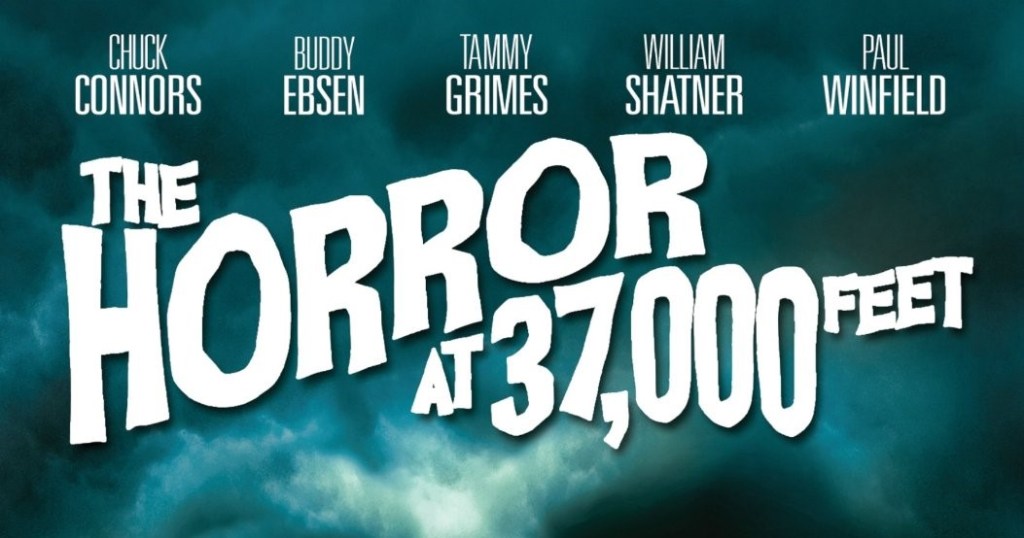

The Encyclopedia Shatnerica has this to say about the 1973 made-for-TV movie The Horror at 37,000 Feet: “The hackneyed plot concerns a jumbo jet, and especially those passengers in first class, which is being haunted by ghosts because of a druid stone in the baggage hold.”
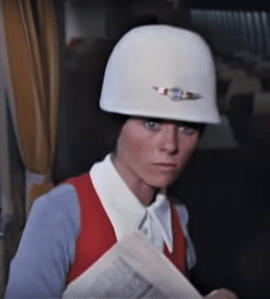
This cinematic gem also features flight attendants wearing ridiculous helmets, a dog you just know is doomed, and an impressive B-list cast that included one past and one future Star Trek star. It also illustrates what William Shatner went through after he left the bridge of the Enterprise.
I have this movie on an old VHS tape in a box somewhere, but luckily it is also available on YouTube in a good transfer.
Shatner plays an alcoholic ex-priest whose character is defined early on with the world-weary line, “I’ll tell you something: I’m bored with rules.” He is meant to give the movie some gravitas; a defrocked priest, after all, should have insight into the supernatural goings-on that soon terrorize the passengers. Unfortunately, his wisdom is delivered in lines like “The closer to heaven, the more discordant,” which doesn’t make much sense even in the story’s context.
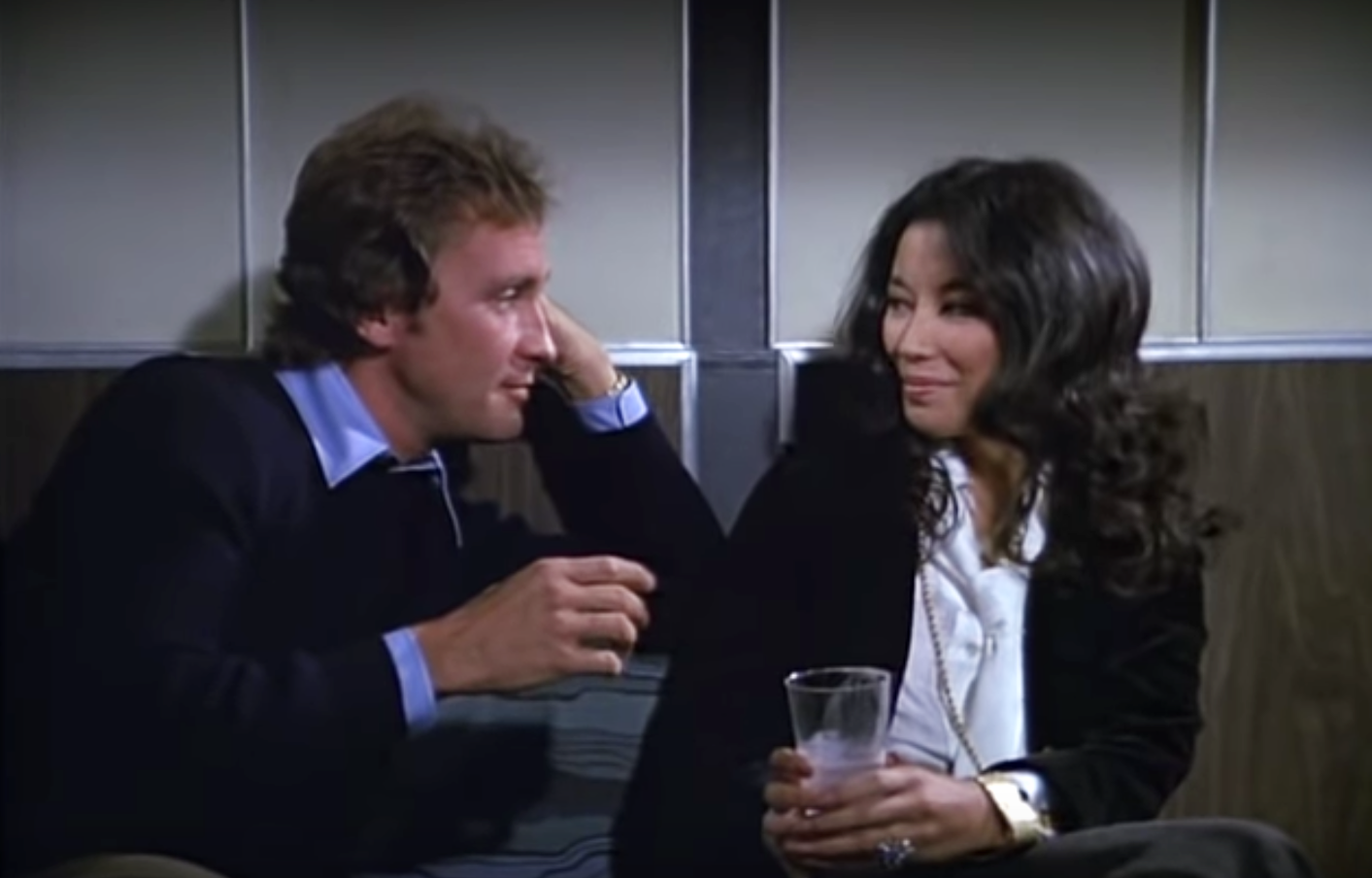
Only a few years after guest-starring in Elaan of Troyius, France Nuyen boards the cursed airplane in a small-to-vanishing role. She plays a model who briefly serves as a love interest for one of the male leads; unfortunately, the subplot is dropped as soon as it appears and she is relegated to standing in the background of scenes.

Paul Winfield, Captain Clark Terrell in Star Trek II: The Wrath of Khan, is almost unrecognizable playing a fussy British doctor. He too gets little to do.
The cast also includes Buddy Ebsen (The Beverly Hillbillies’ Jed Clampett) and Russell Johnson (the Professor from Gilligan’s Island).
It is not a good movie. The plot doesn’t make sense, the acting is stilted and it is only sporadically even a little scary. A few years before both Jaws and Alien created terror by keeping the monster hidden for most of the movie, Horror tries for the same effect but ultimately disappoints when no big bad ever bursts on to the screen.

But watch the movie anyway. It’s one of those so-bad-it’s-good films that are a lot of fun to watch. And it is indicative of the career struggles Shatner faced after Star Trek.
The Shatner of the ’70s
The decade between the end of TOS and the release of The Motion Picture in 1979 were largely unproductive years for Shatner; he lived for a while in the back of a truck camper, made movies like Horror and appeared in a lot of small plays. As he wrote in his autobiography Up Till Now, “After my divorce from Gloria (in 1969) I was just about broke…and I began looking for work. I had three kids and an ex-wife to support.”
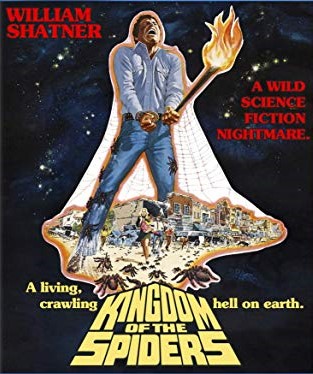
So he took any gig that paid, and the result was a lot of mediocre work that would have been entirely forgotten had Shatner not become a cultural icon. His climb back to prominence began with the best movie of this period, The Kingdom of the Spiders, which hit theatres just two years before The Motion Picture, but even it would have faded into the shadows without the reflected light of Star Trek.

Shatner has often said that his success comes largely from his willingness to say yes when asked if he wants to do something. As he wrote in Shatner Rules:
I nearly always say “yes.” “Yes” means opportunity. “Yes” makes the dots in your life appear. And if you’re willing and open, you can connect these dots. You don’t know where these dots are going to lead, and if you don’t invest yourself fully, the dots won’t connect. The lines you make with those dots always lead to interesting places. “No” closes doors. “Yes” kicks them wide open… As long as you’re able to say “yes,” the opportunities keep coming, and with them, the adventures.
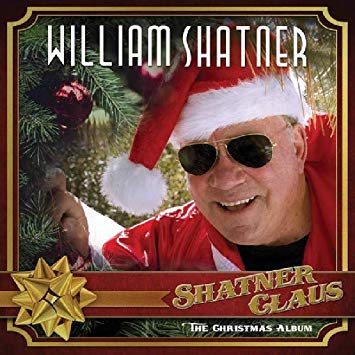
Those opportunities led Shatner through The Horror at 37,000 Feet and to a set crawling with 5,000 tarantulas and eventually to three Emmy Awards for Boston Legal, the Shatner Claus Christmas album and a thousand other projects. Catch one of those early dots with Horror on YouTube. -
33 stickers that take you back to Star Trek collecting in the ’70s

You have likely never seen this licensed Star Trek kids’ booklet. It was made in Canada and the only one I have ever seen in person is the one I own. I’ve added a PDF download link below so you can have your own copy.

The booklet was published in 1975 by Morris National Sales of Montreal, Quebec. It told an original story and came with numbered stickers to place in numbered spots. The images are from different episodes, plus there are a couple of illustrations.

Morris produced 33 stickers on sheets with three or four stickers each. The sheets were sold glued to a cover. Each cover was a puzzle piece; assembled, they formed the image of the Enterprise seen on page 4 of the book. Once you completed the puzzle, you could send the pieces off to Morris to receive “a full color poster of that scene.”

Complete the puzzle… 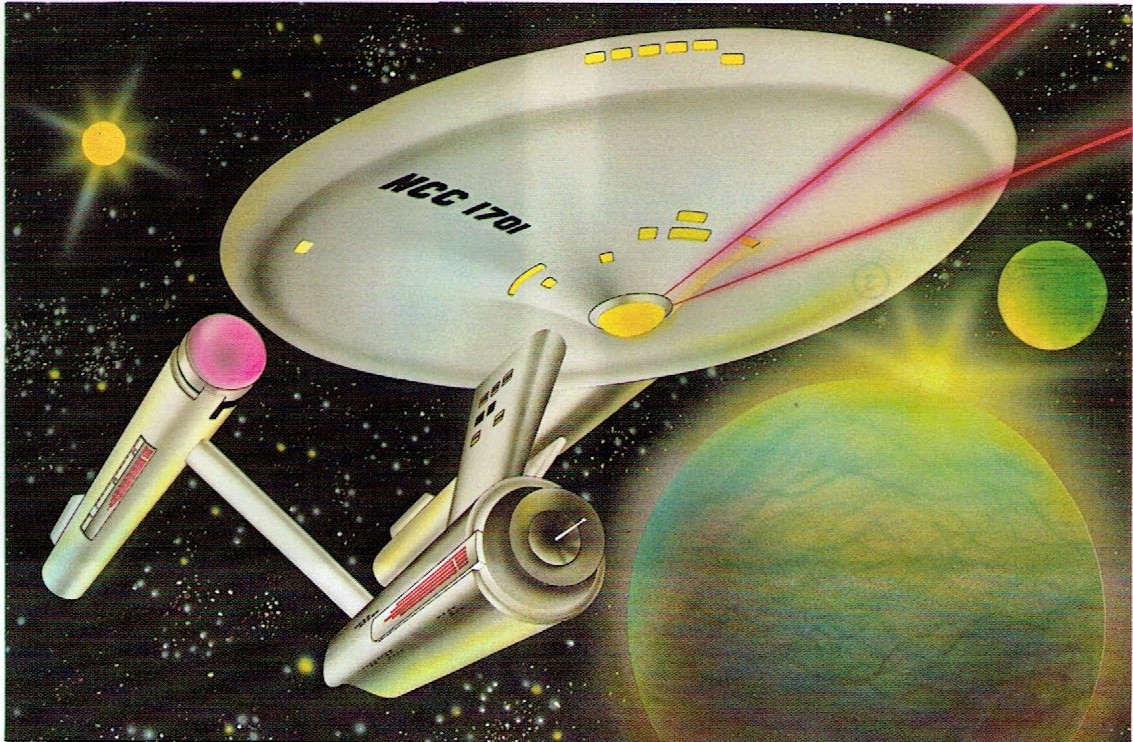
…get this poster.
The book opens with overviews of the main crew and the Enterprise, and this section is surprisingly well written. The author even got Kirk’s serial number right, SC 937-0176 CEC, as seen in Court Martial. However, the entry on McCoy includes this weird note: “His personality quirks are famous among the crew who think him a bit odd.”
The Siege
The story, called The Siege, has a landing party beaming down to investigate the remnants of a city. The part that goes with sticker 6 says the group is Kirk, Spock, McCoy and Chekov, but the image is actually a scene from Arena in which Chekov does not appear; the red shirt in the episode is Ensign O’Herlihy.

The story then takes a hard turn when Kirk begins to hallucinate that he is battling a “power-mad psychotic starship commander” (using photos of Kirk and Gary Mitchell from Where No Man Has Gone Before) and then a “grotesque reptilian creature,” the gorn from Arena.
McCoy tackles Kirk, and Spock instructs him to use his belt to tie the captain, which is a strange order until you realize it matched up with Kirk’s hallucination and allowed them to use a photo from The Cloud Minders.
Back aboard the Enterprise, Kirk is sedated in sickbay and McCoy and Spock determine the crew is under attack by aliens feeding on their thoughts or emotions or memories. Spock begins hallucinating that he’s back on Vulcan, but he recovers (somehow) and then Kirk escapes sickbay (somehow).
Here again we see some cleverness: for the story, Spock needs to chase down Kirk and hold a phaser on him. Where does he find the captain? In the shuttlebay, which allows them to use the publicity photo of Spock standing in front of the Galileo.
And what does Spock do with the phaser? He “fired a lethal disrupt beam at full charge, into Jim Kirk.” Like, the actual Kirk. The captain. Spock reasoned that the alien field influencing Kirk would absorb the phaser energy. We are all fortunate that he was correct.
But the story ends on a real down note. When Spock cut the shields (in order to disrupt the alien’s hold on the Enterprise crew — or something, it’s really not clear), “The enormous amount of energy built up to counteract the deflectors was then snapped back to its source in an awesome backlash,” causing an explosion that left the alien settlement “shattered and trembling.” In other words, Spock killed an unknown number of beings on the planet and no one comments or beams down to see if anyone survived. It’s a scene reminiscent of Kirk’s casual genocide in the novel Mission to Horatius, and again it takes place in a story meant for children.
’70s collectibles were different
Here’s the thing: it’s easy to make fun of items like this, and yes, the story is entirely silly, but remember, many collectibles were created for kids, and it would have been a lot of fun to paste the stickers into the boxes, creating a picture book as you went.
And remember too that in 1975 the pictures themselves were collectibles. The first Fotonovel was still two years away, the episodes weren’t available on VHS until the ’80s, and dealers covered tables with 8x10s at conventions — because people wanted Star Trek photos.
Today we buy screen-accurate props and costumes and high-end models from Master Replicas and Eaglemoss; we expect a lot from our collectibles. In the ’70s, we were thrilled just to see an item with Star Trek on it. We were very forgiving.

One of the centre posters These books sometimes appear on eBay, and the sellers usually want a lot for them. If you decide to add one to your collection, know that they came in four editions, all the same but with different posters in the middle: Spock, Kirk, Kirk and the Gorn, and the Robot. I only own the Spock edition, and that’s okay with me. I like this item, but one is enough.
-
Inside Star Trek issue 2: two days to make Spock’s ears, 90 minutes to get Nimoy into them
Inside Star Trek was a semi-official newsletter, published under the guidance of Gene Roddenberry. This connection gave the writers access to the actors, production crew and sets.
I own the complete run:
Issues 1 to 12: Inside Star Trek, edited by Ruth Berman
Issues 13 to 24: renamed Star Trektennial News, edited by Susan Sackett
Issues 25 to 31: again called Inside Star Trek, edited by Virginia Yable
Here are highlights from issue 2, published August 1968.
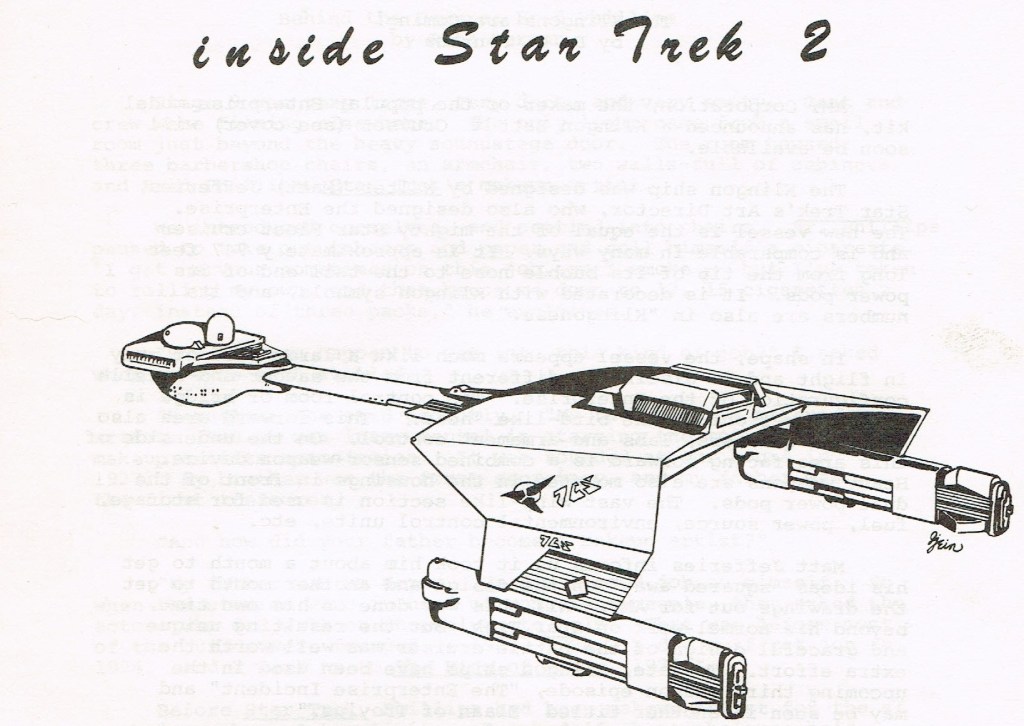
Cover by the amazing Greg Jein
The cover drawing of the Klingon D7 is by accomplished model maker Greg Jein. He drew it in 1968, and by 1977 he was hired to construct an updated variant of the D7 for Star Trek: Phase II. Two years after that, he created the V’ger interior models for Star Trek: The Motion Picture on a very tight schedule. He told Cinefex magazine: “We called people all over town. There were probably close to twenty or thirty of us working on it, on and off. At least four weekends we didn’t go home at all. When it finally came out, we were still two or three days late.” (Issue 2.)

Jein also worked on the two- and six-foot studio models of the Enterprise-D for Encounter at Farpoint and built other pieces for that episode, and contributed to other TNG episodes plus DS9, Voyager and many of the movies.
Jein is responsible for or contributed to 51 Star Trek models, but his first Trek product was this newsletter cover.
From Oz to Spock’s ears
Fred Phillips was already an accomplished make-up artist when he landed on the Enterprise. Asked by editor Ruth Berman about his career, he paused in a list of productions to ask “…what was that fantasy with Bert Lahr?” She replied “The Wizard of Oz?”
When working on Oz sort of slips your mind, you’ve done a lot of important work. He added “The Wizard of Oz is actually where I got the training I’ve been able to execute on Outer Limits and this show.”
Berman asked about creating the Vulcan and Romulan ears:
I have to take an impression of the actor’s ears. It takes between 20 and 30 hours to make a pair of ears. I would normally need two days to get the ears ready, from impression to finished appliance. After you have the molds done, you pour the rubber in — and the room temperature and the temperature of all the ingredients have to be inside a range of 65 to 71 degrees. Then it takes four hours cooking in the oven and three hours cooling. Usually what I do is put the molds in the oven when I get home from work around eight, and then I can take them out around midnight. You could take them out sooner but then the molds would crack.”
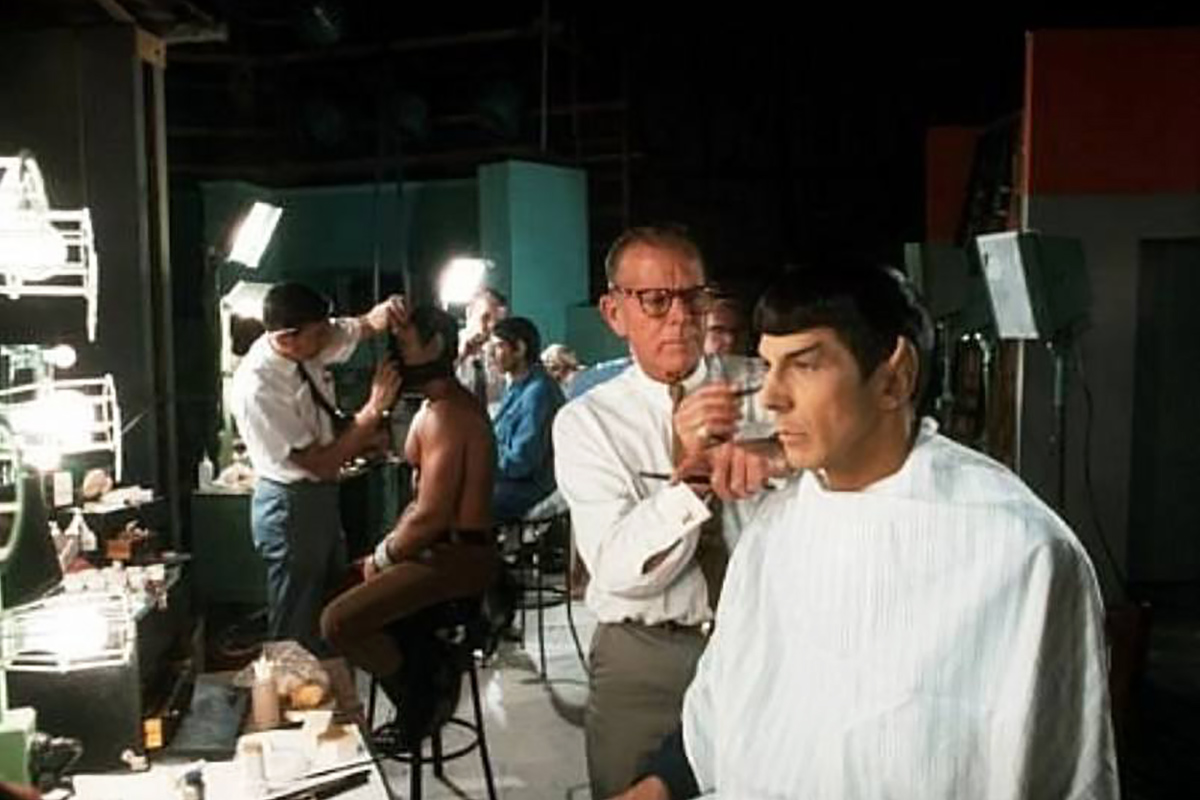
Phillips at work for Amok Time Berman asked if appliances are ever reused, and Phillips recounted a story I believe appears in print only here. “They had wanted a custom-built head for the aliens in the show we’re doing this week, The Empath — but there just wasn’t time. I was able to substitute with a head that came from the pilot to Outer Limits.” There was only one alien in The Outer Limits pilot The Galaxy Being, but there are two Vians in The Empath, so that detail is unclear.
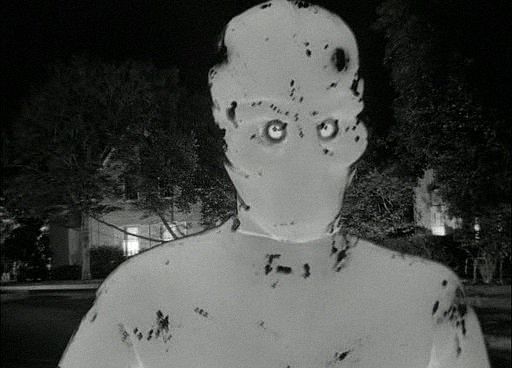
Image from parlor of horror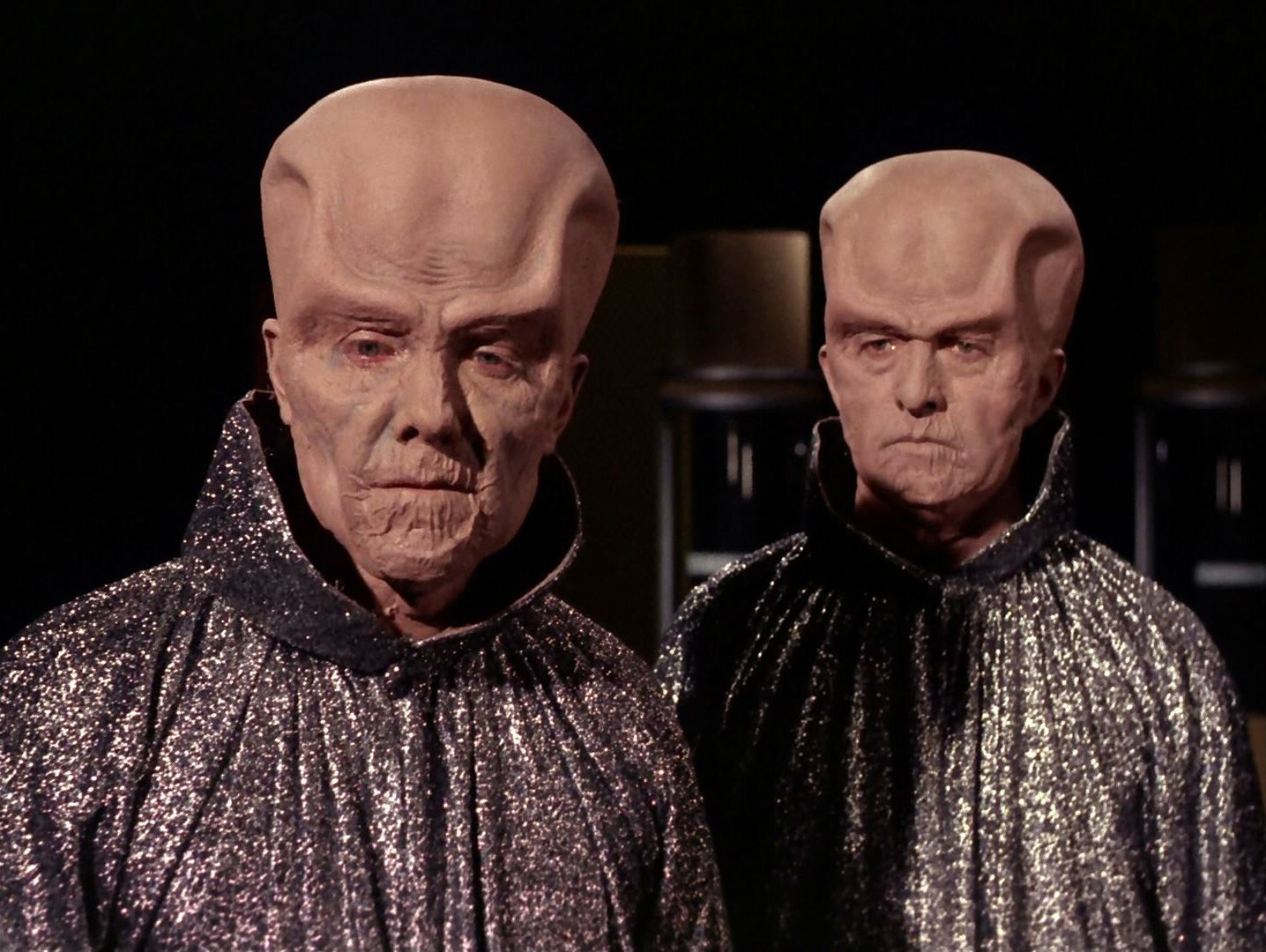
Image from TrekCore Phillips said getting Leonard Nimoy ready for the cameras usually took 90 minutes. Some characters took much longer. He showed Berman his sketch of the Gorgan from And the Children Shall Lead: “Now that one took a long time. It was for Melvin Belli. It looks like a mask, but it actually isn’t because the face has to be able to move freely.”
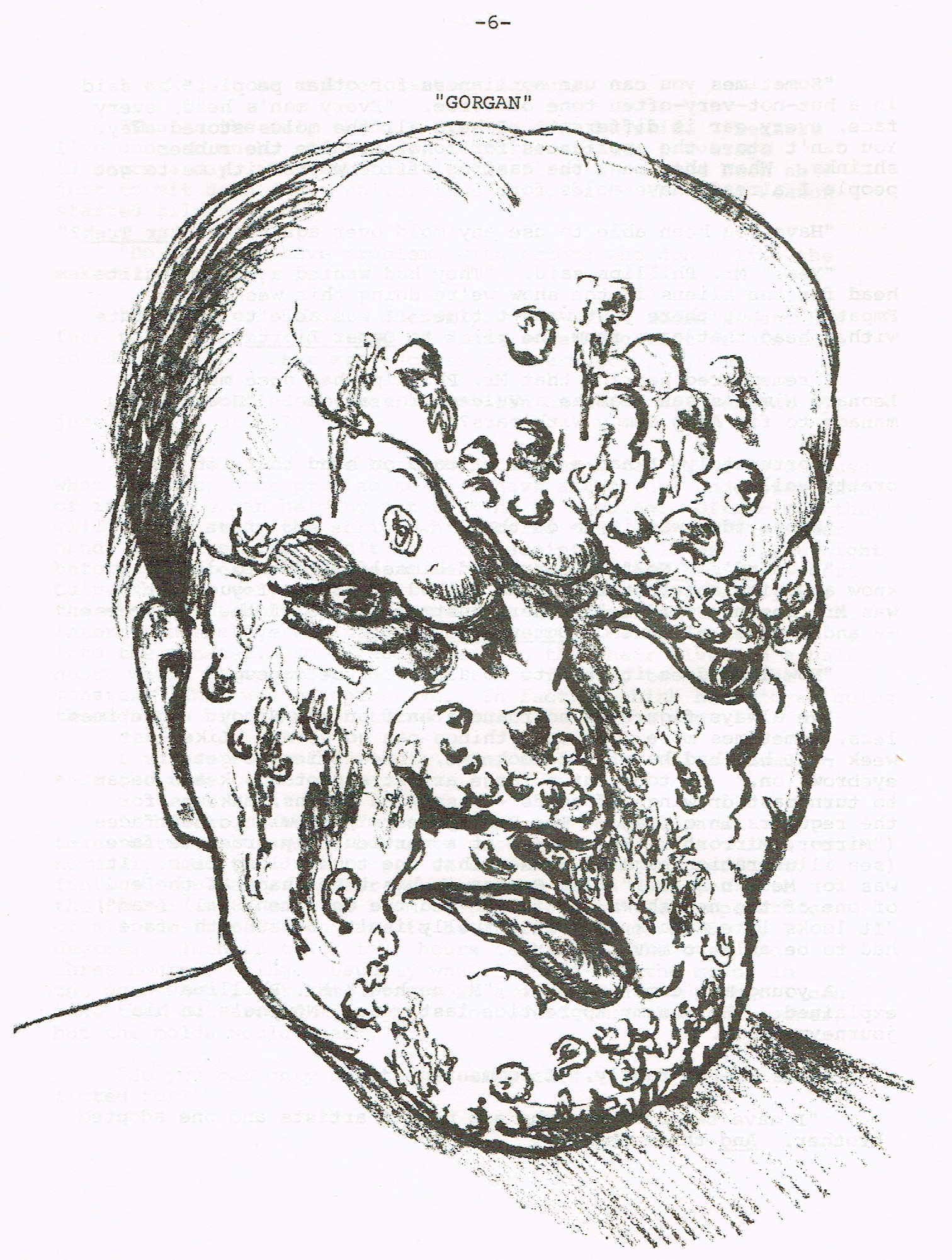
Phillips’ Gorgan sketch 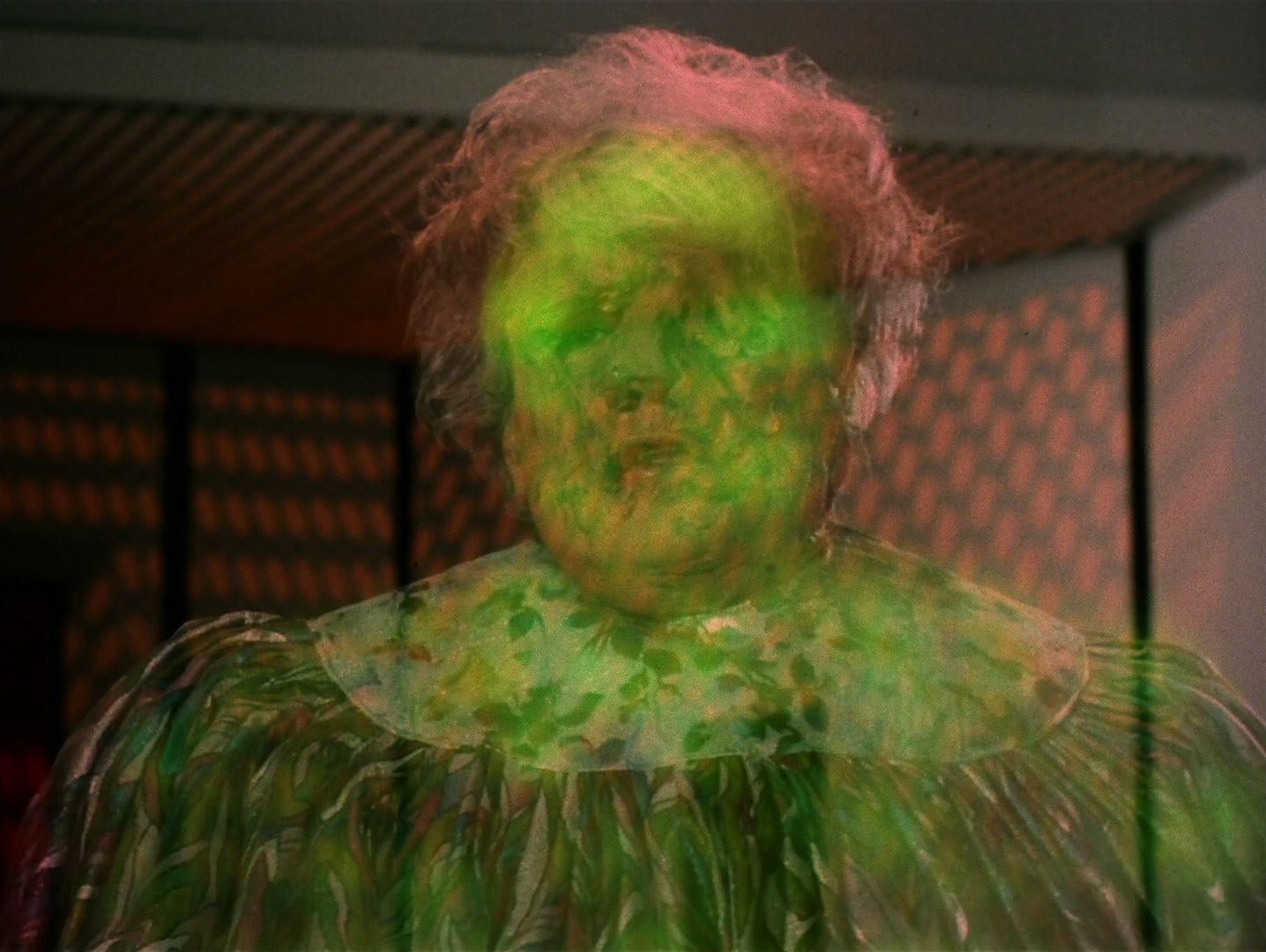
The screen version (TrekCore) It’s an interesting story about a really poor episode, but at least lawyer Melvin Belli enjoyed his time on set. He told Edward Gross and Mark A. Altman in the book Captains’ Logs, “The most fun for me personally was my ‘melting’ death scene. Even though they had taken casts of my face much earlier, the makeup required for the scene still took the better part of the morning. They would shoot for a time, pause, then take me back to makeup to make me look more hideous.”
Inside Star Trek is an invaluable source of early Star Trek voices. I’ll cover each issue. -
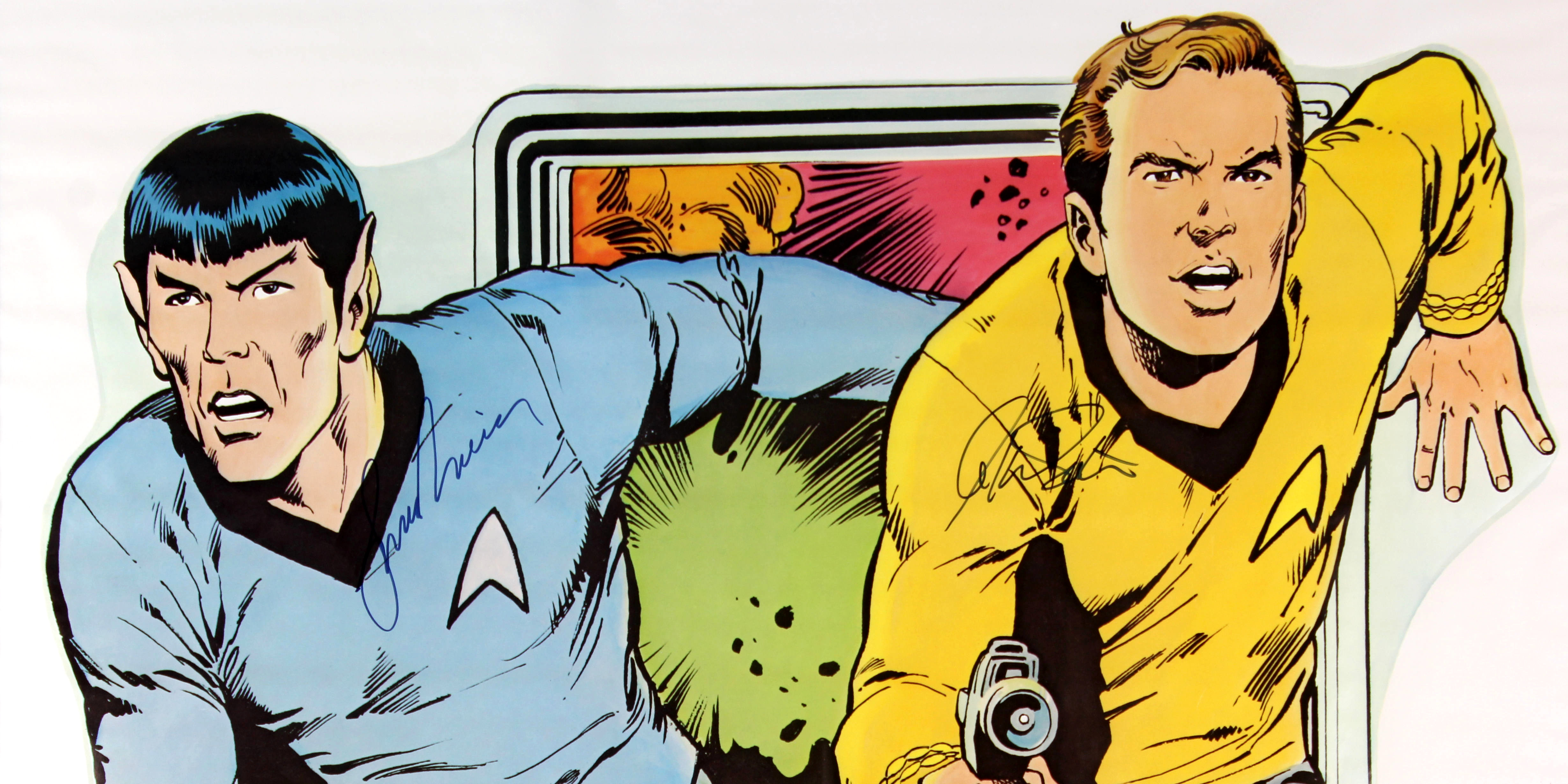
Kirk and Spock were meant to bust out of your wall. I got my poster signed instead

When you got a Super Hero Wallbusters poster, you were supposed to cut out the figures, paste them on your wall, and then write something clever in the word balloons. When I got mine, I stored it in a poster tube, got Leonard Nimoy and William Shatner to sign it, and then paid a lot of money to get it framed.
I’ve been collecting for a long time, and it’s rare to find something I have never seen. Don’t want, already have or can’t afford — sure. But entirely new to me? Not often.

I was walking the dealer room at Toronto Trek in 2006. Nimoy and Shatner were scheduled for the Fan Expo convention that fall, so I was looking for something to get signed. I spotted this big poster (90 x 120 cm, 3 x 4 feet) from across that crowded room. I had never seen one before.

The dealer had found two in storage; he had forgotten about them. (See? Go through your old stuff; you never know what you’ll find.) He was asking $50 and surprised me by throwing in a Star Trek V juice carton, which is now one of the oddest items in my collection. The next day I dropped by his booth and he asked if I would have paid more for the poster. I said yes, so the person who got his last one paid $75. Sorry about that.
The poster is copyrighted 1977. The manufacturer, Western Graphics Corporation, was bought sometime after by Mead Corporation and then by Rose Art Industries and seems to be no longer. The company also produced Spider-Man, Evel Knievel and Wonder Woman Wallbusters, and that’s all I know about it or its products.

I wish I had a great signing story, but this was one of those cons when Shatner and Nimoy had a huge line so they just signed with their heads down. I had hoped the unusual item would get them to look up and inquire about it. No luck. I also got the American Cancer Society anti-smoking poster autographed at that con, with the same lack of personal contact. As I said, lots of people to get through.
But it is still one of my favourite pieces, because it’s a fun likeness, I have not seen another since, and it’s big and looks great on my wall. Also, it got me that weird juice-carton collectible.
-
Inside Star Trek issue 1: selling IDIC and dumpster diving for set pieces

Inside Star Trek was a semi-official newsletter, launched in 1968 under the guidance of Gene Roddenberry. The staff had access to the actors, production crew and sets.
I own the complete run:
Issues 1 to 12: Inside Star Trek, edited by Ruth Berman
Issues 13 to 24: renamed Star Trektennial News, edited by Susan Sackett
Issues 25 to 31: again called Inside Star Trek, edited by Virginia Yable
Here are highlights from issue 1, published July 1968.
Day one set visit
The inaugural issue opens with a story from editor Ruth Berman about being on set for the filming of The Last Gunfight, later renamed Spectre of the Gun. It’s a description guaranteed to make any fan jealous: “First week of filming on the third season of Star Trek: dust covers are pulled off the bridge…between ‘takes’ mammoth electric fans fight the early summer heat…the warning bell sounds, the fans are shut off, and powerful arc lights shine down on the sets.”

Surprisingly, after a few paragraphs describing the shooting stage and the many technicians present, Burman ends the article without giving us more from the set.
Selling IDIC
Berman then tells a story about the Vulcan pendant Spock wore in Is There in Truth No Beauty? Gene Roddenberry created it because he wanted to sell it to fans. It was a commercial, rather than a creative, decision. Leonard Nimoy wrote in I am Spock:
The term (IDIC) stands for Infinite Diversity in Infinite Combinations…and I was all in favor of the philosophy…but not the fact that Gene wanted me to wear the medallion because he wanted to sell them through his mail-order business Lincoln Enterprises.
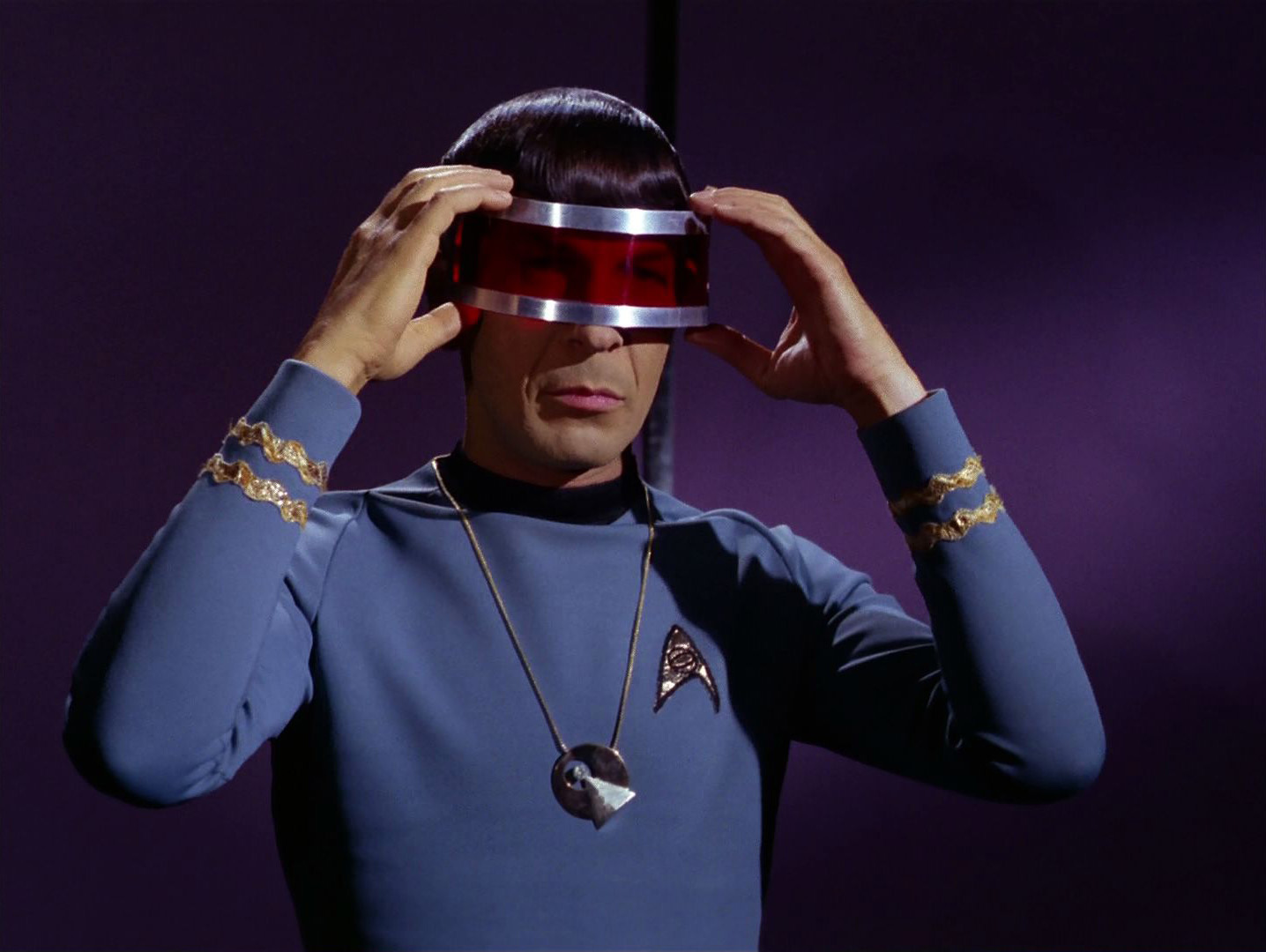
Nimoy and William Shatner even staged a short walk-out protest during filming, but eventually Roddenberry got his way.
Berman and Roddenberry then printed a made-up story in the fanzine to push medallion sales. “When Gene Roddenberry…wants to give a friend a special present, it sometimes turns out to be a hand-crafted piece of jewelery. In the case of Leonard Nimoy, Roddenberry decided that a pendant with a special Vulcan design would be the right gift.” To drive home the pitch, the newsletter asks “Would you like an idic of your own? If enough interest is shown, replicas of Leonard Nimoy’s idic will be added to our catalog.” News of that “special present” would have been a complete surprise to Nimoy.
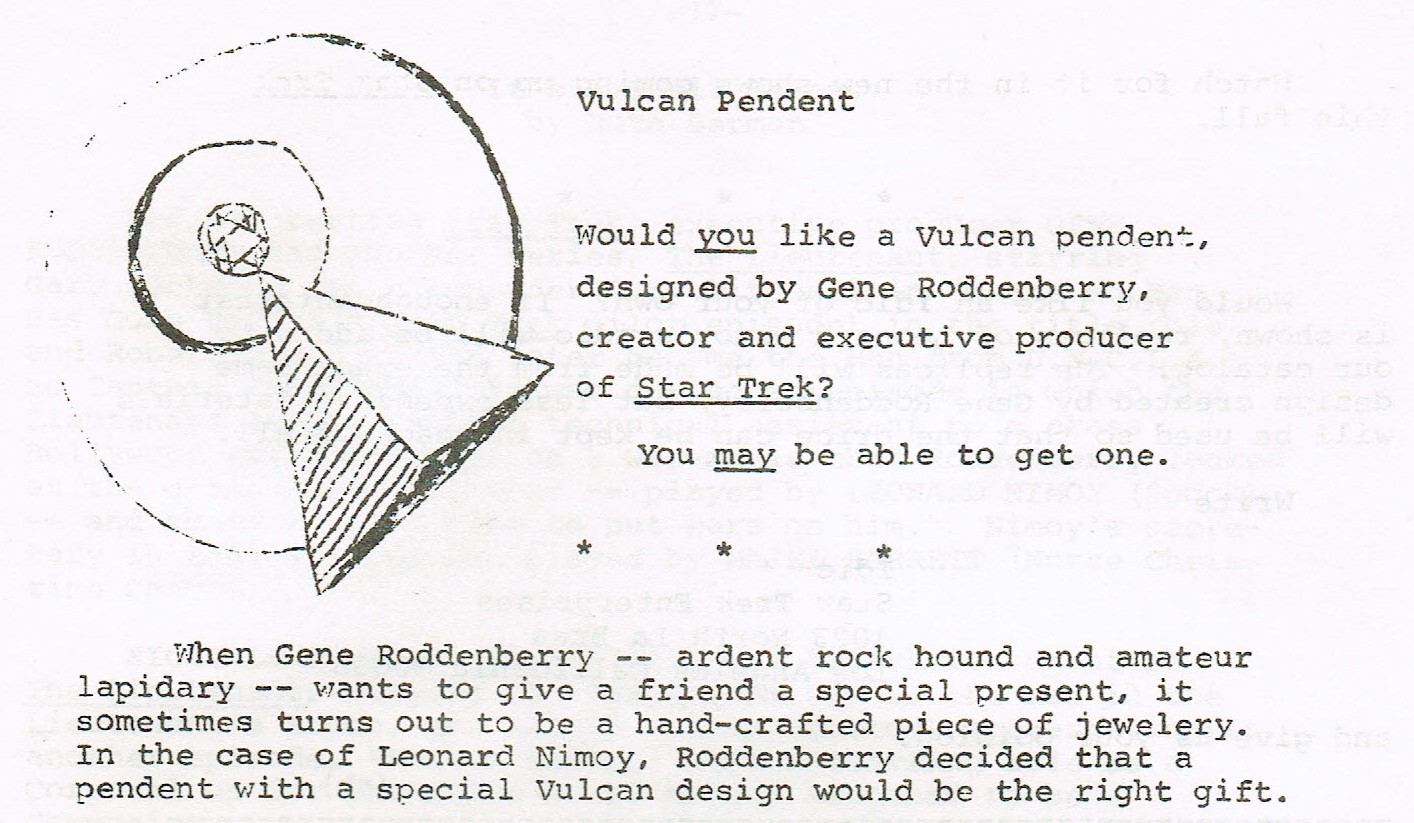
Roddenberry first tried to get the pendant into Spock’s Brain. From a Roddenberry memo to producer Fred Freiberger:
Dear Freddie:
Suggest that the Vulcan medallion can be handled in the epilogue of “SPOCK’S BRAIN” in the following manner:
Epilogue opens with Uhura (and possible appropriate others) making a presentation to Spock of a boxed item from the junior officers of the vessel, which they have had made up to show their delight that Spock has been brought back to life.
Chekov is proud that his research on it was correct and Spock admits it is perfectly executed… Prompted by the fact that Chekov’s clever research has already revealed much about it, Spock begins to explain some of the symbology. Spock, genuinely moved by the gift and by certain relationships of it to the story we have just seen, becomes more and more articulate and is finally chattering away like a human.
We can have some humor here as Kirk, McCoy and Scotty try to break in with ship’s business, and for the first time in our series, Spock won’t let anyone get a word in edgewise. This leads to your suggested final line of McCoy’s wishing he had not connected Spock’s mouth.
Spock’s long exposition was meant to entice buyers, but the memo was sent July 10, 1968, mid-way through filming, and it was too late to add this scene. This explains why the IDIC appeared in Is There in Truth No Beauty? as it filmed directly after Spock’s Brain.
On Kirk’s bed with the set decorator

DC Fontana, from TrekCore D.C. Fontana interviewed set decorator John Dwyer while the two were “seated comfortably on Captains Kirk’s bed on stage 9,” but despite the cozy setting the article is fairly dry. This is surprising considering Fontana is a writer and Dwyer must have had a hundred great stories. The piece’s best bit is about scavenging in the garbage for set pieces:
We do a lot of our wall decorations from the trash bins around the lot. We look in every one as we go by, and in maybe every fifth one we find something appealing that is being thrown away. So we take it, repaint it or add things to it, and use it… We can’t go out and have things built, because the cost factor is just prohibitive.
Pitch to journalists: be fair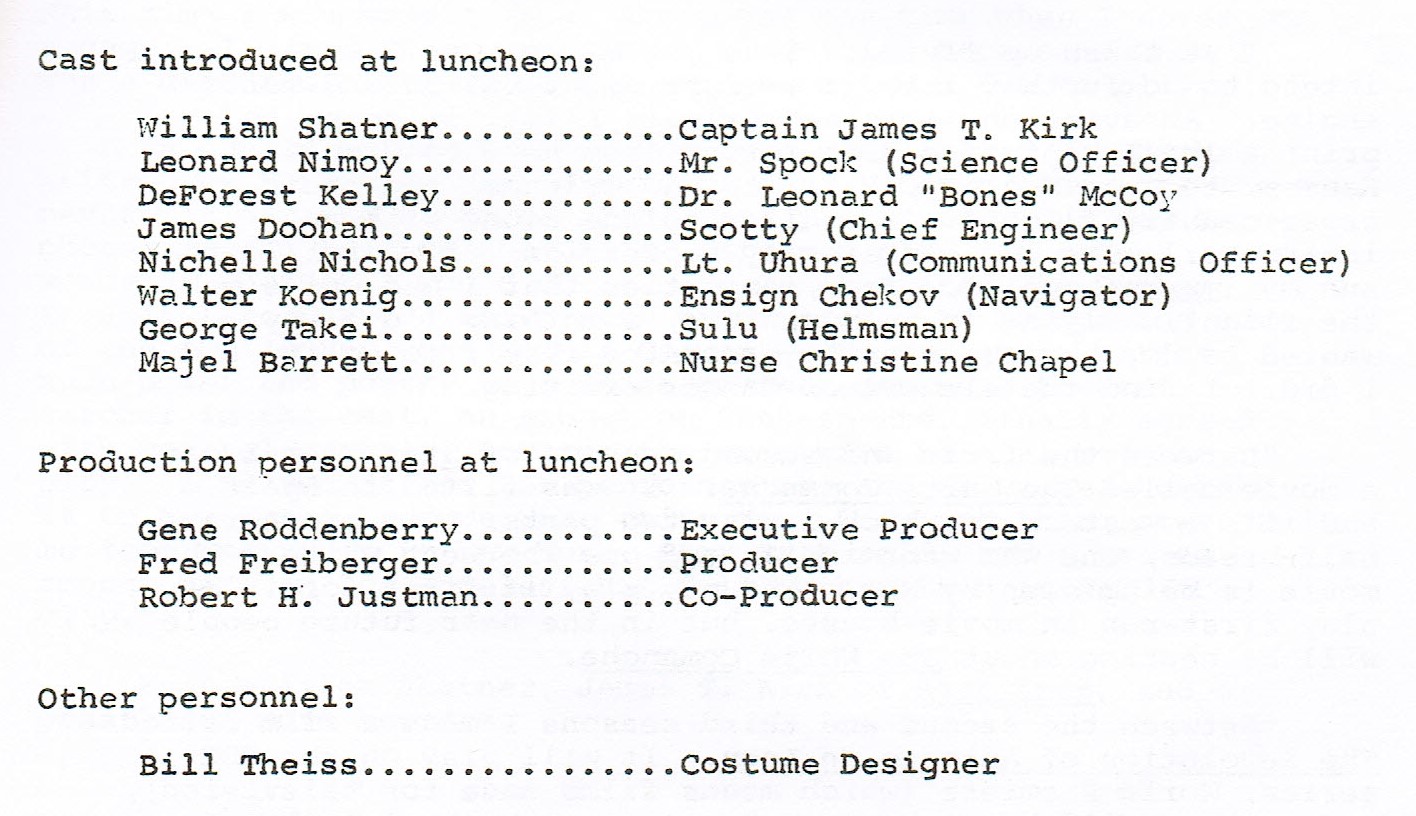
On June 22, 1968, Gene Roddenberry addressed a lunch crowd of entertainment journalists. He was joined by the entire main cast plus Majel Barrett, third-season producer Fred Freiberger, co-producer Bob Justman and costume designer Bill Theiss. Roddenberry’s extolled the virtues of his show, saying:
We are proud that this is the only television program today saying to a worried world that there is a tomorrow. More, we are saying that tomorrow need not be computerized and de-humanized. It is within our ability to make tomorrow a more richly rewarding existence than yesterday ever was.
He also asks the audience to treat the show fairly:
Like us or not, give us rave reviews or rip us apart — do us the favor of accepting that we work just as you do. Within our own limitations, and within the limitations of our medium, when we put our name on the final product it is the best we have been able to do at that time. Bad or good, and it will most probably be both, you may be certain that we make our show with pride.
Shatner has always been busy
From
SHAKESPEARE ARCHERYBerman asked William Shatner what he does outside of Star Trek. His list was extensive: hunting with a bow, getting a pilot’s licence, filming the movies The White Comanche and The Revolution of Antonio de Leon, recording The Transformed Man for Decca Records, appearing on game shows including You Don’t Say, and starring in the play The Hyphen. The strangest quote was about that game show: “I tried to be as funny as possible, because I knew I was a deadhead. Still, it was amusing, it was fun to play.”
Inside Star Trek is an invaluable source of early Star Trek voices. I’ll cover each issue.
-
A View-Master surprise, with Star Trek’s worst episode
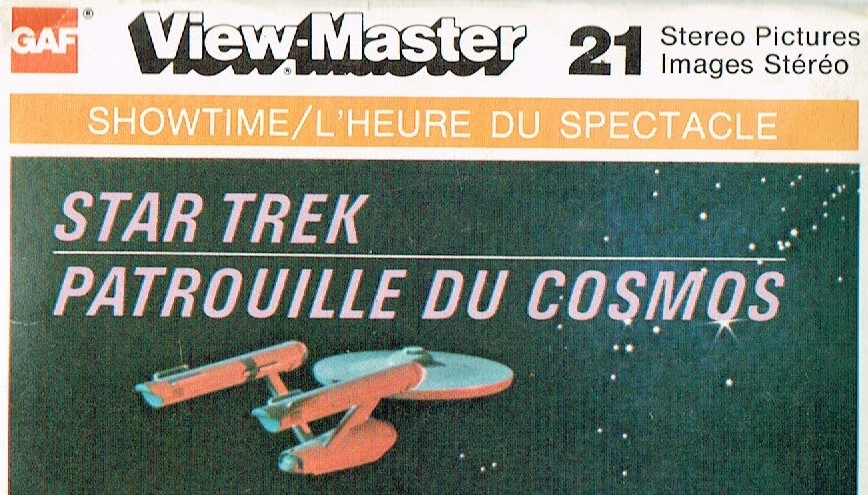
Ever find $20 in a jacket you haven’t worn for a while? That just happened to me, except it was Star Trek View-Master reels in a storage box.
I was looking for a specific collectible and found instead the Star Trek and The Motion Picture View-Master sets. And then I got another surprise: the second sleeve also contained the three Wrath of Khan discs. So I own three of the four original-series titles. The company also produced one set drawn from the animated series.

I have no recollection of buying these, so it was a fun moment. The only downside is that View-Master’s first Star Trek project was The Omega Glory, which I consider the nadir of TOS.

From TrekCore Gene Roddenberry wrote The Omega Glory. It was one of three scripts considered in 1965 for the second Trek pilot, but no one really liked it. Writing of that time, production exec Herb Solow said in Inside Star Trek, “Gene Roddenberry’s script, The Omega Glory, wasn’t very good. It was unnecessary to point it out to him; he was the first to recognize the fact. It later became a less-than-mediocre series episode.”
Roddenberry revised the script and the episode was filmed in December of 1967. Perhaps recognizing some weakness in it, he wanted extra promo money spent, according to Marc Cushman’s These are the Voyages, Season Two. He requested a full-page ad in the trade papers, suggested it could launch the third season, asked for some on-air promos, and tried to convince a Hollywood Reporter writer to cover it. All these were rejected.

Finally, Cushman writes, “Roddenberry struck a deal with GAF Corporation to release The Omega Glory as a View-Master 3-D disc set.” That would shine at least a small spotlight on the script. Other sources say that Omega just happened to be the episode filming when the GAF photographer showed up, but Cushman’s claim makes sense in the context.
The episode has its defenders. Dorothy Fontana said “I didn’t think it was our best episode. However, I always did like the speech that Kirk says about the ‘words’… ‘We the People’ was really a great speech and Bill delivered it well.”
Sure. And Cushman writes that its strong points include the performances from William Shatner and Morgan Woodward, the fight sequences and the production values. But even he has to acknowledge:
…one can’t help but squirm a bit when the tattered flag of the United States is paraded across our television screens to the accompaniment of “The Star-Spangled Banner.” For many, it all seemed rather self-glorifying for this U.S. made show.
The script employs Roddenberry’s parallel-worlds concept, which posits that other planets could experience a history similar to Earth’s. I wrote about the origins of that here. It’s a dubious idea but it saved money by allowing the use of standing sets and existing costumes in stories like Miri and Bread and Circuses. But in Omega, the premise is stretched to breaking. Another Gouverneur Morris writing those words in the Constitution, for another United States, word for word, in the same order, with “We the People…” at the top in the same larger calligraphy. It’s ridiculous.

From TrekCore Spock understates it when he says “The parallel is almost too close, Captain.”
Done in Miri to save money, we can accept a world and a city that looks similar to Earth. Done here, with the same document, country and flag, it comes across as jingoistic, and the value statement it makes about American culture is not consistent with the equality message in Arena, The Devil in the Dark and The Corbomite Maneuver.
I also dislike The Omega Glory because it shows a starship captain committing mass murder, and seemingly planning genocide if he can only get enough weapons. I want to believe in the people of the Federation; I have the same issue with historian John Gill in Patterns of Force.
But Spock’s Brain…
When people discuss the weakest TOS episodes, they fault The Alternative Factor or Spock’s Brain, but those are simply bad episodes. That’s inevitable in any series. Consider another unpopular episode: Plato’s Stepchildren. Yes, there is the cringe-inducing scene of Spock dancing near his captain’s head and Kirk neighing like a horse, but the philosophy of that episode is spot-on. Kirk tells Alexander: “…where I come from, size, shape, or color makes no difference…” That is a Star Trek message, but in The Omega Glory, it is the philosophy that’s wrong, and that makes it the worst of the series.
But there are two Omega bright spots. First, it was at the end of this episode that NBC announced the series would return for another season. Second, when Gene Coon was handed Roddenberry’s original 1965 script to rework, he was so unenthused by it that he instead wrote two original pieces: Errand of Mercy and The Devil in the Dark. So, in a backhanded way, The Omega Glory is responsible for two of the strongest episodes.
Back to View-Master
A fun story about the cover photo of the TOS envelope: the ship in the foreground is the original three-foot Enterprise model, and the Exeter in the background is an AMT model. The model worked in The Doomsday Machine and it works here.

After finding these discs, I bought an old View-Master viewer. Seeing these scenes in 3D is magical. One shot from Omega of Uhura and Sulu at her station makes you feel like you could walk right onto the bridge with them. And if you look closely, Nichelle Nichols appears to be studying a script open on her lap.
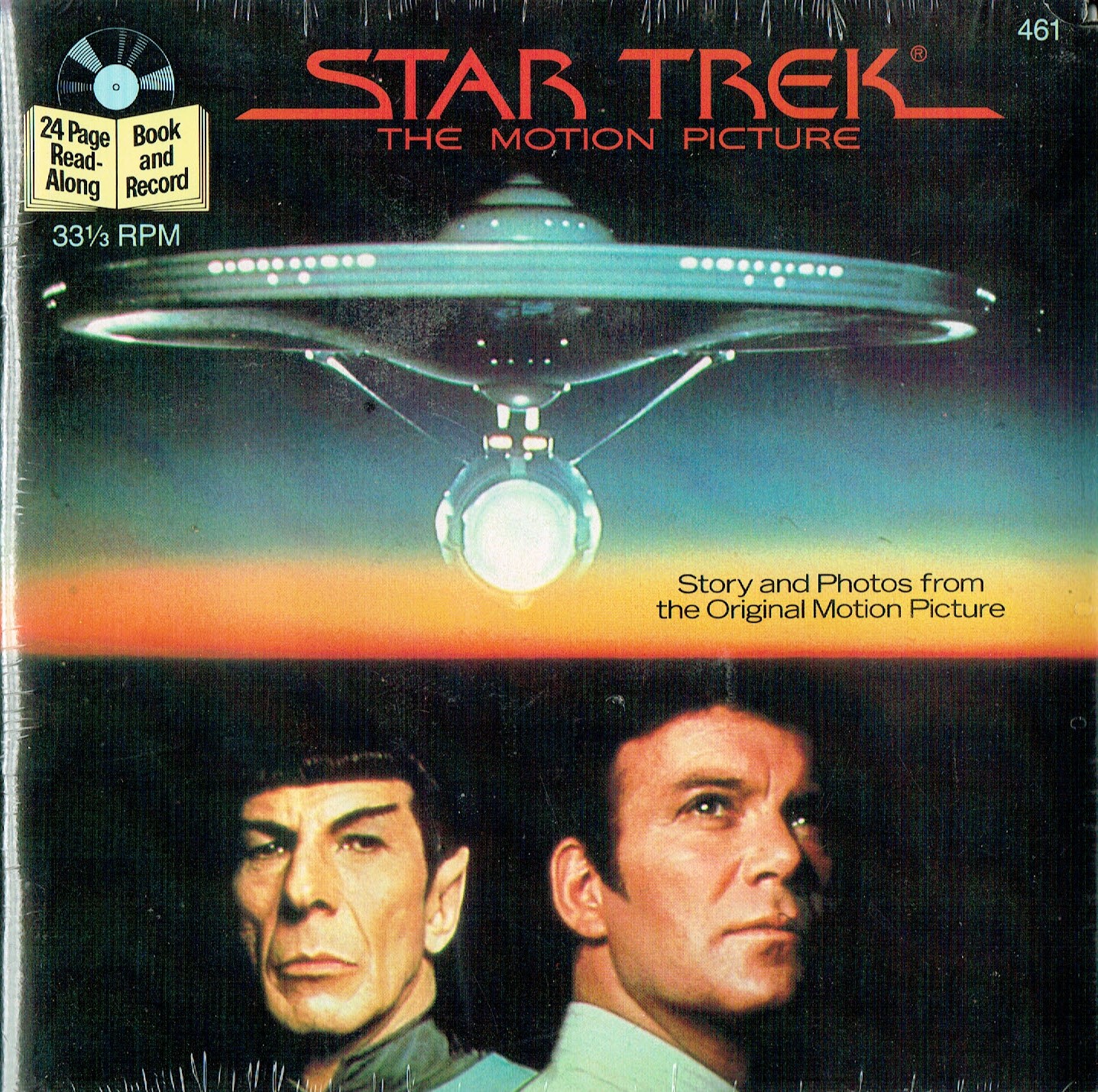
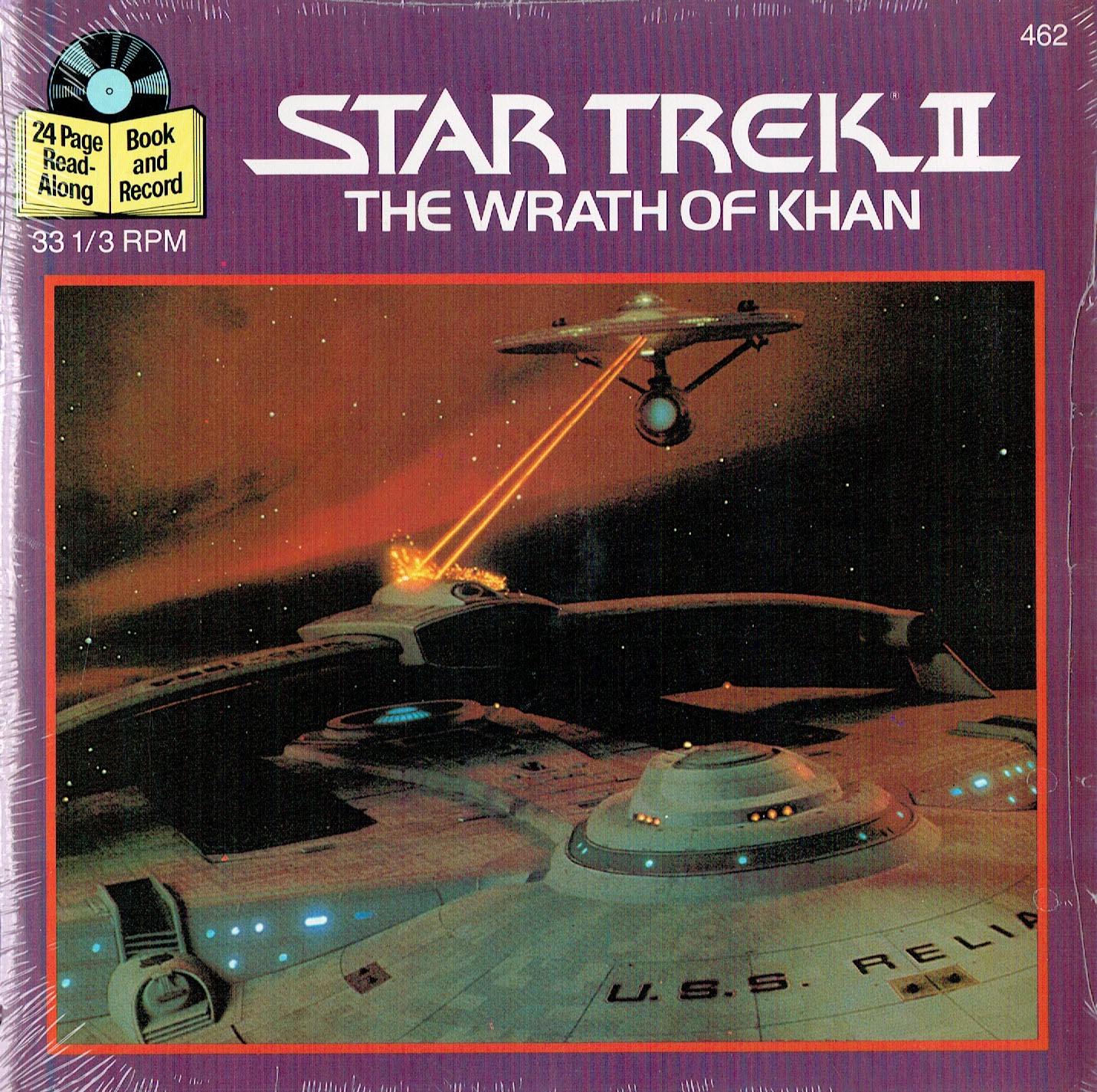
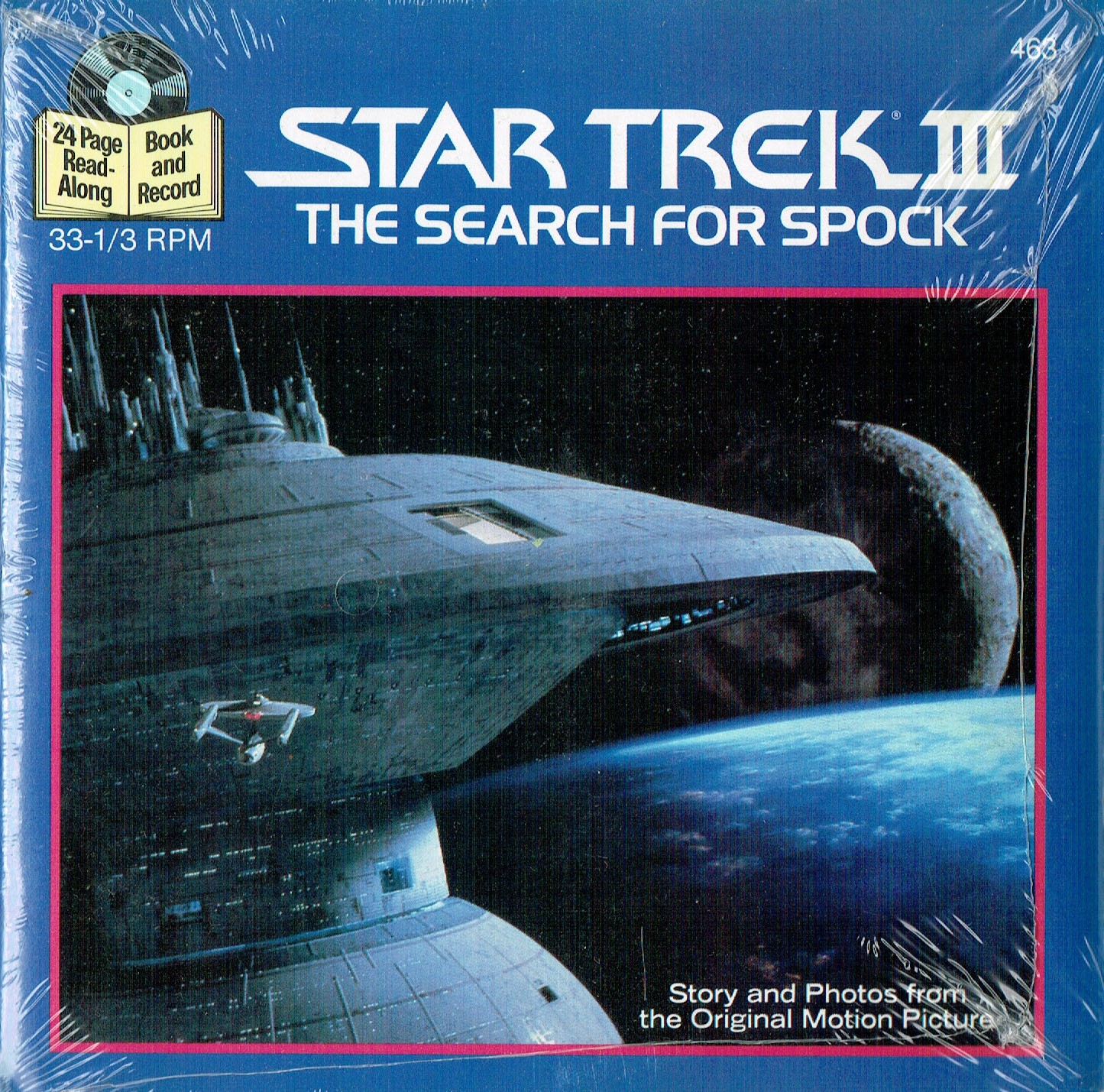

I also found these kids’ records, still sealed in plastic, two books from 1978 and 1977, and a lot of other stuff. So look through your storage boxes. You may have some forgotten Star Trek treasures.
PostscriptStar Trek: Insurrection is a retelling of The Omega Glory, but almost no one ever notices that.

Update: collection completed. Just after I wrote this, I acquired Mr. Spock’s Time Trek, which recounts the animated episode Yesteryear. I now have all four of the TOS sets; there is a TNG set but I only collect TOS.
Arena, Bread and Circuses, Enterprise, Errand of Mercy, Exeter, Gene Coon, Gene Roddenberry, Herb Solow, Insurrection, Marc Cushman, Miri, Nichelle Nichols, Spock’s Brain, Star Trek, Sulu, The Corbomite Maneuver, The Devil in the Dark, The Motion Picture, The Omega Glory, The Wrath of Khan, Uhura, View-Master, Yesteryear -
You don’t need to read Mission to Horatius

Mission to Horatius was the first original TOS novel published, which makes it an important piece of Star Trek memorabilia. But important isn’t the same as good. In fact, it’s really bad. Only completists need to own one.
The Enterprise is traveling to a distant star system to determine which of three inhabited planets sent out a distress call. That’s a fine story idea, but the plot, characterizations and dialogue are terrible. For example, the Enterprise has been in space a long time and the crew is suffering from a disorder called “space cafard” which can be deadly and can (somehow) cause the crew to mutiny. Also, the book paints a very bleak picture of serving on our beloved 1701.
Oh, and Kirk commits genocide and no one notices or comments.

Spoilers
Plot spoilers follow, but that’s not a problem because, again, you should not read Mission to Horatius.
Space cafard is ridiculous. Cafard is striking some crew members. Spock helpfully defines the malady: “The instinctive fear of deep space. A mania that is evidently highly contagious. It is said in the early days of space travel, cafard could sweep through a ship in a matter of hours, until all on board were raging maniacs.”
Raging maniacs. Right. McCoy then informs the captain that only last year, the Space Scout Westmoreland was found drifting with the whole crew dead. “They had killed each other, Captain. Evidently in their madness.”
“They tore each other apart with their bare hands…” Spock adds. People get stressed at work, even burned out, but suggesting the majority of Enterprise’s crew would kill each other because they’re tired is simply silly.
Sulu keeps a rat in his shirt. While on bridge duty. “Sulu cleared his throat again and reached a hand up under his uniform tunic. He brought forth a small brown animal. He set it down on the console before him and said apologetically, ‘Mickey, sir.’”
Captain Kirk stared. “Where did that come from, and what is it doing on my bridge?”
Excellent questions. But there is one good bit here. Kirk berates Sulu with “I thought you were clear on the orders against pets aboard the Enterprise since our troubles with the tribbles.” The show rarely referenced previous events, and it’s welcome here.
Serving on the Enterprise sucks. I would jump at the chance to beam aboard the Enterprise. So would you. But don’t do it, because apparently it’s terrible there.
Chekov snorted. “You don’t kill time on the Enterprise these days. It dies a slow death from boredom.”
Ensign Freeman looked distastefully about the wardroom. “You know…I sometimes get the feeling I’ve spent my whole life on this confounded ship. And to think I used to believe I liked the Starfleet service.”
They shoot people. Spock says General Order One “restrains us from using our sophisticated weapons against advanced life forms…” Two minutes later, Kirk orders Chekov to fire on an inhabitant of the planet Neolithia who is fleeing from the crew on a “horselike quadruped.” There is no reason for this, and sending a person falling unconscious from a running animal is a dangerous assault.
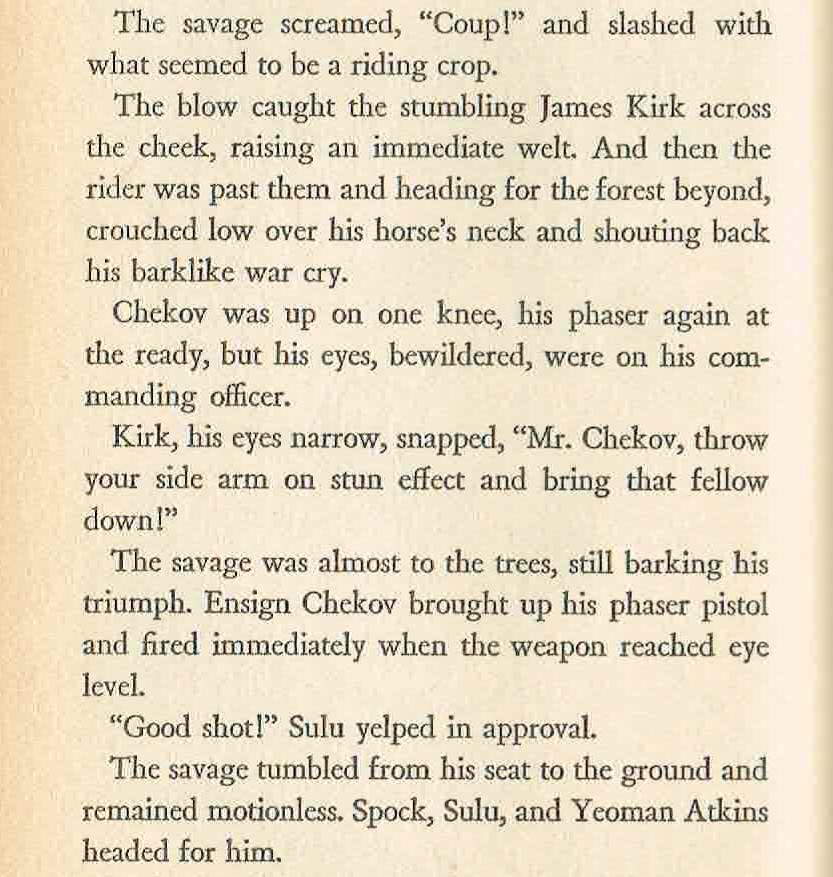
Mythra should not be stoned. Mythra, the second planet the Enterprise visits, was settled by “religious dissidents” who want to worship in peace, but the priest class uses daily doses of LSD to control the citizens. The landing party is handed drugged drinks but no one is dumb enough to partake — except Chekov, who then spends some hours happily stoned. The scene is reminiscent of Darnell taking a bite of the borgia plant in The Man Trap, except Darnell didn’t do that because Enterprise officers aren’t dumb.
Kirk orders the settlement’s water supply laced with an antidote, removing the control of the priest class. The Enterprise then warps away, without waiting to see what ignoring the Prime Directive will create. Granted, that is exactly what Kirk does in The Apple, so I may have to give the book a pass here.
Then Kirk commits genocide. The third planet, called Bavarya, was settled by “political malcontents” who claim to be descendants of “the elite of Teutonic peoples.” (Bavarya. Bavaria. Get it?) And then some Nazi references kick in. For example: “We are the Herr-Elite of the Horatian system, and it is our destiny to help these backward worlds.”
We learn that the Herr-Elite are real people, while the vast majority of the population — five million people — are clones who operate as servants, workers and soldiers.
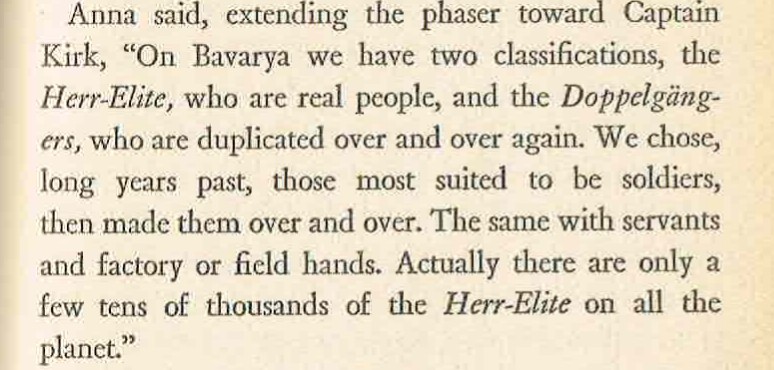
McCoy says clones have no soul, because the “spark” within a person cannot be duplicated, and that clones are built on a “matrix — a mold or impression. Wipe clean the matrix and the duplicate simply [reverts] to the molecules of which it was composed.”
It is never explained how one can remotely erase the mold or why this causes people to disintegrate, but they soon find a machine that will “wipe clean the matrix.” Kirk orders Scotty to throw the switch — and all the duplicates are killed. Five million of them. Sure, they are copies, but they are clearly sentient, so Kirk just committed genocide. But no one seems concerned.
“Your orders are to get that rat!” Planetary crises all solved, 40 crewmembers are now in stasis because of cafard, and McCoy says half the crew are showing signs. “One cafard-crazed crewman running berserk through the ship and the mental contagion will spread like a forest fire, Jim. The whole ship could fall apart within the hour.” Again, it is not explained how bored and tired people infect others with madness.
Remember the rat? It escaped and has been spotted “dancing” in the hallway, which Sulu says means it is infected with plague. Fear of the Black Death grips the Enterprise but a search fails to locate the rat, so the entire crew dons spacesuits and the ship is flooded with chlorine gas.
But don’t worry: McCoy taught the rat to dance to make everyone think they would die of the plague. It was a diversion. The book ends with the Enterprise approaching a starbase for some cafard-curing shore leave.

Mission to Horatius was published by the company that also produced the Gold Key Star Trek comics, and it shows the same lack of believability and almost total unfamiliarity with the source characters, setting or spirit. Early Star Trek novels, such as James Blish’s uneven Spock Must Die!, can be forgiven for not getting characters and dialogue quite right. After all, Spock grins in Where No Man Has Gone Before. But Mission to Horatius is not even close. And yes, it was marketed as a youth novel, but that fact makes its genocide and casual violence more egregious, not less.
Collectors of early TOS memorabilia should probably own this novel, because of its place in history, but no one should actually read it.
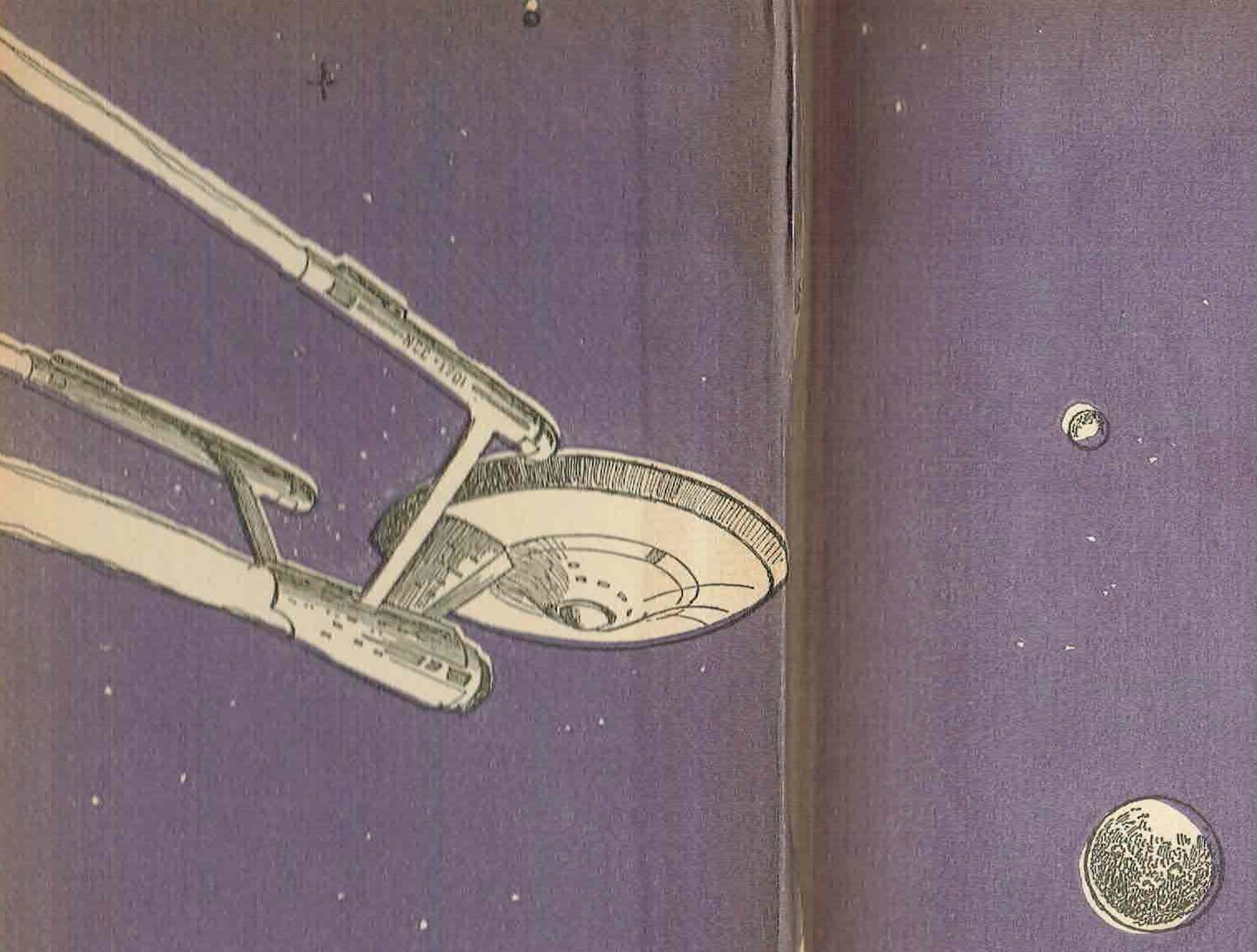
Mission to Horatius was written by Mack Reynolds, illustrations by Sparky Moore, and published by Whitman Publishing. First edition: 1968.
-
William Shatner was always nice to me

I have 13 William Shatner autographs. Eight of those I got in person. Three of those are special. This is the story of those three.

From Cuoco’s Instagram William Shatner seems to create strong impressions on people, which is a nice way of saying that some really like him and others do not. Actress Kaley Cuoco, for example, seems to have a genuine affection for him, and in the episode of Shatner’s Raw Nerve with Leonard Nimoy it is obvious the two are very close. Of course, sadly, there was a falling out between them before Nimoy died.
James Doohan was not a fan, writing in his book Beam Me Up, Scotty, “I have to admit, I just don’t like the man.” And, as has been well-documented elsewhere, he often did not generate good feelings. Nichelle Nichols, at the end of their interview for Star Trek Memories, said to Shatner “I’m not finished yet. I have to tell you why I despise you.” She told Shatner that he was “very difficult to work with, and really inconsiderate of other actors.” Shatner, to his credit, includes the story in his book, and added “I must admit that Nichelle’s criticism is probably valid.”
I do not know Shatner at all, but I was a print journalist for a while and that meant I got to interact with him outside of a convention setting, and he was always nice to me.
In 1995, I was a junior reporter going through press releases and I came across the announcement that Shatner would be appearing at the launch of C.O.R.E. Digital, an animation and special-effects studio in Toronto. He was an investor. I took the press release to my editor and said “I need you to send me to this.” She agreed. At the time, I was too “professional” to step out of my assigned role so, other than a handshake and a reporter-type question, I didn’t have any real contact with him.

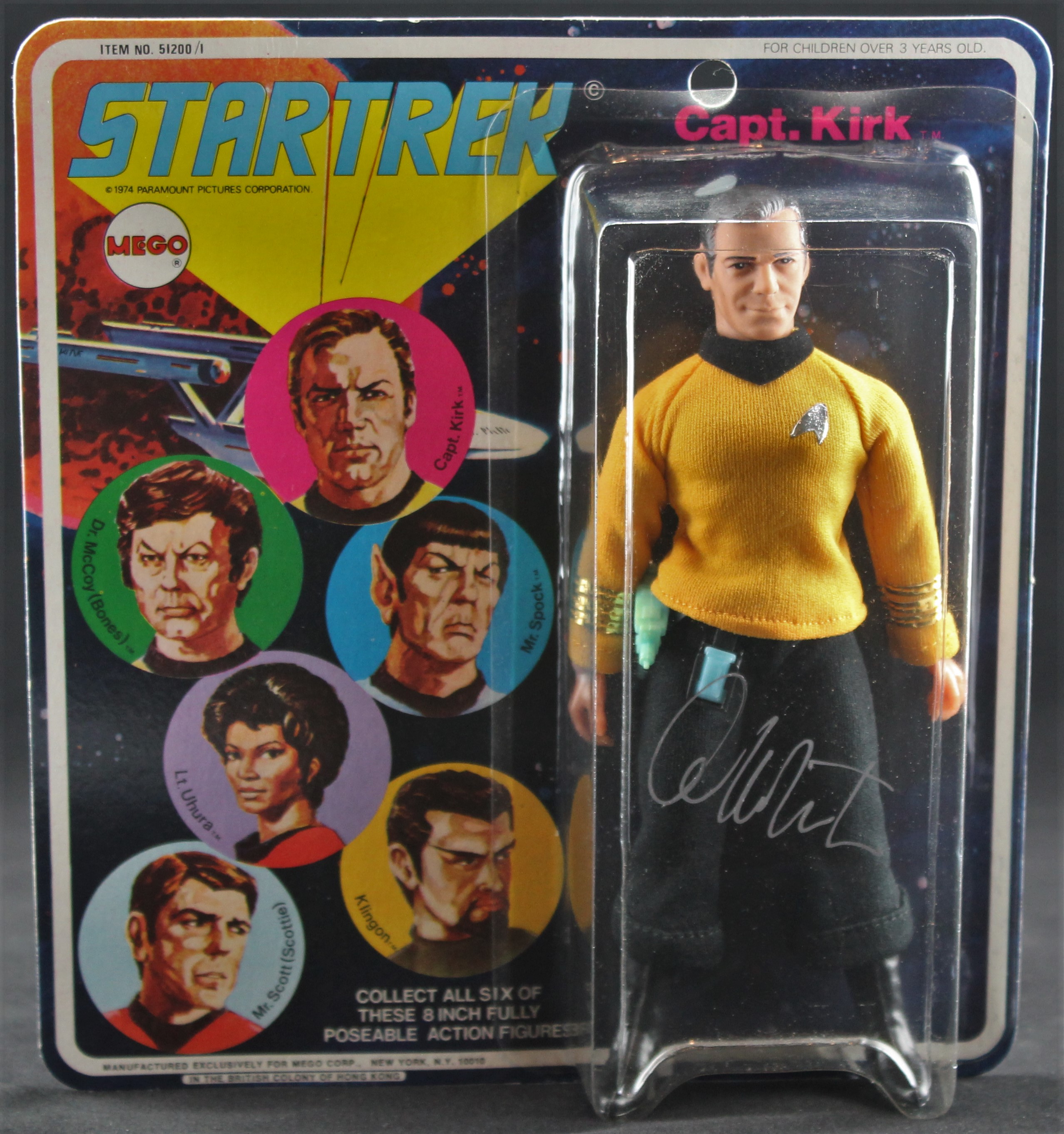
A number of years later, Shatner was hired by Epson to help launch a new product: a TV with a built-in photo printer. (It was a silly product and soon disappeared.) I was an editor by then and didn’t feel as restricted by my role, so I brought with me a Star Trek V DVD and a 1970s Kirk Mego action figure, still in its package. After the event, I approached Shatner and asked him to sign the DVD. That signature wasn’t too clear, so I pulled out the Mego figure and he signed that too. Both are currently sitting on a shelf in my Star Trek room.
After he signed the Mego figure, one of the other journalists said to me “Why do you have a Kirk action figure” and I replied “Why don’t you have a Kirk action figure?” I turned to leave the room and Shatner called out, joking, “I don’t want that to show up on eBay.” I laughed and walked out, but I returned a minute later. He was talking to a PR rep. “I’m sorry to interrupt,” I said. “I just want to tell you that this will not be sold on eBay. I have been a fan forever, and this is important to me.” He shook my hand and thanked me for telling him that.
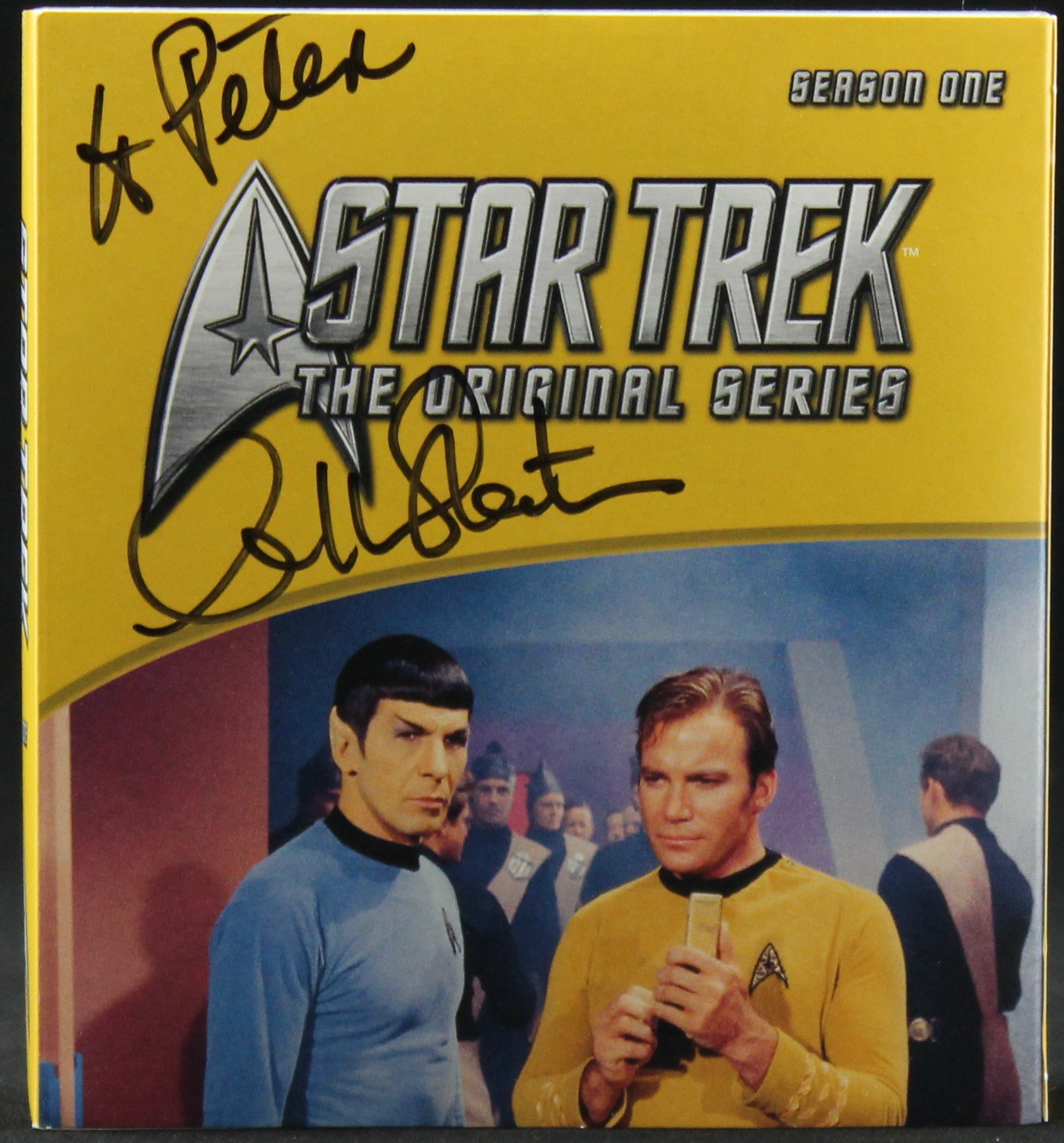
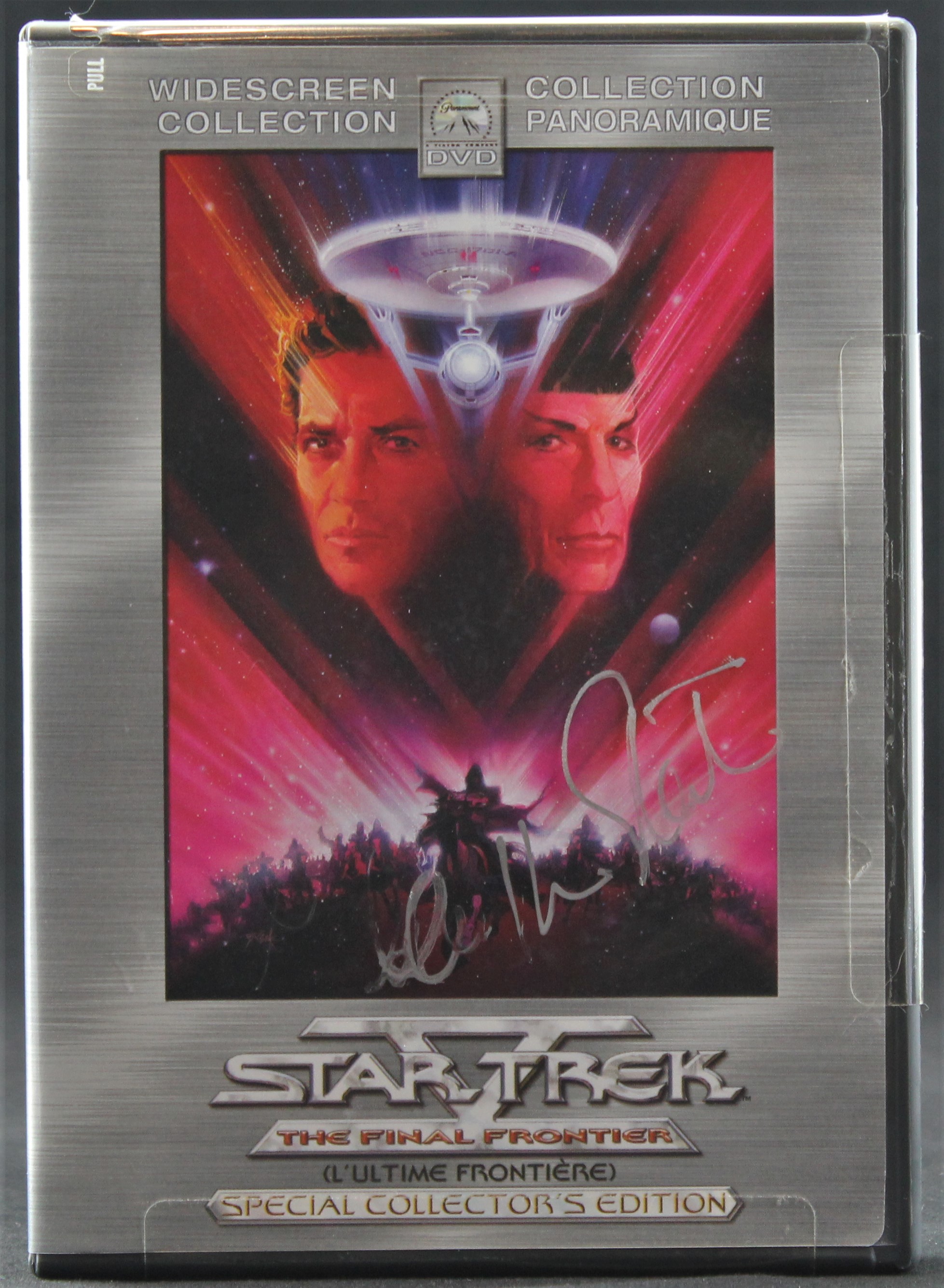
In 2007, Shatner was hired by Canadian telecom company Rogers to promote its then-impressive video phones. (Think FaceTime, but years before Apple did it.) You can see some of the press conference here; it’s a little cheesy. After the announcement, he did a series of TV interviews and then the print media got one-on-ones. By the time I sat down with him, it had been a long day and our talk was fairly brief. After we were done, I said “Would it be untoward of me to ask for an autograph?” He smiled and said “No, that would be quite toward. What have you got?” I pulled out the TOS season 1 DVD set and he signed it. It’s on my shelf beside Star Trek V and the Mego figure.
In those encounters, Shatner was gracious and accommodating to a journalist who was mixing a little fanboy time into his work day. And back to that Epson event: a PR person I know told me Shatner could not have been nicer to them on the day of the event and the evening before, when they took him out for dinner.
-
Download the most important Star Trek document

Gene Roddenberry’s 1964 pitch for his new show is arguably the most important Star Trek document ever. The pitch, usually referred to as Star Trek is…, was designed to sell the show to network executives and it’s an interesting look at Roddenberry’s earliest creative ideas.
The series is a great idea, Roddenberry said, because the universe contains so many story possibilities. He writes:
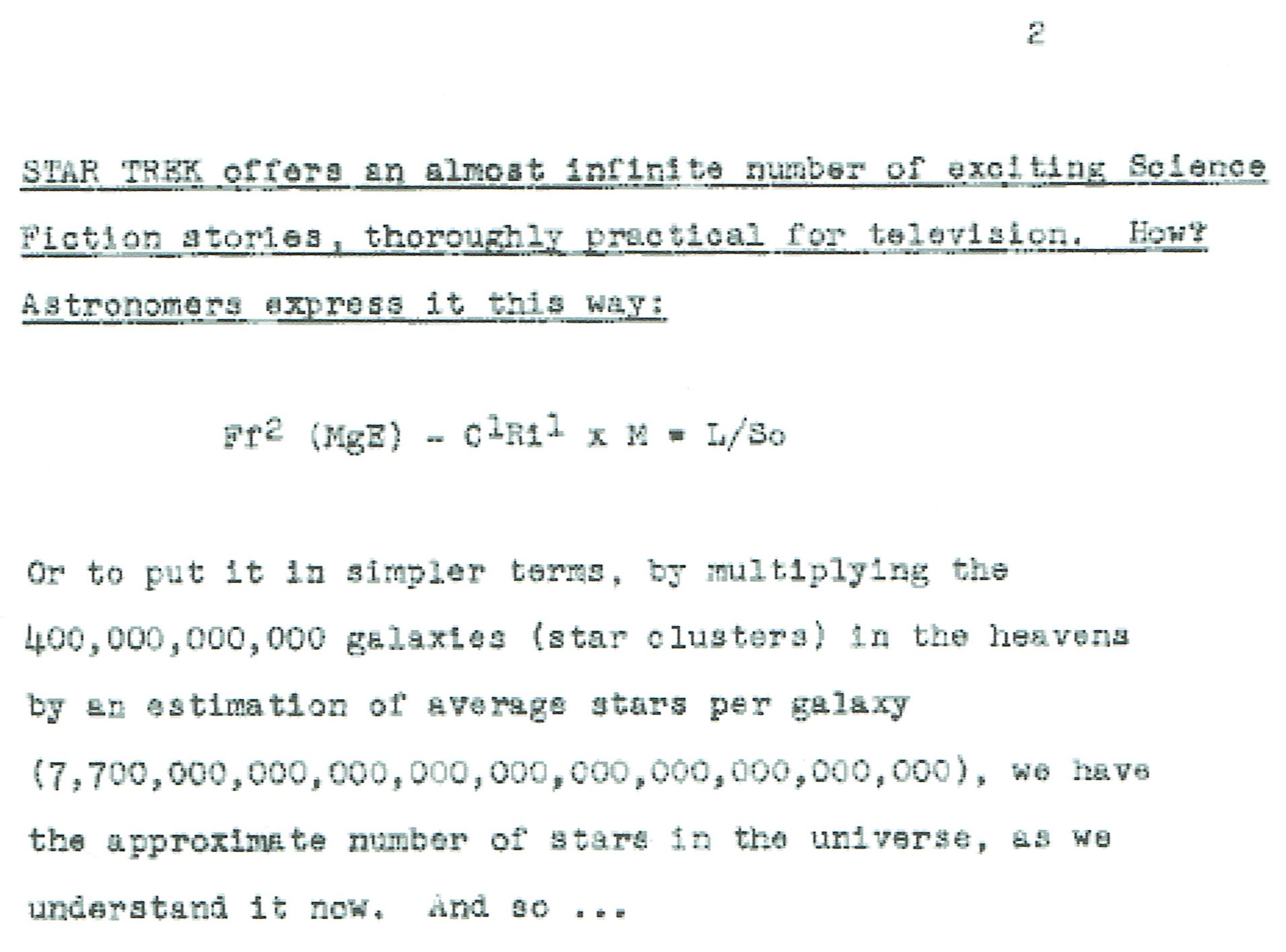
STAR TREK offers an almost infinite number of exciting Science Fiction stories, thoroughly practical for television. How? Astronomers express it this way:
Ff2 (MgE) – C1 Ri1 ・M = L/So
Roddenberry is referencing the Drake Equation, and states that the math proves there are “something like three million worlds with a chance of intelligent life and social evolution similar to our own.”
The Drake Equation is a real thing, but Roddenberry didn’t have the actual text handy, so he just made up the string above. It’s nonsensical; for example, C to the power of 1 is just C. No mathematician would write that.
Roddenberry’s take on the Drake Equation makes a brief appearance in Balance of Terror, although it is not named. Kirk, doubting his command acumen, asks McCoy “I look around that bridge, and I see the men waiting for me to make the next move. And Bones, what if I’m wrong?” The doctor replies,
In this galaxy, there’s a mathematical probability of three million Earth-type planets. And in all of the universe, three million million galaxies like this. And in all of that, and perhaps more, only one of each of us. Don’t destroy the one named Kirk.
Star Trek is… is also the first documented use of the “wagon-train” to the stars concept Roddenberry employed to sell the idea to execs familiar with westerns. According to Harlan Ellison, the wagon-train idea originated with Sam Peeples, who wrote the pilot that sold the show, Where No Man Has Gone Before. Roddenberry would use the phrase for many years.
The pitch also outlines the Parallel World’s concept, which posits that other planets would experience cultural and historical evolution similar to Earth’s. In practice, this meant Star Trek could cut costs by using existing sets and costumes from Roman, Grecian, Nazi and gangster productions, among others, as can be seen in Bread and Circuses, Who Mourns for Adonais? and Plato’s Stepchildren, Patterns for Force, and A Piece of the Action.
Also of note, the captain is Robert April, the ship is the SS Yorktown, and it is a Cruiser Class, rather than the Constitution Class the Enterprise became. (Although, of course, the Enterprise is actually a Starship Class ship, but that’s an argument for another post.) Oh, and the Yorktown can land on a planet, a feature denied the Enterprise.
Roddenberry also included many story ideas, and you can see the seeds of The Cage, Charlie X, A Piece of the Action, Mudd’s Women, Shore Leave, and The Man Trap.
Some ideas would resurface in TNG episodes. The Stranger, in which “an alien intelligence has made its way aboard with the aim of taking over the minds of key crew members — purpose, to use our Cruiser to attack a rival civilization,” sees life in both Power Play and Conundrum. Infection, in which a female crew member is surprised to discover she’s pregnant, is basically TNG’s The Child and, before then, was to be used for a Star Trek Phase II story in which Ilia becomes pregnant after the Enterprise passes near a nebula.
It’s perhaps good that two other ideas never saw the light of a soundstage. In The Coming, the crew meets a “disturbingly familiar man…condemned to crucifixion” in a story that would have upset the network censors and a portion of the viewing audience. And A Question of Cannibalism has the Enterprise discover a planet on which sentient “cow-like creatures” are raised for food. It’s a solid concept (recently used on Discovery) but that era’s special effects and the show’s budget would have given us intelligent cattle that looked silly.
If you’ve never read Star Trek is… or it’s just been a while, click the link to download a copy. It is a foundation document that helped sell Star Trek and create all that followed.
-
A fun fake: Flight Deck Officer certificate
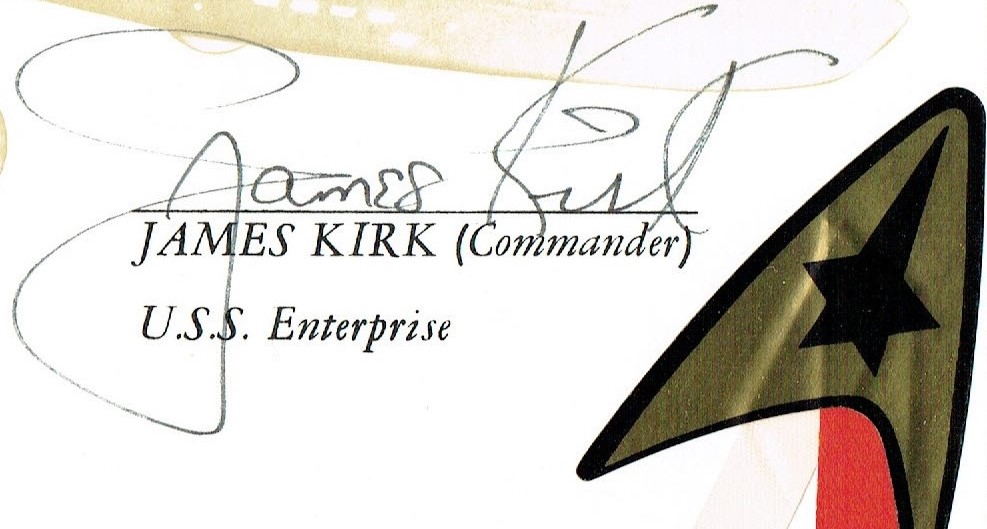
I bought a Flight Deck Officer certificate many years ago, when I was quite young, for a few dollars. I got it at a really great little sci-fi shop near Yonge and Bloor in Toronto. That store lasted only a couple of years, but that guy had some great items.
The certificate was produced by Lincoln Enterprises, according to this article on StarTrek.com.
Flight Deck Certificate – This 8 x 11” certificate came ‘signed’ by Captain Kirk and Gene Roddenberry and granted the bearer honorary membership to the USS Enterprise. Available in a standard blue version for $.50, or a deluxe version printed on parchment paper with insignia sticker and two-color ribbon for only $1.00.
I am pleased to say I have the deluxe version.

I think I knew, even back then, that the Gene Roddenberry signature was a fake, but I held out some hope. A number of years ago, Susan Sackett, Roddenberry’s assistant during the TNG years and the author of Inside Trek: My Secret Life with Star Trek Creator Gene Roddenberry, was kind enough to review a scan of my certificate and inform me that it is neither Roddenberry’s signature nor her own. It would have been cool if Sackett had been the one to sign my official welcome to “Star Trek duty.”
Collecting Trek
A TOS collection 40 years in the making

