-
Waiting on Walter. My lunchbox needs him
Star Trek’s 50th anniversary was in 2016. The premiere is celebrated September 8 for the day in 1966 when Willliam Shatner introduced the US viewing public to TOS with: “Captain’s log, stardate fifteen thirteen point one. Our position, orbiting planet M one hundred thirteen. On board the Enterprise, Mr. Spock, temporarily in command.”
Those words were actually heard first in Canada, a full two days earlier, because CTV had Star Trek on its schedule for Tuesdays instead of NBC’s Thursdays. Another bit of Man Trap trivia: the opening voiceover was added at the suggestion of associate producer Bob Justman. His memo to Gene Roddenberry read:
After viewing “THE MAN TRAP” with Sandy Courage this afternoon, I am of the opinion that we need Narration for the opening of the TEASER. The TEASER starts out with a shot of the Enterprise orbiting about a planet and then we DISSOLVE FROM that to an ESTABLISHING SHOT of planet surface and then from that to a shot of Kirk and his companions materializing on the surface of the planet. These three shots take quite a bit of time on the screen.
And since this is liable to be our first or second show on the air, I think it would be wise to establish where we are and what we are doing, over these opening shots. Therefore, feel free to write a lengthy narration for Captain Kirk. It could run as much as half a minute, if you wished it.
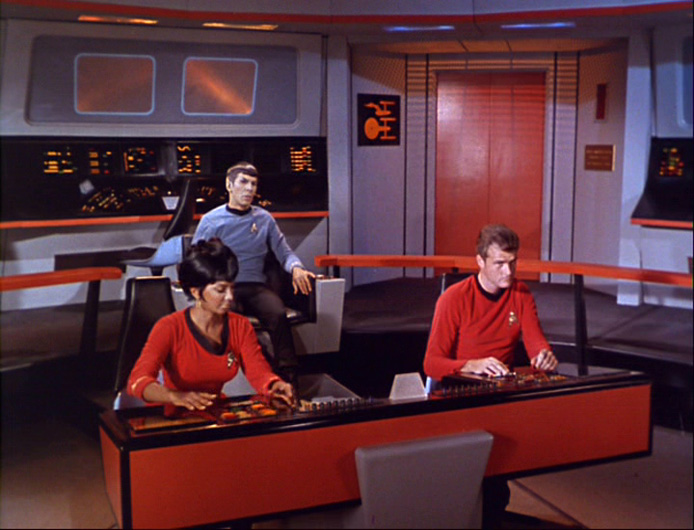
The bridge scene from The Naked Time Justman was right. Since our introduction to all of Star Trek is a view of Spock and the bridge crew, it is important to at least hear the voice of our hero. The opening footage of the bridge and of Spock in the command chair are outtakes from The Naked Time and What Are Little Girls Made Of?, respectively. For more detail on this, see this excellent Star Trek Fact Check article.
What does this have to do with a lunchbox?
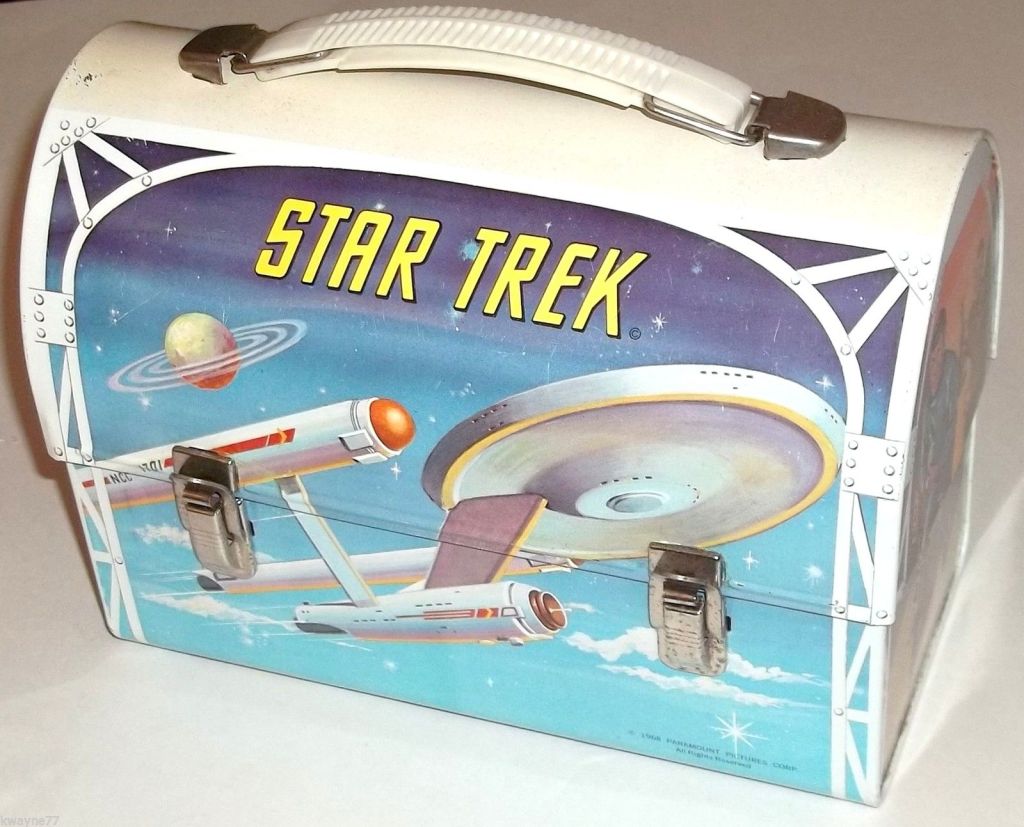
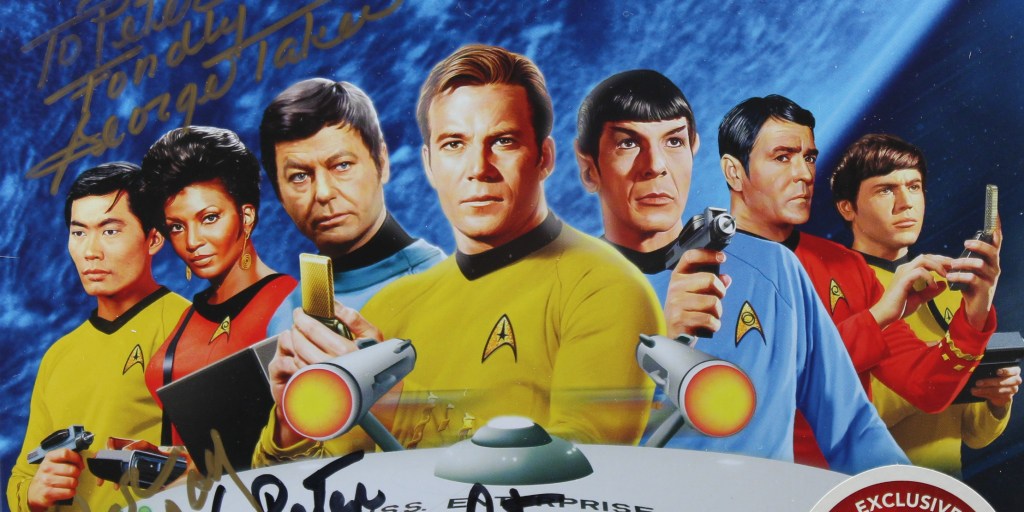
The 1968 Aladdin box My lunchbox is not the coveted 1968 Aladdin one — which I indeed covet but do not own — but rather a nice little 50th anniversary unit made for the 2016 Fan Expo convention. And this is where Walter Koenig finally enters this post. It is signed by all the main cast who are still with us: William Shatner, George Takei and Nichelle Nichols — but not Walter Koenig. The other three attended the 2016 Fan Expo but Koenig did not, and he has not visited southern Ontario since.
(Astute Star Trek fans will note that, in discussing the 50th anniversary, I am talking about the first season of TOS — and Koenig wasn’t in the cast yet. True, but Chekov was on board the Enterprise. Khan Noonien Singh told us so.)
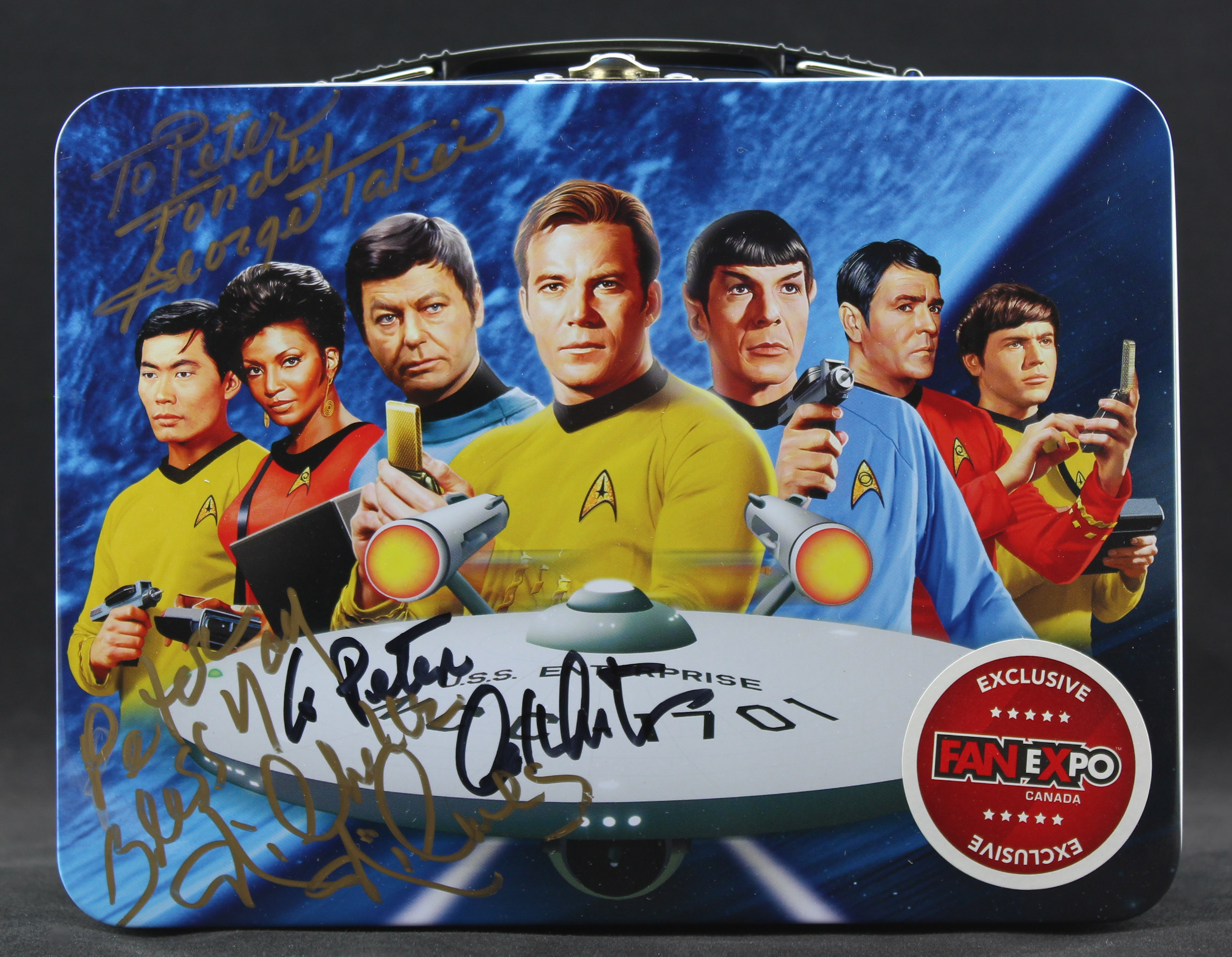
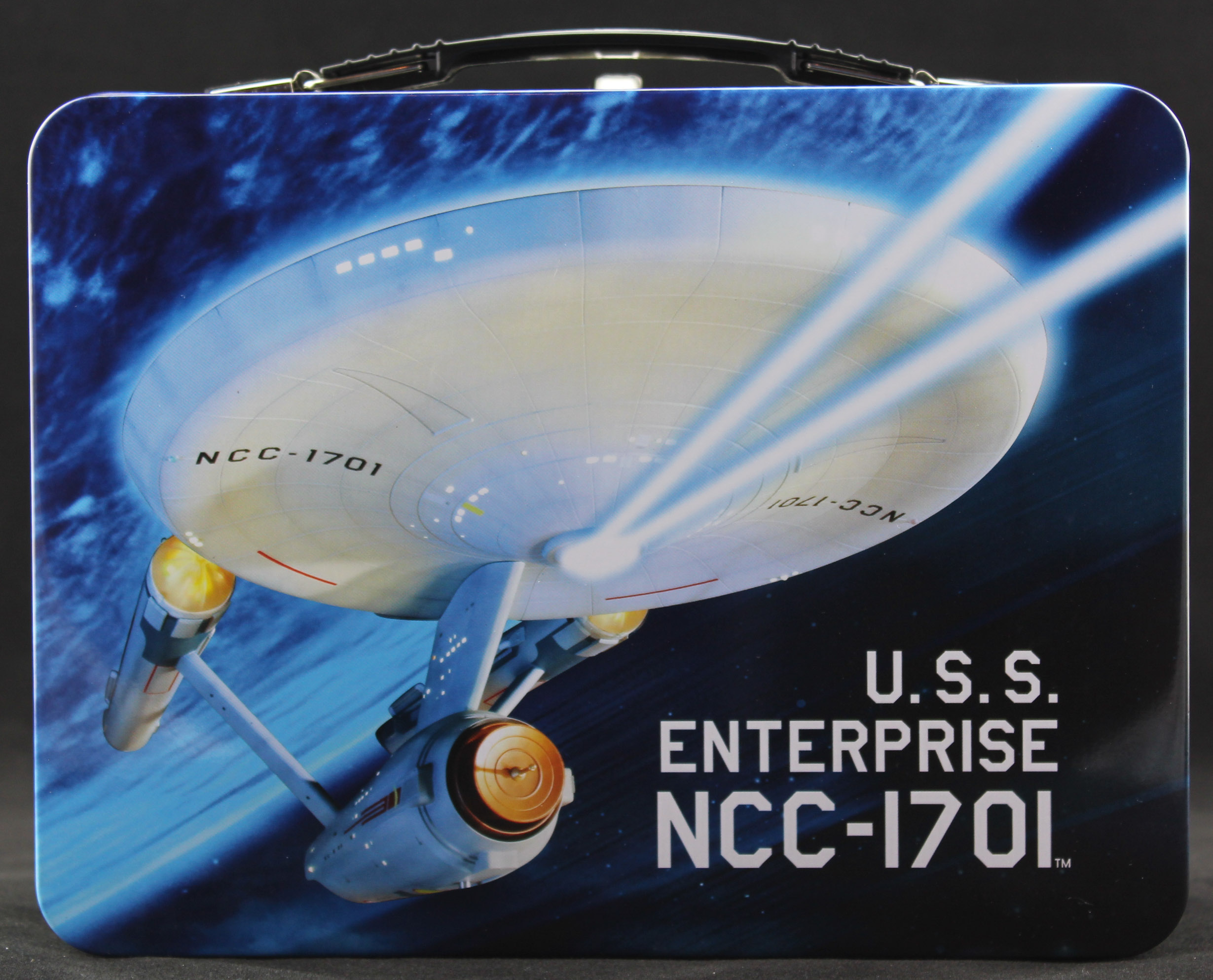
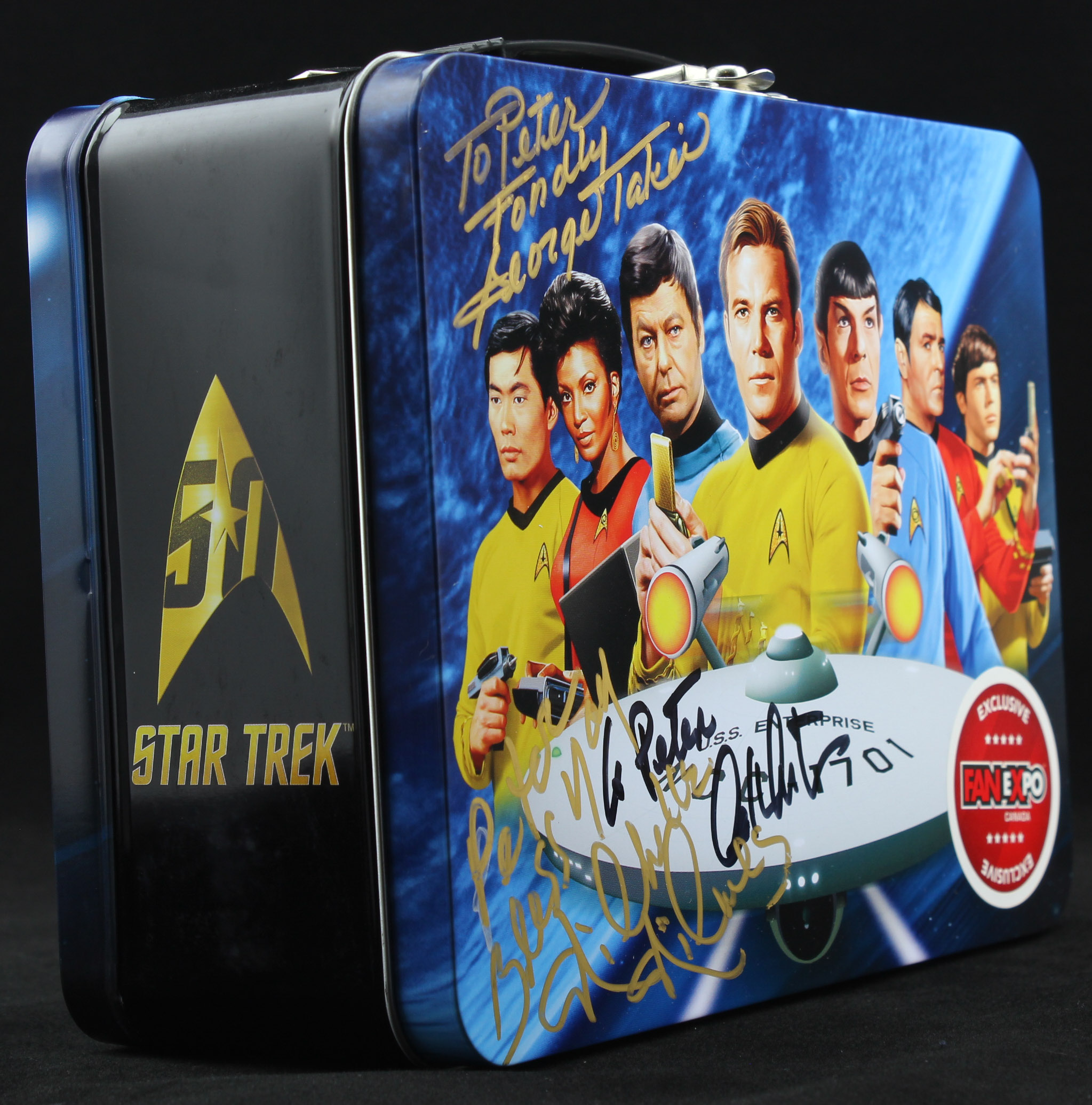
So, I am waiting for Koenig to visit my fair city or its environs. Without him, my lunchbox is incomplete. Of course, I have his autograph — nine times, including on a program from the Toronto Star Trek ’76 convention. Sadly, that one I did not get in person in 1976, but I really like it and will write about it soon.
So why am I bothered about the anniversary box? Well, first, because it is an anniversary item and should be signed by everyone who was still with us in 2016. Second, because collecting autographs is like eating potato chips: it’s hard to stop.
The lunchbox is in your court, Mr. Koenig. Please come to Toronto.
-
Inside Star Trek 6: bubble-wrap Klingons and warm Gorns

Inside Star Trek was a semi-official newsletter, published under the guidance of Gene Roddenberry. This connection gave the writers access to the actors, production crew and sets.
I own the complete run:
- Issues 1 to 12: Inside Star Trek, edited by Ruth Berman
- Issues 13 to 24: renamed Star Trektennial News, edited by Susan Sackett
- Issues 25 to 31: again called Inside Star Trek, edited by Virginia Yable
Here are highlights from issue 6, published December 1968.

What is a warm Gorn? I still don’t know
Reader Joe Rauner sent this question to the newsletter: What is a warm Gorn? Here is the complete reply:
The Gorns were hostile, reptilian aliens in “Arena.” By analogy, since they looked reptilian, they were thought of as cold-blooded. By analogy, a warm-blooded animal with a love for Star Trek is a warm Gorn. In particular, Gene Roddenberry’s assistant Rick Carter (the first man to introduce himself as a Gorn) is a warm Gorn.
So…I have no idea. I have never heard the term “warm Gorn” and Google comes up with nothing. If anyone knows what this is about, please tell me.
On a break from being Spock

In an interview with Leonard Nimoy, we learn his studio office consisted of two rooms crammed with books, scripts, magazines and letters, and that on the bathroom door he taped a poster of himself starring in Gore Vidal’s play Visit to a Small Planet. It ran at the Pheasant Run Playhouse in St. Charles, Illinois, in 1968, and before that was adapted for a movie starring Jerry Lewis.
That poster was probably this photo. Notice the Spock haircut.
Ruth Berman asked about two films Nimoy had done recently: Deathwatch and The Balcony. He noted that both were too grim to be played on network TV, but that they sometimes appeared in rep cinemas. Too grim is about right. Deathwatch, for example, opens with a hooded Nimoy being led to a small room in which he is permitted to walk in small circles for 55 minutes, rest for five, and then walk again for 55 minutes. Prison inmates walking in small rooms is the entire first 10 minutes, but the film gets a lot better as a series of flashbacks show us how the characters ended up in stir. Nimoy is actually quite good in the role.
The film also starred Michael Forest, a few years before he appeared as Apollo in Who Mourns for Adonais?
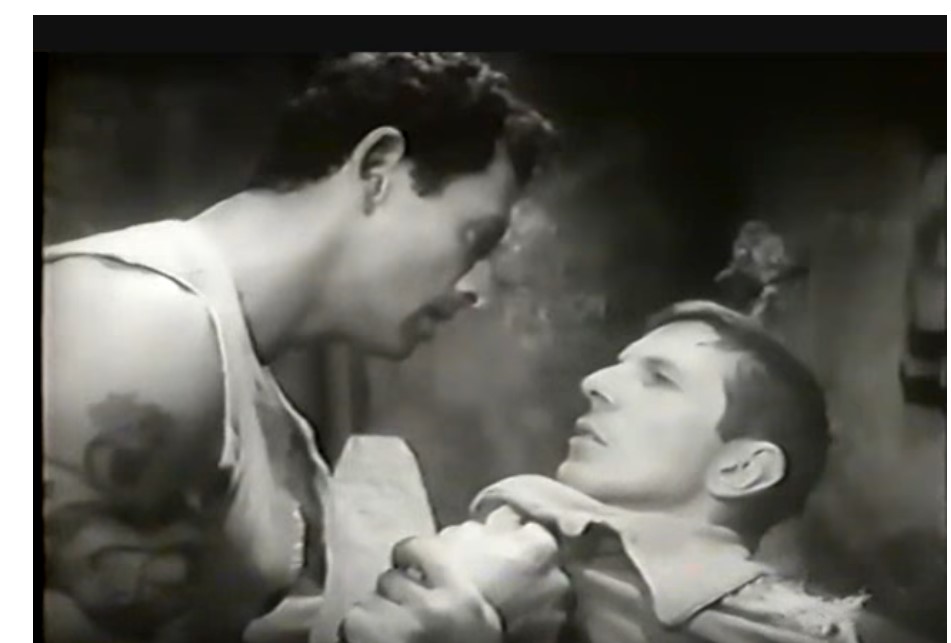
Forest and Nimoy in Deathwatch There is a good bit at the end of the interview, when Berman observes Nimoy stepping back into his role:
Nimoy pushed up the sleeve of his uniform, revealing, rather incongruously, a wrist-watch underneath. “I’m afraid I’m due back at the set,” he said. As he rose, his face and back straightened into Spock’s formality of bearing.
Bill Theiss on bubble-wrap Klingons and placemat Elasians
In D.C. Fontana’s article on Star Trek costume designer Bill Theiss, we learn he struggled to find work after serving in the navy during World War II. He designed neckties for a summer, did a stint as an artist in the advertising department at Universal, moved to the wardrobe department at CBS, worked on two movies in Europe, and then landed a job as a designer on Blake Edwards’ The Pink Panther.

Theiss and Susan Oliver, The Cage After some time in wardrobe at ABC, Theiss worked on The World of Ray Bradbury, which brought him to the attention of Fontana. They had first met at Universal and, based on this job, she recommended that Roddenberry hire him for The Cage. He then worked on a bunch of other projects in the eight months before Star Trek began its regular production schedule with Where No Man Has Gone Before.
On Star Trek, Theiss said that one of the biggest challenges is “coming up with designs that are futuristic, because in reality they are never futuristic” as he is “limited by fabrics and materials [and] must try to find design devices which spell out the future for us here and now.”
I knew the Elasian guards from Elaan of Troyius were clothed partly in placemats and that Klingon costumes employed bubble wrap, but I had always assumed those were cost-saving choices. Theiss had a far more artistic explanation:
My main approach for turning contemporary fabrics into futuristic materials and fabrics is to employ things out of context. This device can take a number of forms. One is to use a material designed for one purpose for something totally different. For example, plastic placemats became Neo-Renaissance body armor in Elaan of Troyius. In another case, I sprayed fabrics with metallic color using geometric lace as a stencil. That was on A Taste of Armageddon, where I also used upholstery fabrics on the men’s costumes. Part of the Klingon uniform is a plastic packing material called Sealed Air.

A placematted Kryton And Theiss’ famous predilection for showing a lot of skin? That too had motivation beyond the obvious:
Clothes since the mid-nineteenth century have become less and less bulky, cumbersome, protective (both physically and morally) and headed faster and faster apparently into complete nudity. This does not mean clothes of the future will be non-existent, or that people in the future will be nude… I can only deduce the future will bring literally thousands of style changes, and nudity as one of them.

Michael Forest and Leslie Parrish
Inside Star Trek is an invaluable source of early Star Trek voices. I’ll cover each issue. Click here to read other articles in this series. -
Harlan Ellison put a drug dealer on the Enterprise. That was not the biggest script problem
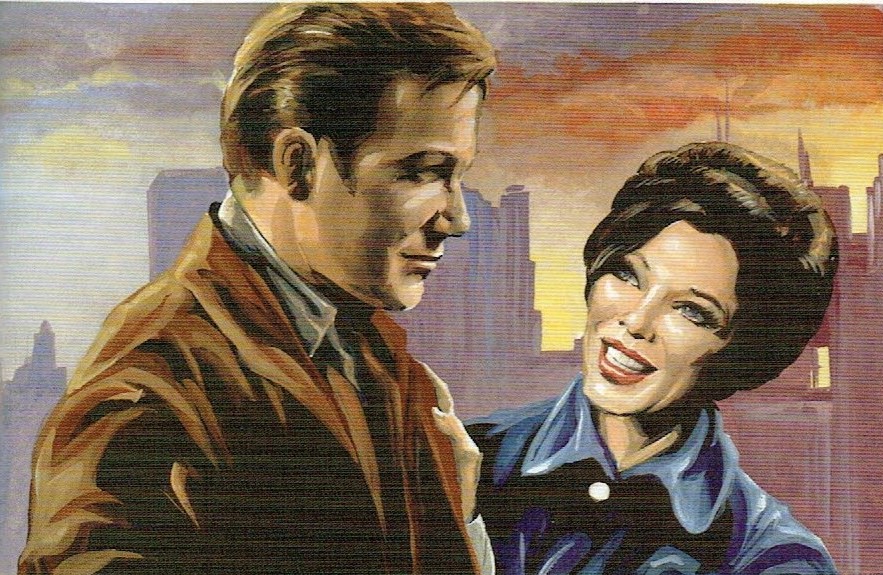
Harlan Ellison submitted his The City on the Edge of Forever story outline in March of 1966. Two revised outlines followed in May, with the first-draft script arriving in June, followed by revised versions that month and again in August. Story consultant Steven Carabatsos then did a script rewrite, Ellison did another draft in December, and then Gene Coon, D.C. Fontana and Gene Roddenberry all completed rewrites and polishes through February 1967 before the cameras started rolling early that same month.
Why so many writers and rewrites? Because the script, while brilliant, was also problematic. The obvious issue was that one crew member is a drug dealer and at least one other is an addict. The addict, stoned on duty, almost destroys the Enterprise. This was a much darker vision of the future than Roddenberry wanted, and he was right to reject Ellison’s versions of the story.
But this hurdle — scripts that didn’t get the tone and characters right — was a routine occurrence, especially early in the series. Freelance writers could not be expected to understand the nuances of the shows they served. But Ellison’s work contained a much more fundamental problem, one that is surprising for such a gifted writer: the prime mover is a character we don’t know and don’t like, and therefore don’t care about.
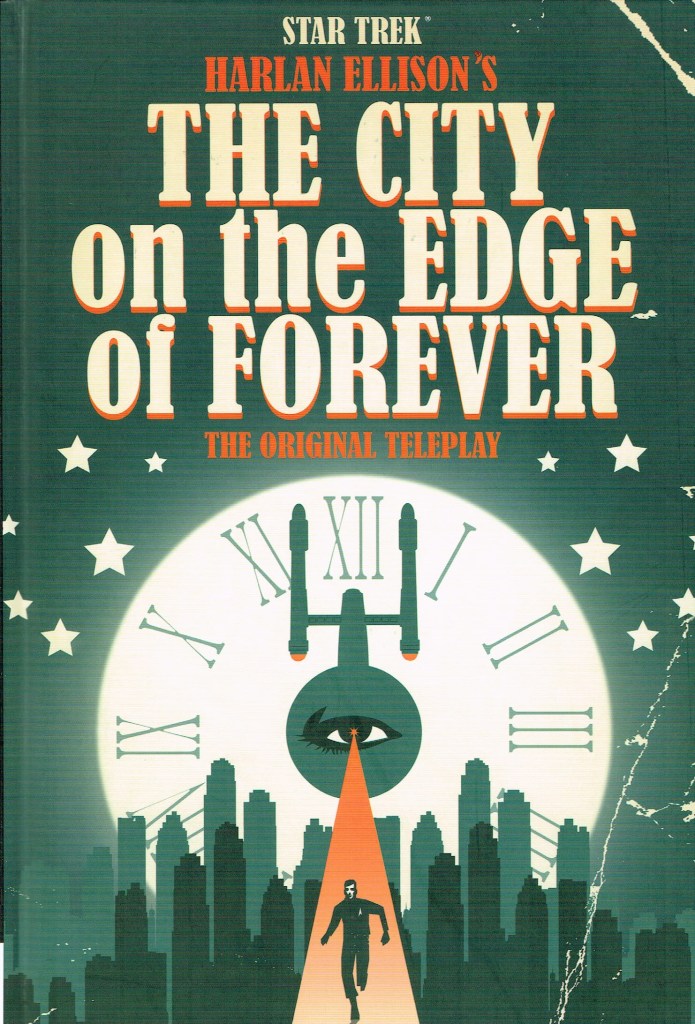
This article is about IDW’s beautiful graphic novel of Ellison’s teleplay. It is an almost word-for-word retelling of his script, and one Ellison himself endorsed, writing in the introduction “I want you to believe as deeply as you believe in anything that I am ‘over the moon’ at what has been done with my original teleplay.”
Someday I will write a longer piece about Ellison’s own book on the episode.
The story
Ellison’s story underwent some changes as it progressed, but here are the basics. I will not spoil the ending of the story.
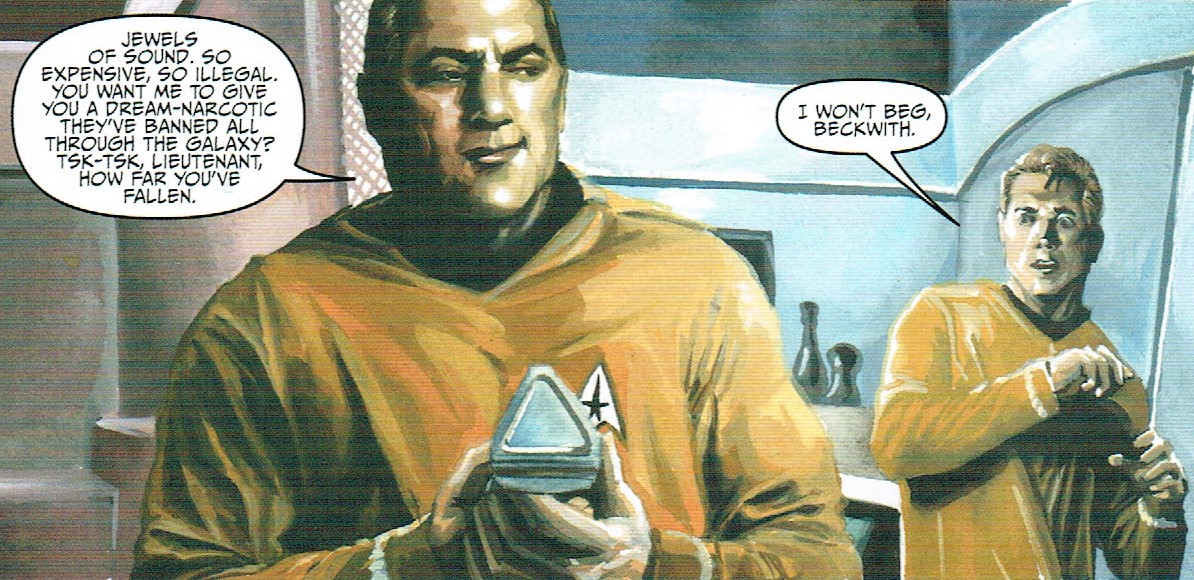
The episode opens with Beckwith, a hulking command-division officer who deals an illicit drug called The Jewels of Sound. An addicted lieutenant named LeBeque is begging the dealer for a hit. Beckwith will give him a dose, but in exchange he wants “to know about that planet out there, what the log says about valuable commodities. I’ll want a landfall pass, and I want you to cover for me when I trade with the natives.”
LeBeque shoots back, “After the slaughter you caused on Harper Five, you’ll do it again?” He says all Beckwith wants is to “cheat aliens, get them hooked on illegal narcotics, and steal what they could trade for cultural advances.”
Again, it’s a much darker future than Roddenberry wanted, more Breaking Bad than Star Trek.
LeBeque gets his hit and is soon being admonished by Spock for mishandling the bridge controls and almost wrecking the ship. “You’ll blow the entire drive,” Spock says.
LeBeque tells Beckwith he’s decided to turn in the dealer, so Beckwith kills him and then clubs a guard outside the transporter room before beaming down to the planet.
In a captain’s log, we learn the Enterprise has been investigating strange radiation that has the ship’s chronometers running backwards. A landing party pursues Beckwith and discovers a surreal city in the distance, which Kirk calls “A city on the edge of forever.”
Kirk then derides time travel using words that must have horrified Roddenberry: “I always thought stories about time machines were the drunkstuff of lab technicians when they’ve had too much pure grain to drink.”
Beckwith then jumps through the portal and changes history. I will end the summary there, so as not to spoil the story. It really is worth reading.
What Ellison got wrong
The complete lack of humour. When Kirk and Spock arrive in New York, they encounter a virulent racist standing on a soapbox ranting about “the alien filth that pollutes our fine country.” The mob attacks Spock and the two flee to the safety of a nearby basement. Missing is the funny televised scene of Kirk and Spock encountering the policeman after they snatch some pants and shirts. Ellison’s work is unrelentingly grim, while the screen version had moments of humor that improved the viewing experience and are true to life. Even in bad times, there are bits of levity.

The drug-dealer story line isn’t necessary. The only purpose served by placing a drug dealer and mass murderer on the Enterprise is to create a character desperate and panicked enough to seek escape by leaping through a time portal. The drugs themselves and the presence of addicted crew members have no real bearing on the rest of the story.
The rewritten script instead gives this antagonist role to McCoy, in a plot much more in keeping with the Star Trek universe. McCoy does his duty and saves Sulu’s life. A fluke caused by a lurching ship sets in motion the same crisis as in Ellison’s script, but without the murders and destruction.
The end lacks punch. The episode consistently ranked as Star Trek’s best closes with a gut blow. That punch lands with far less force in the graphic novel. I won’t give away the ending here, saying only that our hero is less heroic in this version.
We don’t care about Beckwith. But the biggest problem with the original story — and one that is surprising coming from such a talented writer — is that we feel no connection to the story’s prime mover. Beckwith is a two-dimensional villain. He all-but twirls his mustache and ties Uhura to the train tracks. He is not interesting.
By contrast, the filmed version delivers one of the strongest episodes for the TOS trinity of Kirk, Spock and McCoy. Kirk and Spock are worried about McCoy, and we share that concern because we like him. It is interesting to watch them deal with Depression-era New York. It is frustrating to see the trio almost run into each other as the currents of time draw them together. And we share their joy when they are finally reunited. We are engaged by the characters. Ellison’s version has us spend a lot of time with a guy we don’t care about, but the screened version uses that time to develop McCoy’s character and deepen the bond with his friends.
What Ellison got right
There is a lot to love in Ellison’s vision.
Our crew doesn’t ignore McCoy’s pending death. It bugs me every time I watch this episode that the crew rushes down to the planet to find McCoy before the drug overdose kills him but they then immediately get distracted by the Guardian and forget about the doctor. McCoy could easily have died while they chatted with the big talking circle. Ellison wrote the same basic sequence but it makes more sense absent the pending demise of a main character.
Janice is a badass. Ellison created a fantastic role for Janice Rand. When Beckwith locks the doors to the transporter room, Kirk orders Rand to melt them with a phaser rifle. On the planet, Beckwith grabs her from behind and she sends a sharp elbow into his midriff. And after Beckwith leaps through the portal, the crew beams up to find that the Enterprise has been replaced by the pirate ship Condor. Rand beats up some bad guys and then Kirk puts her in charge of the security squad with orders to defend the room. “Yeoman Rand…can you hold this chamber?” Rand replies “I can, sir.”


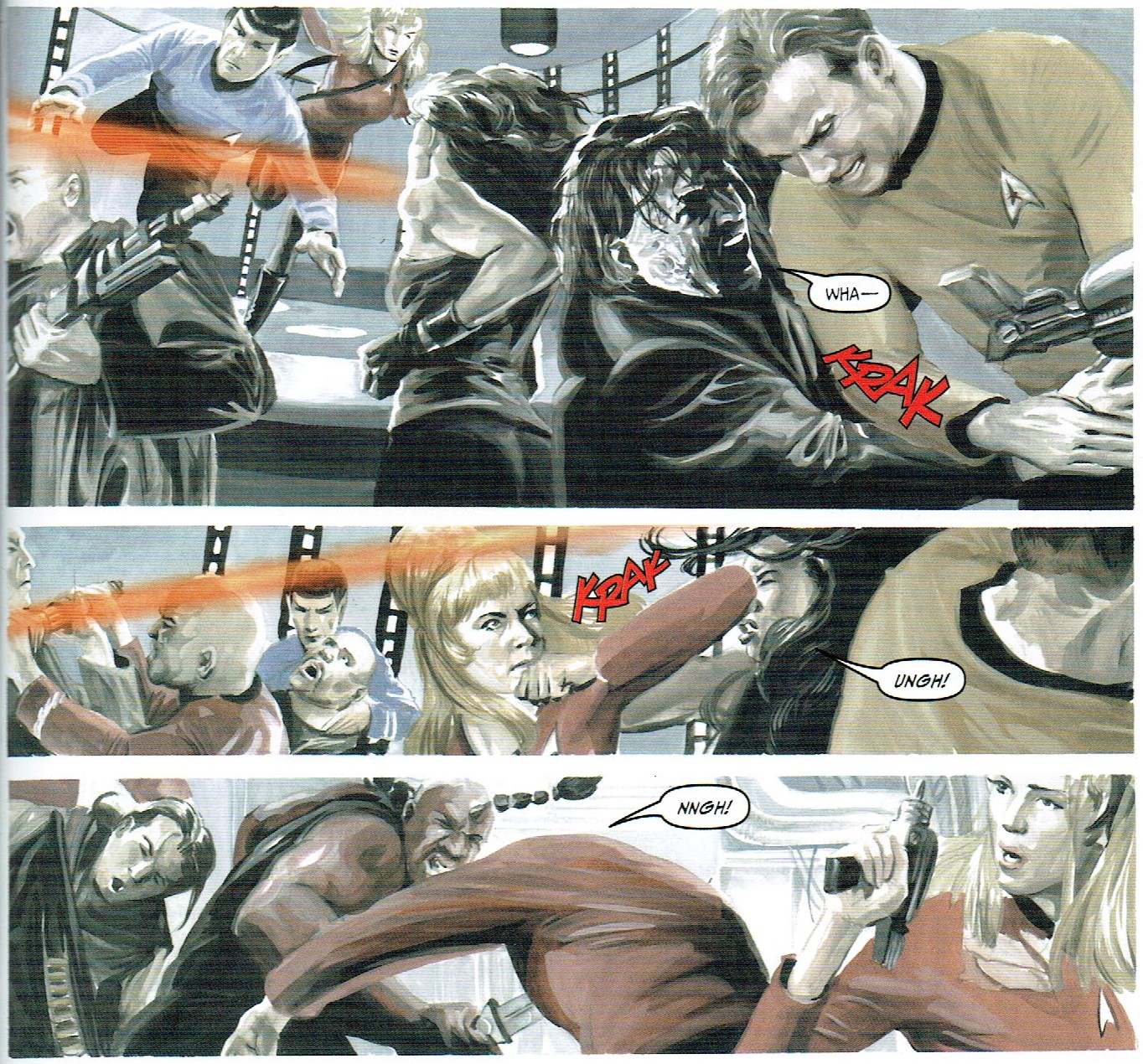

It’s a role that, in the ’60s, would normally have been filled by some large guy. Ellison’s take is progressive and refreshing and Grace Lee Whitney would have had a wonderful time playing the part.
(It’s interesting to note that Ellison had a relationship with Whitney during the production of season one, so it’s possible he was following in Roddenberry’s footsteps: writing a good role for his girlfriend. But even if true, for viewers it would still have been a breakthrough episode for one of the women of TOS.)
Spock gets some great dialogue. Ellison’s dialogue is often inspired. There is, for example, a lovely moment in the graphic novel; it first appeared in Ellison’s initial script, which he called the Writer’s Work Draft, and was also present in the June 3, 1966, teleplay he published in his book on the episode. Whereas the aired episode ends with the best closing line of any TOS episode, Kirk’s despaired “Let’s get the hell out of here,” Ellison’s version has Kirk and Spock return to the Enterprise. Kirk is anguished over the death of Edith, and the episode closes with Spock comforting his friend:
No woman was ever loved as much, Jim. Because no woman was ever offered the universe for love.
That’s beautiful and should have been worked into the screen version somewhere.
Working with this production team. The graphic novel is gorgeous. As Ellison writes in the introduction, “I could not have pictured it as perfect as it has turned out.” Much of the credit must go to artist J.K Woodward, who produced stunning images.

Needlessly dark
Overall, though, Ellison’s script is needlessly dark and not consistent with the future Star Trek presented. Ellison, always voluble in his criticism of how Roddenberry handled his work, wrote in the introduction to this book that “there have been many who have excused what was done to my script by saying, erroneously, that the technology was not available fifty years ago to approximate what I had put on the page.” That was surely a concern at the time, but that analysis ignores the story weaknesses and the misfire on tone.
I am a fan of dystopian fiction, starting with A Canticle for Leibowitz in high school and on to recent TV like The Walking Dead, Breaking Bad and The Handmaid’s Tale. But we don’t need Star Trek to be dark. We need Star Trek to be inspirational. There is already precious little out there for those who crave an optimistic view of the future. Roddenberry and the creative crew were right to recognize the brilliant core of Ellison’s idea, and right to rework it into a Star Trek episode.
-
Inside Star Trek 5: James Doohan said “warp drive” way back in 1953, following a change in career plans

Inside Star Trek was a semi-official newsletter, published under the guidance of Gene Roddenberry. This connection gave the writers access to the actors, production crew and sets.
I own the complete run:
- Issues 1 to 12: Inside Star Trek, edited by Ruth Berman
- Issues 13 to 24: renamed Star Trektennial News, edited by Susan Sackett
- Issues 25 to 31: again called Inside Star Trek, edited by Virginia Yable
Here are highlights from issue 5, published November 1968.
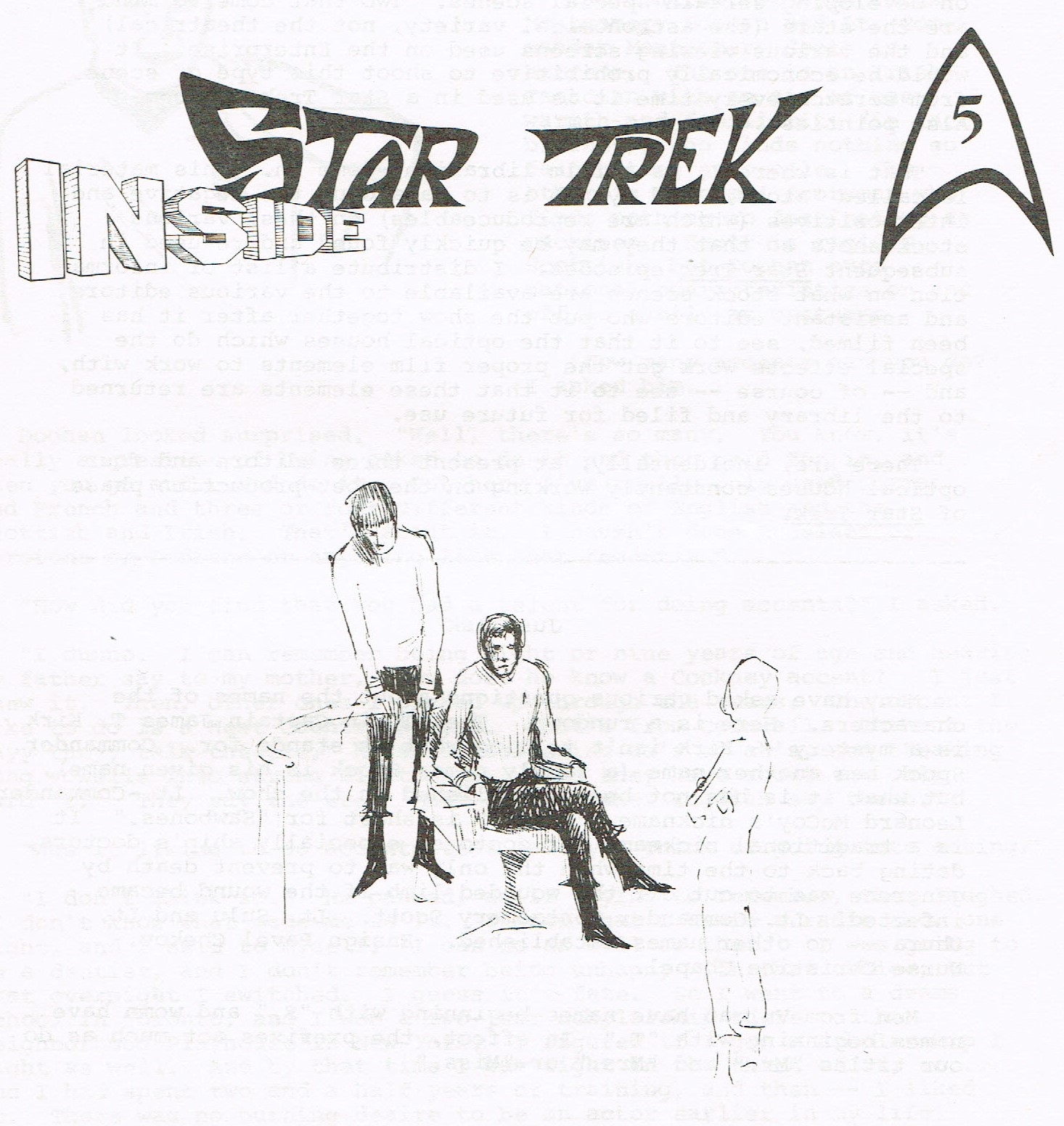
No single topic occupies a greater portion of my brain than does Star Trek the original series, and yet Inside Star Trek always teaches me something new.
Dr. Jimmy Doohan
Acting was not a flame burning within the heart of James Doohan. He sort of fell into it and, if that happy accident hadn’t happened, he was all set to be a dentist.
He told Ruth Berman:
“I was going to be a dentist, and I don’t remember being unhappy with that choice. [Then] I heard a radio show one night, and I said to myself, ‘I can do as well as that.’ So I went to a drama school in Toronto, and I won a two-year scholarship there to the Neighborhood Playhouse in New York.
“There was no burning desire to be an actor earlier in my life. It was just like fate said ‘Go on, you’re going to be an actor and that’s that.’”
After the scholarship ended, Doohan stayed at the school as a teacher for almost three years and in New York for another 18 months after that, before returning to Toronto for Christmas. On that visit he took a few small acting roles and then “before I knew it, there were so many jobs it would have been silly to move.”
He lived in Toronto for about eight years and then decided “I had gone as far as it was possible to go in Canada, and I needed new horizons.” He moved to LA and was cast in Star Trek, but he told Berman that Scotty was not his first ongoing part. “I was on a series in Canada that ran for a year.”
Space Command
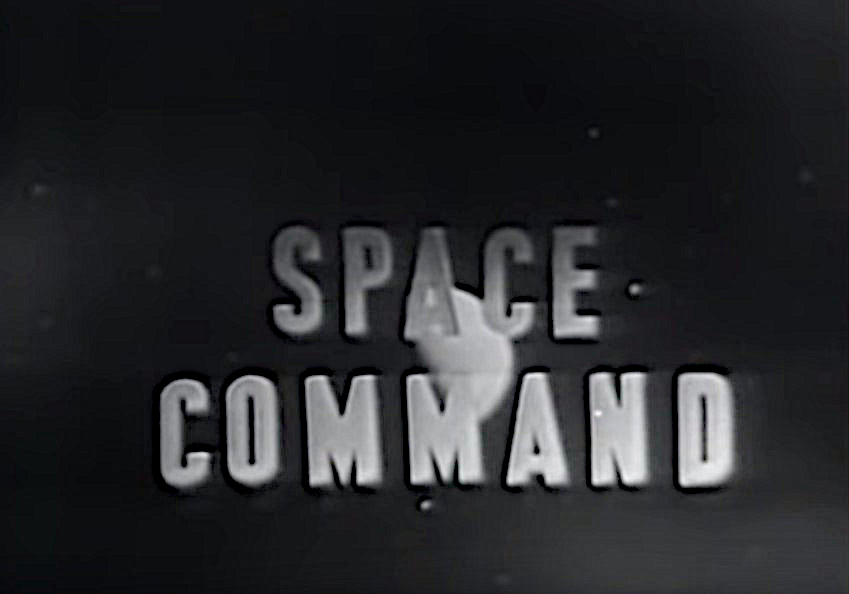

That series was Space Command, a kids’ show set on an exploratory rocket. A full season was produced and aired in 1953 and 1954 by Canada’s CBC network, but only one episode exists today. Luckily, it is on YouTube. In the episode, rocketship XSW-1 is exploring space “26 thousand billion miles” from Earth. That’s 26 trillion miles or about 4.4 light years.
The episode is worth watching just to see Doohan contend with the weird bridge design that put the ship’s controls to the right of his huge chair, forcing him to twist awkwardly to make adjustments, often reaching down between the chair and the console.
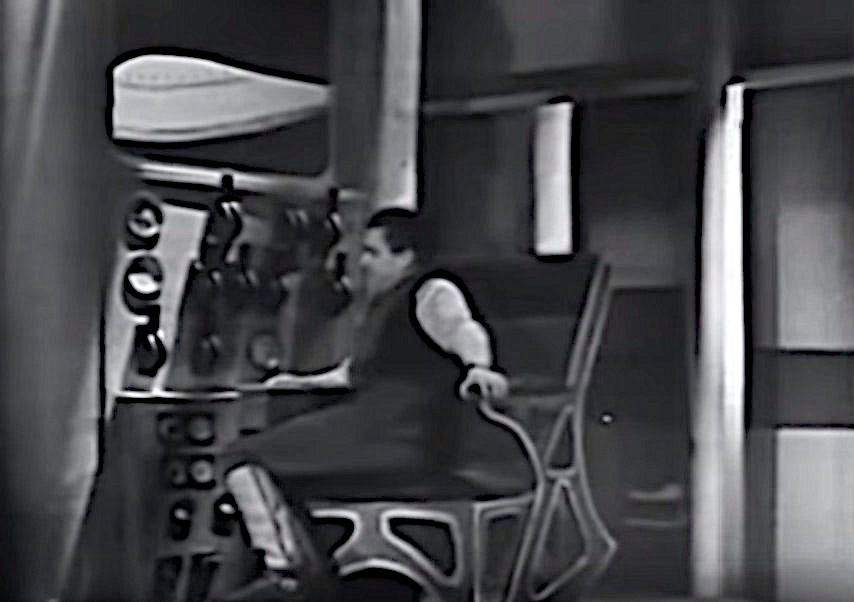

Doohan plays crew member Phil Mitchell, and for TOS fans the best line in the episode is Mitchell’s analysis of a saucer-shaped alien spacecraft:

Look at the shape. That must have come from a planet with a thin atmosphere. And look, there’s no jet exhaust. That can only mean some sort of space warp drive or, better still, anti-gravity.
The concept of warp drive was apparently created by John W. Campbell in Islands of Space, which first appeared in Amazing Stories Quarterly in 1931, but it is still fun to hear Doohan say it in 1953. The Earth rocket XSW-1 is, of course, shown expelling a thick cloud of slowly rising exhaust smoke as it powers through space.

Doohan’s Phil Mitchell, asleep in his giant chair Many online sources state that one episode of Space Command featured guest star William Shatner, and Doohan confirms that in the article, stating Shatner traveled to Toronto from Montreal just to film the show. It seems no one will ever again see that historic first appearance together.
On playing Scotty
Doohan said Scotty was a weak role in the beginning.
It took a long time to build up the character. They didn’t really care about him in the first year. They knew the ship had to have an engineer, because ships don’t just run themselves, but…it’s a one-dimensional character, nothing human. The second season they started to get more in.
The honesty of Inside Star Trek is refreshing. As a semi-official newsletter, I expected a deferential tone, but here is Doohan saying Scotty initially had “nothing human” to do.
Introducing Ed Cotter, film librarian
I believe I have read every book on the production of Star Trek, but I was not familiar with the job of film librarian. A small essay written by librarian Ed Cotter set me right on this important job.
Cotter tells us that thousands of dollars were spent creating a few special scenes, notably the moving star field shown on the main viewer and the content routinely displayed on the bridge monitors.
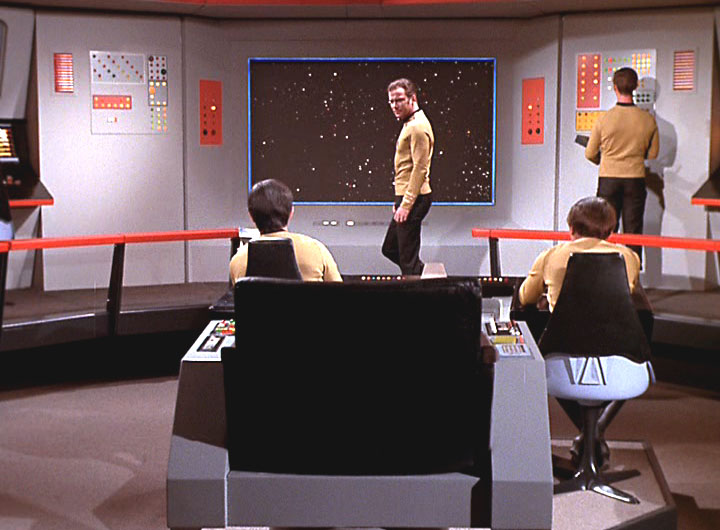
Cotter’s work on display in Spock’s Brain (TrekCore) This material is called ‘stock’ and my job is to catalog the negatives and the interpositives (which are reproduceables)…so that they may be quickly found and reused in subsequent Star Trek episodes. I distribute a list of information on what stock scenes are available to the various editors and assistant editors who put the show together after it has been filmed, see to it that the optical houses which do the special effects work get the proper film elements to work with, and — of course — see to it that these elements are returned to the library and filed for future use.
He adds that, at time of writing, Star Trek had three editors and four optical houses constantly working on the show’s post production.
Memory Alpha does not have an article about Cotter.
Inside Star Trek is an invaluable source of early Star Trek voices. I’ll cover each issue. Click here to read other articles in this series.
-
The Ebony magazine that got me a few minutes with Nichelle Nichols

I was talking Star Trek autographs recently with my friend Robert J. Sawyer. Rob is a lifelong original-series fan and has an extensive Star Trek collection, but he’s never collected autographs. He is an accomplished novelist and he follows the standard practice of his profession: you sign autographs freely for people who value your work, although he understands why many celebrities do charge.
I didn’t collect autographs early on. Paying someone for a signature seemed a waste of my meagre funds. But I watched the fans at one of the first conventions I attended and realized those dollars weren’t really buying the signature. Instead, the money bought a brief meeting with someone who was there, on the set during those few years in the ’60s. The autograph you take home is a reminder of that meeting.
That conversation with Rob got me thinking about my Ebony magazine from January of 1967, because of the pleasant chat I had with Nichelle Nichols as she signed it.

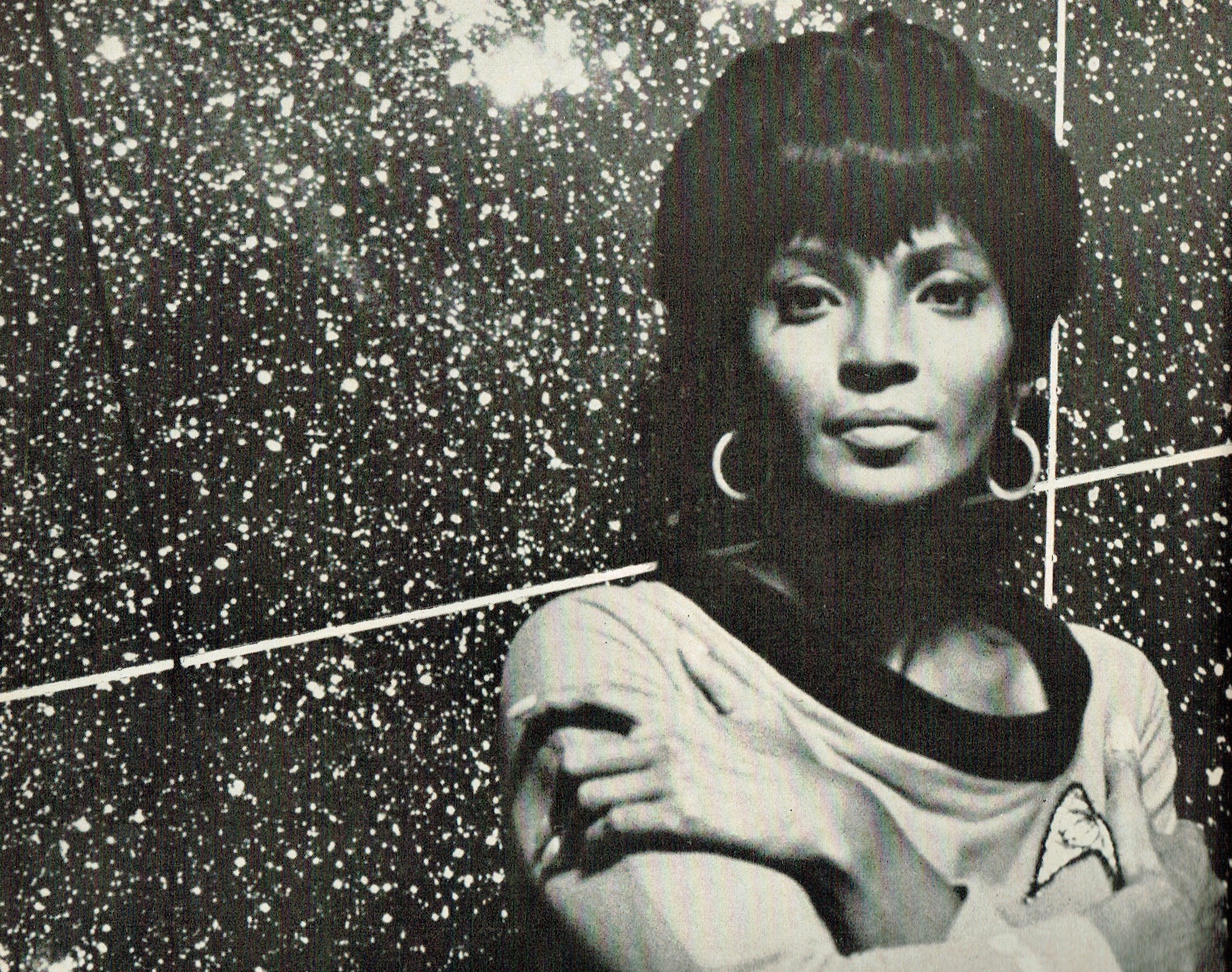
Ebony debuted in 1945, and it was an important expression of the black experience in America. That meant Nichols was thrilled to be the cover story in 1967 but, for today’s readers, the word choices and focus are outdated. For example:
The voice belongs to pretty Los Angeles actress Nichelle Nichols — or, as she is known aboard the Enterprise on the new Thursday night NBC-TV color series Star Trek, Lieutenant Uhura and, according to present-day Earth records, the first Negro astronaut, a triumph of modern-day TV over modern-day NASA.
It also tells us: “The communication officer she portrays was, in the pilot film, played by a man. Anticipating the future, however, planners decided to give the role to a woman, and a Negro at that.” And the article focuses far more on her beauty than her career or experience on the show. One photo caption reads: “In good shape for the part, the actress meets the dimensions both in talent and eye appeal.”
There is also this sentiment attributed to production executive Herb Solow: Nichols was a bonus for Star Trek as “we had hoped to (just) find a shapely broad.”

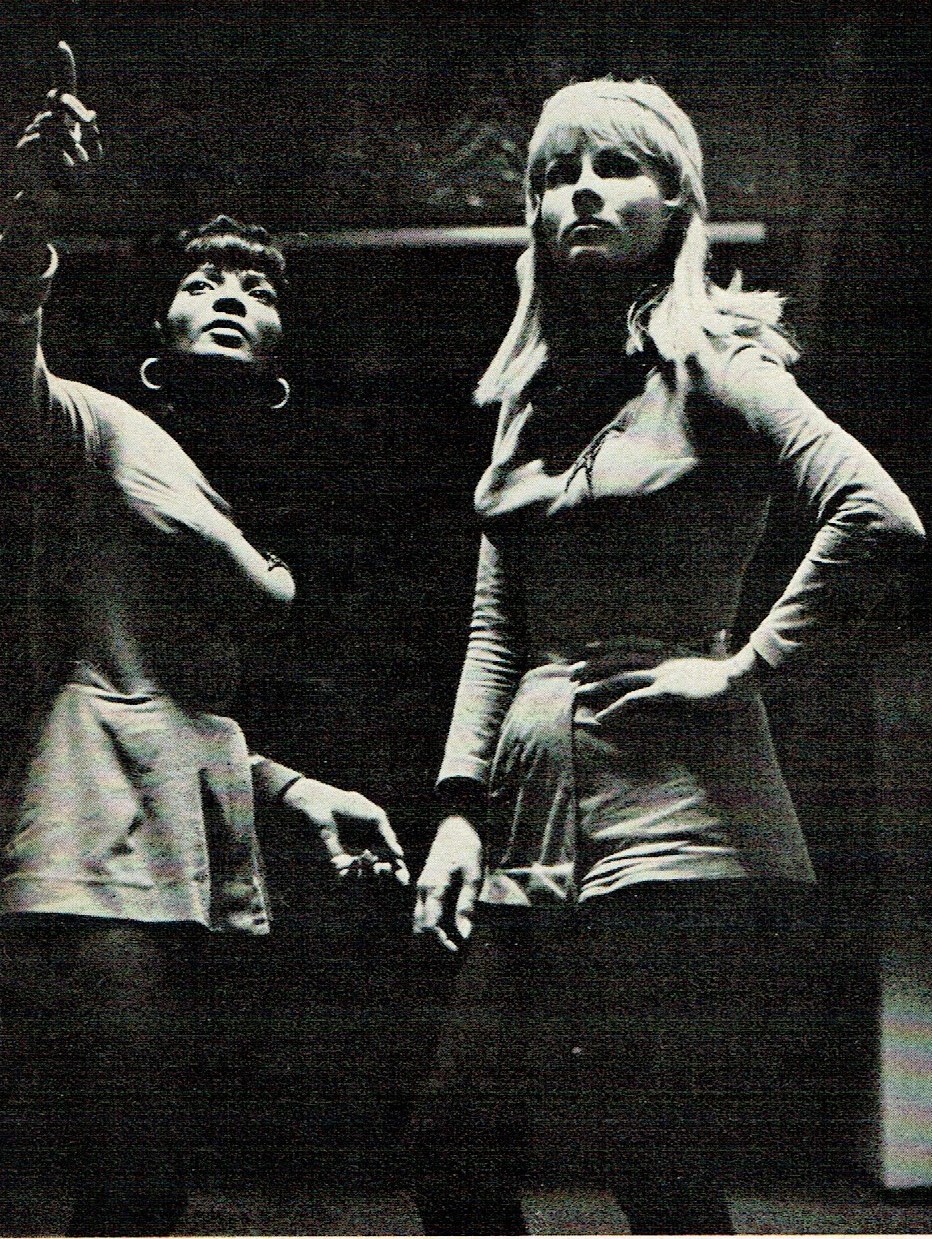

That language was, presumably, acceptable in the ’60s, and yet it actually underscores how important this role was for representation of women and black people. Uhura was an intelligent, capable professional. An oft-heard Whoopi Goldberg anecdote is testimony to this. On StarTrek.com, the multi-award-winning entertainer said:
When I was nine years old, Star Trek came on. I looked at it and I went screaming through the house, ‘Come here, mum, everybody, come quick, come quick, there’s a black lady on television and she ain’t no maid!’ I knew right then and there I could be anything I wanted to be.
That is a remarkable statement about the power of entertainment to inspire people and change society. It is also a sad reminder that only recently has that same validation begun to arrive on-screen for transgender and other marginalized peoples.
My few minutes with Nichelle
Nichelle Nichols ran a fund-raiser for the people of Japan in early 2011, following the earthquake and tsunami. She mailed out signed 8x10s in exchange for a donation of $50 or more to any legitimate related charity. That photo is currently hanging on my wall.

When I learned she would be at Fan Expo in Toronto that same summer, I debated getting her autograph again. I had her signature on other 8x10s, the cast photo from The Score Board, a restaurant menu purchased from TNG script coordinator Eric Stillwell (I’ll write about that one day) and a few other items.
But then I remembered her telling the crowd at a previous convention how important that Ebony magazine appearance had been. So I found a copy.
“Oh, Nichelle is going to love this,” her assistant said when I reached the front of the line at Fan Expo. And she did. Already smiling as she finished with the fan ahead of me, she beamed when she saw the Ebony.
My copy was in much better condition than the one she had, she said. So, of course, I immediately tried to give her mine. “I couldn’t take it,” she said, and I flashed on Uhura’s reply to Cyrano Jones’ offer of a free tribble: “Oh, I couldn’t…could I?”
But no, she refused, even though my offer was sincere. She signed the cover and told me that, even though her show business career started at 16, she had hardly any on-screen credits when the Ebony crew visited the set. That made the article and the photo shoot an overwhelming experience. She took a last look at herself on the cover and handed the magazine to me.
That autograph cost me $60 plus whatever I paid for the magazine, but it got me a few minutes with Nichelle Nichols. For me, just one of the thousands of fans who gather to see her every year, that was money well spent.
Postscript
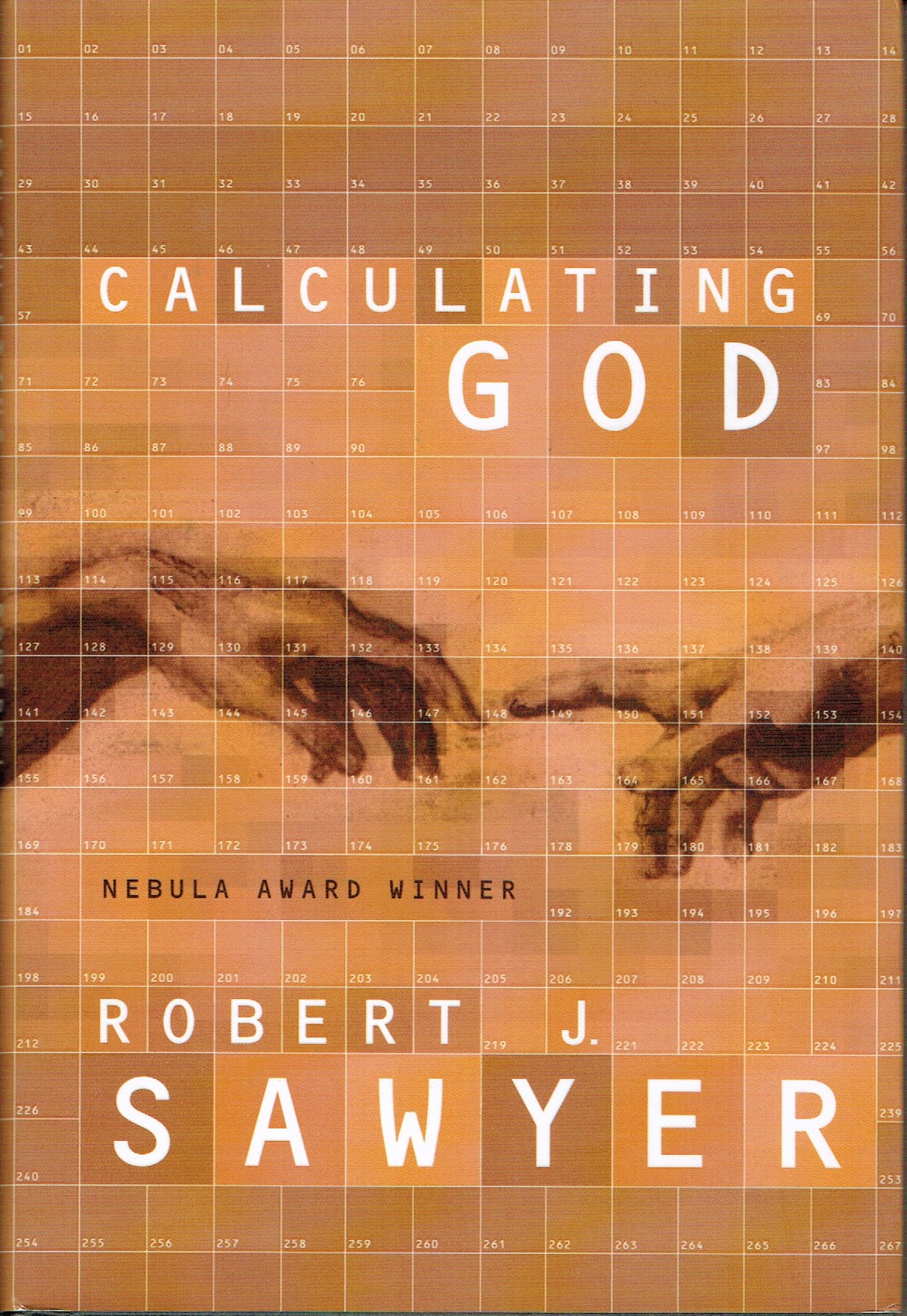
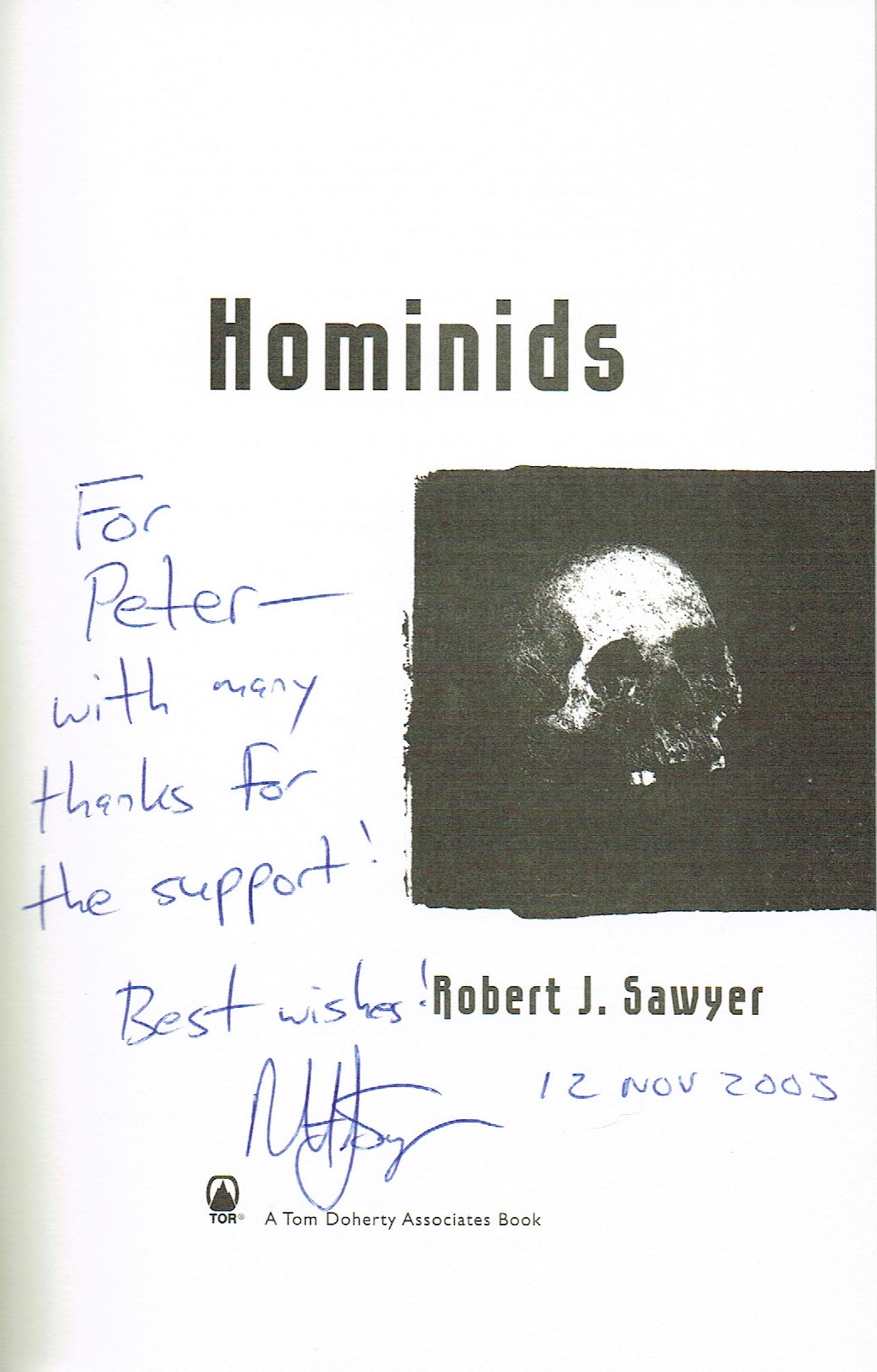
I have asked only one non-Trek person for an autograph: Robert J. Sawyer. I have his signature on two novels — Hominids and Calculating God — and on Boarding the Enterprise, a collection of Star Trek essays. I wrote about that book here.

-
I am unqualified for the 1988 Toronto Trek official trivia quiz

The Toronto Trek Celebration 2 convention was held in 1988. It was “a place where people could go to see and do all sorts of fascinating things.” (ID that for bonus points.) One of those things was the Official Star Trek Trivia Quiz.
To qualify, attendees had to answer 10 preliminary questions. The first 15 people to score a perfect 10 would be invited to compete in the big quiz.
I only got nine right. See how you do.

I list the answers below.
The quiz was sponsored by the Handy Book Exchange, a Toronto institution that opened its Avenue Road location in 1982 and closed its doors in 2018, following the sad footsteps of many bookstores.

Photo from blogTO Here are the instructions for the qualifier quiz.

I miss Toronto Trek
Toronto Trek, originally called Toronto Trek Celebration, was important to my early fandom, and I miss those gatherings. The atmosphere at a Toronto Trek was extremely friendly and collegial. The big commercial cons, like Toronto’s Fan Expo, are excellent and, yes, friendly and collegial in their way, but they really focus on parting people from their money. There were lots of opportunities to spend money at a Toronto Trek, but that’s not why you were there. You were there to meet people who love what you love. They were special gatherings.
I plan to write a number of articles detailing the history of Toronto Trek.
And now, the answers

Number 3. From TrekCore 1. Vulcan term for blood fever: plak tow, Amok Time
2. Kirk’s nephew: Peter Kirk, Operation — Annihilate!
3. The actress who played Leila Kalomi in This Side of Paradise: Jill Ireland
4. The instrument used by Zor Khan: the atavachron, All Our Yesterdays
5. The two combatants from Cheron: Lokai and Bele, Let That Be Your Last Battlefield
6. Gem’s planet: Minara II, The Empath
7. Balok’s ship: The Fesarius, The Corbomite Maneuver
8. Weapon Spock uses to “kill” Kirk in Amok Time: the ahn-woon
9. Who said “I am putting the bag on Krako” and in which episode: Kirk, A Piece Of The Action, and the quote is actually “I’m going to put the bag on Krako.”
10. Spell the name of the grain on K-7: quadrotriticale, The Trouble With Tribbles
The one I flunked: Gem’s planet. I could not remember the system named in the episode so, fair enough, I missed that one. But it’s an odd question, because I don’t think Gem was actually from Minara. The Enterprise travels to Minara II to evacuate the Federation research scientists posted there before the star goes nova, but it is presented as otherwise uninhabited.
I think Gem is from somewhere else. The episode takes place on Minara II because the scientists were convenient subjects for the Vians’ research.
I would not have qualified for that trivia contest. Gem would have tripped me up.
-
The Concordance Color Book — and three fantastic surprise autographs

This was going to be an article about the Star Trek Concordance, both the initial fan version and the later publisher editions, with a bit at the end about the Star Trek Concordance Color Book 1, a small fanzine-type collection of drawings.
But that plan changed when I started flipping through the Color Book — and I found a David Gerrold autograph I didn’t know was there.

My first Star Trek autograph was Gerrold’s, on a first-edition copy of his The World of Star Trek. This foundation stone of my collection was purchased at Toronto’s Bakka sci-fi bookstore. I also have Gerrold’s autograph on a Trouble with Tribbles script (ordered online from him), a Vul-Con II convention program from 1975, and a seri-cel from the animated episode More Tribbles, More Troubles. (What is a seri-cel?)
I was thrilled to have another Gerrold autograph, especially as it was a surprise. And then I kept flipping through the book. And then this happened…
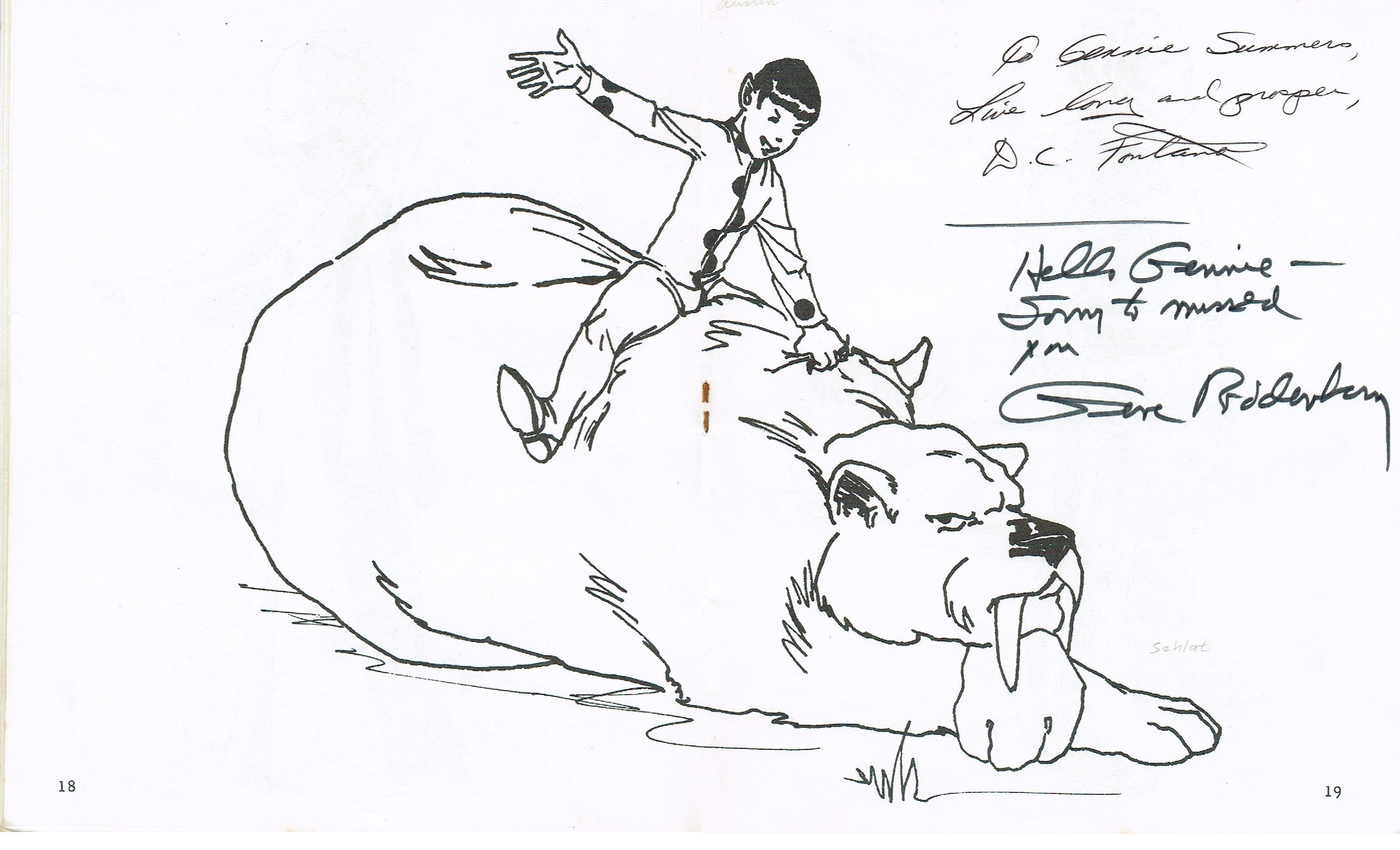
So, this was a moment to remember.
I also had a D.C. Fontana and Gene Roddenberry autograph. That I did not know about before. Wow.
All three autographs were personalized to Gennie Summers. She likely got her book signed at a convention. Roddenberry wrote “Hello Gennie, Sorry to missed you.” (He presumably intended to write “Sorry I missed you.”) I imagine she handed the book to a friend and then went off somewhere, just before Roddenberry came along.
It is impossible to definitively identify the convention. Equicon ’74 is a good candidate; Roddenberry, Fontana and Gerrold were all there (and there’s even some film from that con), although with most of the main cast in attendance and considering celebrities didn’t charge for signatures in the early days, it seems strange there aren’t more here.
Perhaps, as an amateur artist, Summers gravitated towards the writers in the lineup.
Ethel Gennie Summers
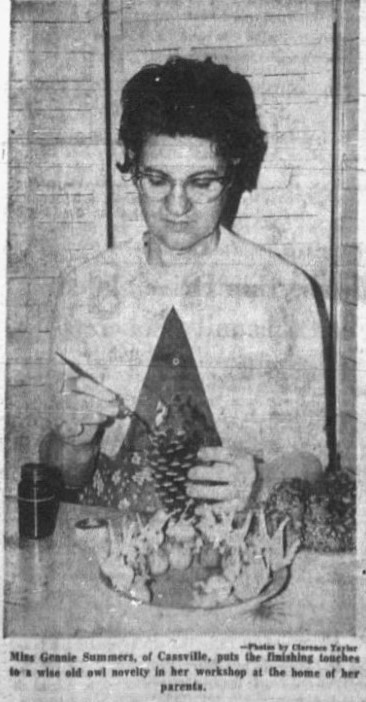
I was able to find information about Summers, as the unusual spelling of her name made for effective searches in online newspaper archives.
Summer loved art but, according to her hometown paper, the Springfield Leader and Press, she was “prevented from seriously pursuing art as a career by eye trouble a number of years ago.”
The February 12, 1967 article Cassville’s Miss Gennie Creates ‘Crazy Critters’ continues:
Miss Summers fashions all kinds of animals and birds — both real and fancied — from native nuts, gourds, pine cones, teasels, gourds, cockleburs, peach pits, acorns, sycamore balls and all kinds of seeds. Some of the results are so realistic they are described as “cute”; others so “far out” that they are fascinating.
(A teasel is a tall prickly plant with spiny purple flower heads, a cocklebur is a flowering plant in the sunflower family, and the journalist listed gourds twice — that’s not my error.)
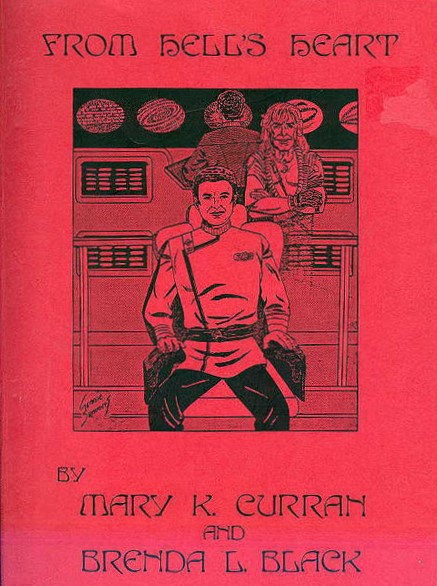
Summers went on to create artwork for a number of fanzines, according to the site Fanlore. It reports that she won several FanQ Awards and lists more than 30 publications to which she contributed.
The fan story From Hell’s Heart used her illustration on the cover. The story is a sequel to The Wrath of Khan, according to Fanlore:
Khan’s spirit returns to haunt the Admiral, not having succeeded from getting his revenge.
“Khan’s obsession is the key that unlocks the door to Admiral Kirk… Khan vows to have Kirk chained at his feet, to serve him in HELL!”
Summers died in 2010, according to an obituary in The Cassvile Democrat.
ETHEL GENNIE SUMMERS
Thursday, June 3, 2010
Ethel Gennie Summers, 85, of Cassville, passed away Tuesday, May 25, 2010, in Red Rose Health and Rehabilitation Center, Cassville.
She was born, Aug. 2, 1924, in Nebraska, the daughter of Alvin Dale and Ethel Mae (Smith) Summers, who preceded her in death.
She lived much of her life in Barry County. She was a self-employed dog groomer, but was more known by her close friends as a graphic artist for Star Trek. She designed the posters for the movie and also drew characters for Star Trek comic books. She even had a space ship in her home, which she invited some to get in.
Cassville, Missouri
The claim that Summers designed “the posters for the movie and also drew characters for Star Trek comic books” must be a reference to fan productions, and I could find no information on the spaceship that was in her home.
D.C. Fontana had that drawing on her wall
Not a coloring book, for some reason, but a “color book,” the publication was produced in 1973 by John Trimble, husband of Bjo Trimble, the people most identified with the campaign that got Star Trek a third season. It’s a small book, folded once and held together by one staple. It reprints artwork that appeared in The Star Trek Concordance, a fan-produced show encyclopedia. Its original iteration covered only seasons one and two, and I will write an article about it and the publisher editions that followed.
The centre spread — the one Roddenberry and Fontana signed for Summers — was drawn by Alicia Austin. The biography in the book says Austin is a cytotechnician who “illustrated many fanzines, as well as books, and the new science fiction magazine, Vertex.” She has 22 pieces of art in the book and lives in LA today. Visit her site to see more of her work.
Austin’s large drawing depicts a “young Vulcan” sitting atop his pet sehlat.
Her work was the go-to reference piece for none other than D.C. Fontana, who wrote both Journey to Babel, the original-series episode that first references Spock’s sehlat, and Yesteryear, the animated series episode in which we see young Spock with his pet, named I Chaya. In a July 2016 episode of the Saturday Morning Trek podcast, Fontana told host Aaron Harvey:
I wanted it to be kind of bear-like, so that it had a lovable quality about it. And I wanted it to be faithful, because the sehlat wanted to follow Spock, and did, and of course it saved his life. I made up that reference in Journey to Babel on the original series, as “Oh, it’s a teddy bear?” says DeForest Kelley, and then I think it’s Spock who says “On Vulcan, the teddy bears have six-inch fangs.” I have a picture on my wall by Alicia Austin of a sehlat, and when people say to me “What does a sehlat look like?” I show them Alicia’s picture.
Four other artists contributed to the Color Book. Notable among them were:
Greg Bear: now better known as a novelist, with more than 50 books published, including the 1984 Star Trek novel Corona, Bear contributed three drawings.
Greg Jein: Jein went on to work on many Star Trek productions. He created the V’ger interior models for Star Trek: The Motion Picture, worked on two Enterprise-D studio models, contributed to TNG’s Encounter at Farpoint and other episodes, and worked on DS9, Voyager and many of the movies. The cover of Inside Star Trek issue 2 is his sketch of the Klingon battle cruiser; see my article on that here.
So, how did I end up with the book?

I bought the book out of a bargain bin at a Toronto Trek convention. I don’t remember exactly when because I didn’t take special note of it. It was sold in a plastic comic bag and I never took it out, so I did not know the autographs were inside. Clearly, the dealer didn’t either.
I paid $10 for it.
I bought it because it’s a quirky piece of Star Trek memorabilia from the 1970s, and I am a big fan of quirky Star Trek memorabilia from the 1970s. But at the time I wondered if it was worth $10.
A few months ago, I recommended that collectors go through their boxes of stuff after I was surprised to find some View-Master reels. That was fun, but it can’t touch the thrill of turning a page and finding a Gene Roddenberry I didn’t know I had. So, go through your stuff. Open boxes. Turn some pages. Seriously. You might find something wonderful.
And thank you, Gennie. I don’t know how your book got to that bargain box in Toronto, but I am glad it did and glad too to learn a little about your life.
Bjo Trimble, D.C. Fontana, David Gerrold, Equicon, Gene Roddenberry, Gennie Summers, Greg Bear, Greg Jein, I Chaya, John Trimble, Journey to Babel, More Tribbles, Sehlat, Star Trek, Star Trek Concordance, Star Trek Concordance Color Book, The Trouble with Tribbles, Toronto Trek, View-Master, Yesteryear -
Inside Star Trek issue 4: Klingon side-projects with Matt Jefferies and coloured food cubes with Irving Feinberg

Inside Star Trek was a semi-official newsletter, published under the guidance of Gene Roddenberry. This connection gave the writers access to the actors, production crew and sets.
I own the complete run:
Issues 1 to 12: Inside Star Trek, edited by Ruth Berman
Issues 13 to 24: renamed Star Trektennial News, edited by Susan Sackett
Issues 25 to 31: again called Inside Star Trek, edited by Virginia Yable
Here are highlights from issue 4, published October 1968.
The best issue so far, Inside Star Trek 4 gave readers inside information on two TOS production stars: art director Matt Jefferies and property master Irving Feinberg.

Dorothy Fontana interviewed Matt Jefferies, designer of the Enterprise, the shuttlecraft, the Klingon battle cruiser and most of what we saw on TOS.
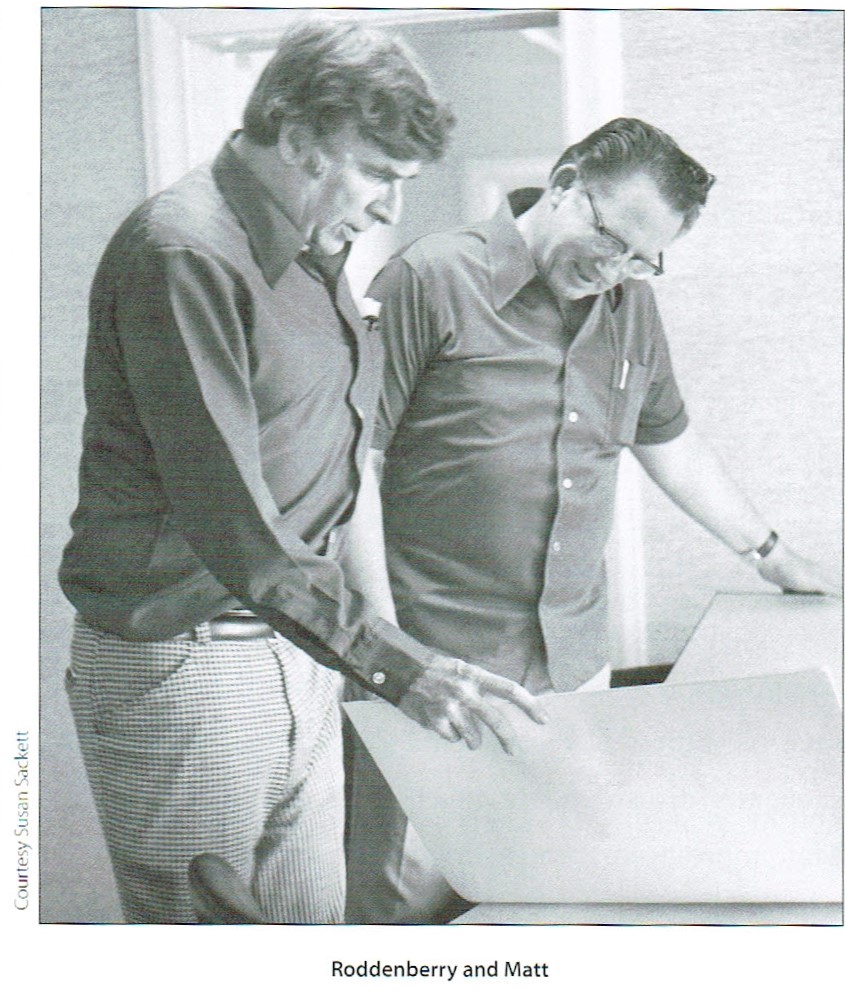
Roddenberry and Jefferies, from the book Beyond the Clouds Walter Matt Jefferies started his Hollywood career with design work on military-themed productions. He told Fontana “I did ship interiors at MGM for The Wreck of the Mary Deare, World War II airplane stuff for Never So Few and The Bull Halsey Story” and then casually mentioned that he also worked on the original Ocean’s Eleven.
For most of his career to that point, he was a set designer, but on Star Trek, Mission: Impossible and April Savage, his title was art director. Fontana asked what an art director does:
I’m responsible for everything they photograph, except the people. It entails the initial design of sets, supervising the building, colors, painting, everything that’s on the stage or location, having it ready for the camera and within budget. It calls for working with the director, set decorator, carpenters, painters, special effects, the whole ball of wax.
Fontana asked him about creating planet sets, and how that differs from designing interiors.
The first thing I do is work out what has to happen in a proposed set… How many actors we have, what the moves are, what kind of general settings the script calls for, how to light it, how to get the equipment in and out, what the camera shots will be, the scope of the shots…you design the set around that.
The approach to interiors is the same as exteriors… In the early stages, John Dwyer, set decorator, comes in and looks at the initial drawings. Then he and I sit down and have a talk about what I have in mind. He proceeds to put his talents to work finding the proper dressing along the lines of what we’ve discussed. I depend on this man very heavily, not only to carry out my ideas but to come up with an endless fountain of his own ideas. And he does. For the most part, stage 9 [which houses almost all of the standing sets for the Enterprise] is a very static set, and John can turn that over to his assistant, Mike May. Then John has the opportunity of getting off the lot and searching for unusual things — something particular he has in mind, or some idea of mine. But John has the opportunity to get out and look where I don’t. So he’s my floating eyes and sticky fingers…that’s where all the ‘freebies’ come in too. He has a wonderful knack for finding these things.
See my coverage of issue 1 for Fontana’s interview with John Dwyer.
Fontana then asked about the Klingon battle cruiser and the Botany Bay, from Space Seed.
We had already established the essential character of the Klingons, so we really had more to draw on in the background than we originally had on the Enterprise. The Klingon character was different and clearly defined in several scripts. We tried to keep some of that character in the design of the ship — cold and, in a sense, vicious. We tried to get into it some of the qualities of a manta ray, shark, or bird of prey, because the Klingons follow that general feeling. Another requirement is that we had to get a feeling their ships were on par with the starships in equipment, power, size, etc. After many sketches and many evenings, it finally evolved. Everyone liked it, and that’s what we built. It was strictly an extra-curricular activity on my part.
The Botany Bay was actually designed before the Enterprise. It was a little idea that popped up and was labelled “antique space freighter.’ Later on, we made it look like something else — a vehicle out of the early 2000s.

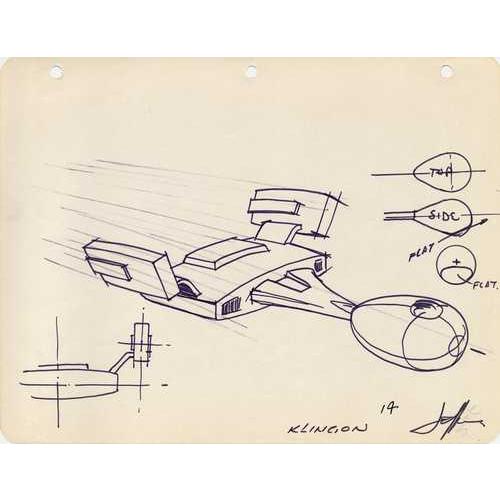


The Jefferies drawings here are all from the wonderful people at TrekCore.
Creating limbo

The design of the frontier town in Spectre of the Gun, in which only the fronts and basic interiors of the buildings were represented, has often been characterized as a cost-saving idea, but this never made a lot of sense as the studio backlot surely had standing western sets the production could have used. Fontana credited this “limbo” design to Jefferies, and he characterized it as a thematic, rather than a budget, decision: “It wasn’t a true limbo — it was a stylized limbo only in what wasn’t there. When you say ‘stylized limbo’ you usually mean misbalanced proportions, things hanging in space, etc. What was there was real. It looked different and it worked effectively.”
Jefferies said that the most challenging sets to that point had been for What Are Little Girls Made Of? and Amok Time, while the most successful were for A Taste of Armageddon, The Return of the Archons, and The Squire of Gothos. His favorite set at the time was “the temple and oracle room in a show we’re shooting (now), For The World is Hollow and I Have Touched the Sky.”


Asked about the most difficult aspect of the job, “Matt had a ready answer for that one: Compromise.”
Usually what we wind up with is only a small part of what I would like to see. But you have to give with the material you have available, the capabilities of the people working for you, time, money — bend for the lighting man, bend of the cameraman, for the director. The most difficult thing is to come up with something you visualized that is on budget and will work best for the company. Frequently, when we get up there to shoot, there’s not a lot left of the original concept.”
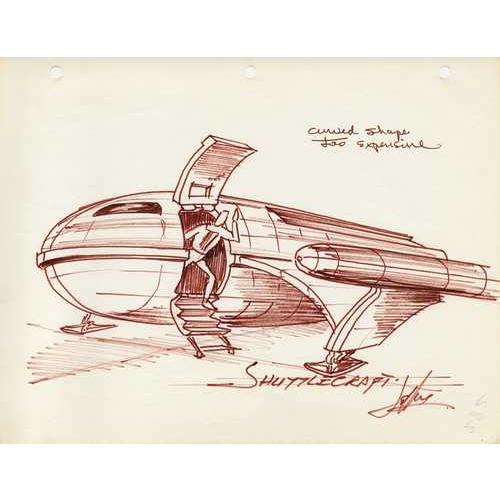
Jefferies’ elaborate shuttle design 
What he had to settle for 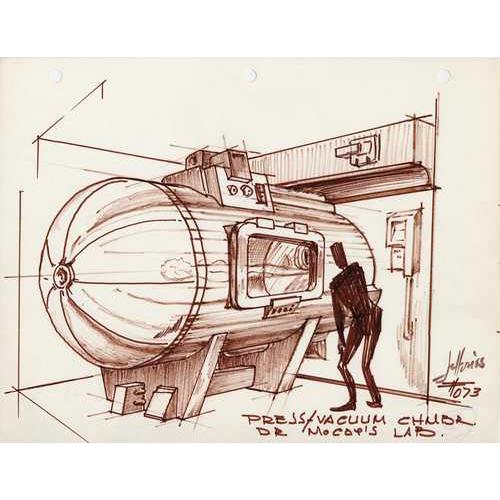
Jefferies’ decompression chamber 
The chamber in Space Seed Feinberg’s tribble-ations
Irving Feinberg proved that Deep Space Nine did not invent the name of its tribbles tribute episode; the article he wrote in this issue was called Trials and Tribble-ations of a Master of Properties.

Feinberg defined his job as managing properties, “any object in the show that works, i.e. is handled, used, or moved by an actor. It may be as big as a boulder or as small as a pin. For each episode I must first read the script for the story content, and then break it down, checking it for all of the props that are to be used. These props must be available by the first day of shooting.
He goes on to describe his tribble travails:
I had about 1,000 tribbles made in four different sizes and four different colors. Some of them were fitted with balloons which could be inflated to make the tribbles pulsate. Others contained motors which moved them about. In one sequence, when I had just finished piling hundreds of tribbles around the set and attaching numerous others to the walls, William Shatner came up to me and with a perfectly straight face told me that they would all have to be removed so that the walls could be repainted. Just before I started to climb those same walls, the whole cast and crew exploded in one grand guffaw.
Food cubes of the future
Feinberg also provided a short-hand Enterprise cookbook:
While on these distant planets, our actors are served with exotic food and drink. I use cubed apples, celery, or other fruits and vegetables dyed bright blue, green, or purple with harmless vegetable dye. I use the vegetable dye because they must not only look strange, but they must be edible. In one scene I had to have a blue drink. I thought I had found the answer to both the color and palatability when I discovered blue curacao. The director swore that I was making William Shatner and Leonard Nimoy tipsy with my liqueur, so, much to their disgust, I had to go back to my trusty (but not tasty) blue dye in water.

Feinberg’s props, like Uhura’s earpiece, were called feinbergers on set It’s gratifying to read that Feinberg really liked his job: “I take pride in my work and in Star Trek. I want each episode to be artistically and scientifically logical. Being the property master on Star Trek may challenge my ingenuity and send me home talking to myself, but I am pleased to be associated with all of the artists on it and proud of the finished product.”
Inside Star Trek is an invaluable source of early Star Trek voices. I’ll cover each issue.
A Taste of Armageddon, Botany Bay, DC Fontana, For The World is Holow and I Have Touched the Sky, Inside Star Trek, Inside Star Trek newsletter, Irving Feinberg, John Dwyer, Klingon, Matt Jefferies, Spectre of the Gun, Star Trek, The Return of the Archons, The Squire of Gothos, What Are Little Girls Made Of? -
Inside Star Trek issue 3: DeForest Kelley on television stress and McCoy’s secret pain

Inside Star Trek was a semi-official newsletter, published under the guidance of Gene Roddenberry. This connection gave the writers access to the actors, production crew and sets.
I own the complete run:
Issues 1 to 12: Inside Star Trek, edited by Ruth Berman
Issues 13 to 24: renamed Star Trektennial News, edited by Susan Sackett
Issues 25 to 31: again called Inside Star Trek, edited by Virginia Yable
Here are highlights from issue 3, published September 1968.
Issue 3 delivered a good interview with DeForest Kelley, but otherwise it’s light on content, with no other articles.

The daughter we never met
Editor Ruth Berman caught Kelley during a break in shooting The Empath. The character had just been tortured, and the two walked to Kelley’s dressing room with “McCoy’s rags fluttering around him.”

From TrekCore Berman asked him to describe McCoy and, just coming off that emotional scene, the actor struggled a little. “I know what McCoy is in my mind [but] right now it seems kind of hazy to me…I guess because I just got through doing a scene down there.” He then added:
I picture him as a dedicated physician, who came aboard for some reason that hasn’t been explained quite clearly…perhaps from some deep hurt in his background.
Kelley’s idea that McCoy fled a personal tragedy had been kicking around behind the scenes for a while. This interview took place in the late summer of 1968. A memo from Dorothy Fontana, dated January 1967, pitched Gene Roddenberry on the idea:
Dear Gene:
I came up with the following premise after a conversation with DeForest Kelley on January 4…
Teaser: The U.S.S Enterprise stops over at a Star Base to pick up new medical personnel being transferred to duty aboard. As the group of doctors and nurses beams aboard, McCoy and Kirk greet them in the Transporter Room. One of the women, a lovely dark-haired girl of twenty, takes one look at McCoy and flings herself into his arms. Much to Captain Kirk’s surprise. Then McCoy turns to Kirk, grinning, and introduces Nurse Joanna McCoy…his daughter.
The heart of the story concerns Captain Kirk, Dr. McCoy, and Joanna. We will learn McCoy had been married a long time ago, but it turned sour and ended in divorce despite the birth of the child, Joanna. McCoy soon after the divorce entered the space service.
McCoy’s divorce never made it to screens in the ’60s, but the 2009 JJ Trek used the idea when McCoy explains to Kirk that he enrolled in Starfleet following a bitter breakup.
Fontana’s story outline had Joanna and Kirk developing a relationship — “In the course of the story, Kirk will find himself drawn to Joanna, and she is (naturally) attracted to him” — and McCoy getting overly protective of her, causing tension between the friends. Joanna, as the episode was to be called, was never produced and — somehow — the idea morphed into The Way to Eden, with Chekov’s old girlfriend Irina Galliulin replacing Joanna.
DeForest Kelley also told Berman that his favourite episodes to that point included The City on the Edge of Forever, Metamorphosis, Miri and Tomorrow is Yesterday.
Production stress
Kelley was also open about the taxing nature of television production:
It’s very tiring. It’s rewarding in many ways, but it’s an exhausting routine. Matter of fact, we’ll all kind of run-down.” He looked ruefully at his cigarette. “Probably smoke too much. I know that Bill is weary, and Leonard, and so am I. The pace kind of catches up with you, but then a week goes by, and you kind of get your second wind. I can’t help but believe this is a more difficult show to do than, let’s say, a western or a Dragnet or something of that nature. We’re vitally concerned, all three of us are, with this show, the scripts — even after we get the script we’re concerned. It may reflect sometimes as an antagonism, but it isn’t antagonism, it’s simply wanting it to be right, and as a result we sometimes have to have a few fights, you know, to get it that way.

From TrekCore Berman then suggests to Kelley one example of wanting to get it right, from The City on the Edge of Forever:
McCoy is coming out from under the influence of a drug but he’s still groggy. In the script, he falls asleep saying to a girl ‘Quite all right, I don’t believe in you either.’ But the way it came out was, ‘Quite all right, my dear, I don’t believe in you either.’ Which sort of captured his gentleness and gallantry.
That’s a subtle but important bit of characterization, and those small production details, told by the people on the set in the ’60s, make this newsletter so important.
Inside Star Trek is an invaluable source of early Star Trek voices. I’ll cover each issue.
Click here to read other articles in this series. -
Thank you, Doug Drexler, for trying to save the Gold Key comics
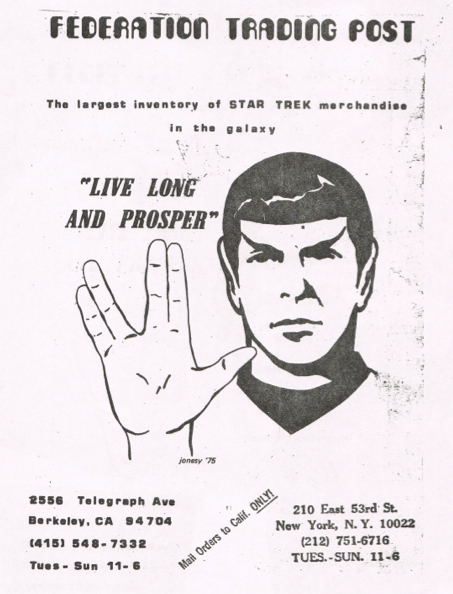
Doug Drexler tells a great story about the Gold Key Star Trek comics. The man who would go on to become a noted makeup artist, scenic artist, illustrator, and visual effects expert on TNG, Voyager, DS9, Enterprise and five Trek films was working at the Federation Trading Post in the mid-70s. The New York store was a mecca for Trekkies in the early days of fandom. It printed its own posters, made uniforms, and sold outfits to Saturday Night Live for its Star Trek spoof.
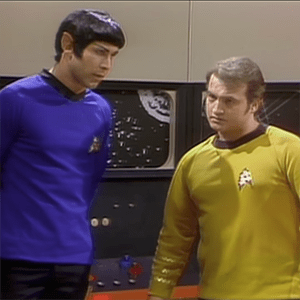
Drexler talked about Gold Key on The Inglorious Treksperts podcast:
The Gold Key guys came strutting in one day. They were only across the street from us, and they were coming in to be big shots. About a half hour before they came in, we were using them as an example of how wrong [Star Trek products] could go. So they came in and said, “We do the Gold Key comics!” and we burst out laughing. We couldn’t help it. We told them, as gently as we could, what was wrong with their comics.
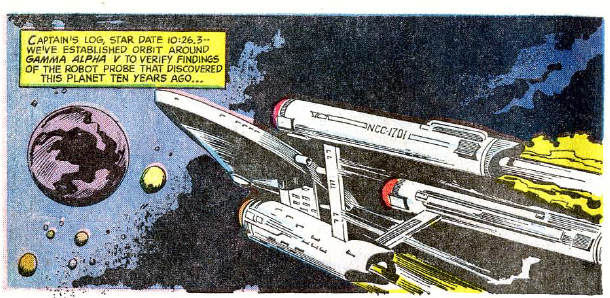
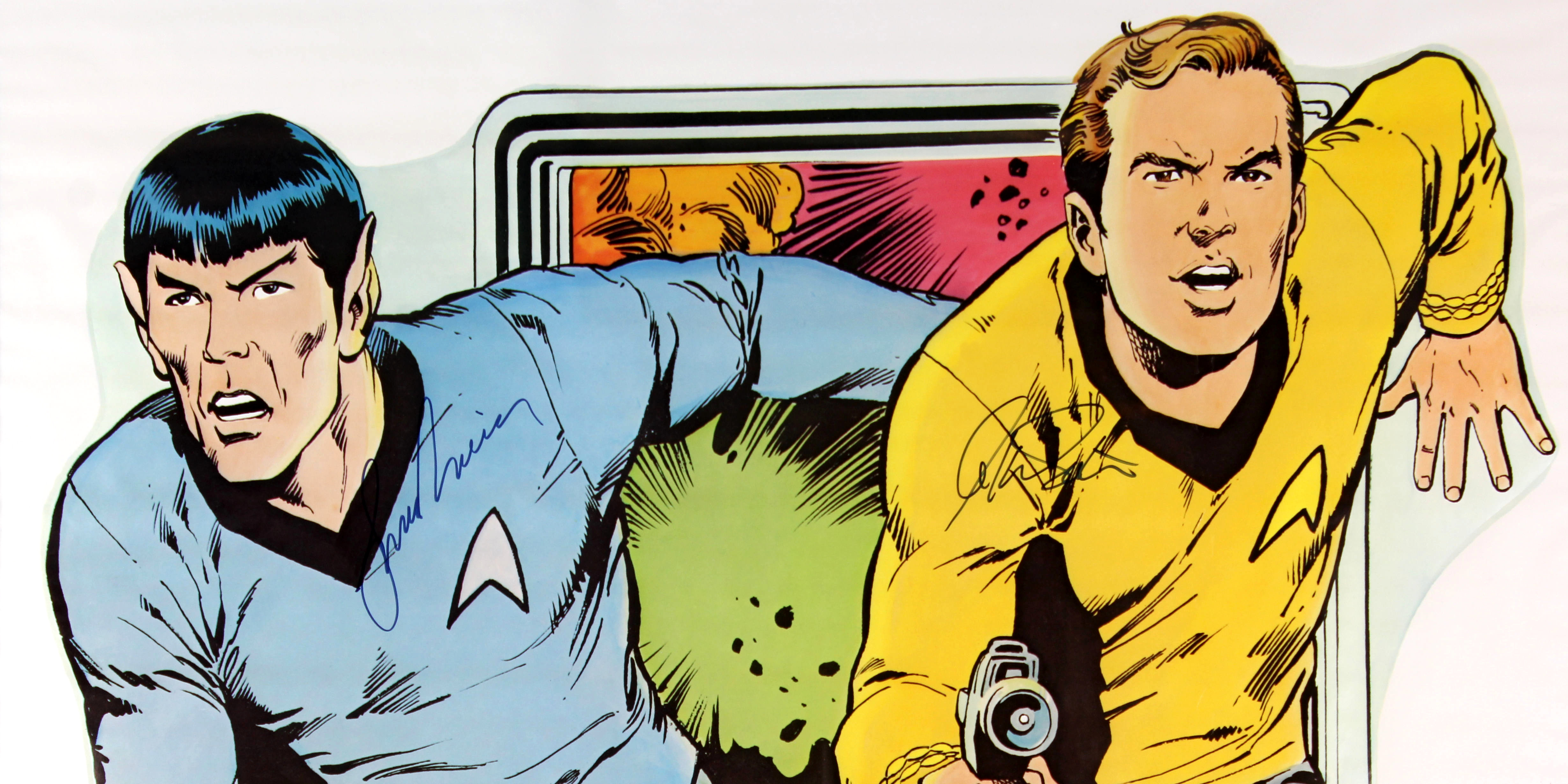
Gold Key published 61 Star Trek comics between 1967 and 1979, although a few were reprints. They are highly prized now for their kitsch value but, as Drexler said, there was a lot wrong with the books. The plots were silly, the characters were nothing like what we saw on TV, and the details were always incorrect; flames squirted from the shuttle deck and the nacelles, the look of the bridge and the transporter room were just made up, Scotty was often drawn as a tall blond guy, and his name was misspelled as Slott on the cover of issue 55. It is said that the two artists who drew the early issues both lived in Italy and had never seen the show.

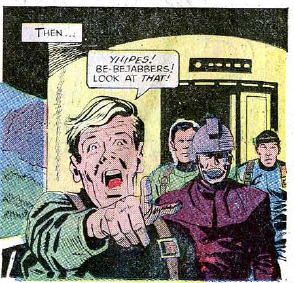
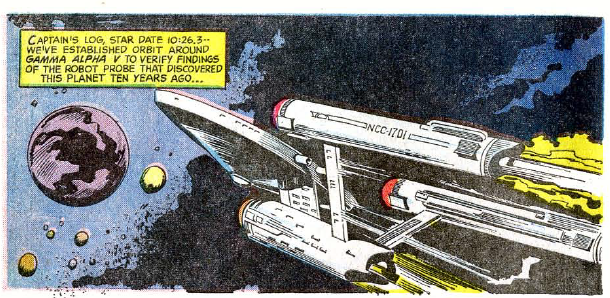
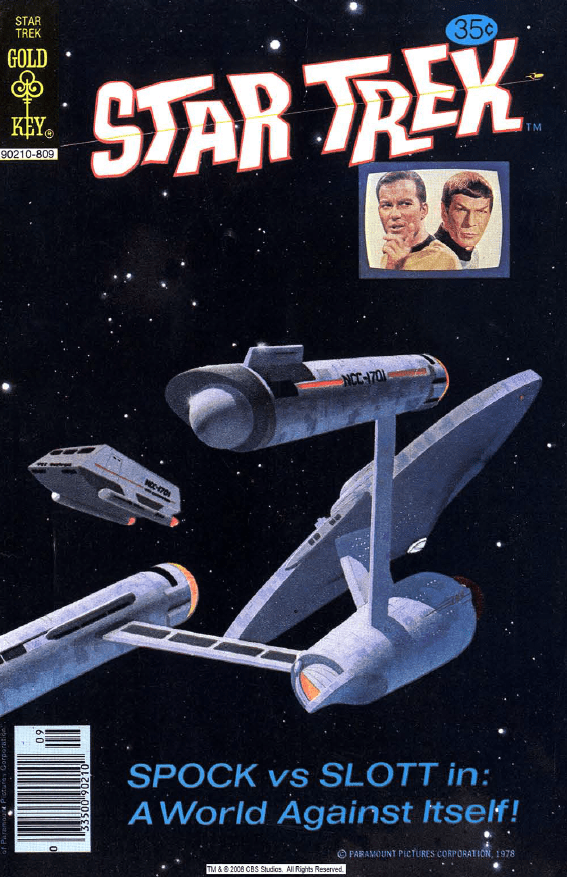
Back in the ‘70s, though, there was almost no Star Trek merchandise, so the comics were popular, and collecting comics is a lot of fun. I was actually sorry when I completed my collection.
I have always been interested in the story behind these books, so I was pleased when well-known comic writer Len Wein was scheduled to appear in Toronto for a convention in 2009. Wein wrote eight issues for Gold Key and I could finally ask someone about those days. I had him autograph The Legacy of Lazarus (#9) and The Enterprise Mutiny (#14).
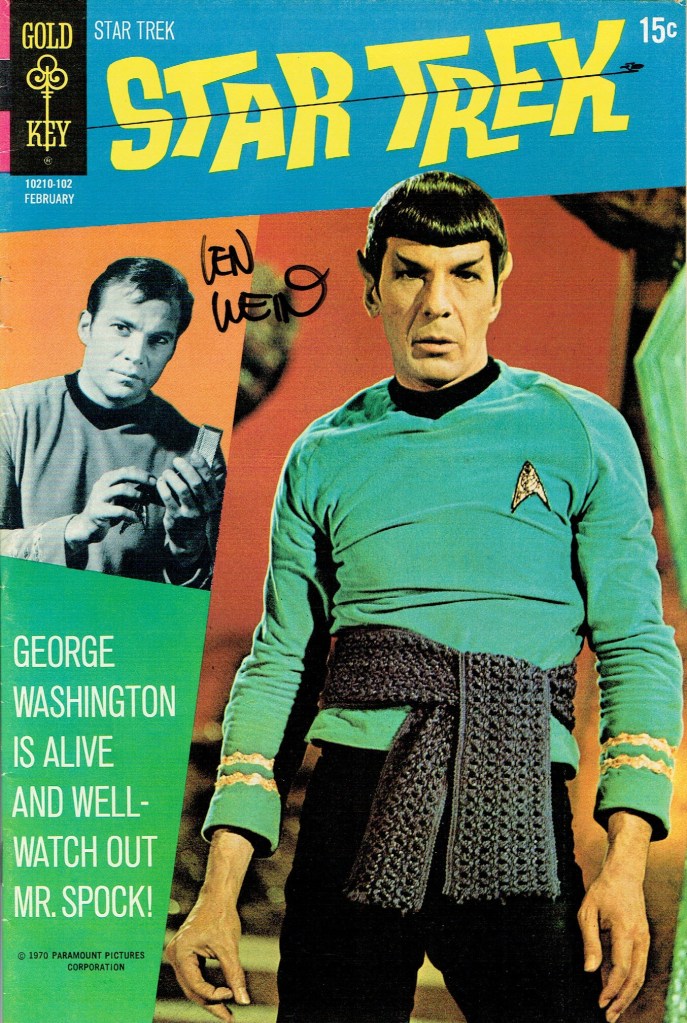
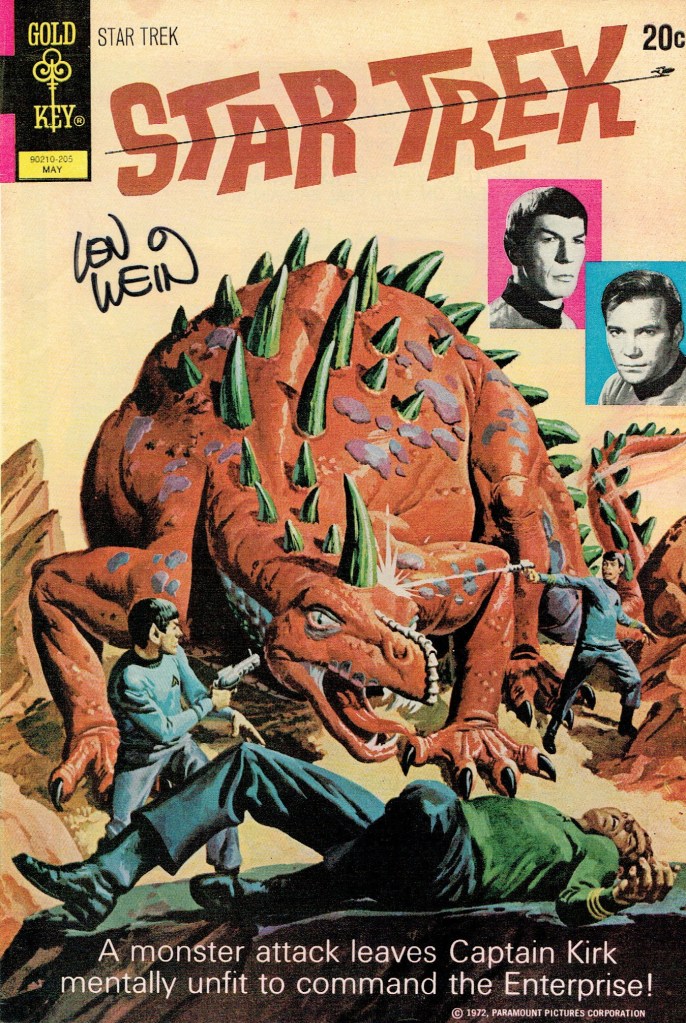
Sadly, though, he didn’t have a lot to say about his time at Gold Key. Perhaps he didn’t enjoy those years; he went on to bigger things, including co-creating Swamp Thing at DC and reviving the X-Men franchise at Marvel. I walked away from his table not knowing any more than when I arrived.
Wein died in 2017 and, while Swamp Thing is definitely the height of his career, his Star Trek work wasn’t bad. Issue 9 is about a planet full of androids made in the images of Earth celebrities, and 14 is a good story about a Klingon plot to replace Kirk with a lookalike operative. A clever Spock foils the plot, but the end is marred slightly by a repeat of the scene in Whom Gods Destroy in which Spock is holding a phaser on two identical Kirks. The obvious solution is to stun them both but, as in the episode, Spock guesses which is real and shoots the other one.
A few years after Wein’s work, Drexler’s criticism caused the Gold Key guys to basically say “Oh yea, you think you can do better?” And yes, he did. Drexler wrote down some ideas and ended up with a story consultant credit on two issues.
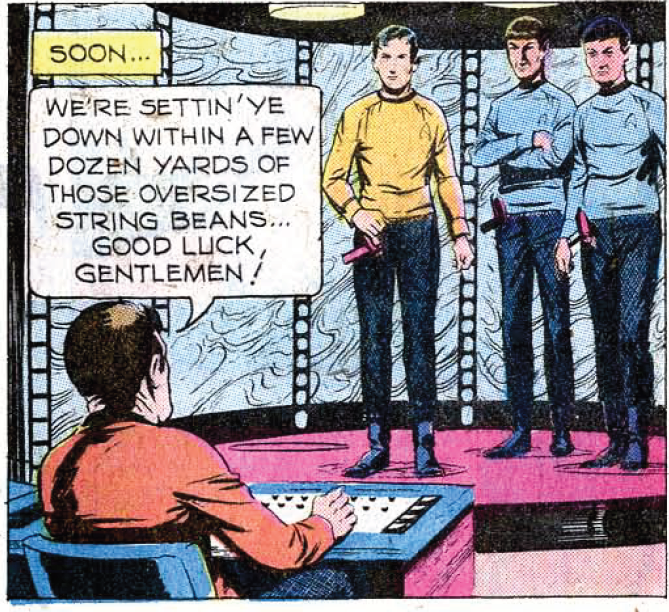
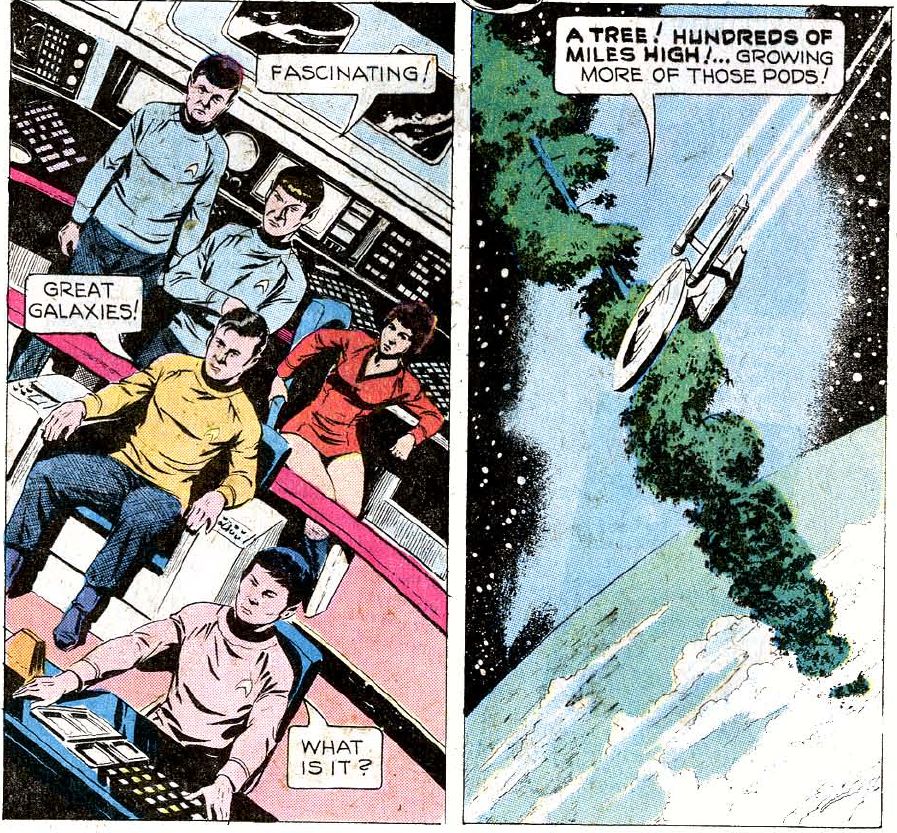
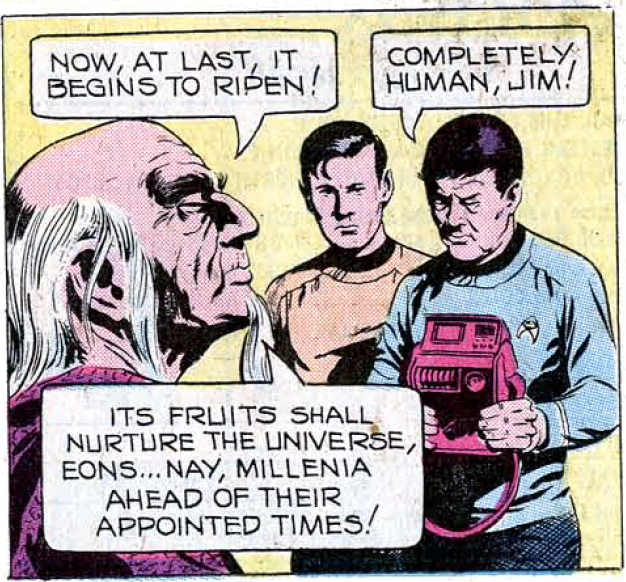
This Tree Bears Bitter Fruit, #47, is an interesting story about energy beings who destroy matter for food. There is a mysterious old man who controls the beings, but his plot line is dropped following a convoluted fight between Kirk and the energy beings. It doesn’t make a lot of sense but it doesn’t really have to. It’s fun. And the artwork and characterization are far more accurate than in the early days. There are also nice callbacks to the Organians and The Lights of Zetar, and a recreation of the salad scene from The Corbomite Maneuver. Those came from Drexler.

But even he could only do so much: Scotty is shown seated at the transporter console, a surprised Kirk exclaims “Great galaxies!” and the tricorders are huge and bright pink.
Issue 48, Murder on the Enterprise, is a fairly standard whodunit but it’s entertaining. Drexler salts the story liberally with references for fans. Kirk mentions his time as a lieutenant on the Farragut (Obsession), Spock says a scientist made his reputation studying the silicone-based life on Janus IV (The Devil in the Dark), one person is “hungry as a sehlat” (Journey to Babel and Yesteryear) and there is even a quick mention of the halo fish seen in the animated episode The Terratin Incident.
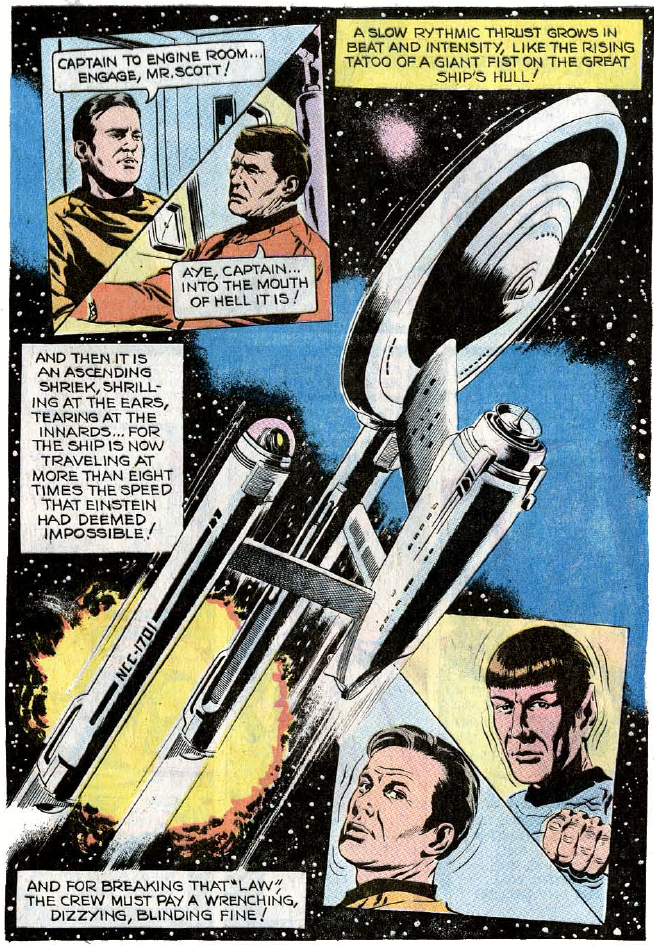
Although he only worked directly on two issues, Drexler’s involvement greatly improved what followed. Before him, issue 46 opens with the crew dreading the jump to warp drive, as traveling faster than light is a “wrenching, dizzying, blinding” experience that Scott describes as entering “the mouth of hell.” This is laughably inconsistent with the TV show.
After Drexler’s involvement, the comics looked and sounded more like Star Trek, with accurate artwork and less outlandish stories. Issue 49, for example, is a mostly thoughtful sequel to Metamorphosis which even includes a recap of the episode. Again, Drexler’s influence didn’t fix everything: for some reason, Zefram Cochrane is drawn as an older man with theatrically swept-back hair.

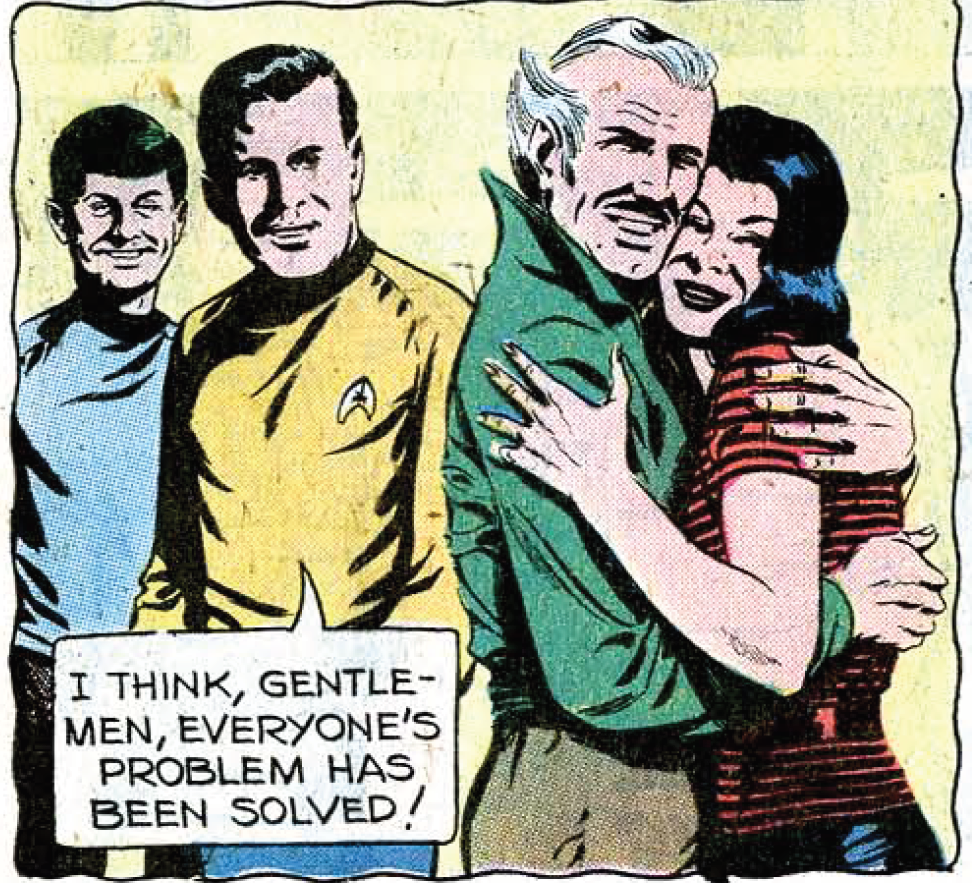
The Gold Key comics were never great Star Trek, but they got markedly better after Doug Drexler worked with the publishers. For that, Doug, Trek fans thank you.
Collecting Trek
A TOS collection 40 years in the making

