-
Rodan, John Wayne and what George Takei got wrong
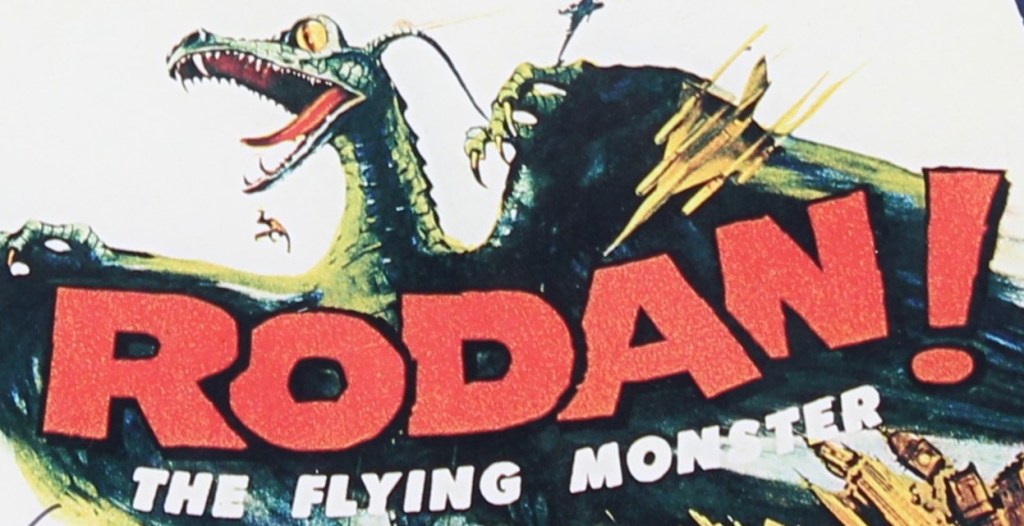
George Takei was an architecture major at UCLA as a young man, but his heart was never in it. He wanted to act. His father surprised him one day by pointing out an ad in the Rafu Shimpo, the local Japanese newspaper. King Brothers Productions was looking for Japanese-American actors to dub the movie Rodan. Takei landed the three-day gig, his first paid acting job.
The four actors hired for the work each played eight or nine characters, watching the movie on a screen and reading their English lines in time with the characters’ moving lips. “With earphones over my head and intensely focused on the silent images, I stuttered, cried, pontificated, and shrieked,” Takei wrote in his autobiography To the Stars.
I first met George Takei at a convention in Buffalo, and then a couple more times at cons in Toronto. So I already had a few signed Star Trek 8x10s when I heard he was coming back for a Toronto Trek convention. I needed a new idea.
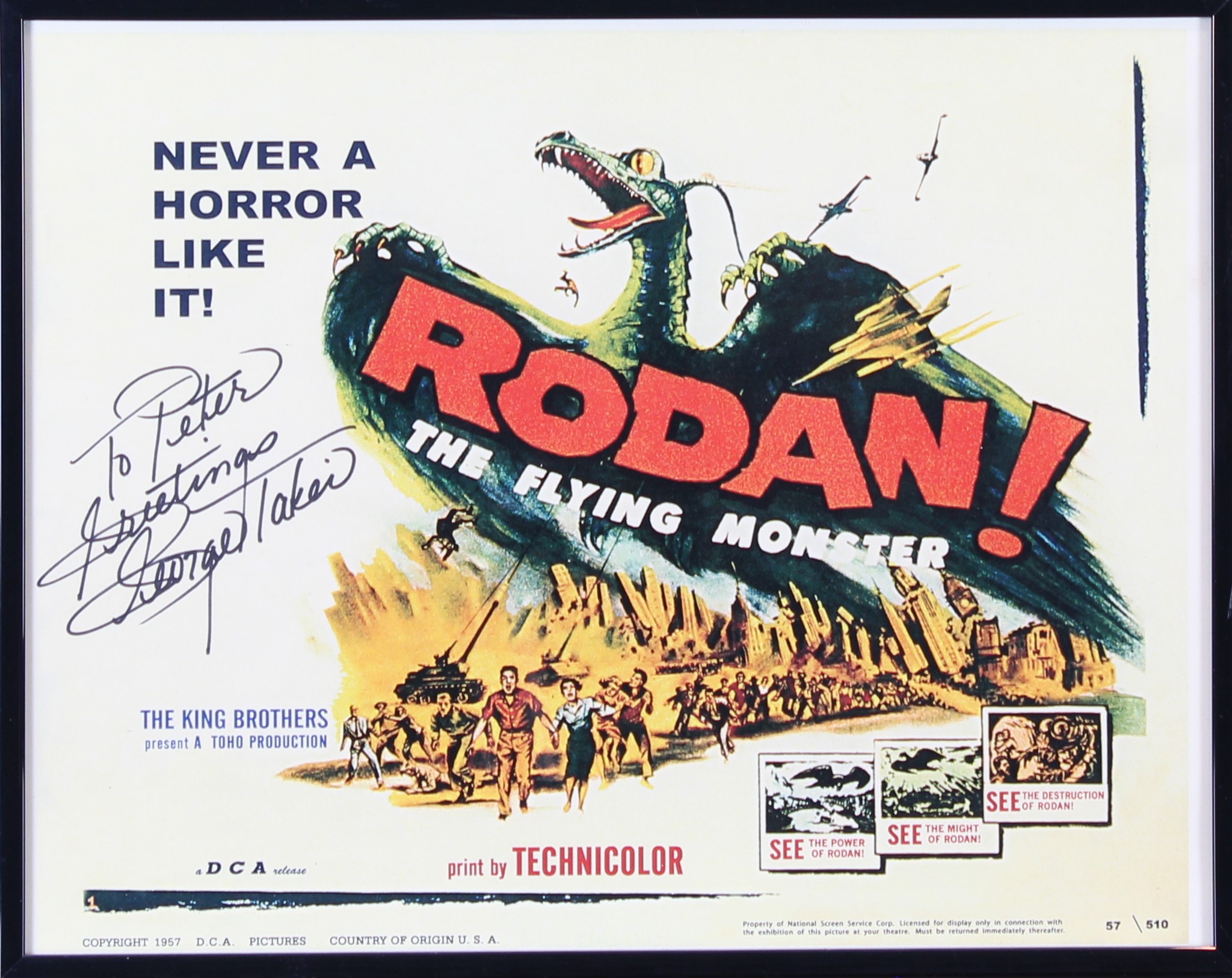
I remembered the story from his book, so I bought a reproduction 11×14 Rodan lobby card on eBay. Placing it on his autograph table at the convention elicited that big trademark smile from Takei. “This was my first paid acting job.”
“I know,” I said. “I read about it in your book.” The autograph line wasn’t too big, and he and I had a nice chat about his early days as an actor. He was, as always, charming and friendly with his fans.
Years later, in 2013, Takei was again coming to Toronto, to Fan Expo. And I remembered another story: over the course of TOS season 1, he had advocated for a bigger role, with more for Sulu to do. “My ship may have been moving steady at warp three, but I wanted to do more than merely announce that fact,” Takei wrote in To the Stars. “I peppered Gene Roddenberry with character-defining ideas, personal histories, plot possibilities, anything that might give Sulu more prominence. Gene was receptive and said he would devote more attention to developing my character.”
And then a big offer arrived just as production on season one was closing: John Wayne wanted Takei to play a Vietnamese captain in The Green Berets. It was a huge break for a young actor, but Takei was conflicted; he opposed the war, while Wayne was a vocal proponent. Then Takei did something amazing: he risked losing the part by telling Wayne his opinion. Wayne listened, nodded and said he wanted Takei on the movie anyway.
Just before leaving for the movie set, Gene Roddenberry handed Takei some welcome news: a batch of season two scripts that featured Sulu. Included in that set were The Trouble with Tribbles, The Gamesters of Triskelion and Bread and Circuses.
Remember Sulu in those classic episodes? Nope, because days of rain delayed shooting on the outdoor Green Berets set, and Takei missed the start of season two. “I returned to Los Angeles heartsick and resentful. The scripts I had taken with me…had all been filmed, save for Mirror Mirror. The lines I had so anxiously committed to memory had already been spoken by someone else; the spirited lobbying I had mounted to enhance Sulu’s role had all been for naught. I had gained nothing but a new competitor…an actor name Walter Koenig.”
At Fan Expo, Takei told me he is proud of his Green Berets performance and doesn’t regret doing the movie, but that it still hurts that heavy rain meant great lines went to Chekov instead of Sulu.

Well, except…
It’s a great story, but Takei got the details wrong. Take a look at a production-order episode list (at either Wikipedia or in Marc Cushman’s These Are The Voyages, Season Two) and you’ll see Mirror, Mirror filmed before Tribbles, Gamesters and Circuses, so the statement that he missed filming those episodes but returned in time for Mirror can’t be correct. Also, Cushman states Takei’s leave from the set began the day before Tribbles started production, so it was not the delayed return that robbed him of those lines in Tribbles, it was his own request to go shoot a movie. The Green Berets shoot did go over time and Takei was gone for longer than anticipated, but the story common in fandom that Sulu was supposed to be featured in Tribbles — a story that was common because Takei told it at conventions and wrote about it in his book — simply isn’t correct.

David Gerrold also confirms that Sulu was never planned for the episode. In his book on the making of The Trouble with Tribbles, Gerrold writes that his first-draft script included a new character named Doggerty; Bob Justman suggested changing that to Chekov, writing in a memo: “Let’s re-write so that Ensign Chekov has the Doggerty part. I feel that as long as the prices are equal, we should take advantage of our regulars as much as we can.” So it was Justman and not John Wayne who put Chekov in Tribbles.
I intend no criticism of George Takei here. To the Stars was published more than 25 years after the events in his Tribbles tale; details become fuzzy. But now I can watch that episode without thinking that rain kept Sulu from shopping with Uhura on K-7.
-
Leonard Nimoy sued Paramount — and won
Leonard Nimoy often saw Spock’s face on cereal cartons and posters and lunch boxes, and he never gave it much thought. That changed over dinner with Henry Fonda in 1975.
Fonda and Nimoy met in 1972 on the set of The Alpha Caper. Three years later, Nimoy and his wife Sandra Zober joined Fonda and his wife Shirlee Mae Adams for dinner in London after seeing Fonda perform in the play Darrow.
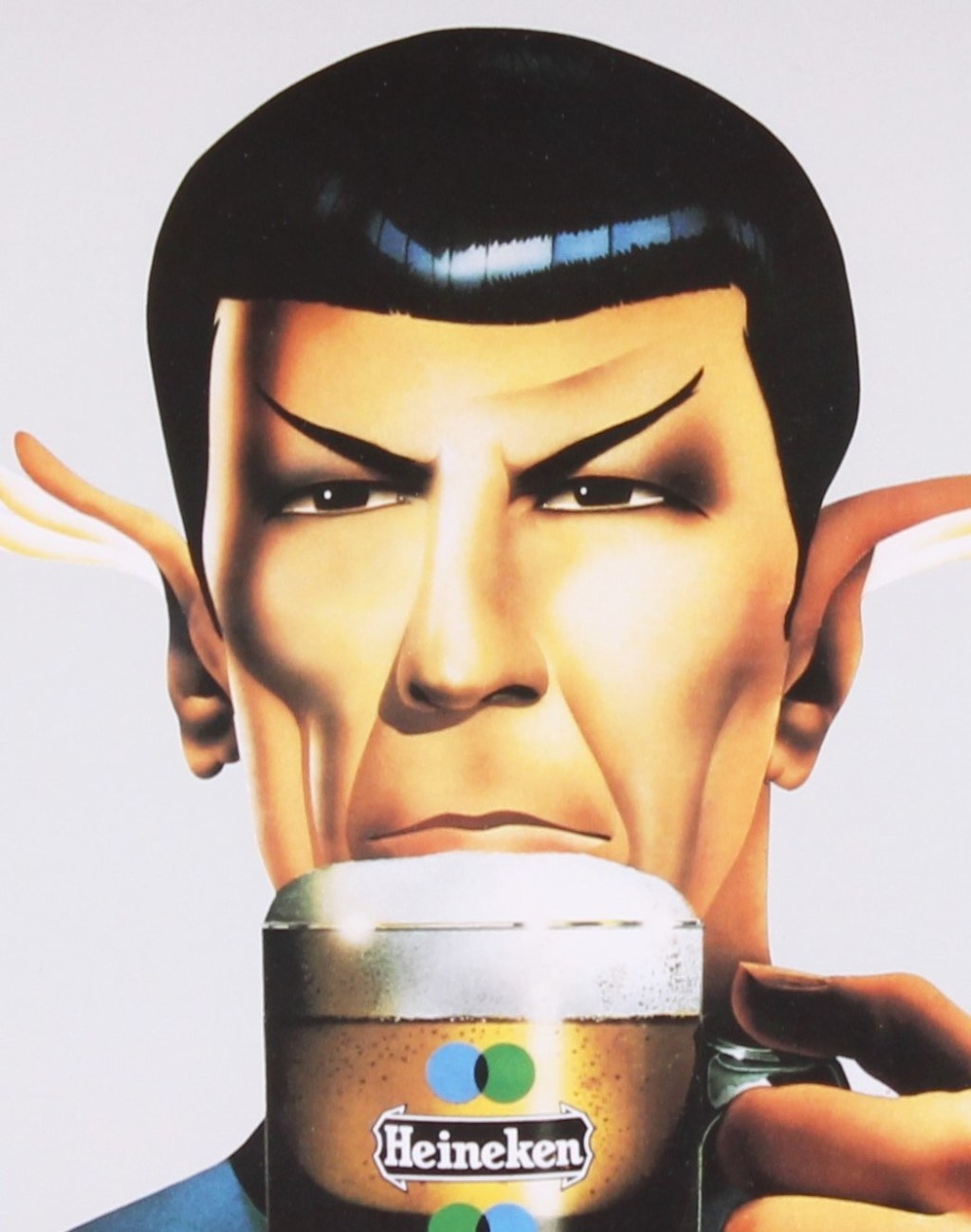
Fonda asked Nimoy what he thought of the Spock billboards all over the city. “What billboards, Henry?” Nimoy asked. Fonda replied, “Do you mean to tell me you don’t know about all those Heineken billboards?” Nimoy did not, but he now understood why a bartender had earlier suggested Nimoy might like to order a Heineken.
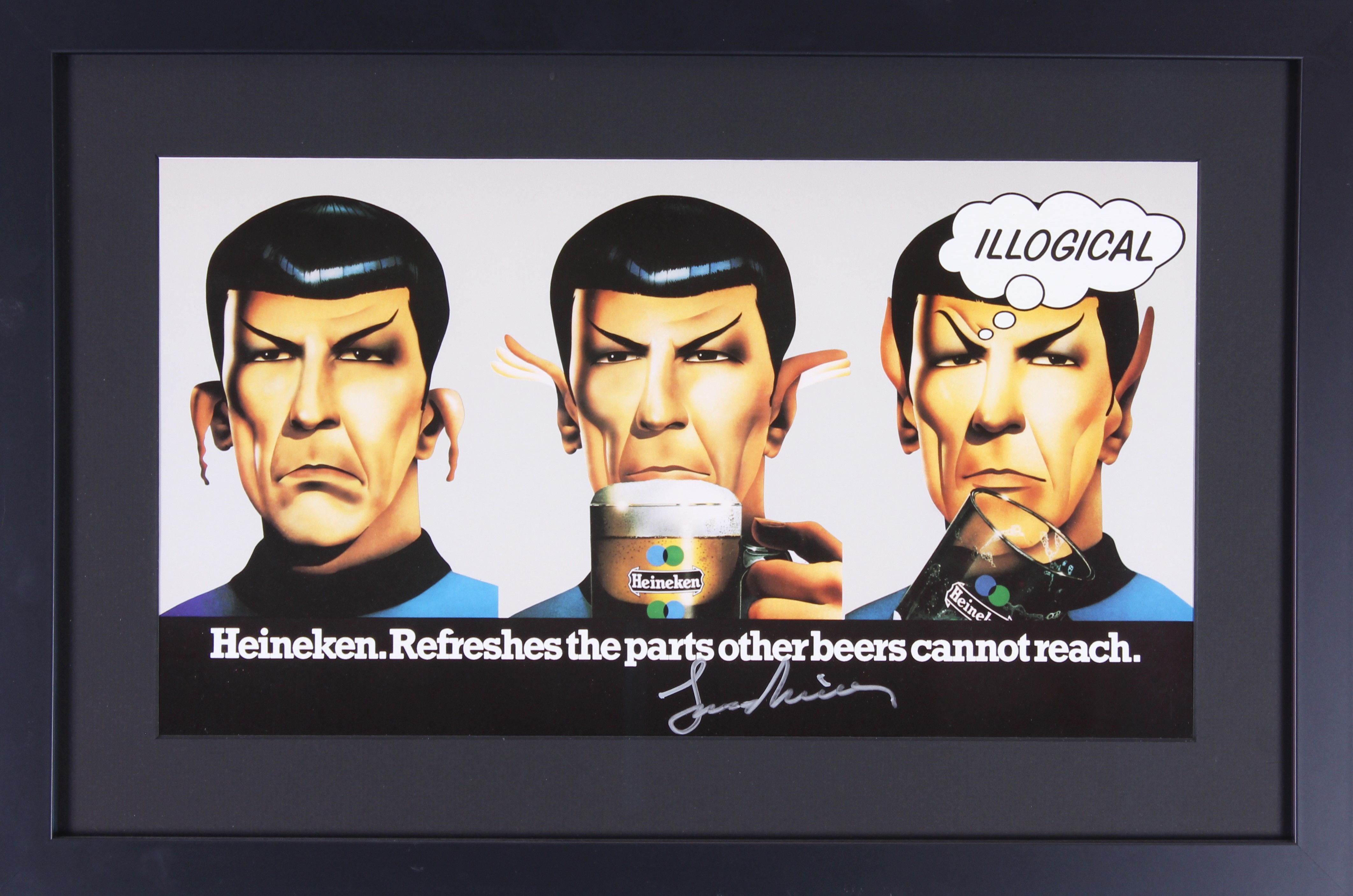
Nimoy found the Heineken poster’s sexual innuendo to be in bad taste. Once back home, he discovered the beer company had not been granted permission for the billboard campaign. Worse, he also found out Paramount had stopped paying him years earlier for the licencing of his image. So he sued Paramount for recompense. Paramount balked and the lawsuit dragged on, only to finally be resolved because Nimoy refused to even read the script for Star Trek: The Motion Picture until the studio settled.
A payment arrived and Nimoy signed on to play Spock.
In 2009, Nimoy was set to appear at Fan Expo in Toronto, and I needed something interesting for him to sign. I remembered the Heineken story, which Nimoy told in his 1995 book I Am Spock, and found high-quality reprints of the billboard on eBay. All set.
But would Nimoy sign the poster? After all, it had prompted a lawsuit. So I also brought the LP Mr. Spock’s Music from Outer Space to the convention as a backup.
When I got near the front of the autograph line, I unrolled the poster and showed it to his assistant, who smiled and said “Oh, I think Leonard will be fine with this.” There were not many people in line and, when he finished chatting with the person ahead of me, Nimoy turned, looked at the poster for a few seconds, and then looked up at me.
“I’m not sure you want to sign this,” I said.
“Why wouldn’t I?”
“Well, because of what you had to go through because of it.”
“Do you know the story?”
I nodded, and Leonard Nimoy nodded back and made a “go ahead” gesture with his hand, so I told him the story as he wrote it in I Am Spock. “That’s right,” he said. “You do know the story. That was a bad time, but I had to do it.”
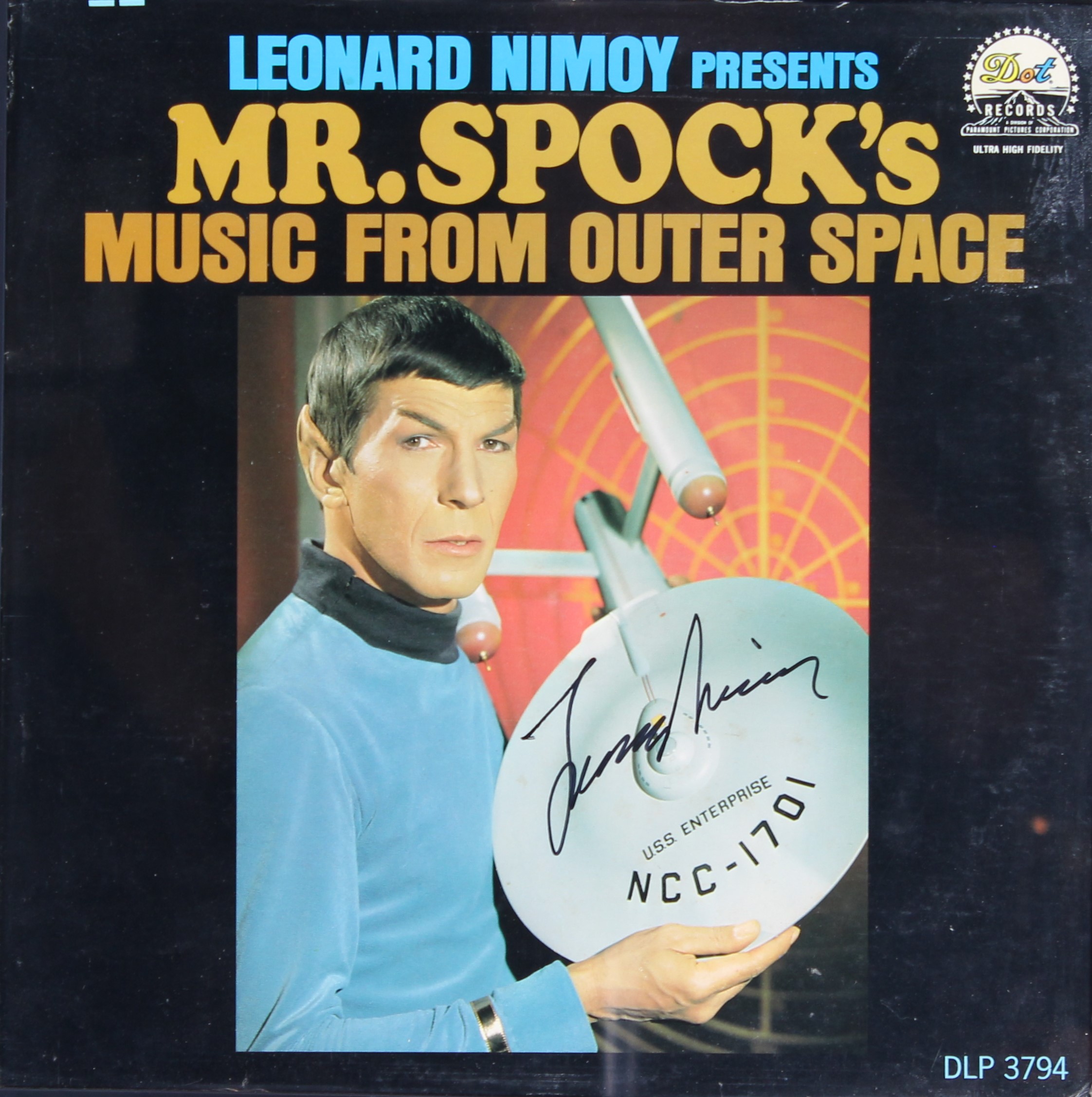
We talked a little about Toronto and I thanked him for coming to the city, and of course I also got him to sign Mr. Spock’s Music from Outer Space. It was great to spend even a few minutes with him; often the big lines at conventions mean you don’t get even a hello.
The story behind the poster makes it one of my favourite items, and my concern that he might refuse to sign it was justified. Years later I spoke with a collector who had the same idea, and lined up at a convention also in 2009, only to have Nimoy politely refuse to sign the Heineken poster. I don’t know why he signed mine. Perhaps because I knew the story.
Postscript
Many Web sites state the Heineken story appears in the earlier book I Am Not Spock, and that Nimoy sued Heineken. Both of these are incorrect.
An advertising guy named Mike Everett claims Heineken tried to get in touch with Nimoy to arrange a photo shoot for the ad and, when that proved difficult, just went with an illustration. The ad won the D&AD Silver award for the best poster of 1975, so it seems this whole thing didn’t really hurt Heineken.
-
Leonard Nimoy to Trek fans: Don’t smoke. Live long and prosper

Leonard Nimoy was set to appear at the 2006 Fan Expo in Toronto, along with William Shatner. I needed something unique to get signed; I already had a couple 8x10s and the cast-signed photo from The Score Board. eBay to the rescue. I found an American Cancer Society poster, featuring Leonard Nimoy as Spock. At the time, it was just a unique and interesting item for an autograph; no one knew that Nimoy would announce in 2014 that he had chronic obstructive pulmonary disease. He would die within a year, even though he had quit smoking 30 years earlier.
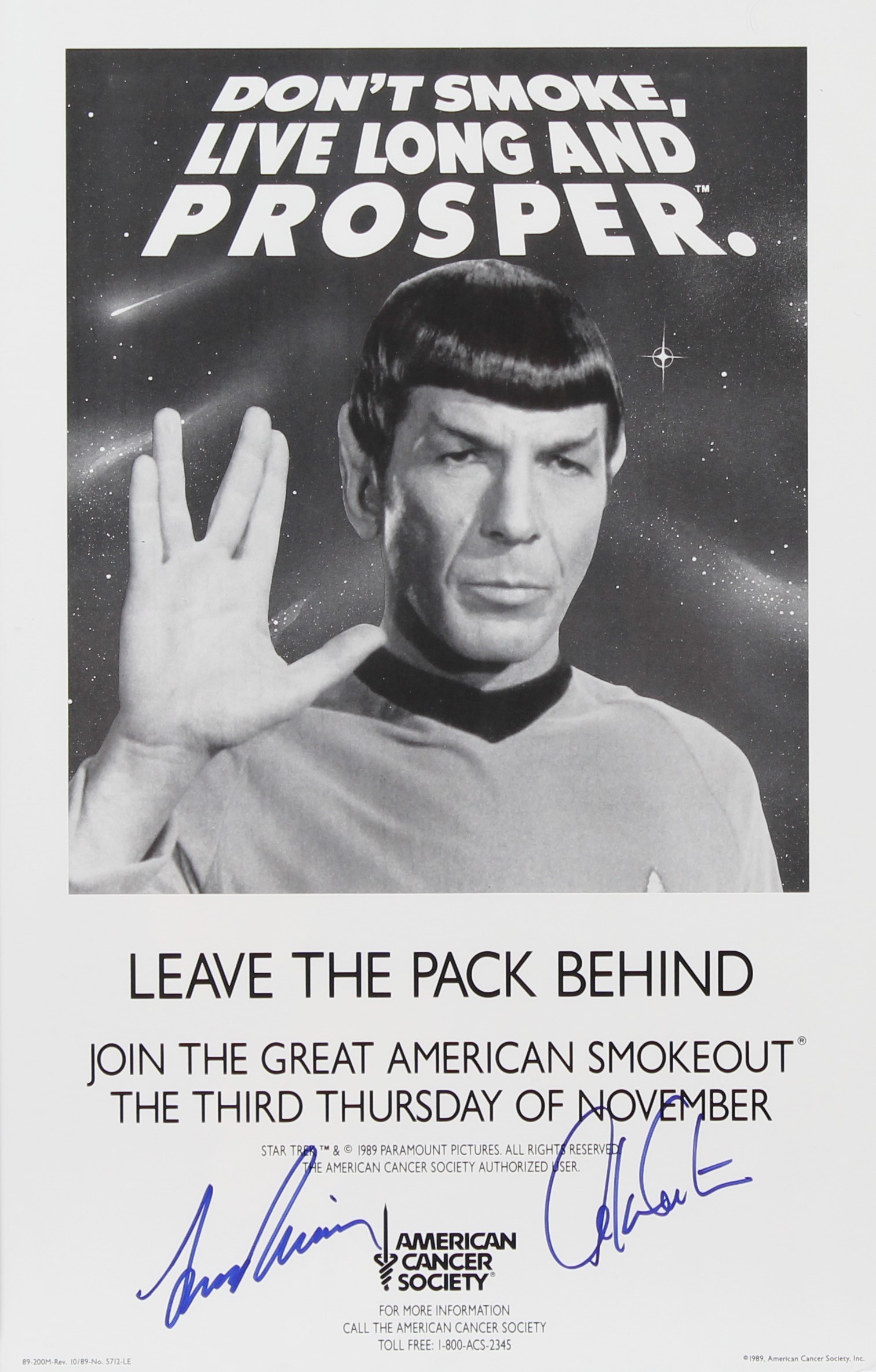
At Fan Expo, Nimoy and Shatner sat together at a long autograph table. The fans lined up, bought small tickets — one colour for Leonard, a different colour for Bill — and then passed an item and a ticket to an assistant. My poster and my ticket were duly handed over, Nimoy signed and pushed the poster down the table and, hardly looking up, Shatner signed it as well.
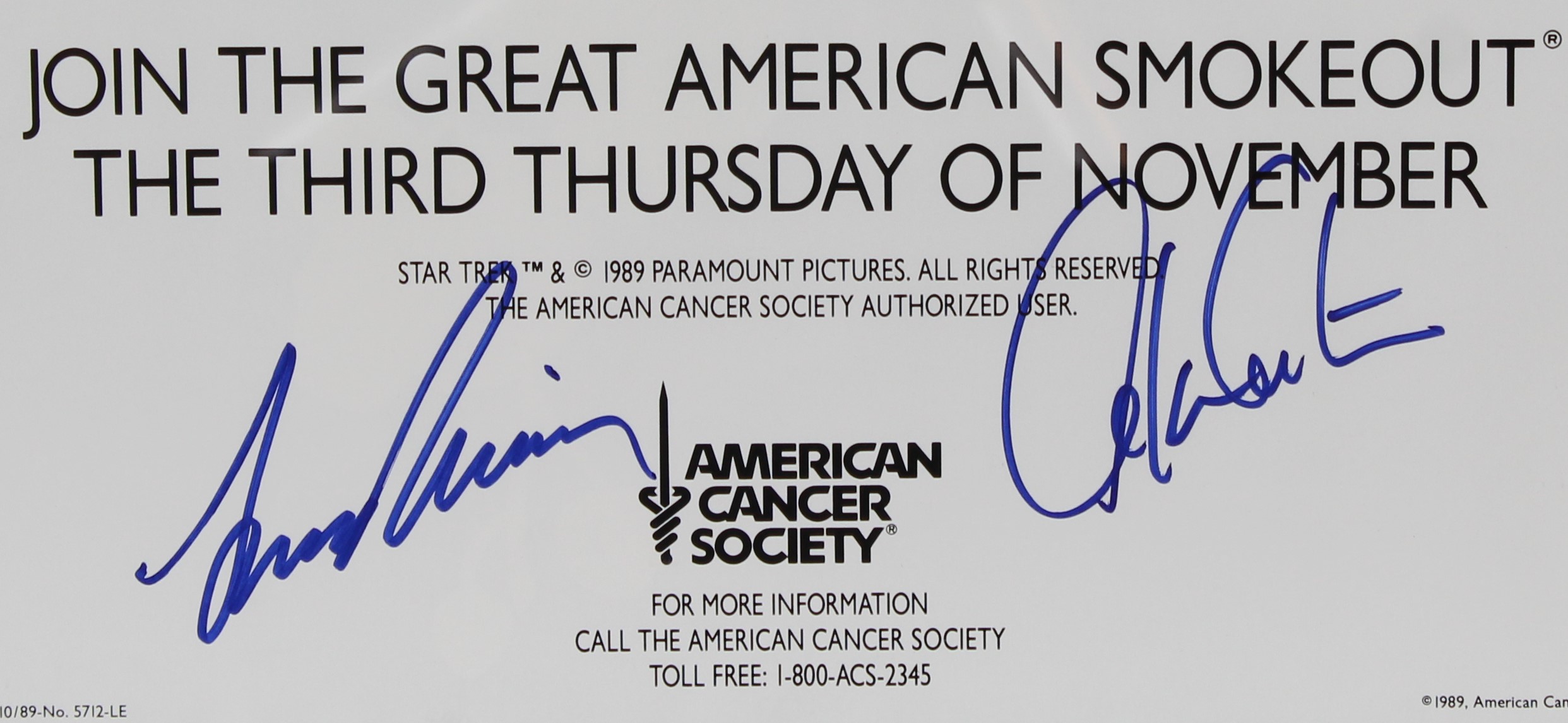
I was horrified. Spock was on the poster, Kirk was not. And then, five seconds later, I saw the humour of the situation. And I got a free autograph.
I would like to say that Nimoy looked up from the item, met my gaze, and took the time to tell me that this campaign was meaningful to him, that after struggling to quit smoking he was proud to encourage others to do the same. But that didn’t happen. He signed, slid the poster over and took an 8×10 from the assistant beside him. He had a big line to get through, and we both moved on.
Years later, when he died, I went down to my Star Trek room and looked at the poster. I hope it did encourage some people to quit, and that he was proud of that. It’s one of my favourite collectibles.
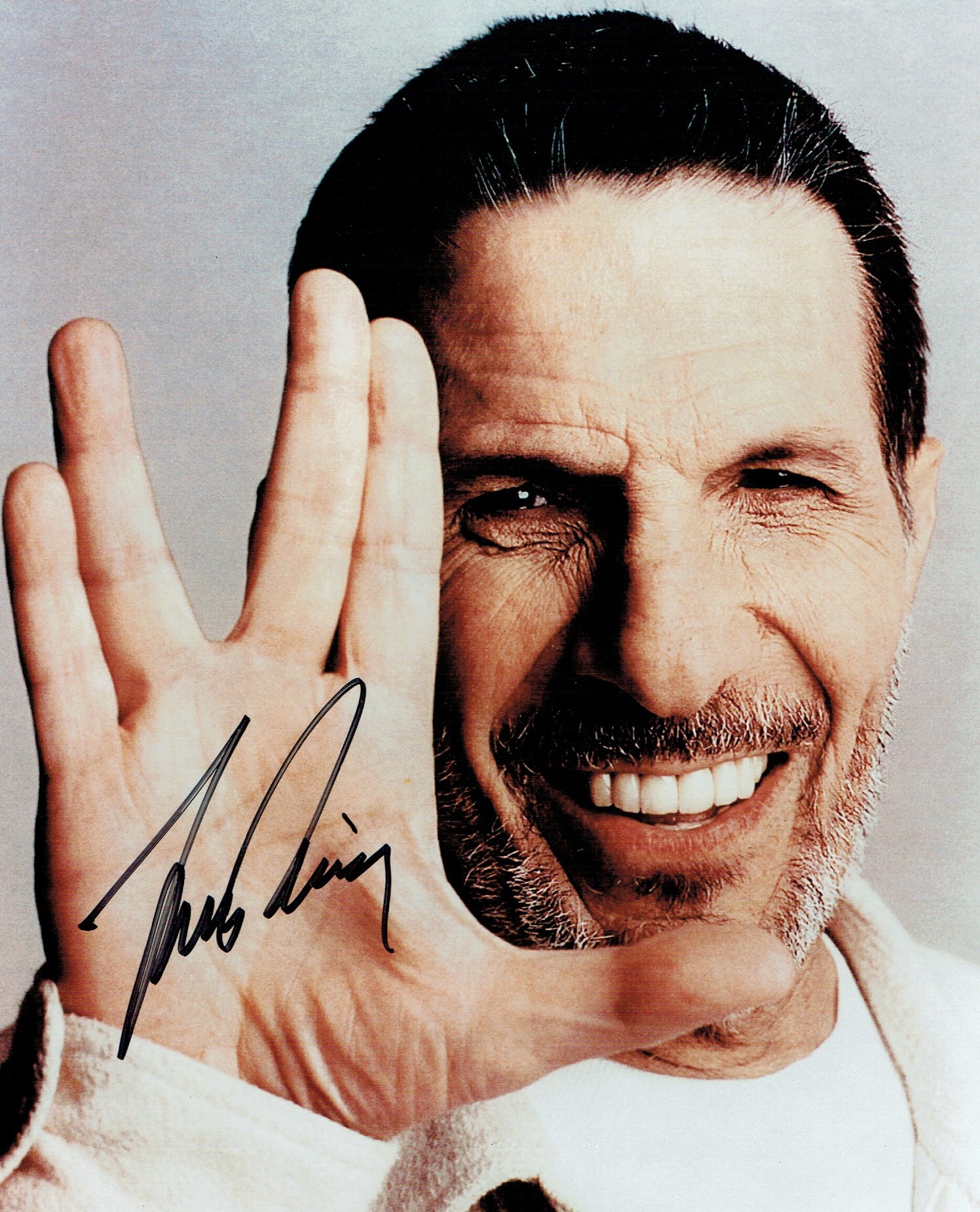
Signed 2003, SFX Toronto -
Franklin Mint’s 25th anniversary Enterprise

The Franklin Mint 25th anniversary Enterprise is not the most accurate model. That would be the big Polar Lights studio-scale model. But the Franklin Mint ship is mostly correct and it’s certainly beautiful.
It is a metal model, and quite heavy. It’s missing some black accents, like on the nacelles, and overall it’s too light in colour, more white than the light grey-blue of the real model. But the proportions and shapes are all correct, the nacelles are nicely in line with the ship (even more than 25 years after it was manufactured), and the shuttlecraft stored at the back of the secondary hull is nicely detailed but obviously too large. My favourite bit is that the top of the bridge comes off, revealing the tiny consoles and chairs within.


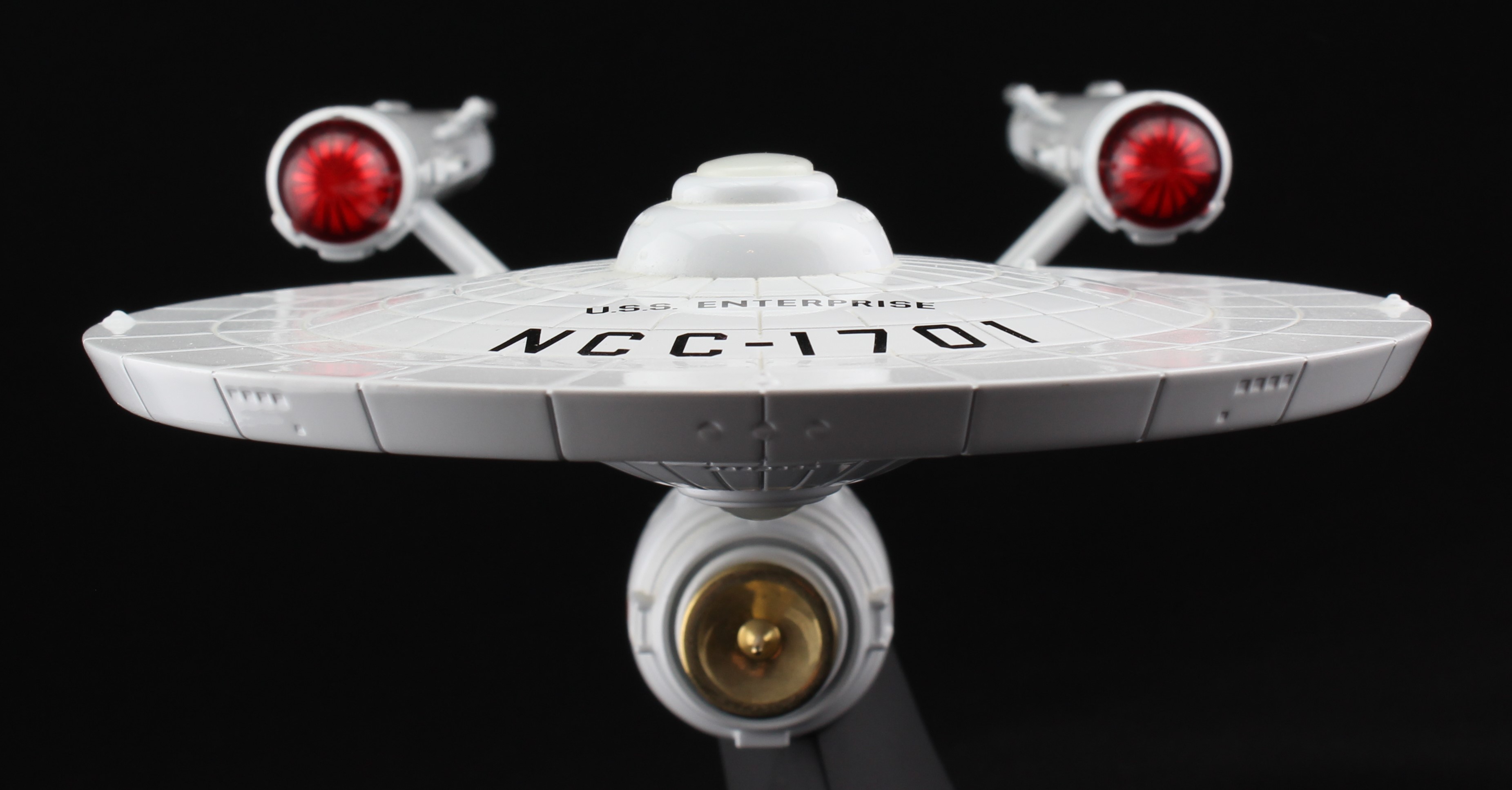

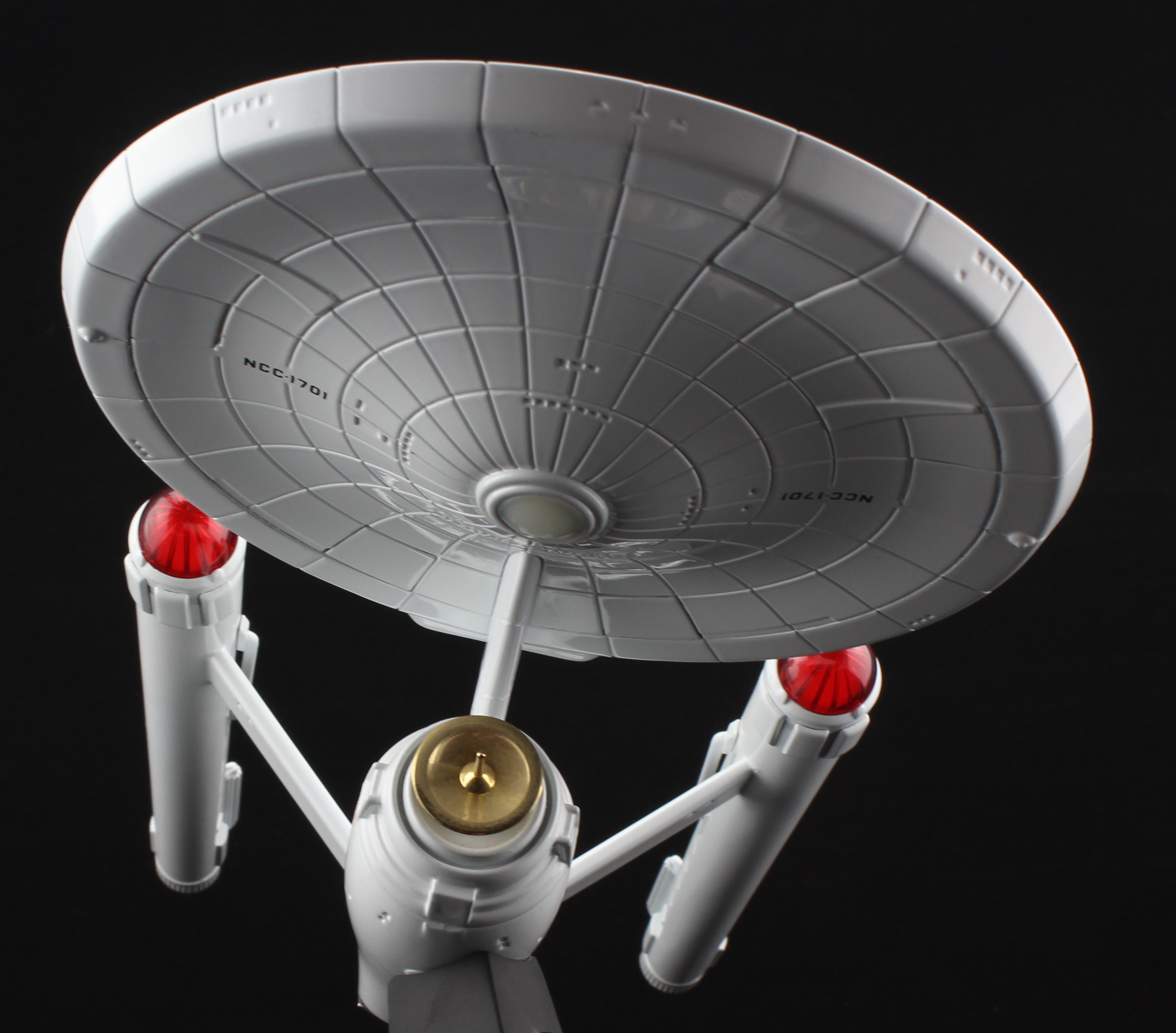


I own many Enterprises but this was one of my first high-end collectibles and it holds a special place for me.
-
Fire torpedoes at your friends: two starships from Dinky Toys

I love the Enterprise. Its design is both beautiful and functional, and importantly it looks great on camera from any angle. I own a number of exquisitely detailed and highly accurate Enterprise models. This is not one of those, but I like it a lot anyway.
In 1976, Dinky Toys launched the Enterprise and Klingon Battle Cruiser die-cast metal models. These were toys, rather than models, since they shot little plastic discs across the room. Ostensibly, these were photon torpedoes, but really they were just an excuse to try to ping your best friend in the head.
One clever design bit on the Enterprise is the bay doors that open at the bottom of the secondary hull. The doors serve as a stand for the ship. This is a great idea except, of course, on the real Enterprise there is no such bay. A roughly rendered shuttlecraft clips into the bay.
The torpedoes are loaded through a large hole on top of the saucer and fired by rotating the metal flange topping the bridge. (It is helpfully labeled “Turn to fire.”) I own a number of discs and the launch mechanism works but I almost never fire the discs; I am scared of breaking it.
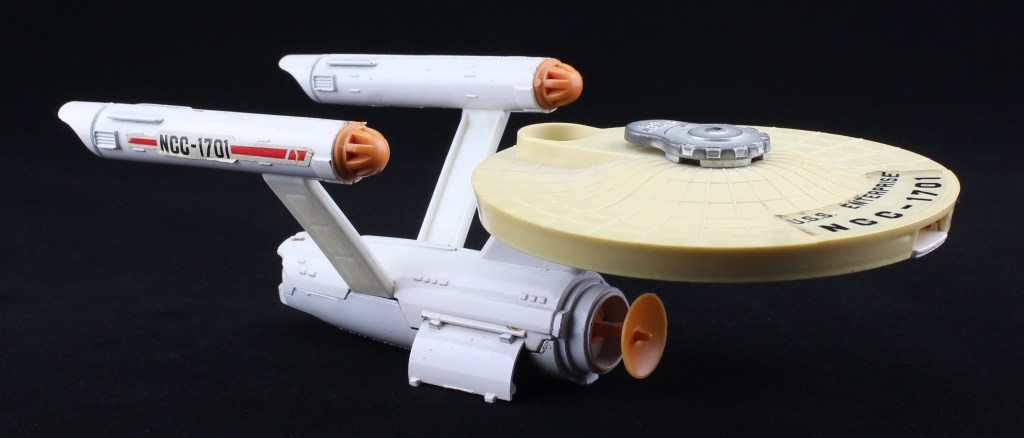
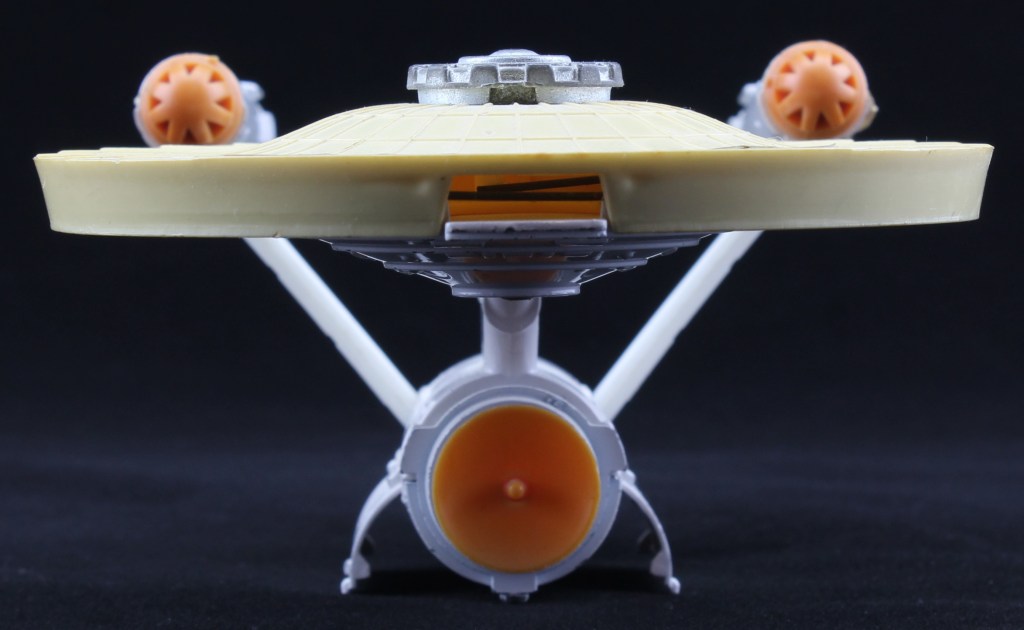
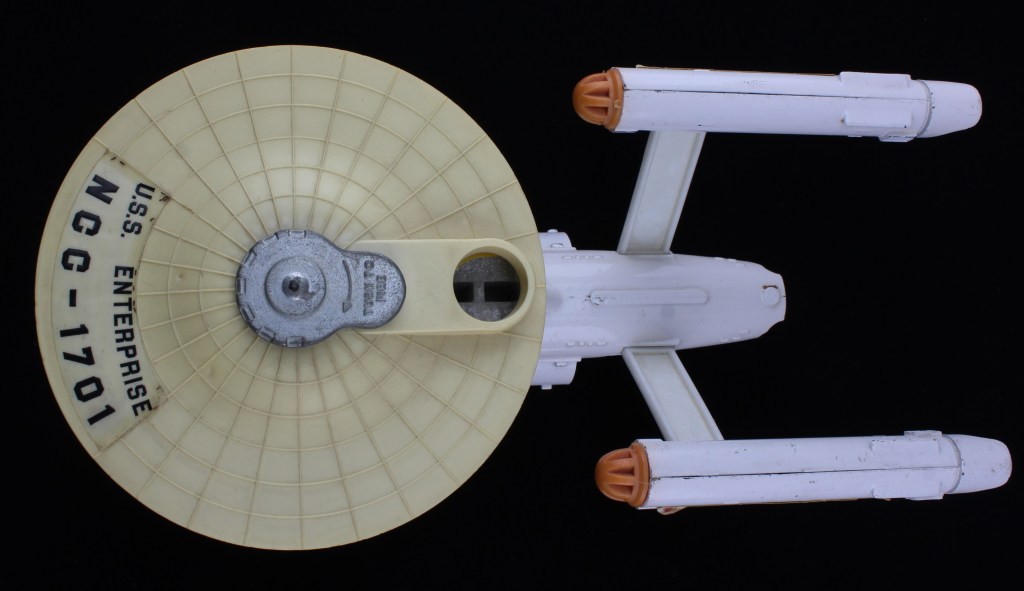
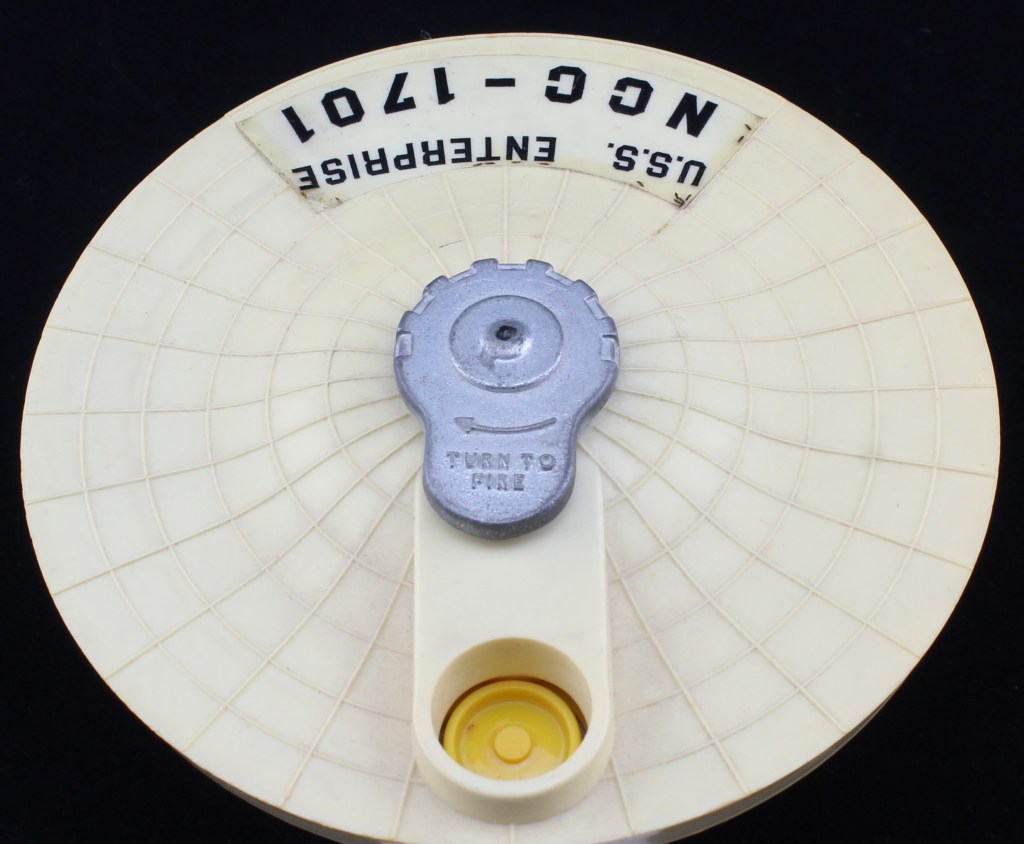
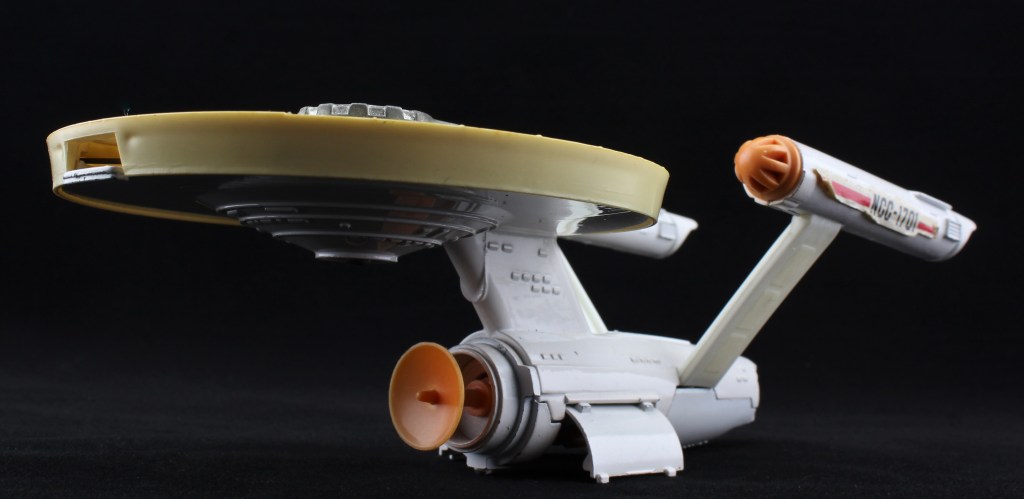
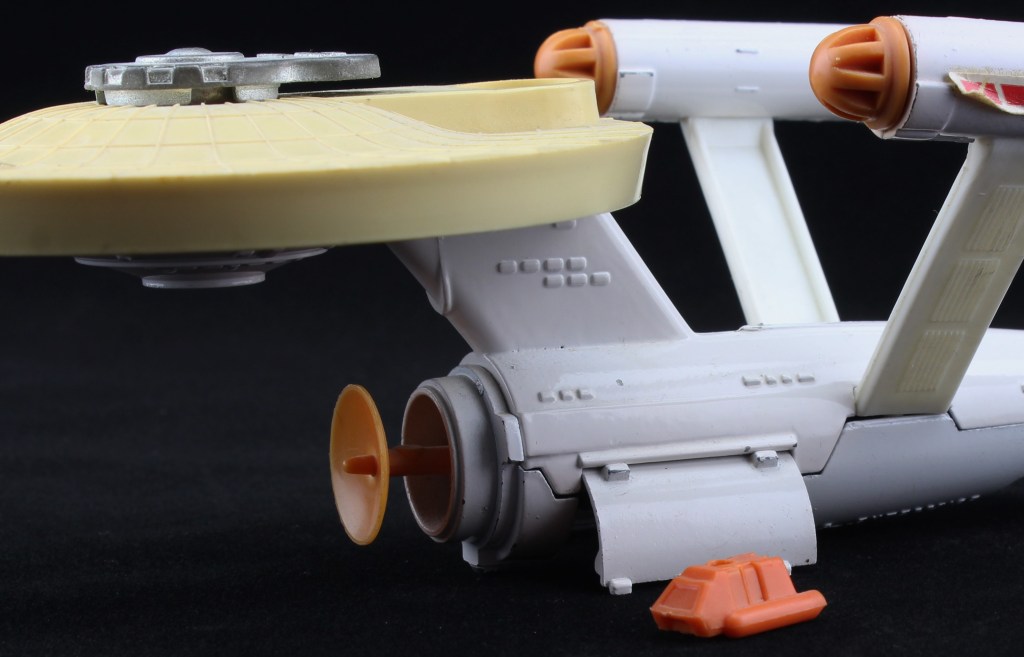
The toy is attractive, although the nacelles are stubby and tend to droop on their plastic struts, the orange bits are a little too orange, and the saucers get a little yellow with age, but any collector who loves the Enterprise really needs one of these.
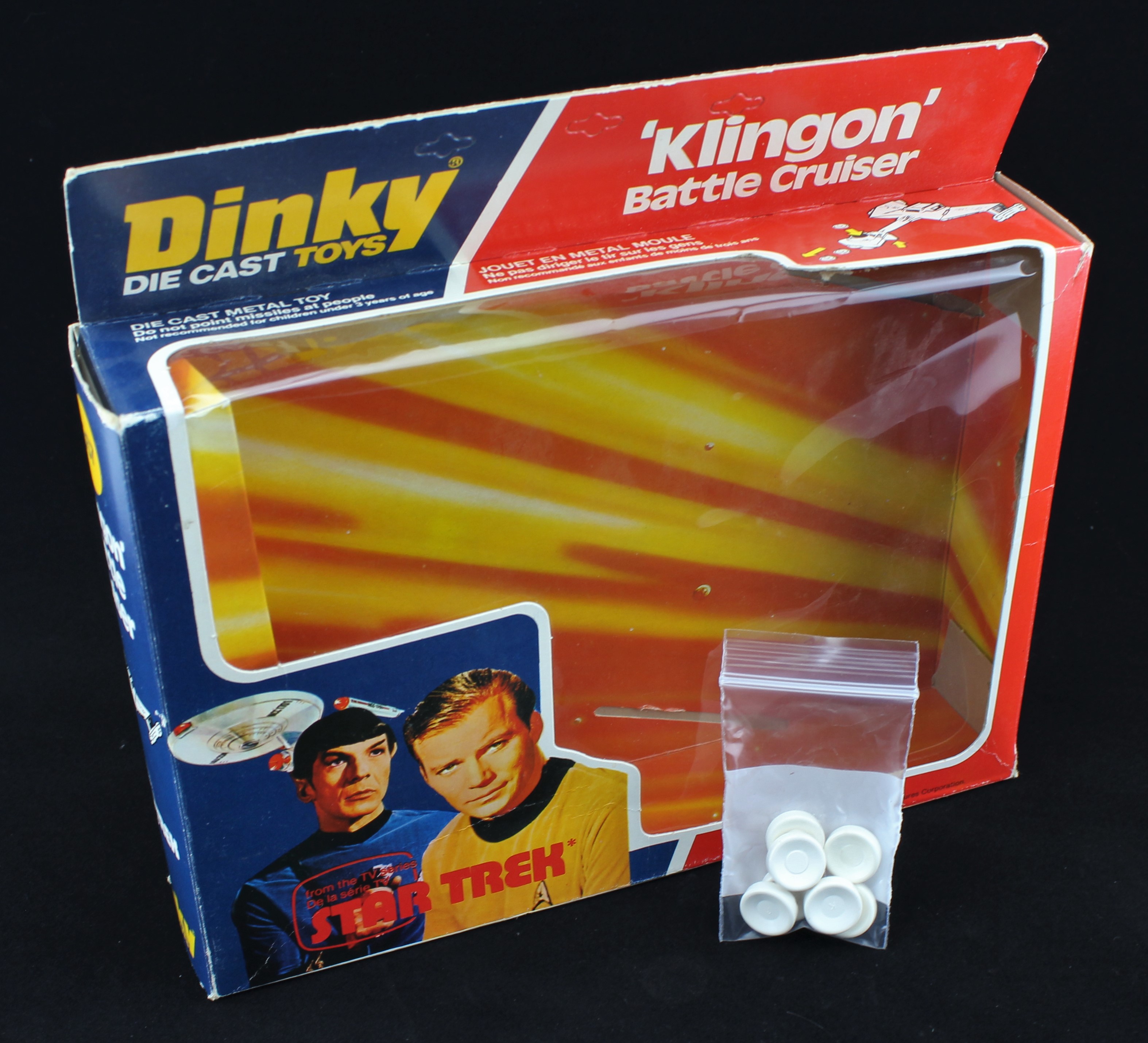
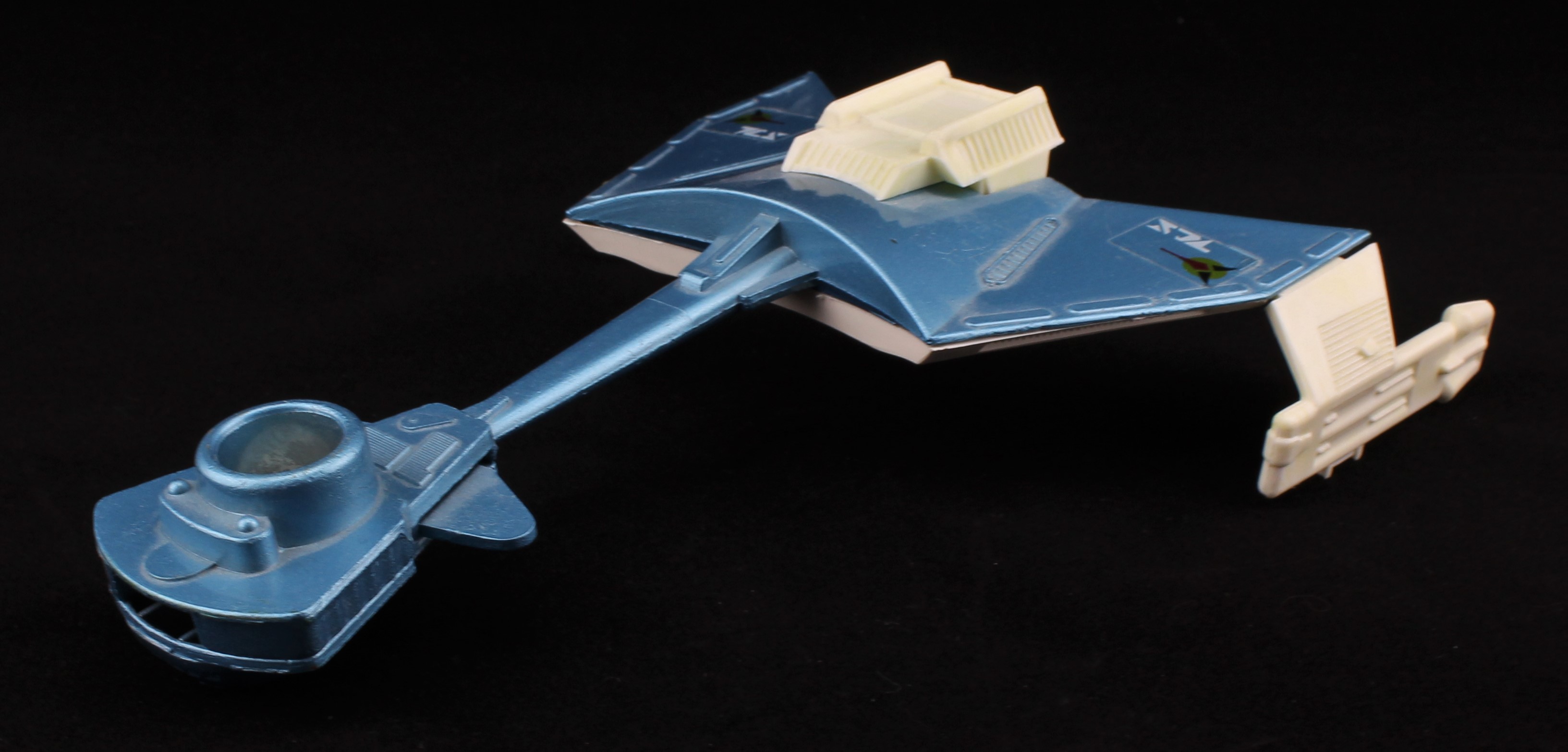
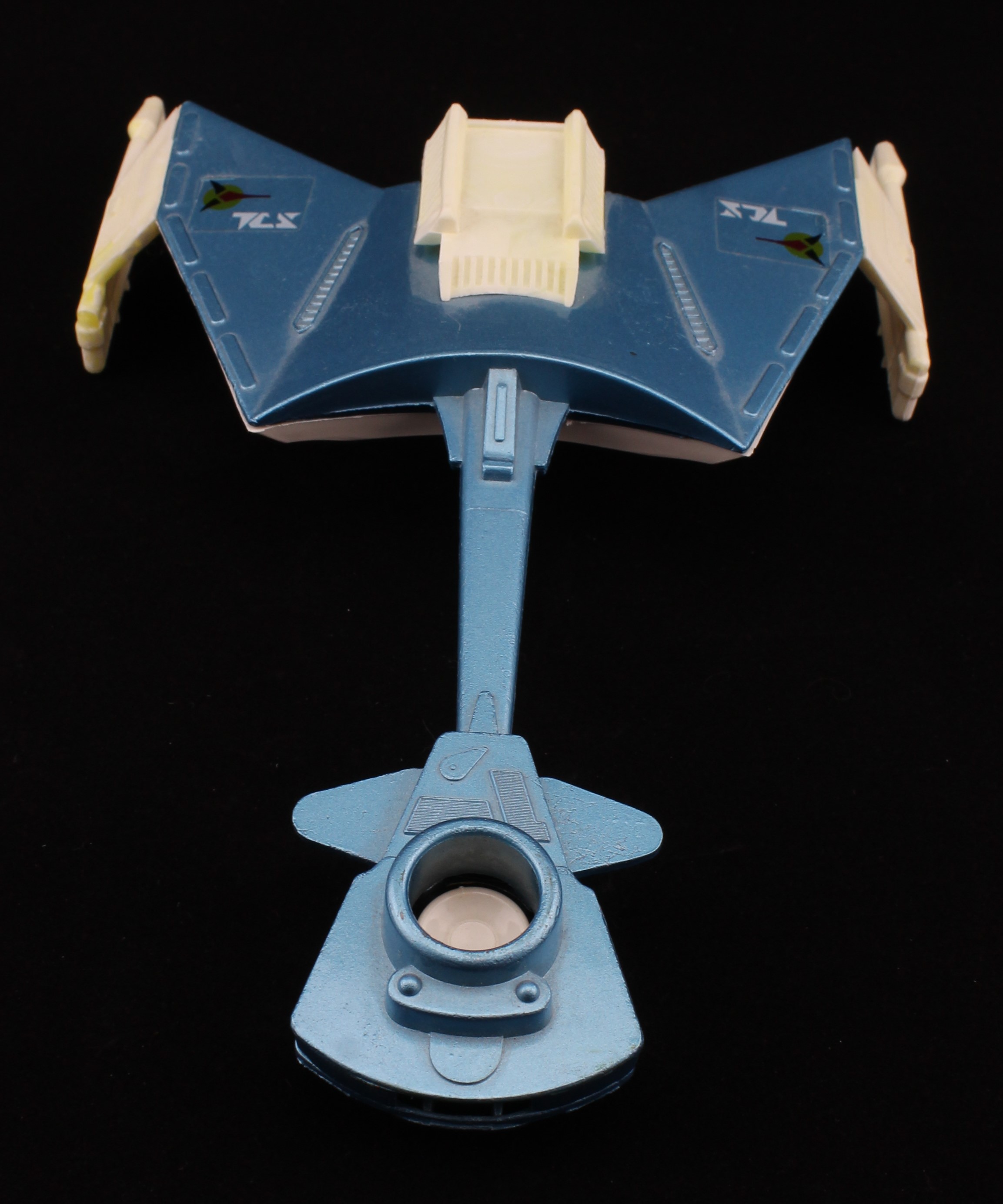
I also own the Klingon ship. It fires the same type of discs, although the launch mechanism is different, and it has no stand. The ship rests on its nacelles; this explains why these or the plastic bottom of the ship are often cracked when you find one today.
The excellent Dinky Toys blog offers detailed articles on the Dinky Enterprise and Dinky Klingon Battle Cruiser.
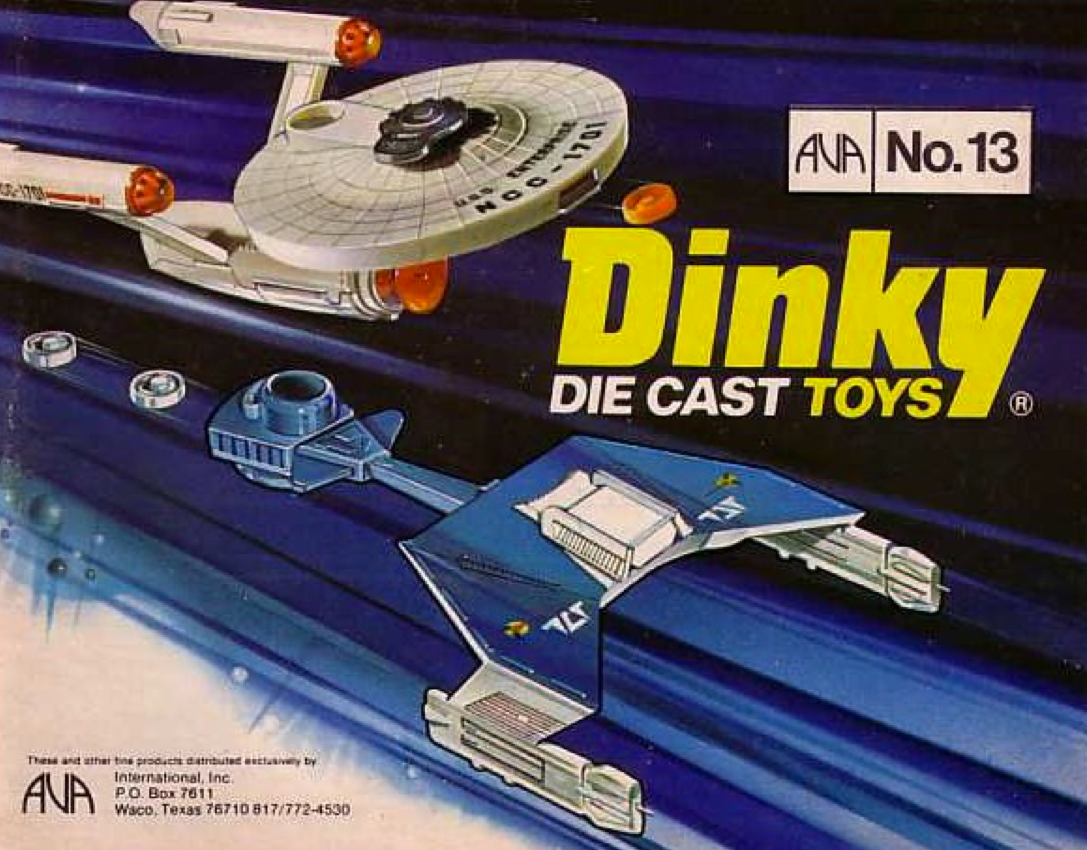
A sales catalogue, from the Dinky Toys blogIn 1980, Dinky planned to release a refit Enterprise as seen in The Motion Picture and even produced prototypes and ads for it, but the company folded in 1979 before the toy hit the shelves. It did release a small, non-torpedo version of the refit, however.
I’ve seen the original Dinky Enterprise sell for anywhere between $50 and $300, depending on condition. Anyone shopping for one needs to ask if the firing mechanism still works and if it comes with the torpedos and the shuttle.
-
The Roddenberry memo that helped launch The Making of Star Trek
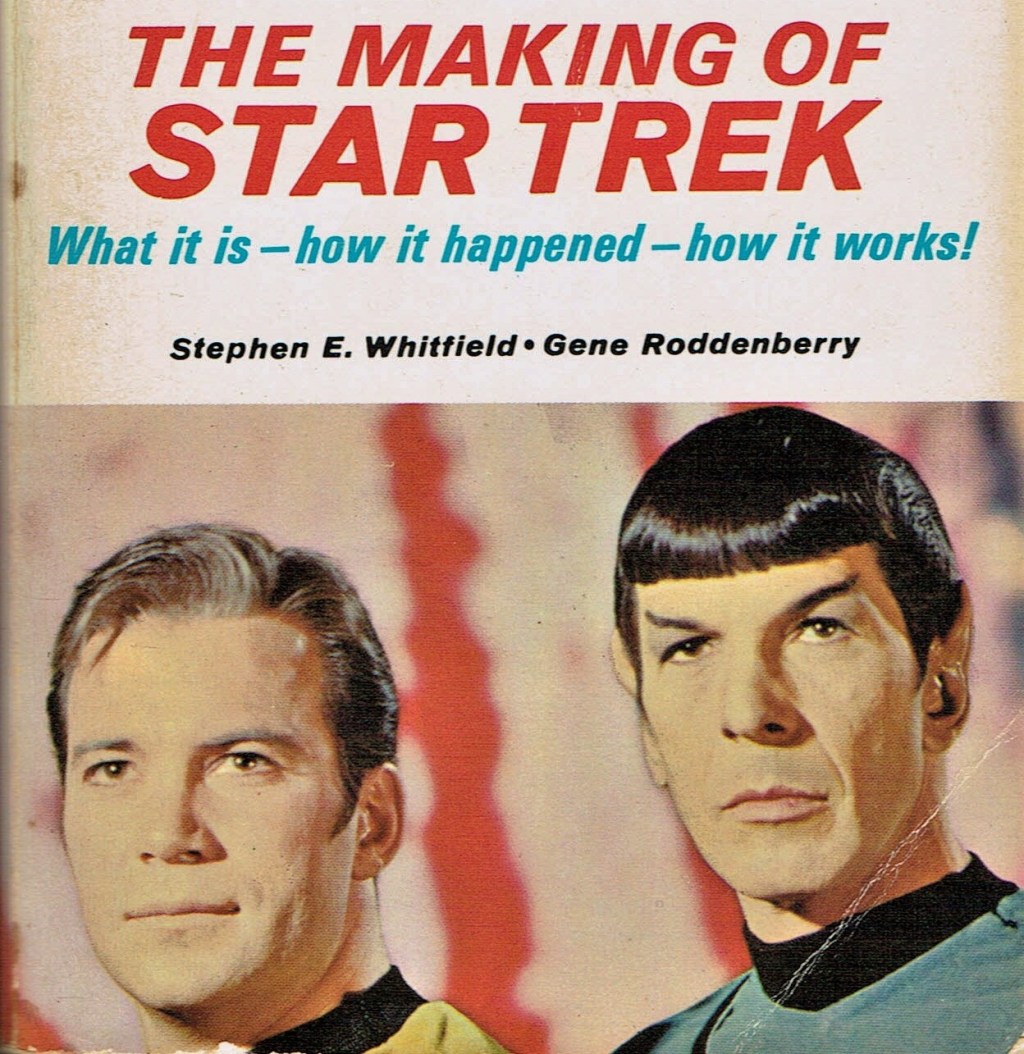
Gene Roddenberry always had an eye out for projects that could either bring in some income or promote Star Trek. One such effort was Lincoln Enterprises, a mail-order merchandise firm. It was originally operated by superfans Bjo and John Trimble, but after nine months they were dropped in favor of Stephen Poe. Poe was the National Advertising and Promotion Director at Aluminum Model Toys, better known as AMT, the company which produced all the early Star Trek consumer model kits. AMT agreed to build the exterior and interiors of the shuttlecraft Galileo for the episode The Galileo Seven in return for the rights to produce Star Trek models. (Some sources say the deal was to produce the Klingon D7 model, others say the Enterprise; Matt Jefferies’ brother Richard claimed in his book Beyond the Clouds that the deal covered both the Enterprise and the Galileo models.) The AMT story is interesting and the Memory Alpha entry is worth reading.
[Update: I have since cleared up the licensing mystery.]

Fourth printing, March 1969 Poe and Roddenberry became friends, bonding over their shared experiences as pilots. Poe took over Lincoln Enterprises and began working with Roddenberry on a behind-the-scenes Star Trek book, the first written about the show. Poe used his stepfather’s name, Whitfield, for the book. Roddenberry required that he be listed as a co-author, so he got half of the book’s profits. Roddenberry had already made a similar move on theme composer Alexander Courage, writing lyrics that were never meant to be used on air but secured the series creator half of Courage’s royalties. This led to bad feelings between Courage and Roddenberry, but this was not the case with Poe; he appreciated the opportunity to break into publishing. (I’ve included Roddenberry’s lyrics at the end of this post.)
Early in the planning process for The Making of Star Trek, Roddenberry wrote to his agent, Alden Schwimmer, to brief him on the project. By June of 1967, Poe had apparently generated some publisher interest. The book was written during the production break between seasons 2 and 3 and would be published by Ballantine Books in 1968. Less than a year later, it was in its fourth printing and Memory Alpha says it is the most reprinted Star Trek book. And rightly so; Poe was given free access to the Star Trek sets and production offices, and the book he wrote is an invaluable resource.

I purchased this memo on eBay and then authenticated it with Susan Sackett, Roddenberry’s assistant during the TNG years. (Sackett wrote her own book, Inside Trek: My Secret Life with Star Trek Creator Gene Roddenberry. Not much is left secret however; the book is a great read but be prepared to learn a lot about Gene Roddenberry.) She was kind enough to reply to my email and confirm the signature is indeed Roddenberry’s. This is one of three Roddenberry signatures in my collection; the other two will be featured on this site.
And now, just for fun, the theme lyrics Roddenberry wrote, as published in Herb Solow and Bob Justman’s excellent book Inside Star Trek. Remember that the lyrics didn’t have to be good, they just had to exist. Contractually, this gave Roddenberry half of the royalties.
Beyond
The rim of the star-light
My love
Is wand’ring in star-flight
I know
He’ll find in star-clustered reaches
Love,
Strange love a star woman teaches.
I know
His journey ends never
His star trek
Will go on forever.
But tell him
While he wanders his starry sea
Remember, remember me.Postscript
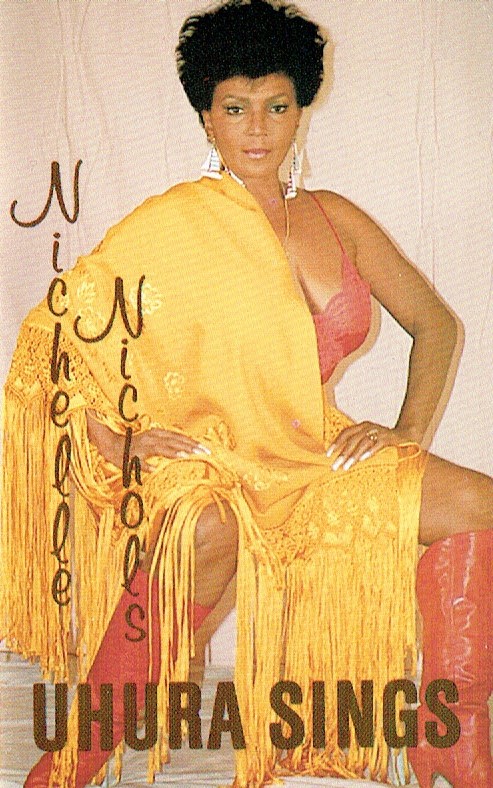
Many Web sites claim that Nichelle Nichols sings Roddenberry’s lyrics on her 1986 album Uhura Sings. However, the words in her Theme from Star Trek were actually written by partner Jim Meechan. Play the video below to hear that song.
Want to experience Roddenberry’s lyrics? Check out this take by comedy duo Tenacious D.
-
No Chapel, no T’Pau. The original Amok Time story outline

I own the Amok Time story outline Ted Sturgeon submitted to Gene Roddenberry. It’s a fascinating look at the process of creating an episode and at the Trek that could have been.
The outline in my collection came from Ted Sturgeon’s typewriter. This is not a photocopy, but the actual pages he typed and that Roddenberry read.
I found the outline in an eBay auction a number of years ago. Apparently, Desilu gave a bunch of production papers — scripts and pitches mostly — to a local college for use by film and television students. This document was one of those donated items.
The pages looked like the real thing and obviously came from a typewriter, but I wanted to authenticate them. Theodore Sturgeon died in 1985, but his daughter Noel Sturgeon is the Trustee of the Theodore Sturgeon Literary Trust. I contacted her, sent her photographs of the document and she confirmed it is real. She wrote to me: “you have a Sturgeon-authored document on your hands.”
Also, written on the first page is the name “Gene Roddenberry.” It is not Roddenberry’s writing, so I asked Noel about it. She replied: “I can say that this is my father’s typewriter and the label “Gene Roddenberry” is his [Ted Sturgeon’s] writing, so it is likely this is Gene’s copy of the treatment (which would make sense given the provenance as you have given me).”
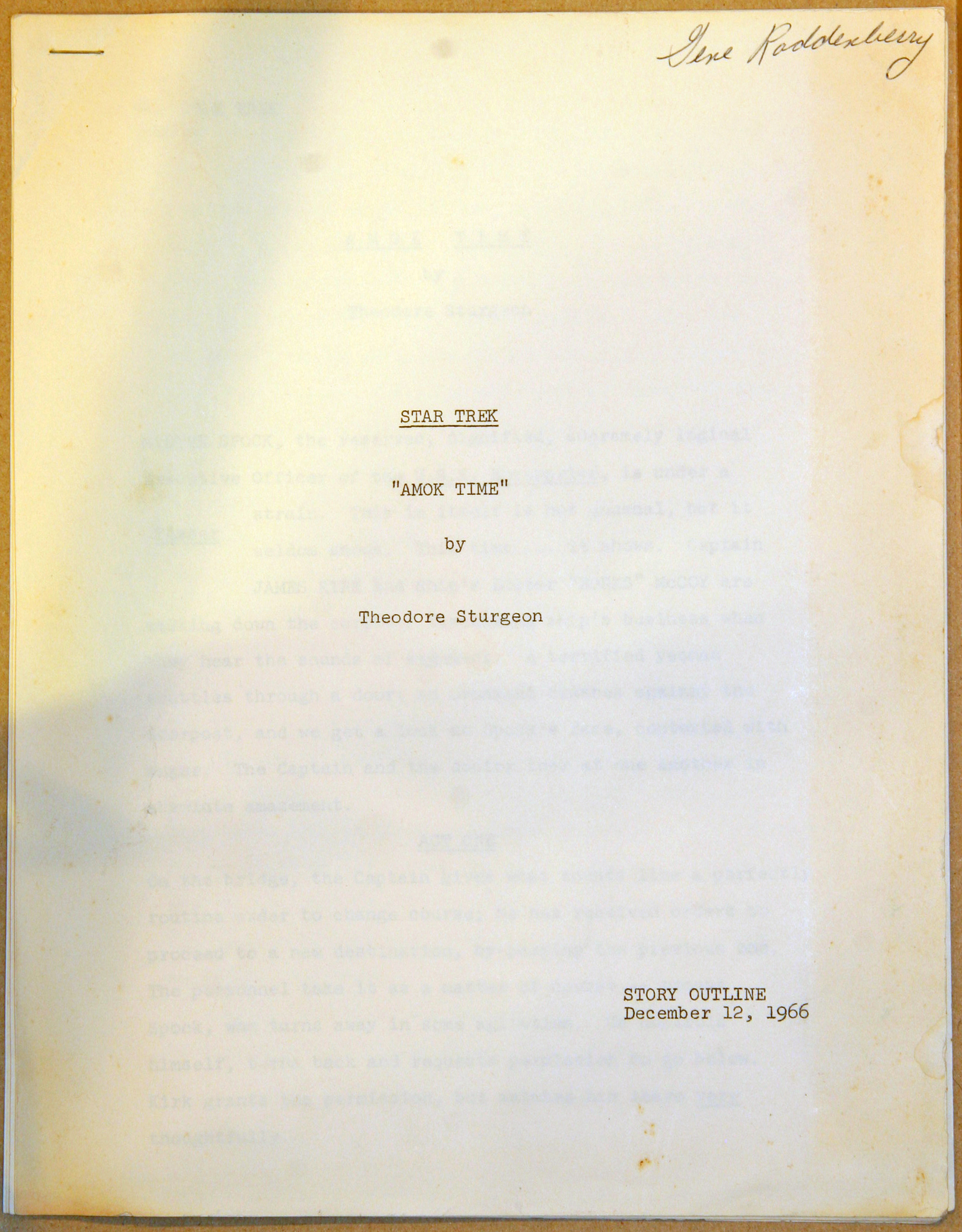
So not only do I own the outline of one of the best episodes, I have Roddenberry’s own copy of it.
There are many interesting differences between Sturgeon’s outline and the filmed episode.
– Nurse Chapel does not appear. On screen, Chapel brought Spock plomeek soup; in the outline, it is a nameless “terrified yeoman” who flees Spock’s quarters. In the two scripts Sturgeon would write based on this outline, that character became Maggie, a young woman infatuated with Spock. But none of the production people liked the character; DC Fontana, in an April 4, 1967, memo to Gene Roddenberry, suggested cutting the character: “Emphasis on Maggie is wrong. We don’t need her in this show.” She suggested using Christine Chapel instead, picking up on Chapel’s interest in Spock from The Naked Time.
– It is Dr. McCoy who figures out Spock’s mating problem and explains the process to Kirk, not Spock who confesses it to Kirk.
– Kirk gets another ship to fill in for the Enterprise, and therefore does not have to disobey Starfleet orders.
– T’Pring awaits Spock on Vulcan, but T’Pau and Stonn do not appear in the outline.
– T’Pring refuses Spock, demands the challenge of combat against Kirk, and sets out the rules for the three rounds of fighting: the first will be fought with maces, the second with knives and the third with fists. A round only ends when an opponent is killed or disarmed. Therefore, if both are still alive by the third round, it must end in a death.
– McCoy urges Kirk to accept a stimulant or to stun Spock with a phaser, allowing them all to beam back to the Enterprise.
– McCoy gives Kirk a shot without the captain realizing it.
– Vulcans are able to “tell at a glance, and positively, that a dead man is really dead.”
– After Kirk is thought to be dead, McCoy says the Enterprise will stay in orbit for 20 minutes. Spock can return to the Enterprise or stay with T’Pring. McCoy promises not to tell anyone what Spock has done.
– McCoy and Kirk agree that they will never tell Spock the truth about the injection, claiming instead that a “miracle” had occurred.
Sturgeon’s outline is close to the filmed episode, but one element really stands out: I am not sure why McCoy thinks he can simply not tell anyone what Spock did. People will ask questions when McCoy beams up with a strangled and supposedly dead captain and no first officer.
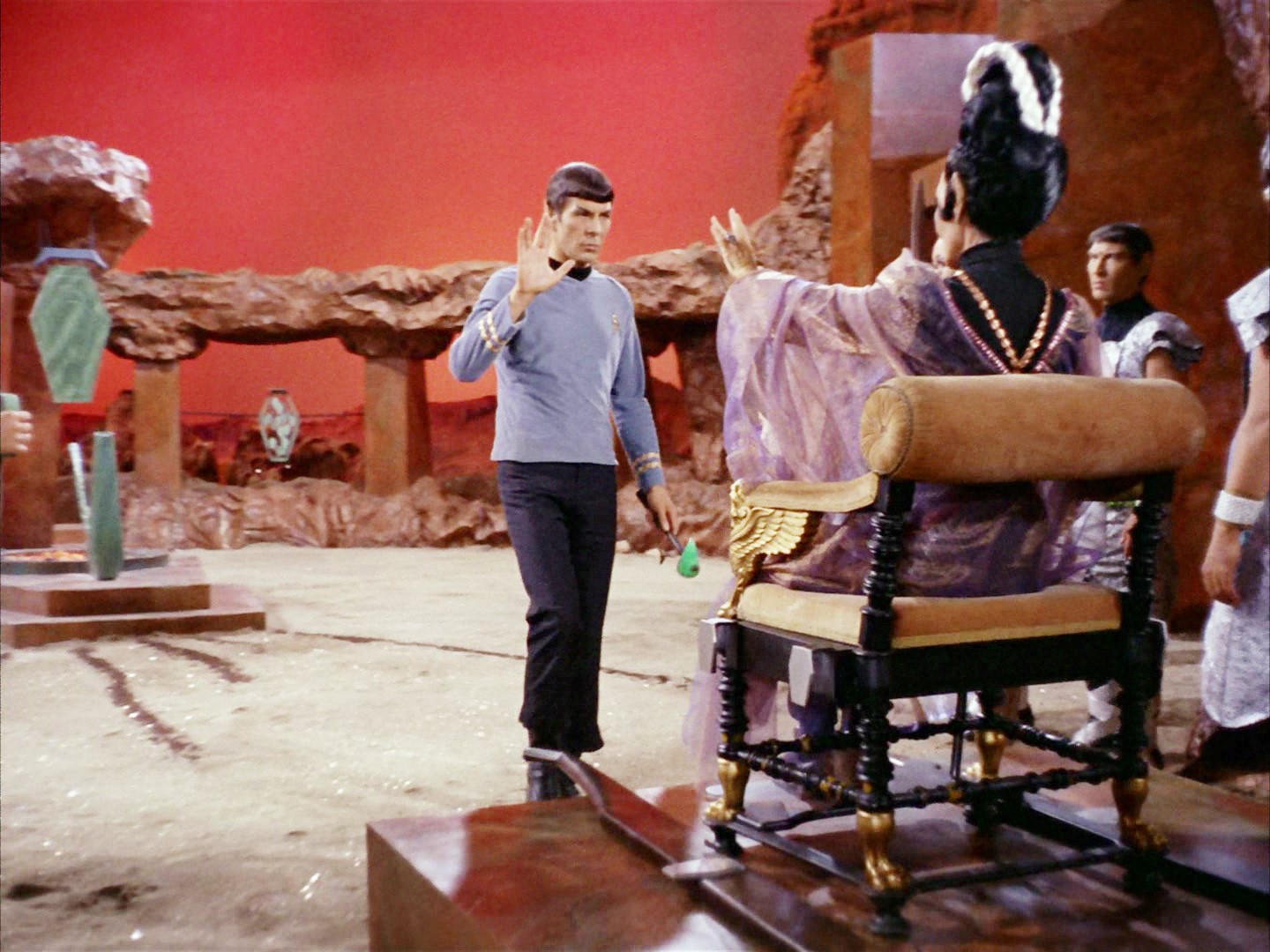
Screen cap from TrekCore.Missing from the outline are also a strong justification for Kirk to fight Spock, and one of the best scenes in Star Trek: Spock’s amazed smile and exclamation of “Jim!” at the end, and McCoy’s “In a pig’s eye.” Also missing is the Vulcan greeting gesture, as it was created by Nimoy during filming. In the shooting script, Spock bows to T’Pau and she lays her hands on his shoulders.
Fun fact: in Sturgeon’s outline, McCoy was to “shoulder” Kirk after the captain is knocked out. I am sure DeForest Kelley would have objected to hauling a limp Shatner up onto his shoulder.
DC Fontana, Gene L. Coon and Roddenberry all worked on the script after Sturgeon submitted his second draft of the teleplay, but Sturgeon wrote a wonderful story and much of the final episode is in this draft, directly from Sturgeon’s typewriter.
-
Bobby Clark signed a Gorn mask

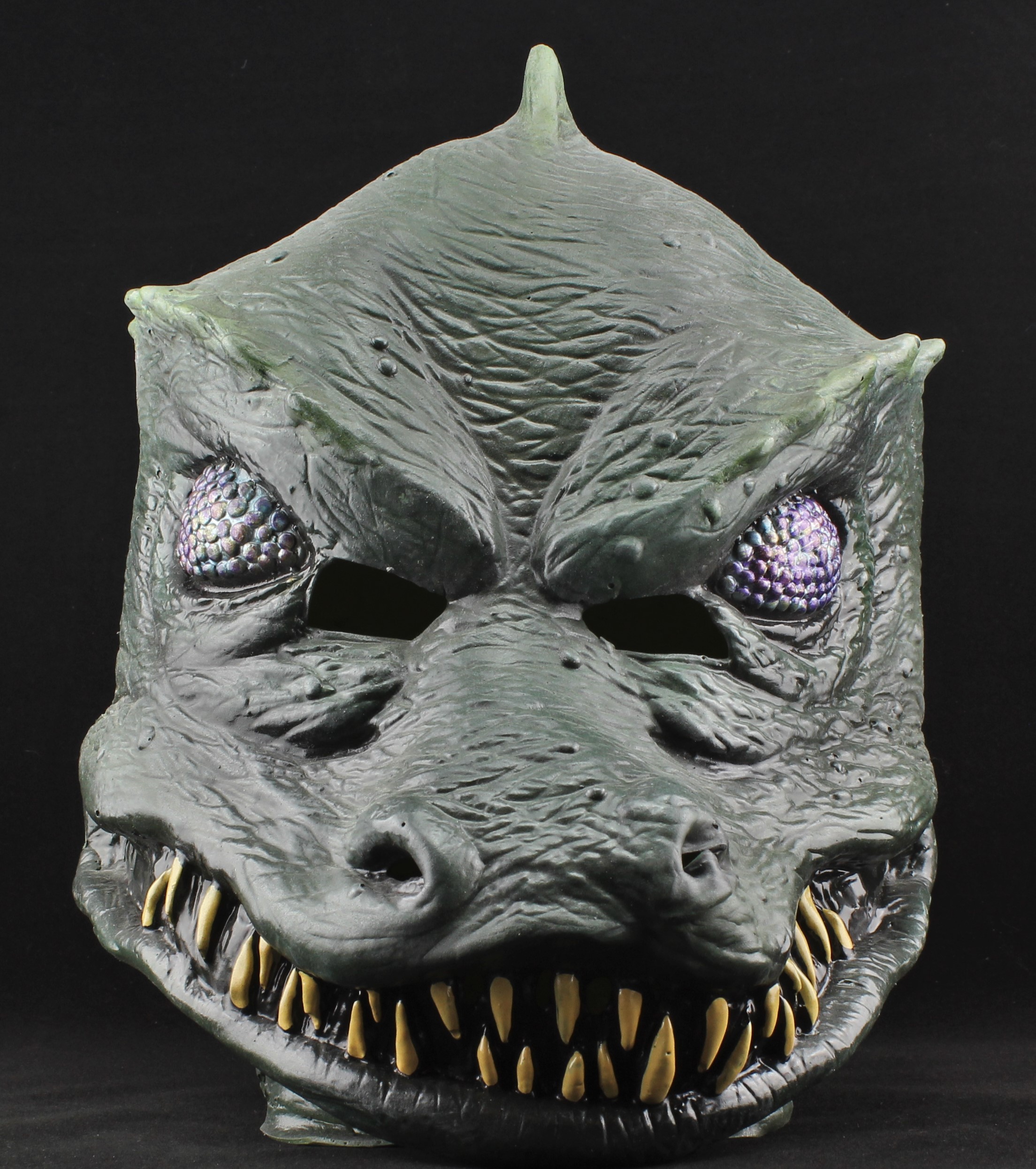
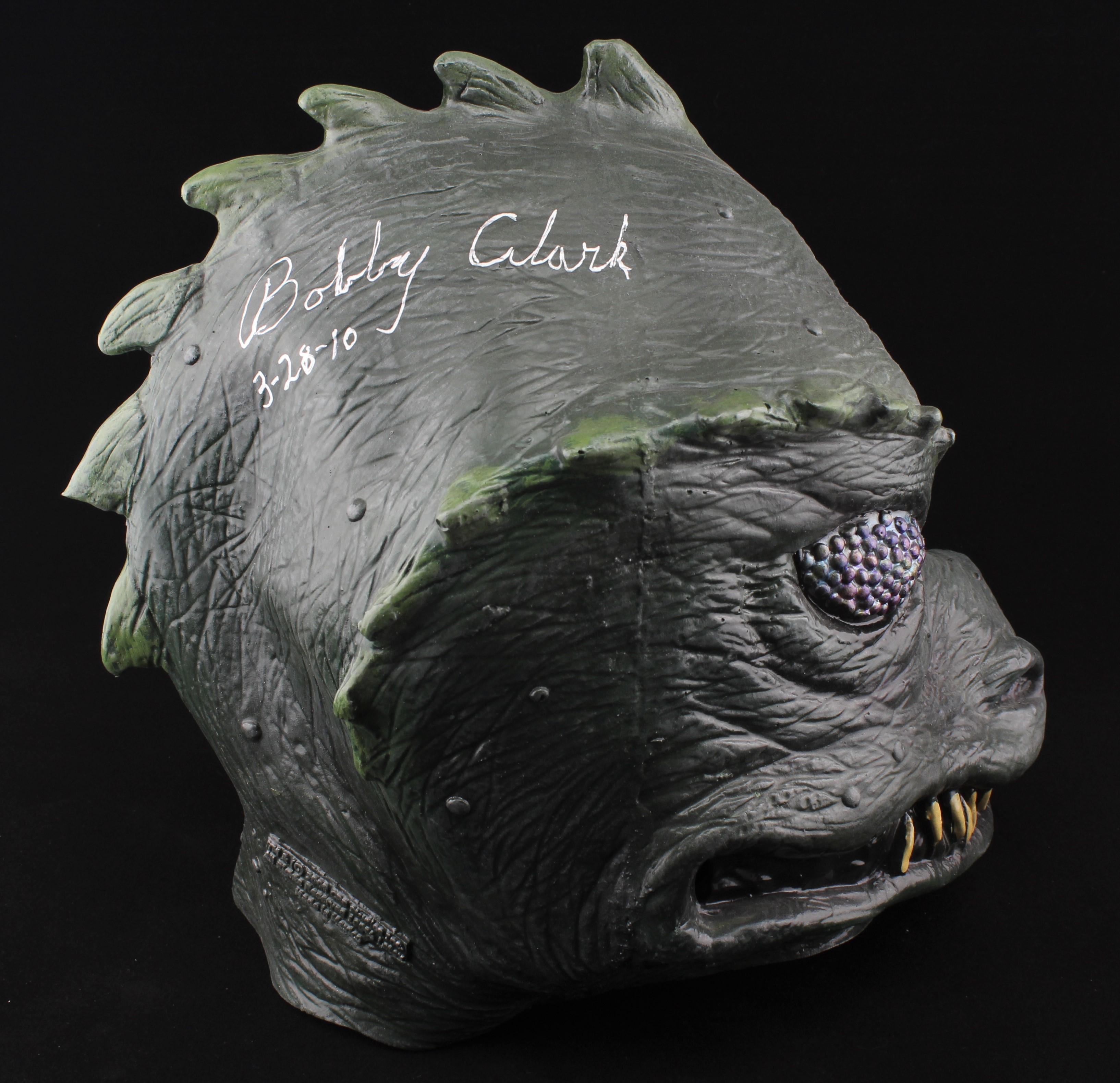
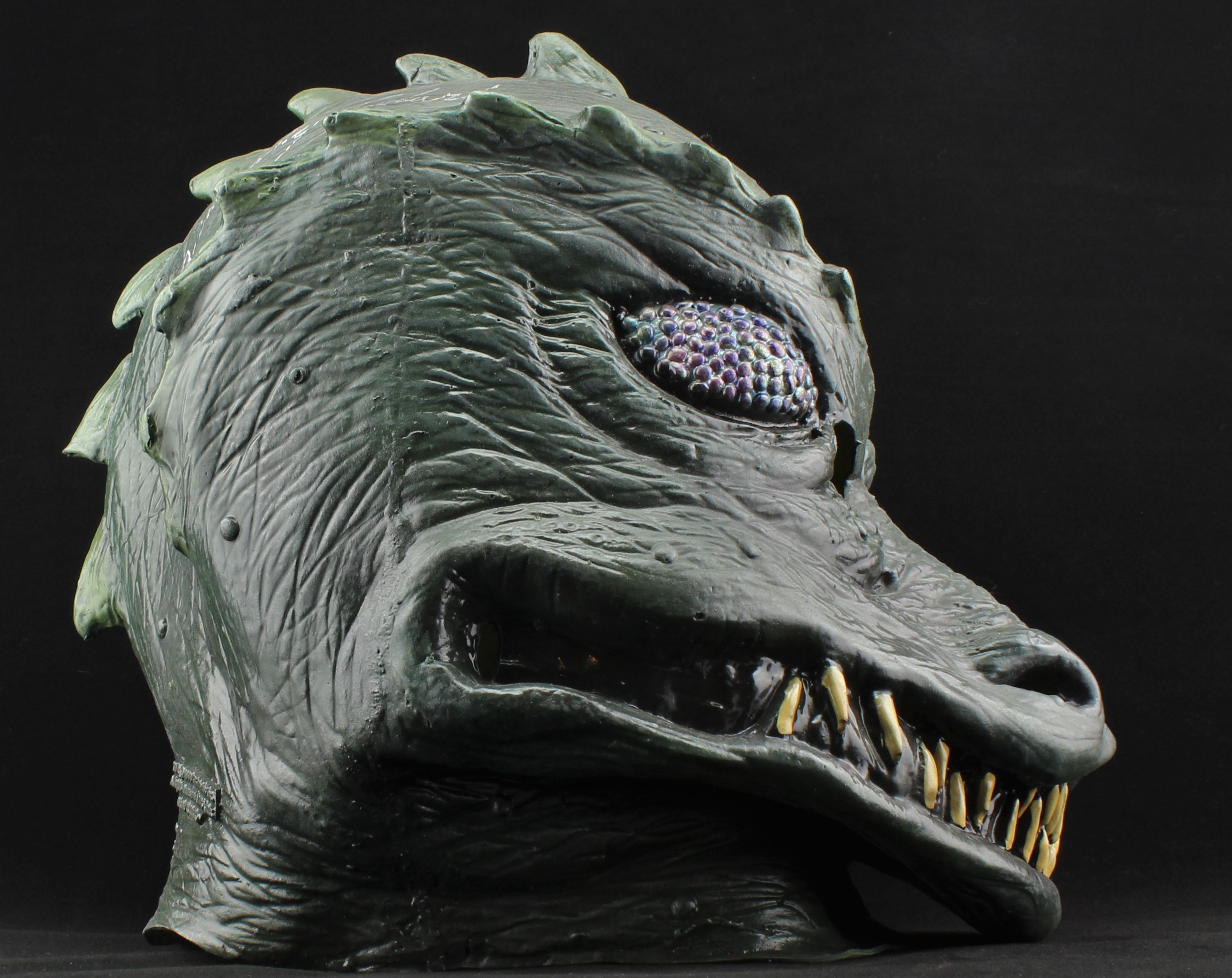
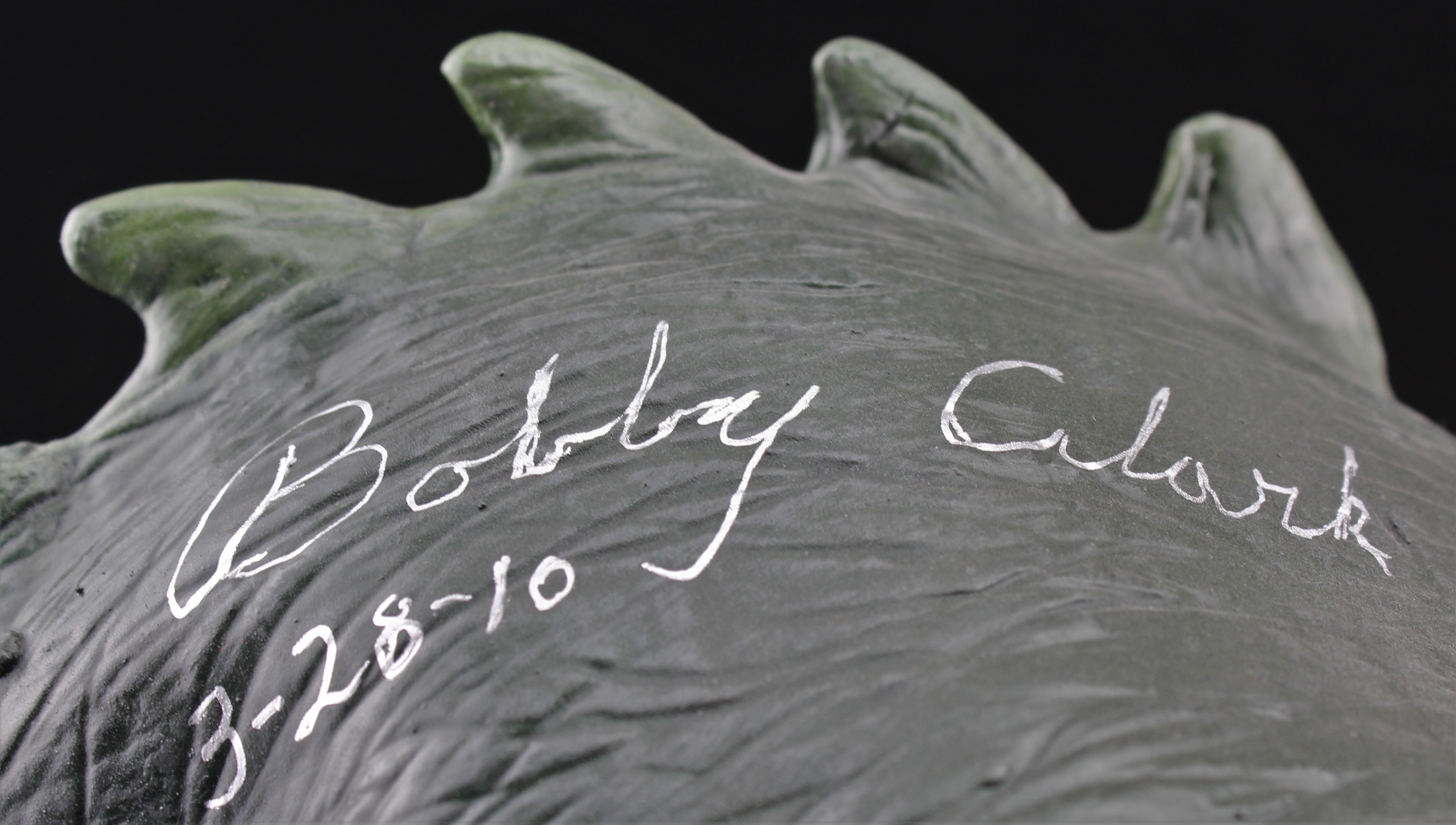
Two guys pulled on the Gorn wetsuit costumes on the Vasquez Rocks set of Arena in November of 1966. I was fortunate to spend 20 minutes chatting with Bobby Clark, the better known of the two, in Toronto in 2010. Clark asked why Star Trek mattered to me, and about the Gorn in particular. Then he pulled a life-sized Gorn mask out of a duffel bag and offered to sign it for me.
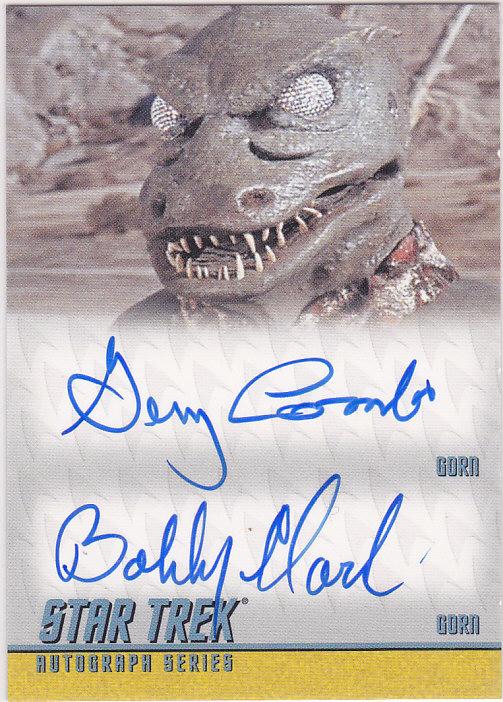
(The other actor in a full suit was Gary Combs, and a few close-ups were shot with William Blackburn wearing just the head.)
Arena is a quintessential TOS episode. It tells us that the person you were sure is an enemy may not be. It is a message shared with The Devil in the Dark and The Corbomite Maneuver, both of which also demand that we put aside fear and even genuine grievances to look at the other person’s point of view, and that we prove that we live up to our noble ideals.
Arena also tells us that we can, and must, rise above base instincts. Kirk put that into words in A Taste of Armageddon. Anan 7 has overseen the death of millions of people, and Kirk tells him: “We’re human beings with the blood of a million savage years on our hands, but we can stop it. We can admit that we’re killers, but we’re not going to kill today. That’s all it takes. Knowing that we won’t kill today.”
Bobby Clark had for a long time been entirely disconnected from our fandom and genuinely wanted to know why Star Trek and the Gorn mattered. I tried to explain that Arena is part of that fundamental Star Trek message. He listened and then said “I have something you may like” and he offered me the Gorn mask. He signed and dated it and charged me C$70, and it now resides in a glass case in my Star Trek room.
Bobby was right — I like the mask a lot. For him, the days on set were like a lot of others. He talks about those days here. After the gig, new journeyman jobs came along and he forgot the Gorn, but he helped create an episode that truly represents the message of Star Trek.
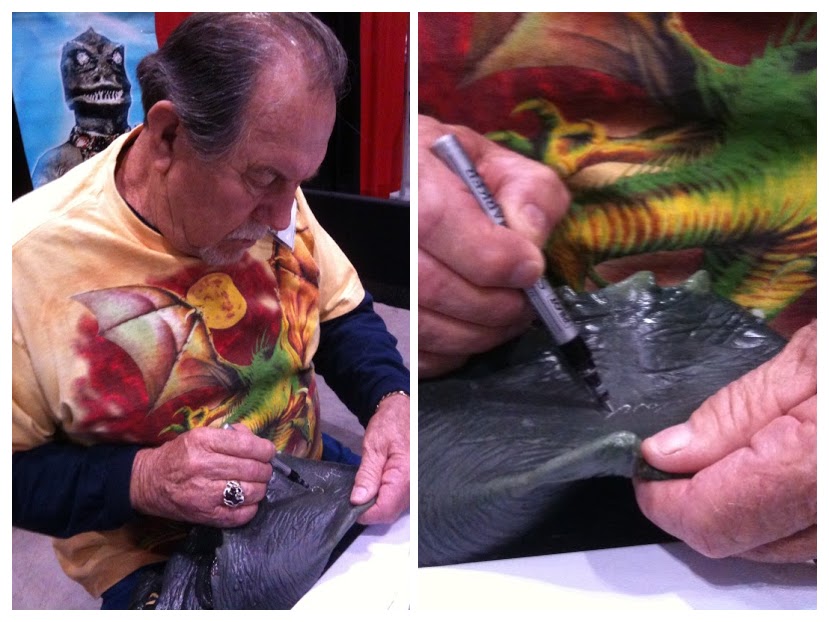
Signing the Gorn mask, Toronto Comicon, March 2010 A good look at Bobby
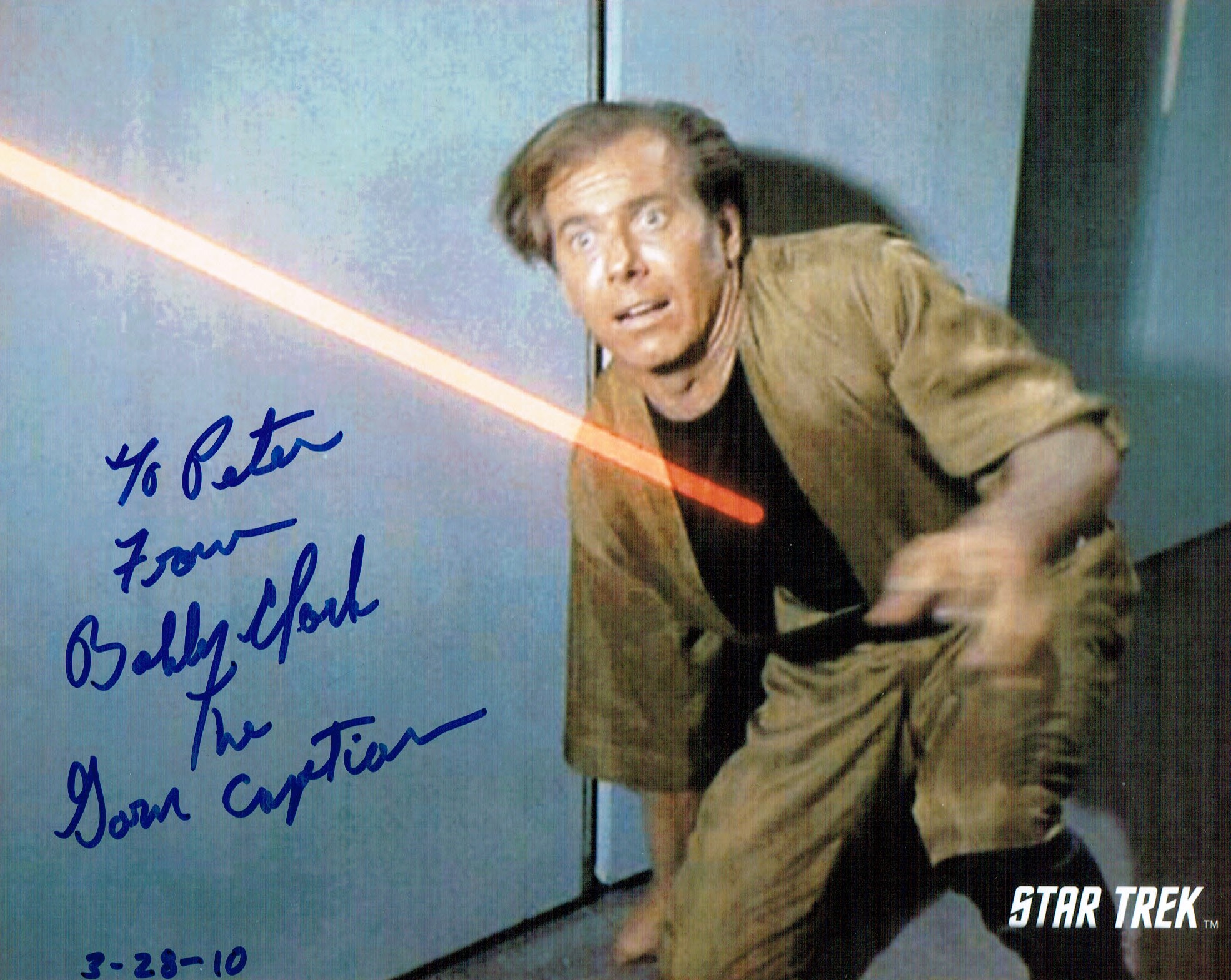
Clark was in four TOS episodes, all in season two. In addition to the mask, I also bought an 8×10 from Mirror Mirror. Extras and stunt people avoided having their faces clearly seen on screen, as being recognizable in one episode limited the ability to appear in future episodes; Mirror Mirror is the only episode to give us a really good look at Bobby.
Collecting Trek
A TOS collection 40 years in the making