-
How fast is warp three?
The specifics of warp speed are never discussed on screen in the original series. We know that warp five is faster than warp four and that the Enterprise usually sticks to the lower end of the speedometer, even when time is short; consider Captain Kirk’s order from The Squire of Gothos: “Ahead warp factor three, Mister Sulu. Colony Beta Six wants their supplies. Let’s get across this void in a hurry.”
Other than that, we can’t make canonical statements about how fast each warp factor is. But we can cite the next-best thing: the TOS show bible and The Making of Star Trek, both written or approved by Gene Roddenberry. Those sources do specify speeds but they also contain what can only be a typo on warp factor three.
The show’s bible, third revision, has this to say about warp speed:

So warp factor one is the speed of light: 186,000 miles or 300,000 kilometres per second. Warp two is eight times the speed of light, and warp four is sixty-four times. That makes the formula speed = wf3 x c, where wf is warp factor and c is the speed of light.
Warp Multiple of c 1 1 2 8 3 27 4 64 5 125 6 216 7 343 8 512 9 729 But that means the show bible got warp three wrong. It should be 27c, not 24. That error also appears in The Making of Star Trek, by Stephen E. Whitfield. On page 191, Whitfield had the following, copying his numbers and some of the language from the show bible.
…greater problems result when it becomes necessary to express a speed many times faster than the speed of light. STAR TREK dialogue solves the problem by measuring all faster-than-light speeds in terms of “Warp Factors.” Warp Factor One is the speed of light. Warp Factor Three is 24 times the speed of light. Maximum safe cruising speed of the Enterprise is Warp Factor Six, or 216 times the speed of light. At Warp Factor Eight (512 times the speed of light) the ship’s structure begins to show considerable strain… Warp Factor Six is therefore exceeded only in instances of extreme emergency.
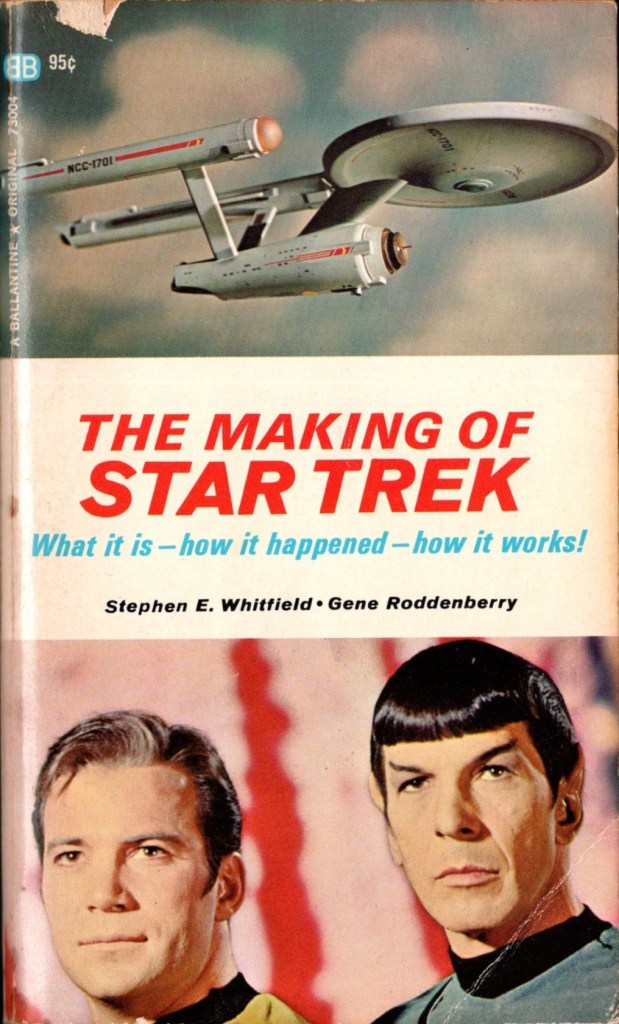
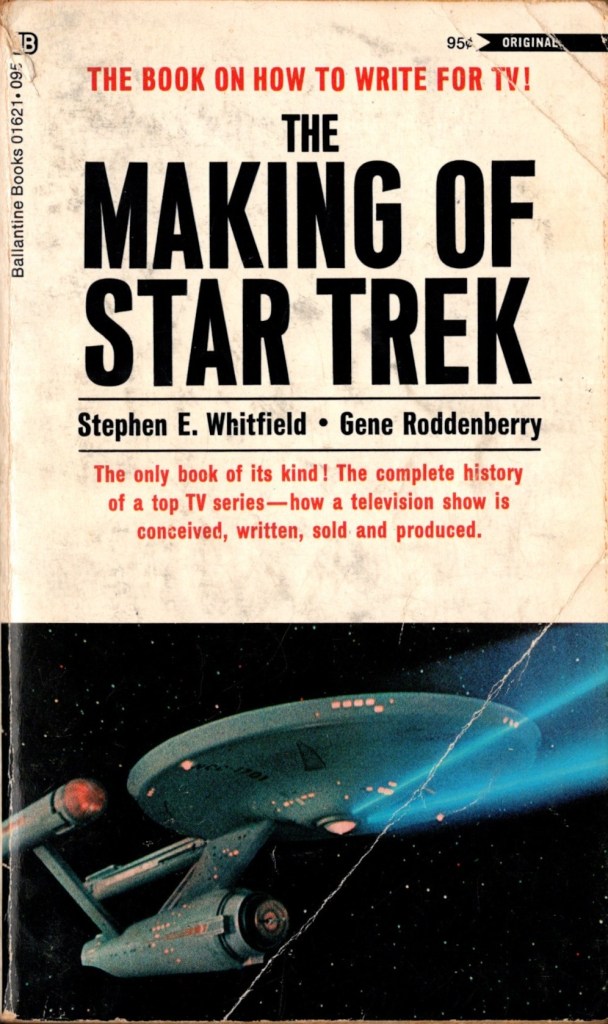

My often-read 4th, 6th and 22nd printings. The formula was changed for The Next Generation. The Star Trek Encyclopedia by Mike and Denise Okuda has a good explanation of the TNG math but, as this is a TOS blog, I won’t go into it here.
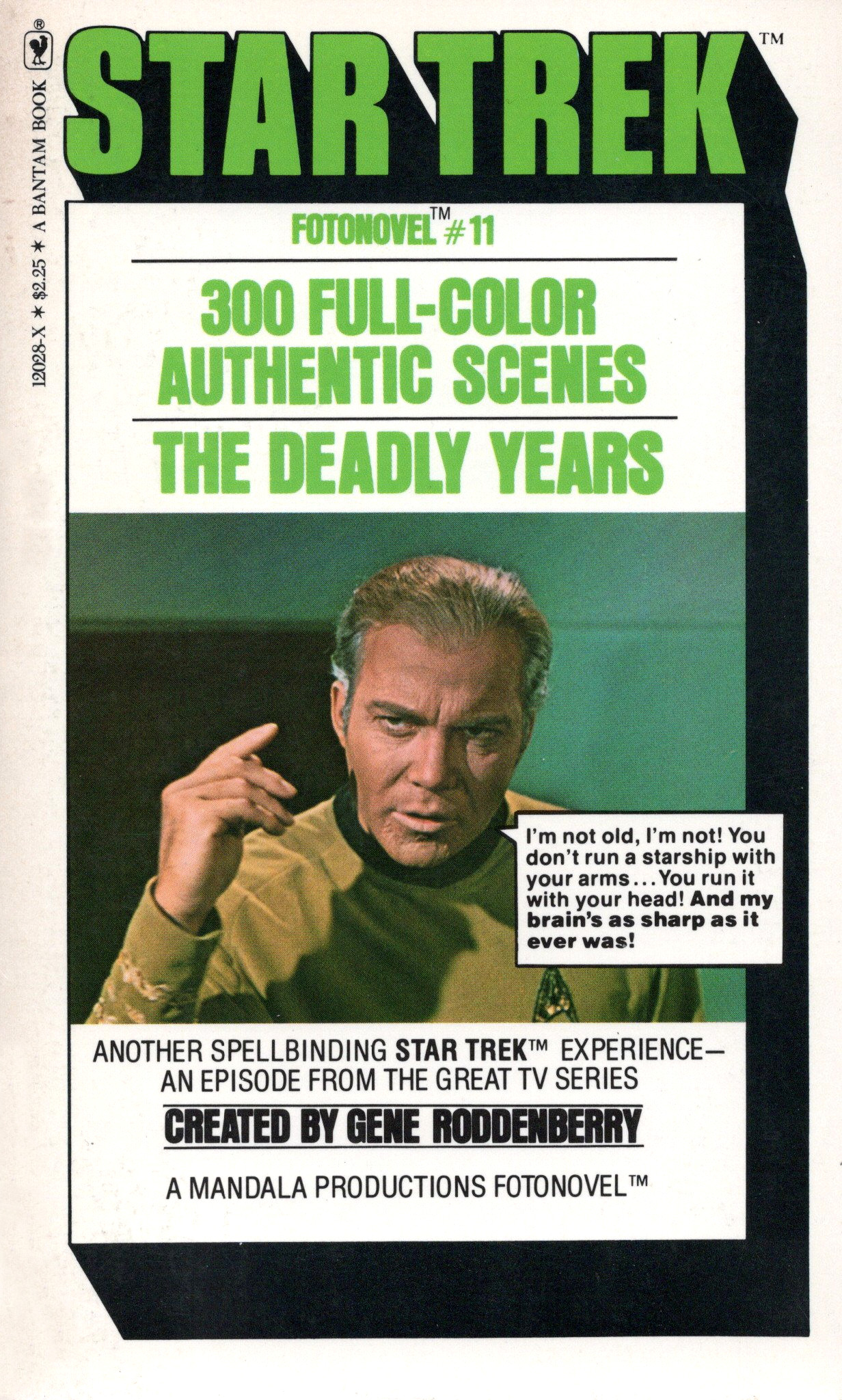
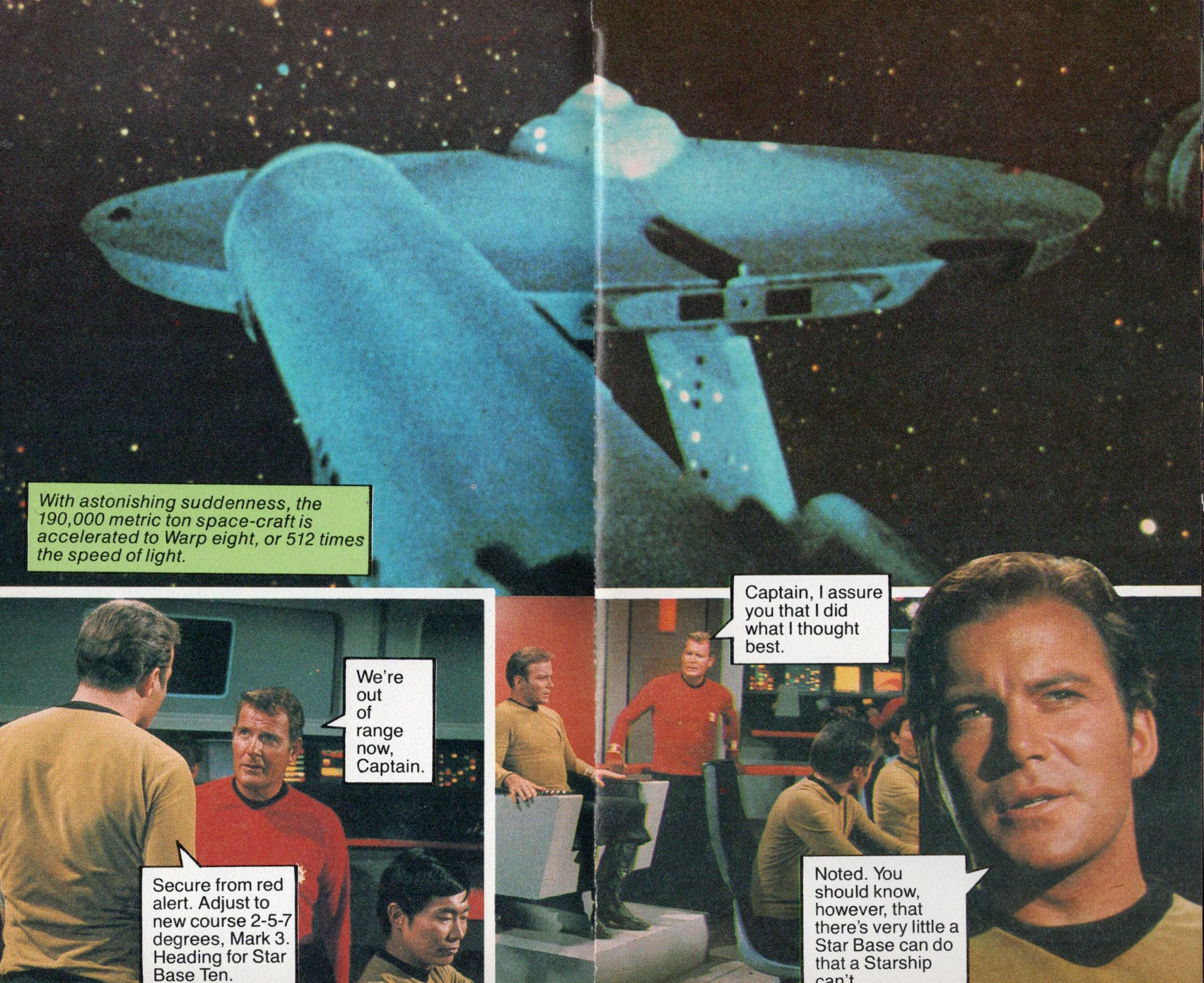
It’s interesting to note that Fotonovel 11, The Deadly Years, states correctly that warp 8 is 512 times the speed of light. Those books were gems when they were published almost 50 years ago and still are today.
Postcript
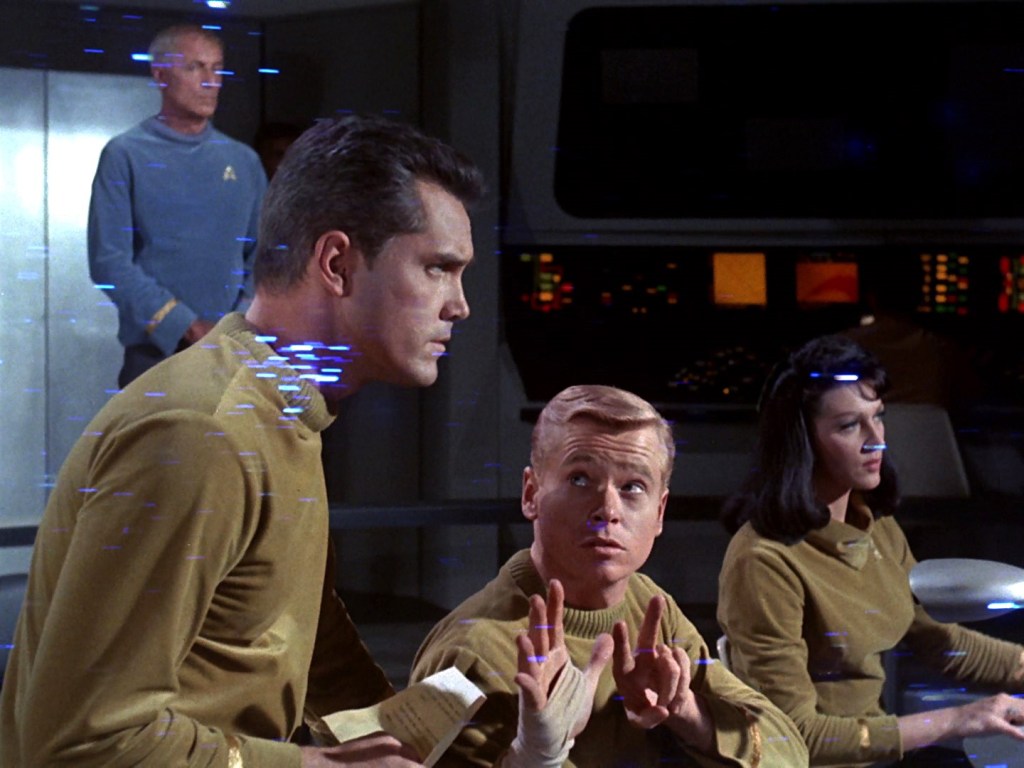
While Kirk typically kept his ship to the slower warp speeds, Captain Pike had no such compunction. In The Cage, he casually ordered Tyler to take the Enterprise to warp seven and no one looked surprised.
-
Check out these animated-series mini CDs from two decades ago

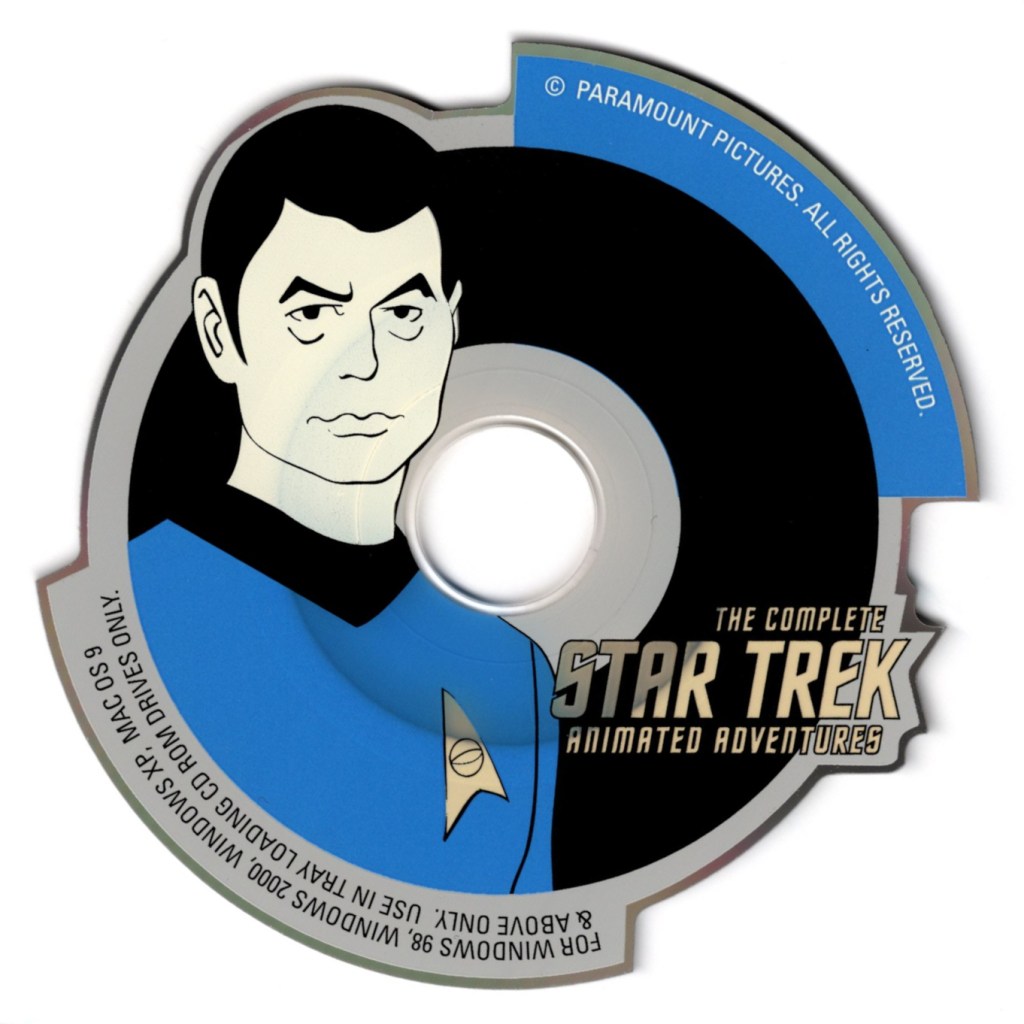
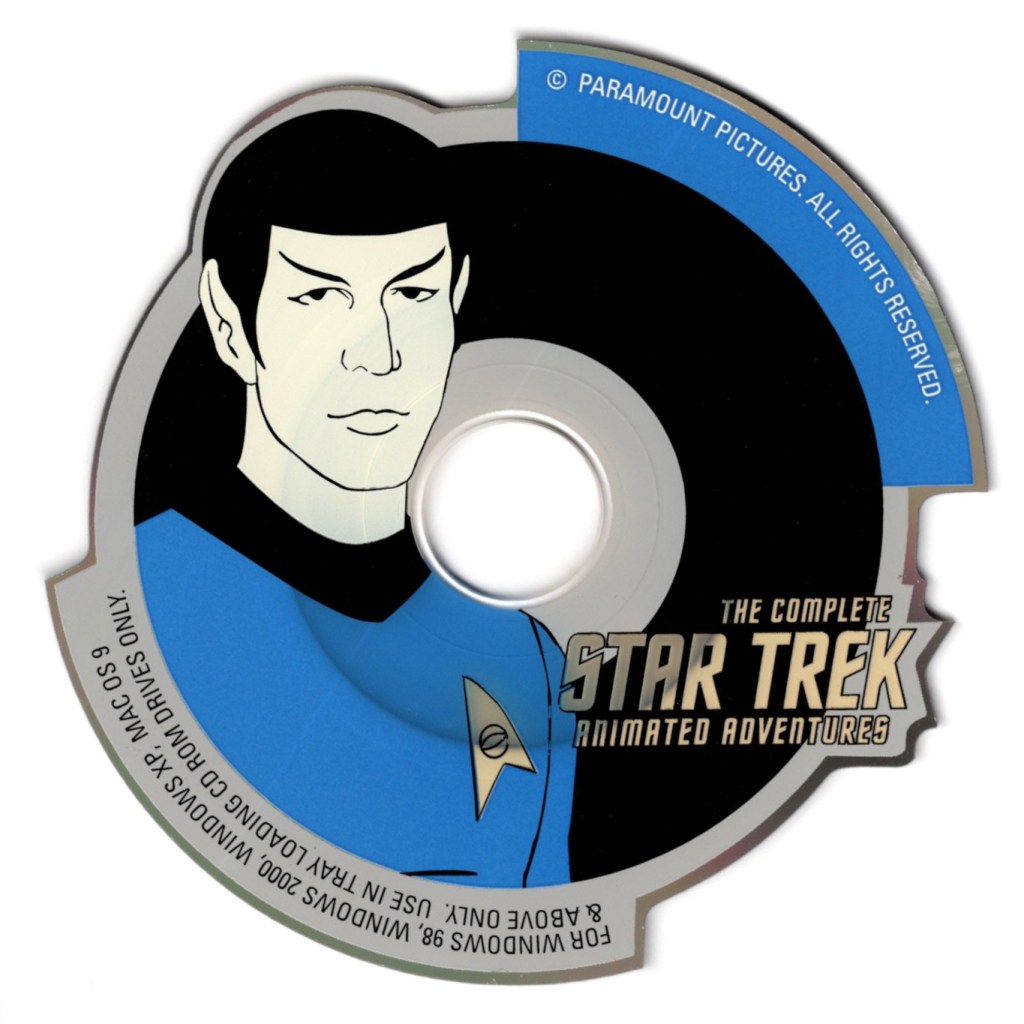
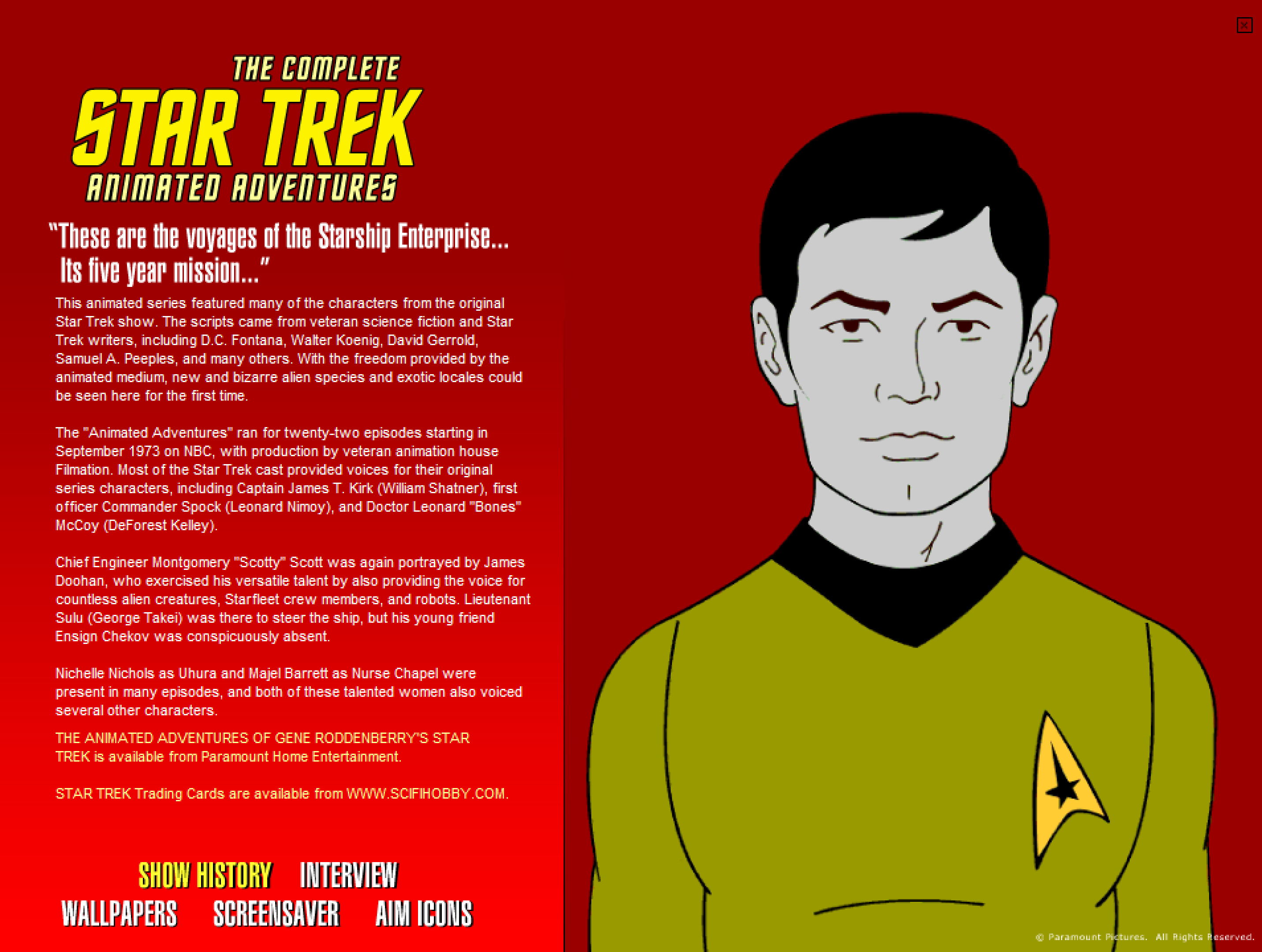
I really like the mini CD-ROMs that Rittenhouse Archives produced as box toppers for its 2003 animated-series card set. And I entirely forgot I owned them.
Which is why I say again, if you have a largish collection, go through your storage boxes. You might find collectibles you’ve forgotten about (as I experienced here and here).

A few days ago I went looking for specific copies of Star Trek, The Magazine for an upcoming post, and I came across these five CD-ROMs. I own the base set of the cards plus a number of the chase cards, but the CDs are the fun part, because they were a real value add. Rittenhouse gave collectors AOL Instant Messenger icons, a screen saver, wallpaper, and a video interview with TAS season one associate producer and story editor DC Fontana.
I own the complete set of five CDs; the content is the same on each.


Wallpaper and that interview
Here are the nine wallpaper images Rittenhouse offered.



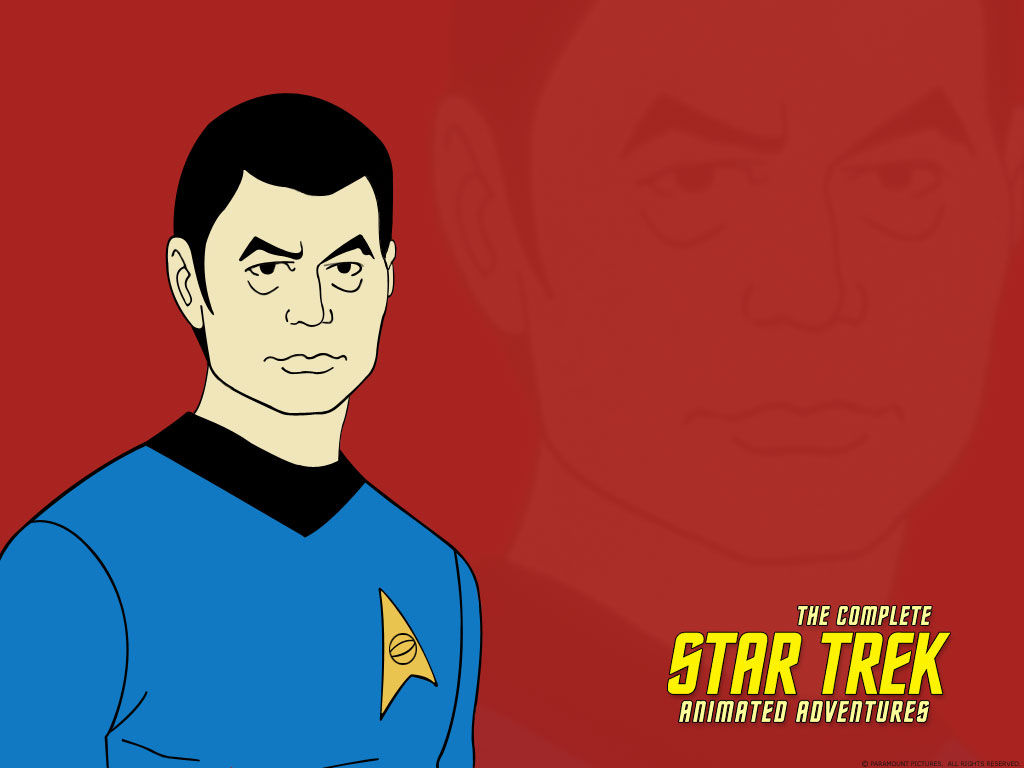


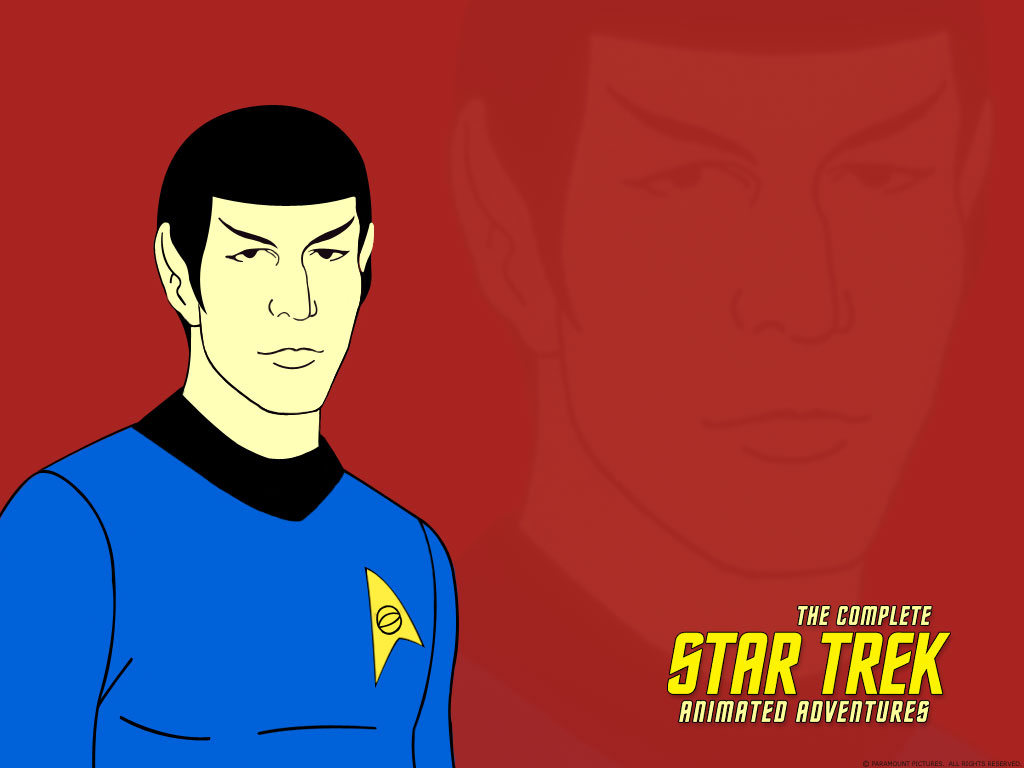

The pictures are okay, but the company could have been a little more adventurous by including images such as the following. However, it’s important to remember this was 20 years ago, and having even the basic images was cool.


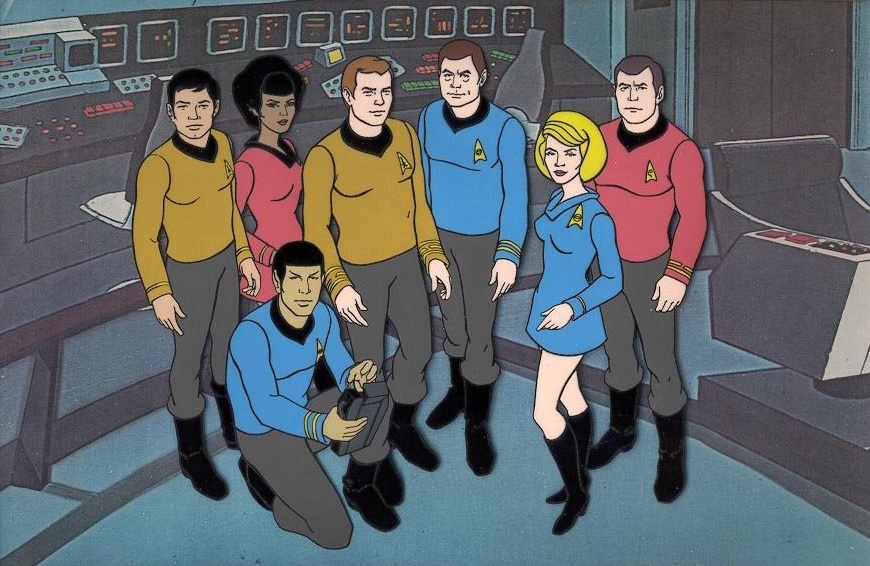
These images from TrekCore The real gem of the CDs is the four-minute interview with Dorothy Fontana. Here it is.

My favourite bit is her statement that “We weren’t doing a cartoon; we were doing Star Trek.”
My understanding is that relatively few collectors own these disks, so hopefully this is a fun visit with a rare collectible.
Postscript
Digging into an old storage box might reveal a collectible you didn’t even know about. Four years ago, I found a Gene Roddenberry autograph.
-
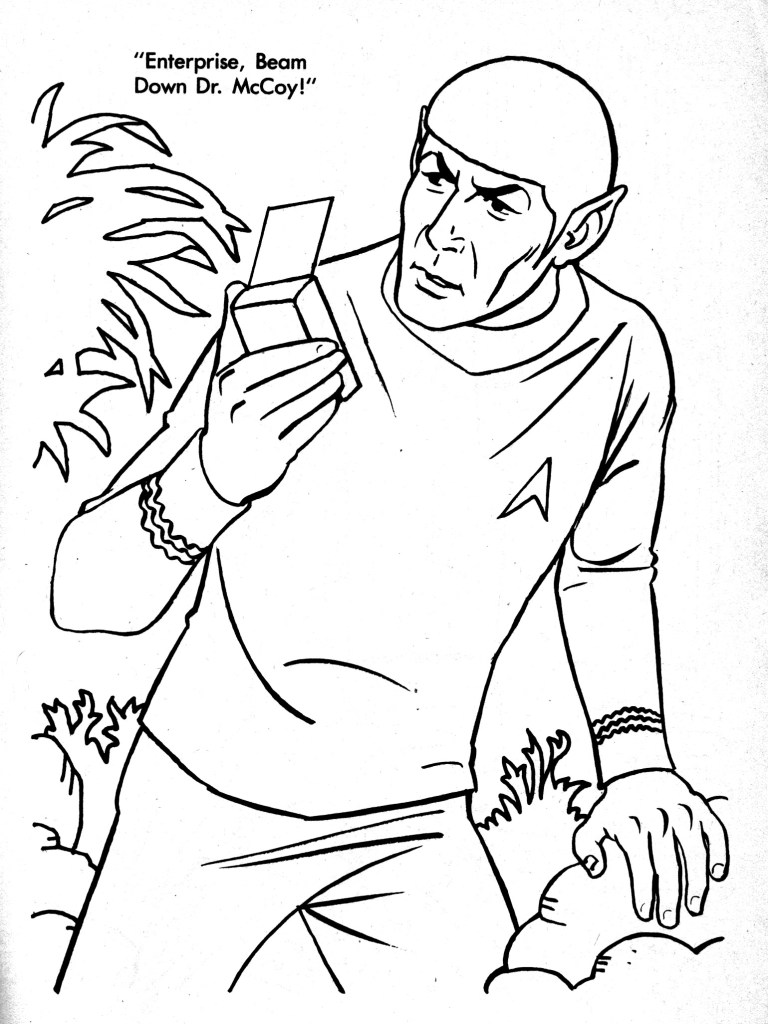
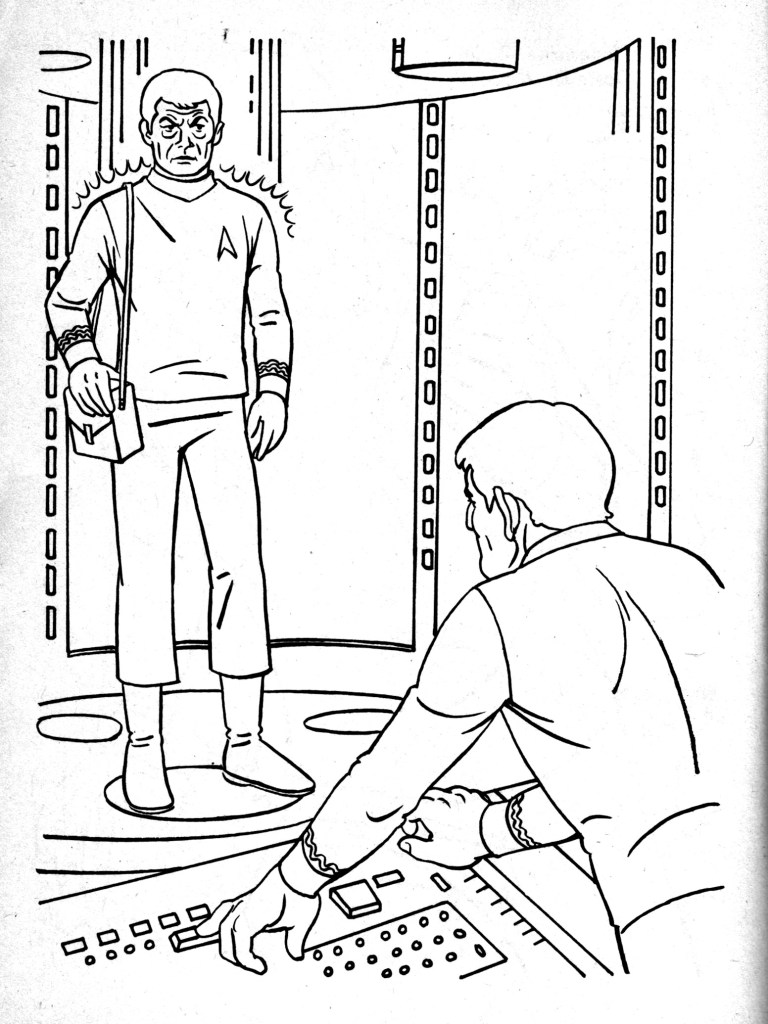
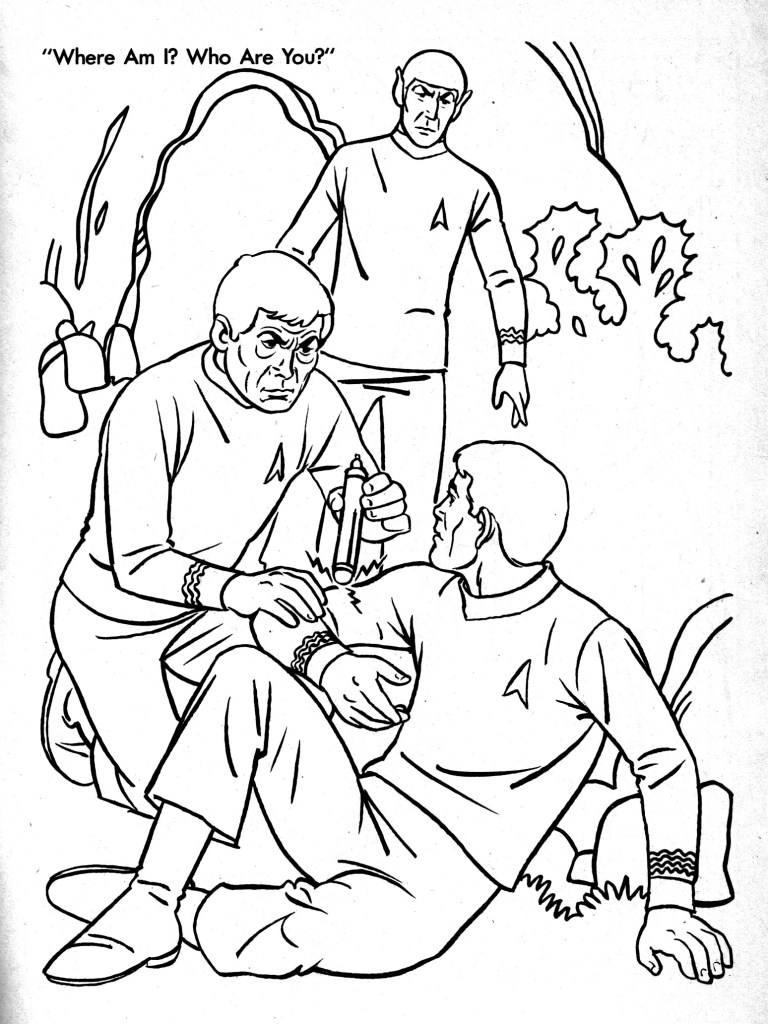
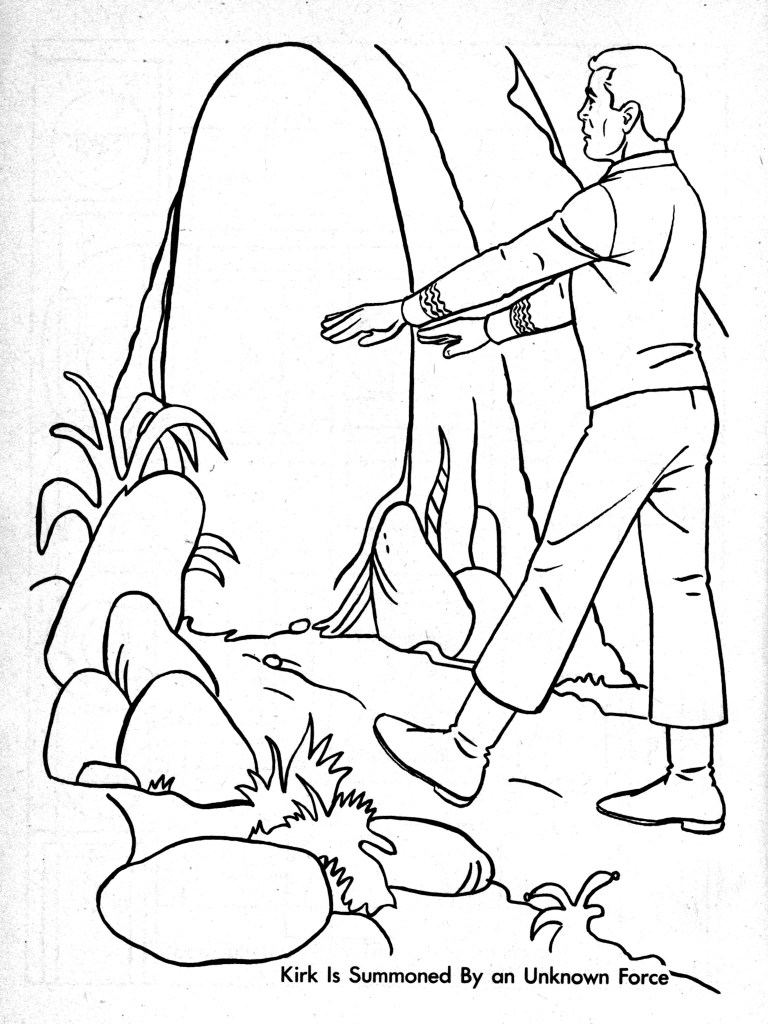
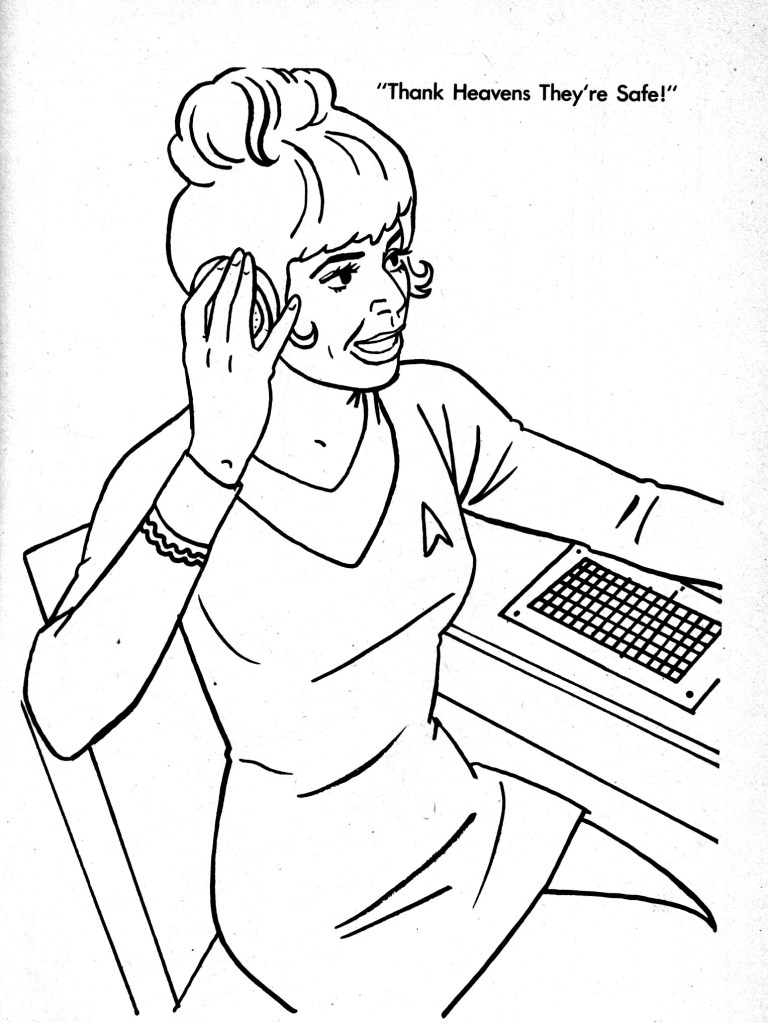
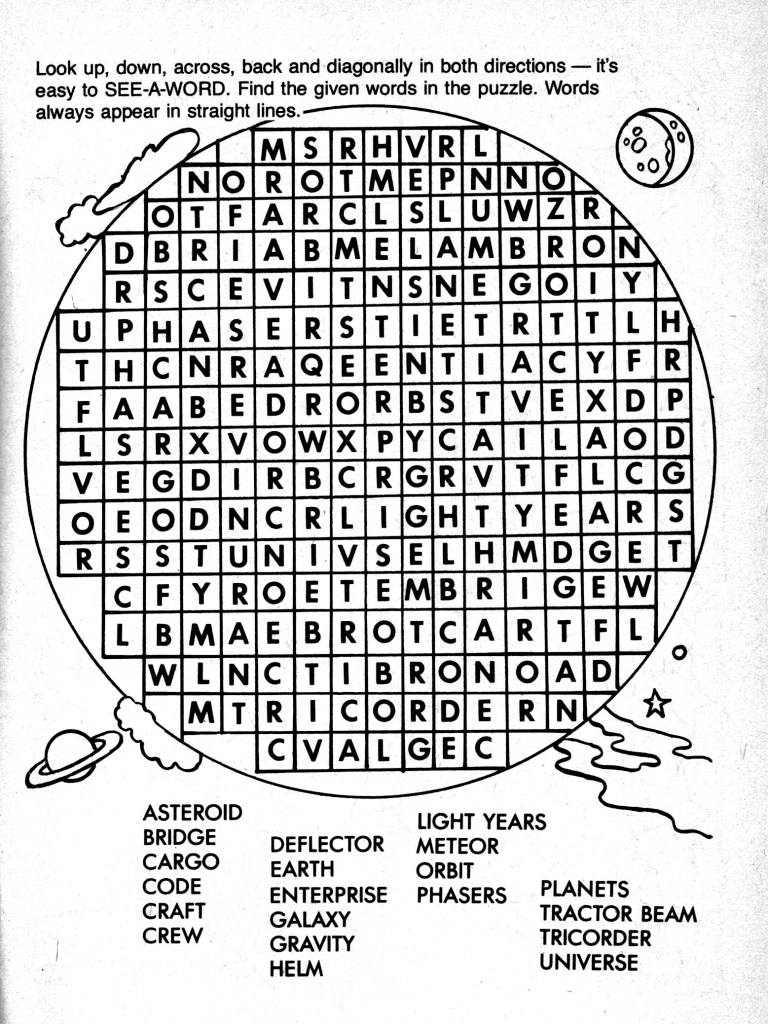
Why did I buy a kids’ colouring and activity book?

Being a collector is often an odd pursuit. You get the high of a great acquisition on one side or the consternation of “Why did I buy this?” on the other. Who among us has not muttered that question the day after a convention?
I recently attended Niagara Falls Comic Con and I didn’t buy much. I picked up three DC comics, leaving me 17 short of owning the complete DC run. (Of the TOS-era, which is all I collect.) I have all the Gold Key and Marvel comics so I am now closing in on completing what I consider the mainstream classic set. And I am getting them the old-fashioned way: by flipping through boxes at cons. No eBay. It’s more fun and I get to chat with comics dealers.
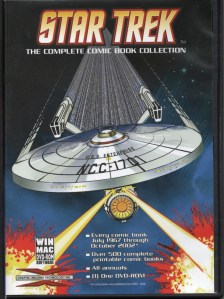
I do own this DVD with PDFs of all the mainstream comics from 1967 to 2022 and it’s great, but I like owning them in paper.
I also bought this.

Why? Three reasons, none of them all that logical. First, I had never seen it — and that is a huge draw for me. There are a bunch of collectibles I don’t want (I am looking at you, Funko Pops) and collectibles I can’t afford but it is rare for me to spot something I have never seen. Reason two: it is unused and in great condition, even though it is 44 years old. Condition is a big factor if you collect vintage toys, trading cards, comics or anything else that was marketed to kids. Third, the dealer was a nice guy and he only wanted $15, which was reasonable.
So, I have reasons, but the item itself is silly. The story is nonsensical and it reads like the publisher cut a bunch of pages to save money.
Read it yourself.
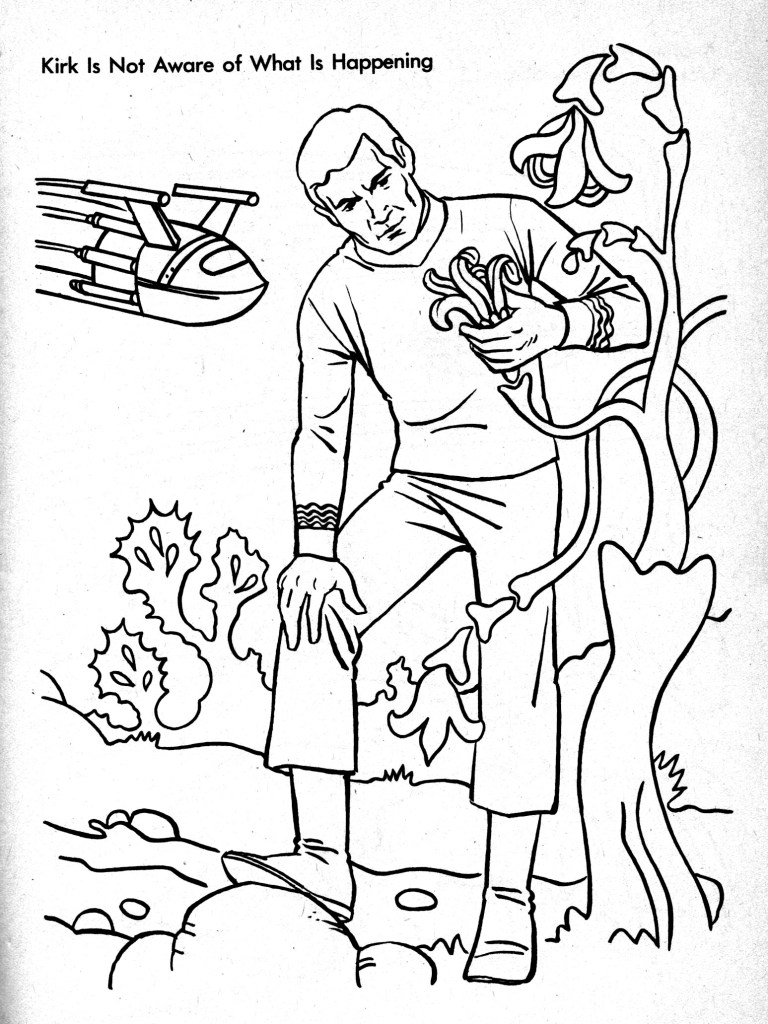
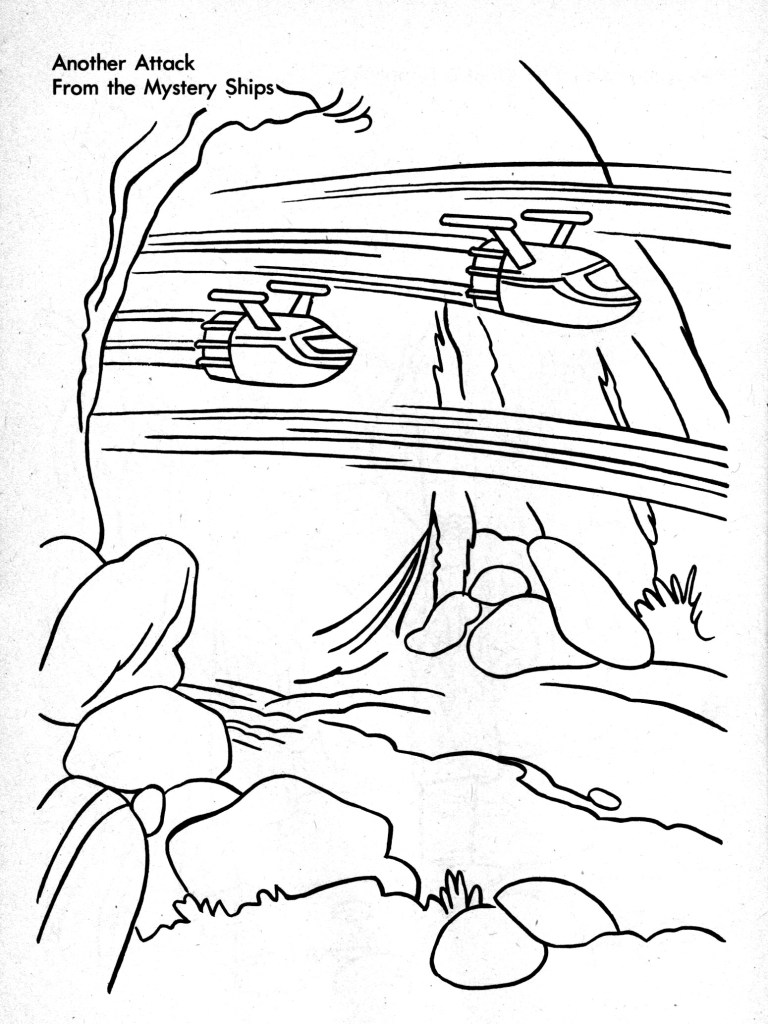
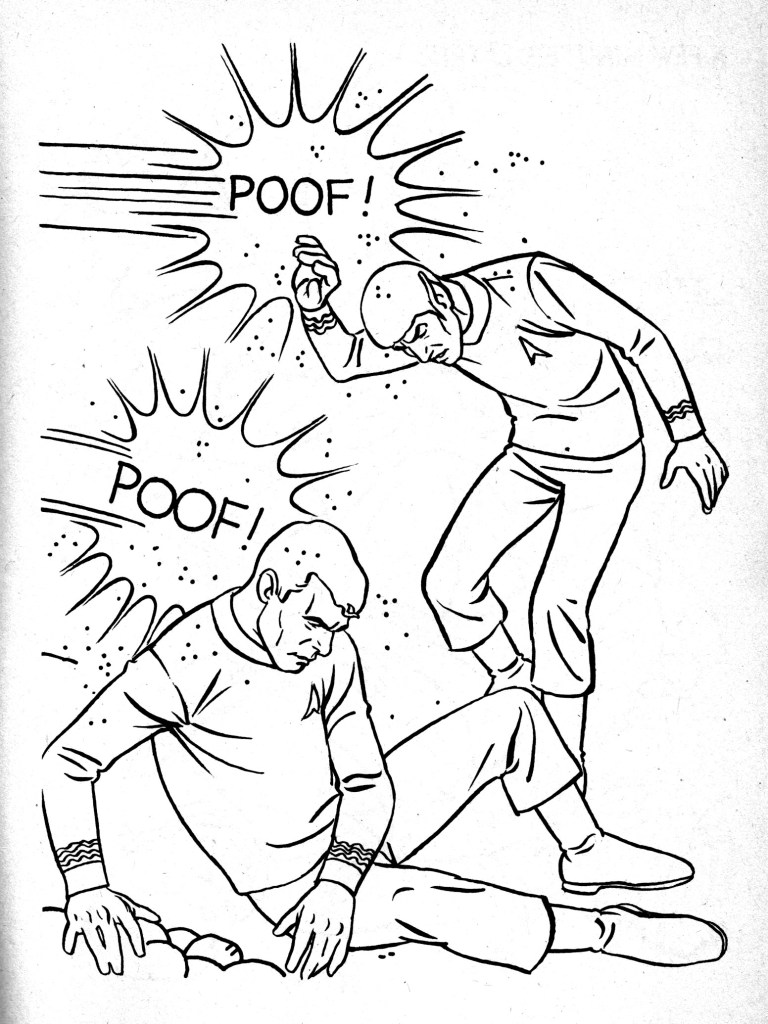
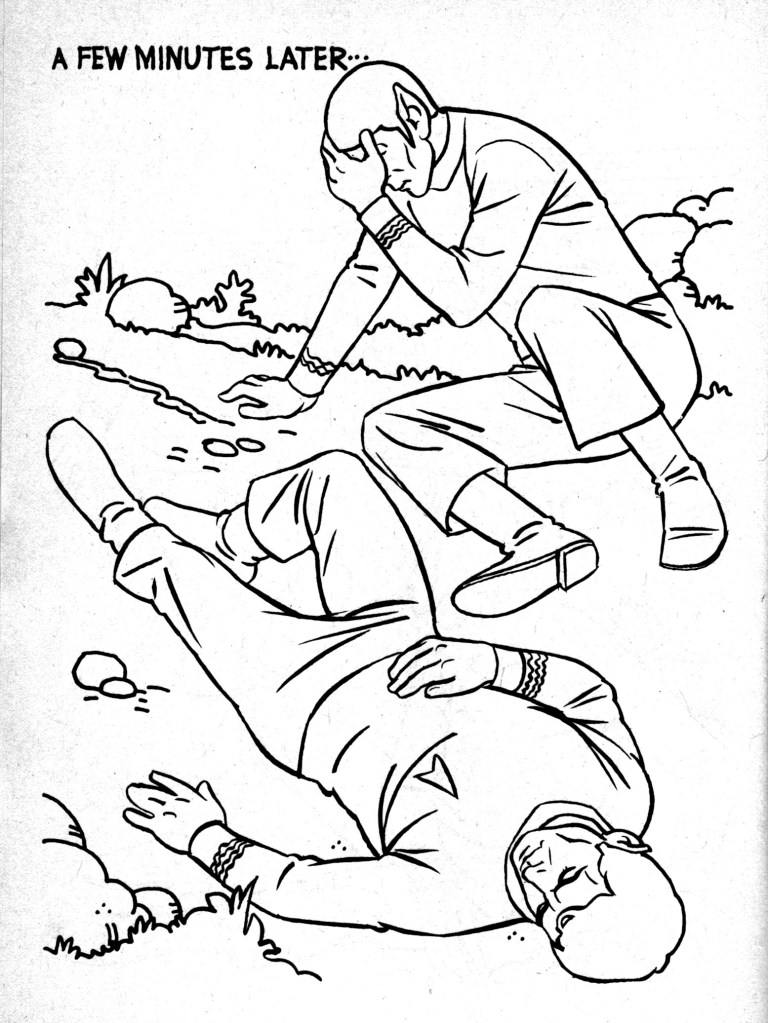
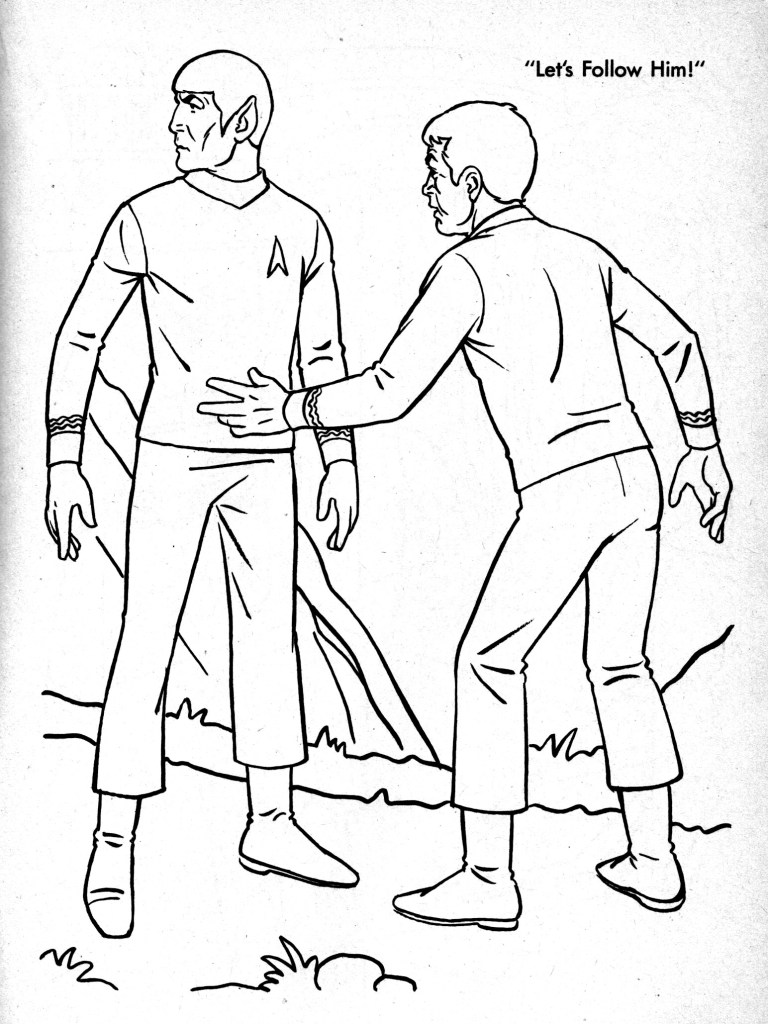
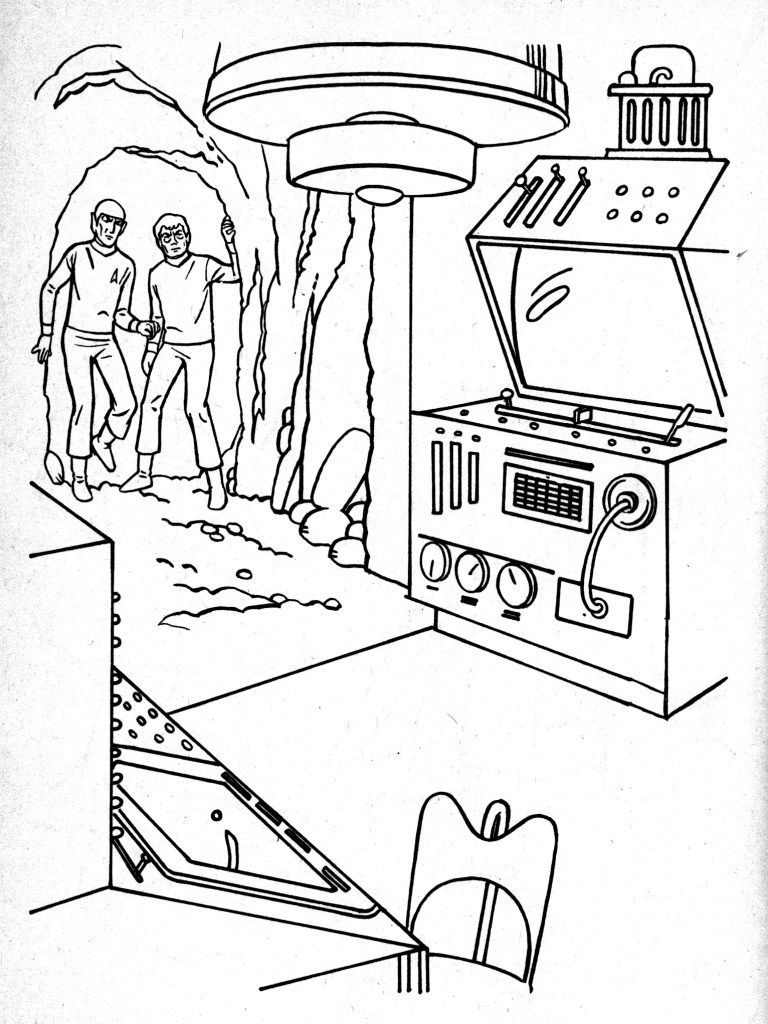
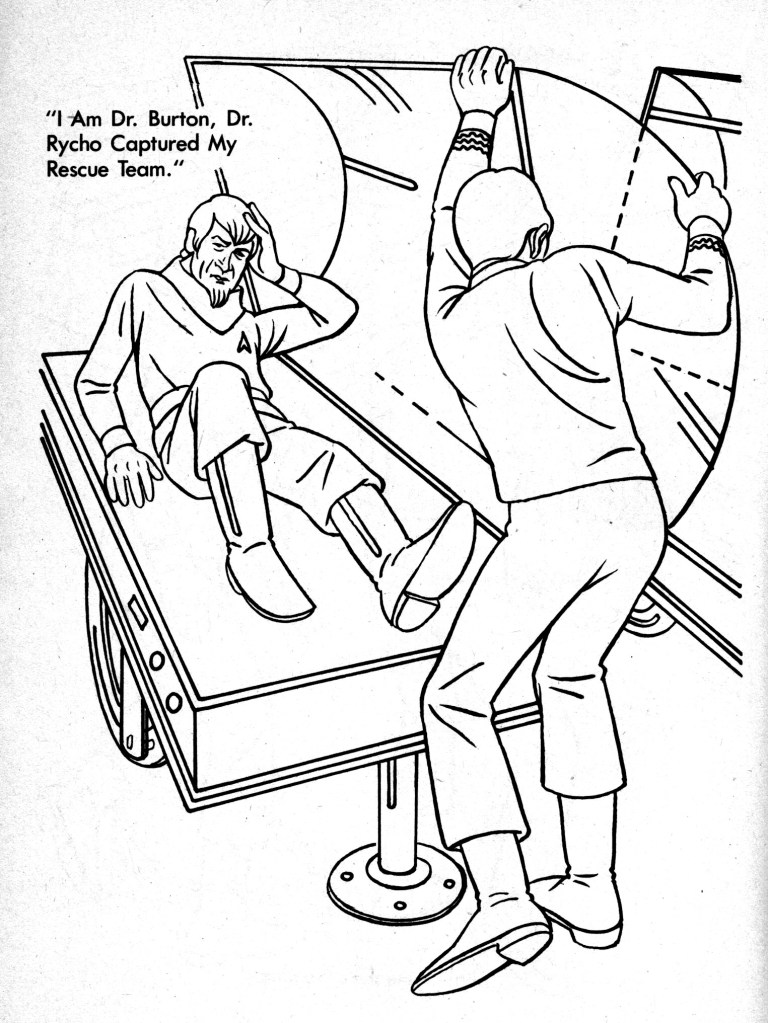
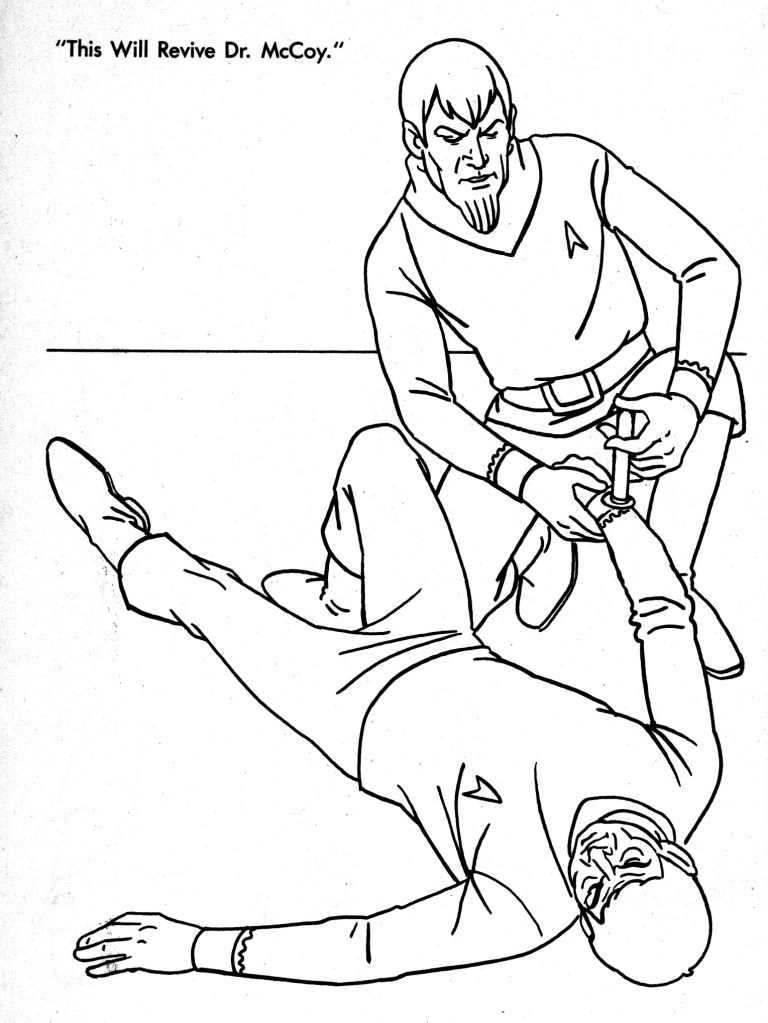
Why is Kirk talking in numbers? Why did Dr. Rycho put some Starfleet personnel in sleeper tubes? Why is McCoy suddenly unconscious on the ground? “This will revive Dr. McCoy,” says Dr. Burton, but how did he get knocked out?
And then I did a bit of research and discovered my guess was correct: the publisher cut pages. My new acquisition is actually a Merrigold Press Design reprint of an earlier Whitman Publishing book, and I learned from this page at Memory Beta that chunks of the original story are missing here, including the bit when Rycho threw knock-out powder at McCoy and Spock, explaining why the doctor was on the ground.
So this is a really lazy product, even for a kids’ activity book. But it has Star Trek on the cover, it’s vintage and in good shape, and the dealer was a nice guy. So now it’s in my collection.
Postscript
And then it got worse. I was on eBay moments after finding that Memory Beta page and I am now the proud owner of the Whitman version as well. It was $19 including shipping and will arrive soon.
Being a collector can be weird.
-
Creating the Star Trek Giant Poster Books

Star Trek would not exist today without the fandom of the 1970s. We would not have 10 follow-on shows and 13 movies and countless books and tons of merch had the original series faded away once the sets were torn down in 1969.
The fans kept it alive by watching reruns, attending conventions and buying any book or magazine with Star Trek on its cover. And the first professionally published Star Trek magazine is arguably also the best: the Star Trek Giant Poster Book.

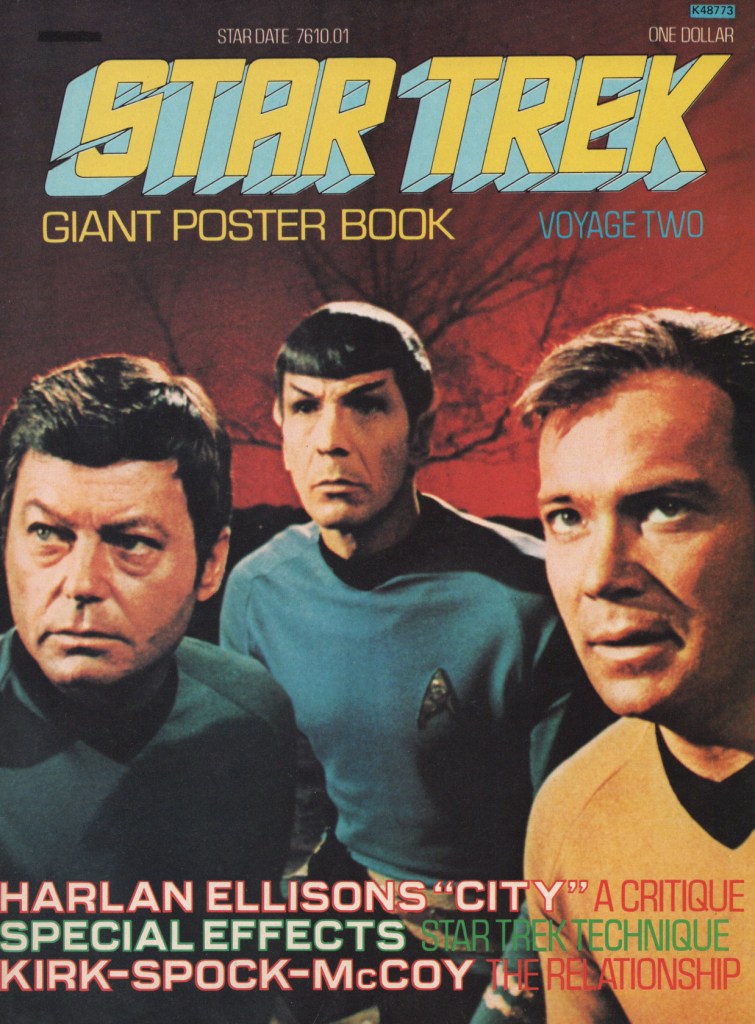
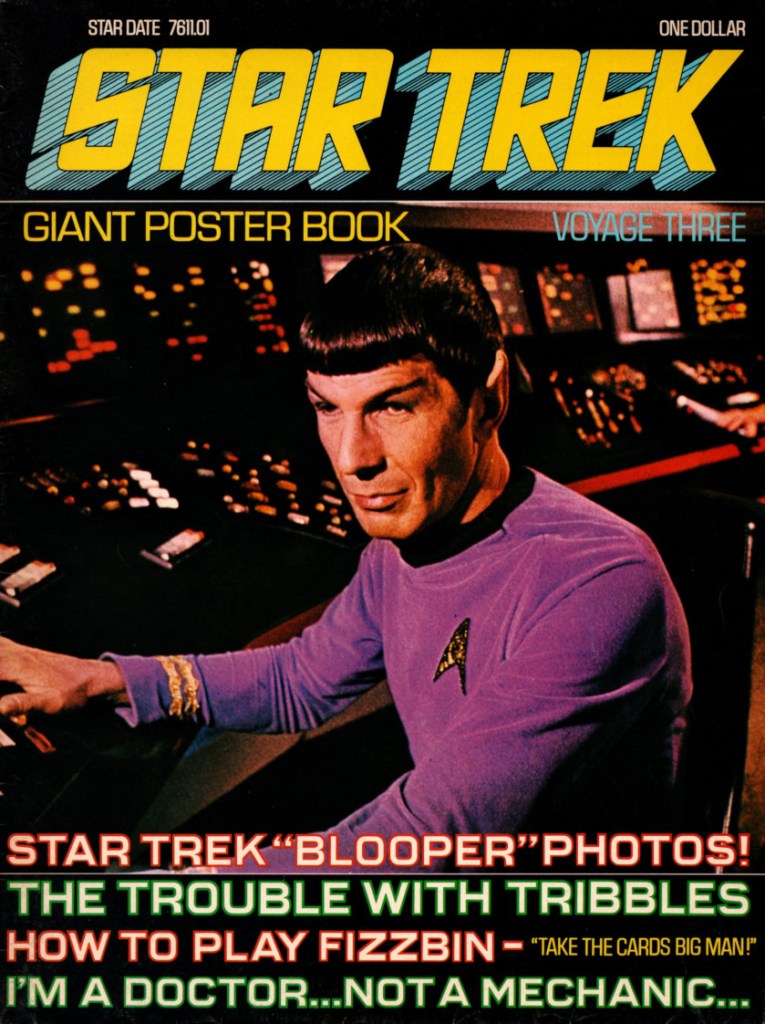
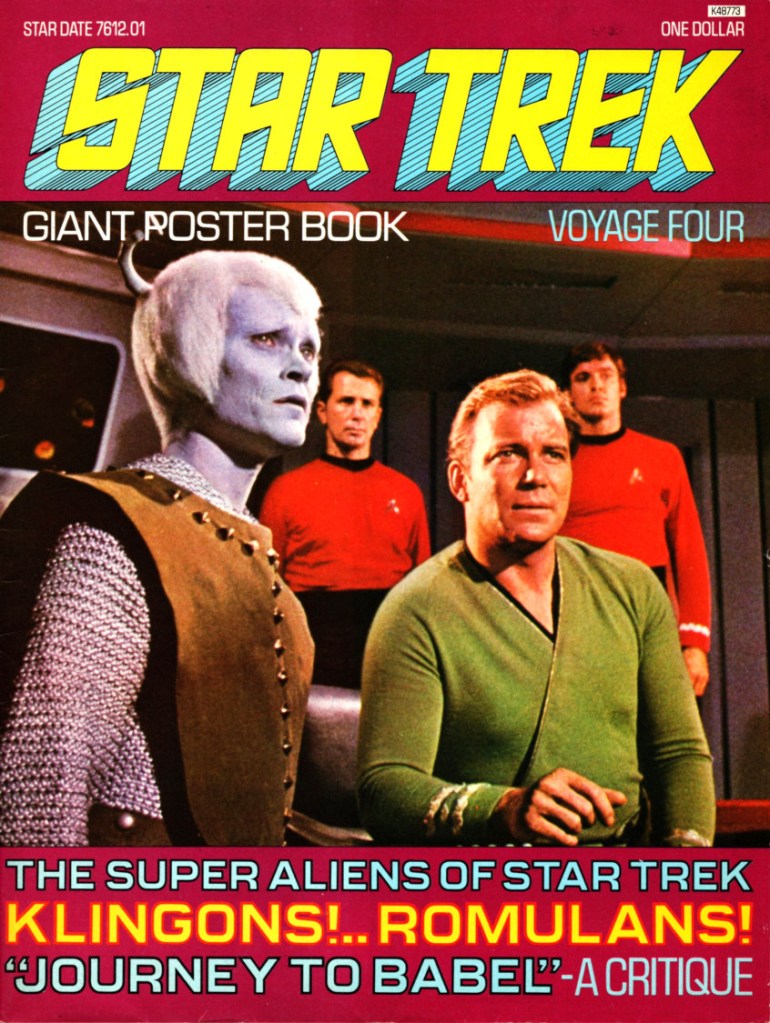
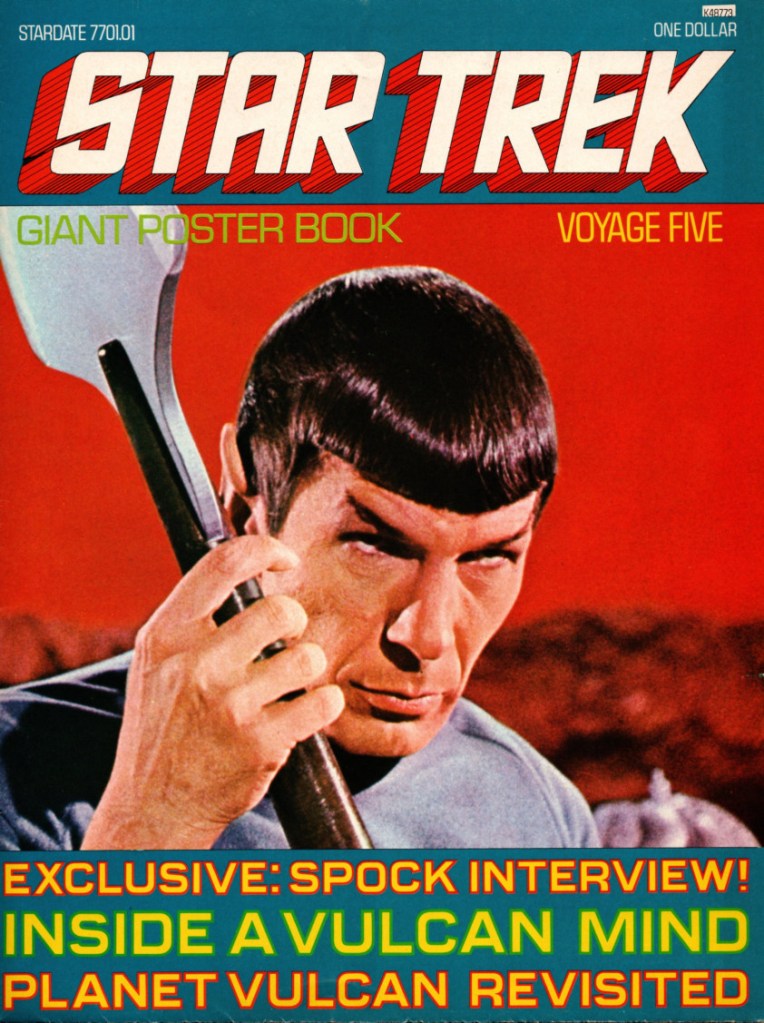
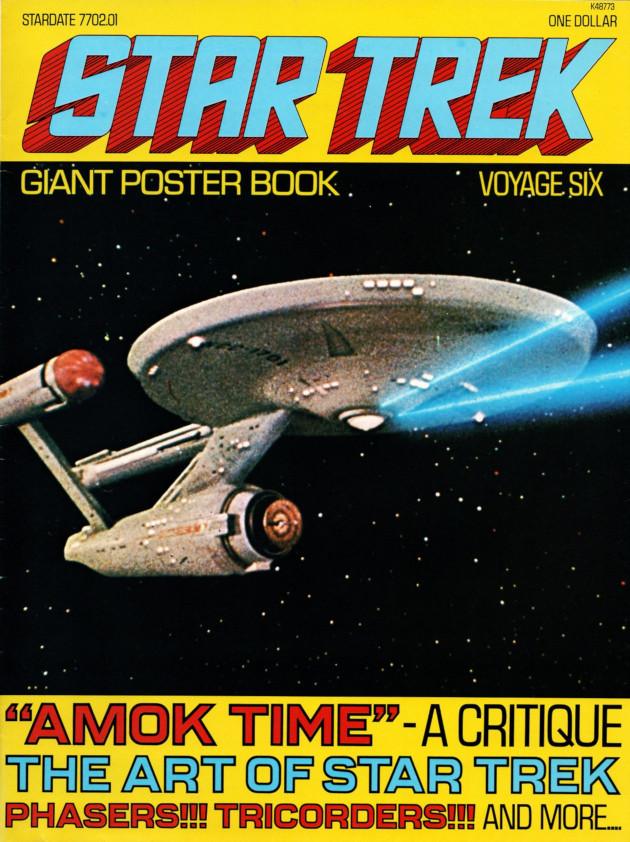
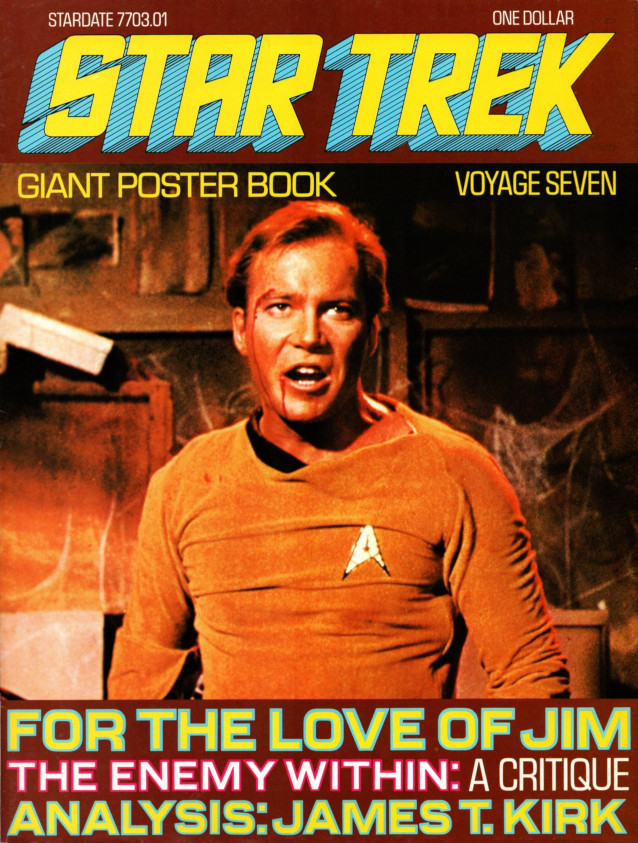

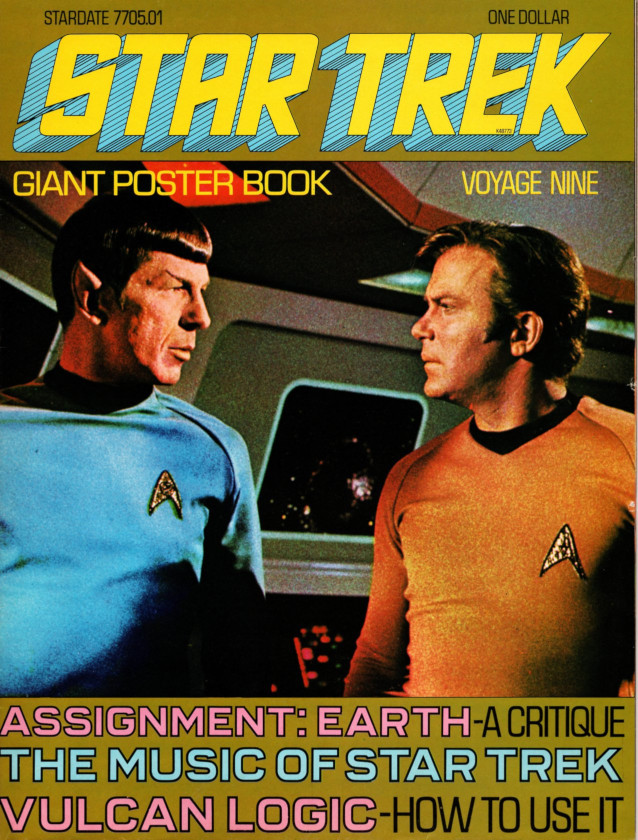
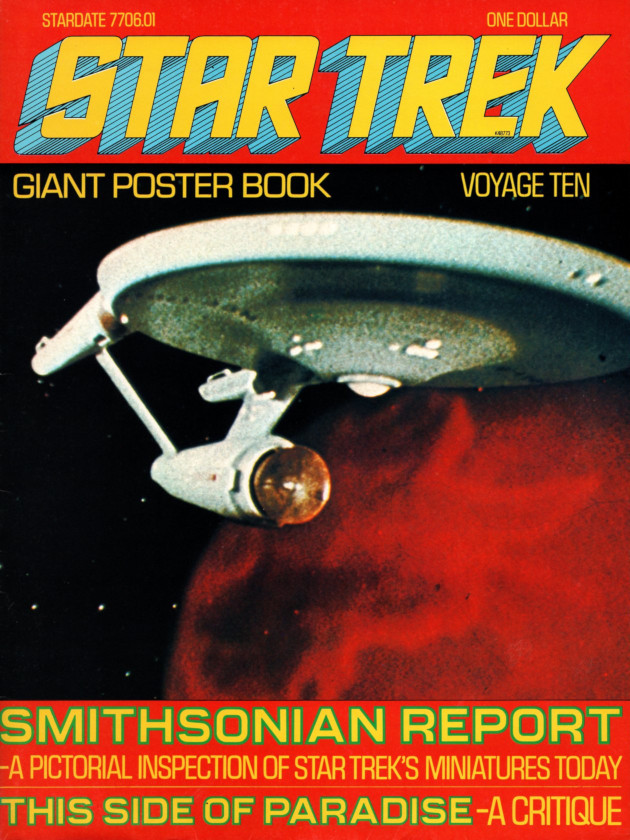
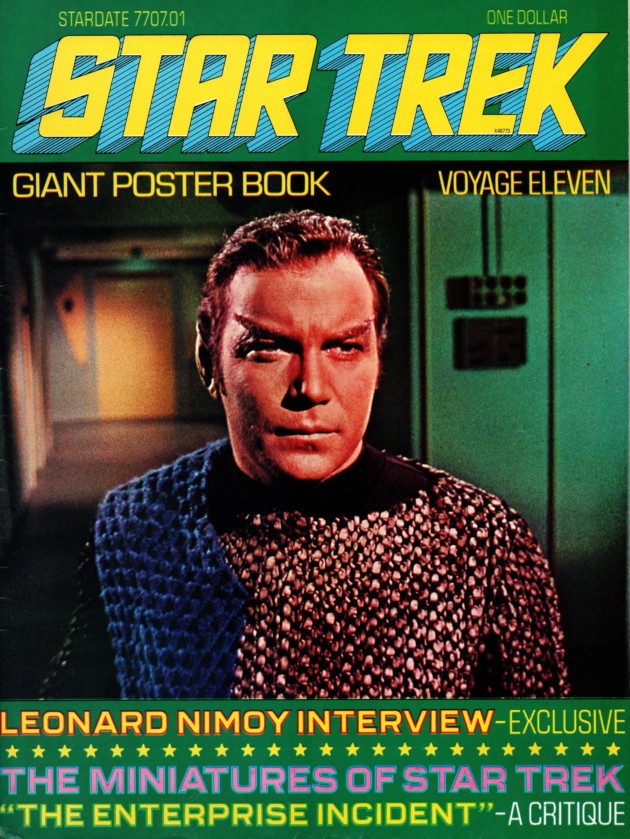
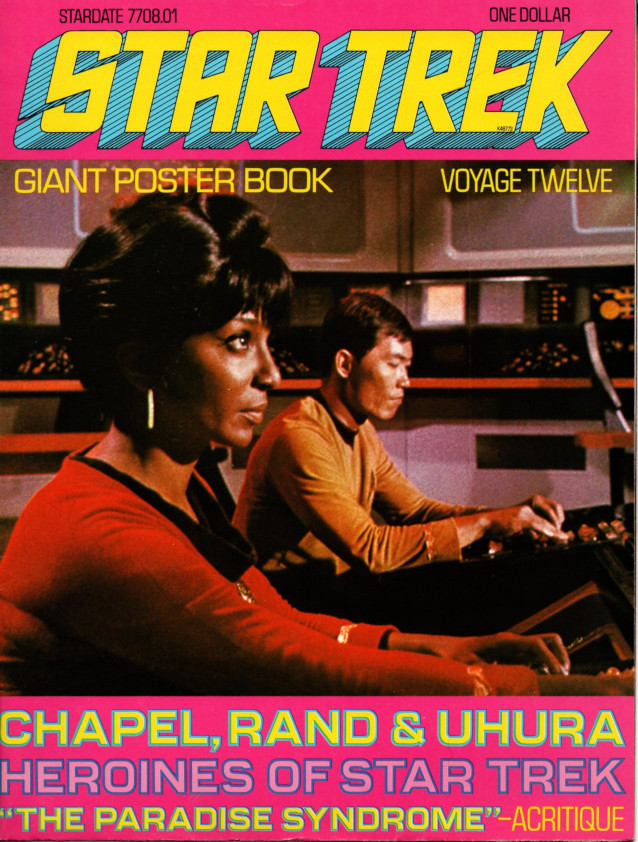
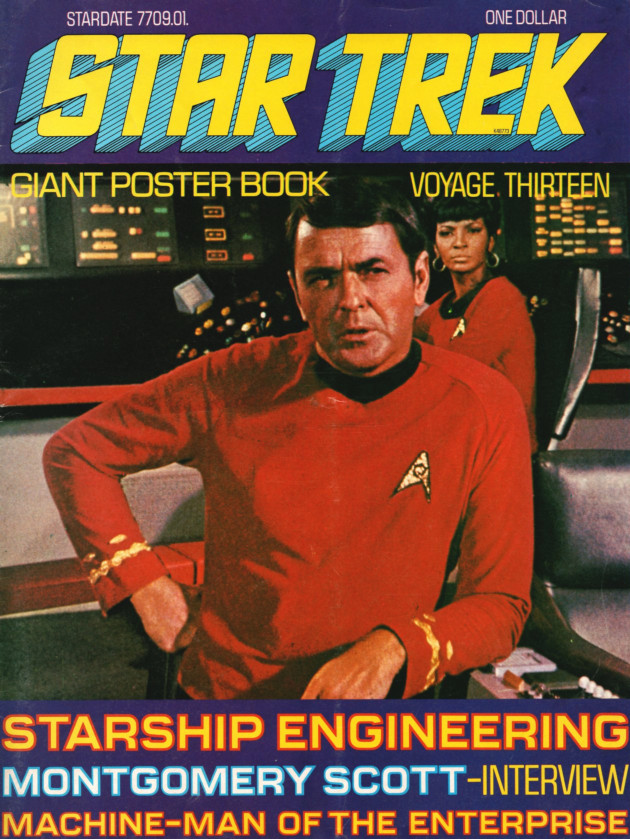
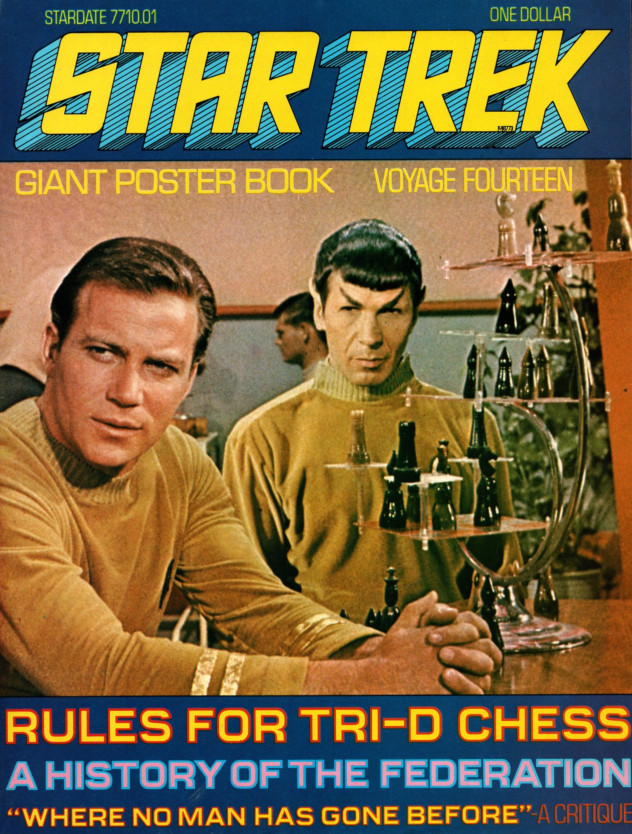


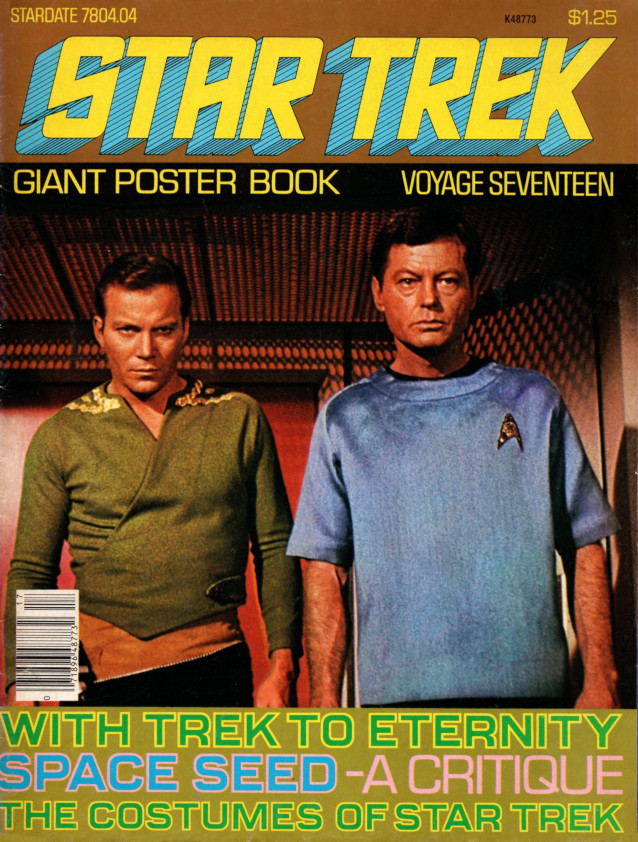
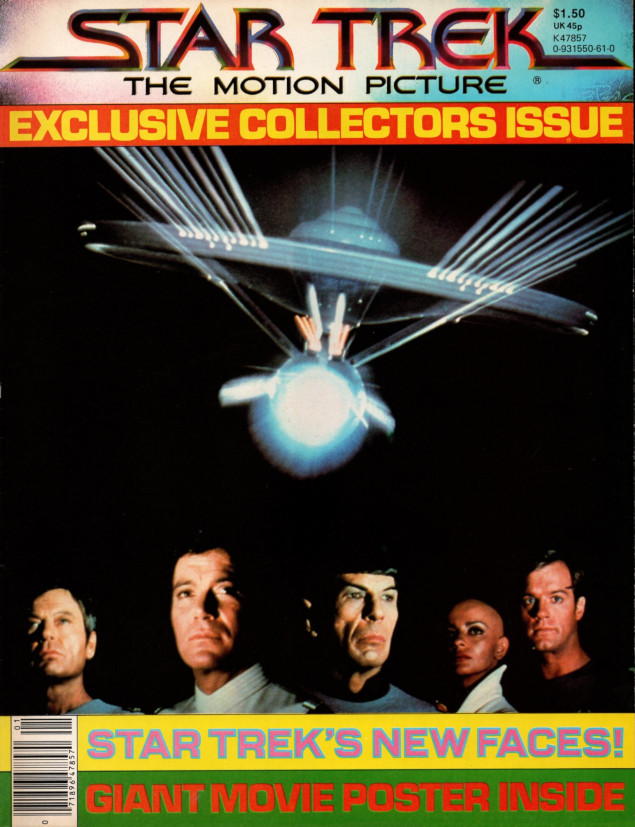
Many early Trek books and magazines began essentially by accident, and a surprising number of those came out of The Federation Trading Post, a Star Trek store that occupied what is now a high-end bit of real estate in Manhattan in the 1970s. The Star Fleet Medical Reference Manual and two of the best Gold Key Trek comics both originated in that store.
As did the Giant Poster Books. Star Trek production luminary Doug Drexler told me recently he was behind the counter one day in 1976 when a guy from Fiona Press came into the store. Fiona “had a skin magazine, and it was a slick publication.” That magazine was called Club, an American version of the British magazine Men Only.
“He said they had just gotten the rights to do a Star Trek poster book, but they knew nothing about Star Trek. He asked if we knew anyone who could do it, and we said ‘Well, there’s us.’ We had our own photos, we were plugged into the fan base, and Allan Asherman had all kinds of studio transparencies. We used those to make our posters.”
Store staffer Asherman would go on to a lengthy career at DC Comics and as a magazine and book writer; his Star Trek work includes The Star Trek Compendium, The Star Trek Interview Book and The Making of Star Trek II: The Wrath of Khan.
A fourth book, detailing unproduced scripts, was printed and two days away from distribution when Gene Roddenberry killed the project because a Hollywood writers’ strike stopped the flow of stories for the second season of The Next Generation, and he needed those older scripts. Asherman told that story on a recent episode of the Roy’s Tie-Dye Sci-Fi Corner podcast.
The team assembles
The magazine’s editorial staff in its early days all came from the store: Ron Barlow, Doug Drexler, Allan Asherman, Anthony Fredrickson and Geoffrey Mandel. And the quality of the writing and editing is excellent, especially when you consider these guys were not, at that time, creative professionals.
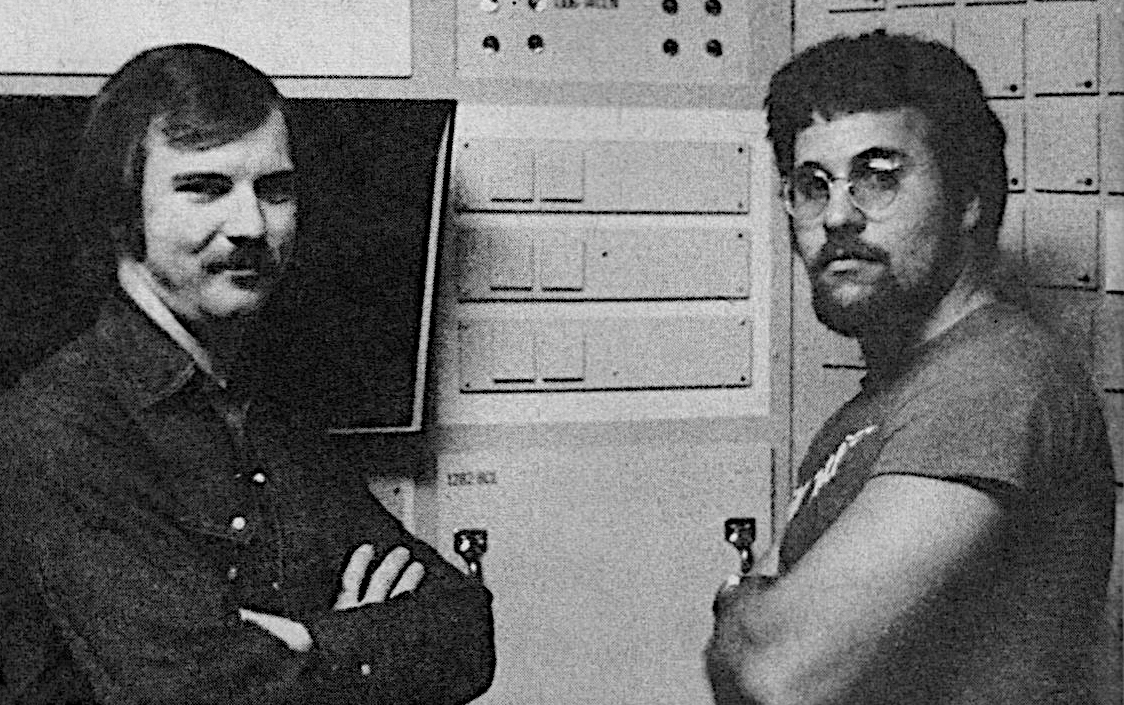
Ron Barlow (left) and Doug Drexler from All About Star Trek Fan Clubs, December 1976, and the masthead from issue 1 of the Poster Book.
“Geoff Mandel, Allan Asherman, Anthony Fredrickson and I wrote the articles and drew the pictures. There was a small group of fans who knew each other, and stuff would get passed around. Allan…had the most amazing collection of anyone I knew at the time, and the rest of us had been collecting images and interviews, so we had that stuff, plus we had the passion to write about it.”
The team turned out a high-quality issue almost every month. “I used to write down all my thoughts and then I would cut up [the pages] and put this one here and move that one there and then I would tape them together and I’d have an outline,” Drexler said.
The group would change a little over time, with Drexler drifting away after about a year and new people joining.
The publisher of the magazines is listed as Paradise Press, the same company as Fiona Press. I imagine the new name distanced the titles from their progenitor. And the model was obviously a success, as the company went on to produce poster books on Star Wars, Starsky and Hutch, The Black Hole, Close Encounters of the Third Kind, Grease, The Great Muppet Caper and many others.
Drexler, however, said even today he can’t assess the magazine’s financial performance. “They sold well enough but there was no way to gather reactions, so I don’t really know.”
Way ahead of their time
But he does know how important those magazines were. “I’ve seen photos from the production of Star Trek: The Motion Picture with Fred Phillips putting make-up on Leonard Nimoy and with our posters on the wall.”
The team spent hours drawing blueprints and analysing scripts and scenes, and “now there are thousands of people doing that but, back then, we were it. That’s why so many people remember our books. They left an impression.
“The Poster Books were way ahead of their time. They were the first professional Star Trek magazines, and they were done by people who knew and loved the show.”
I’ll cover each issue of the magazine. Here is the article on issue one.
-
Giant Poster Book one: a magazine that told readers “you’re at home”
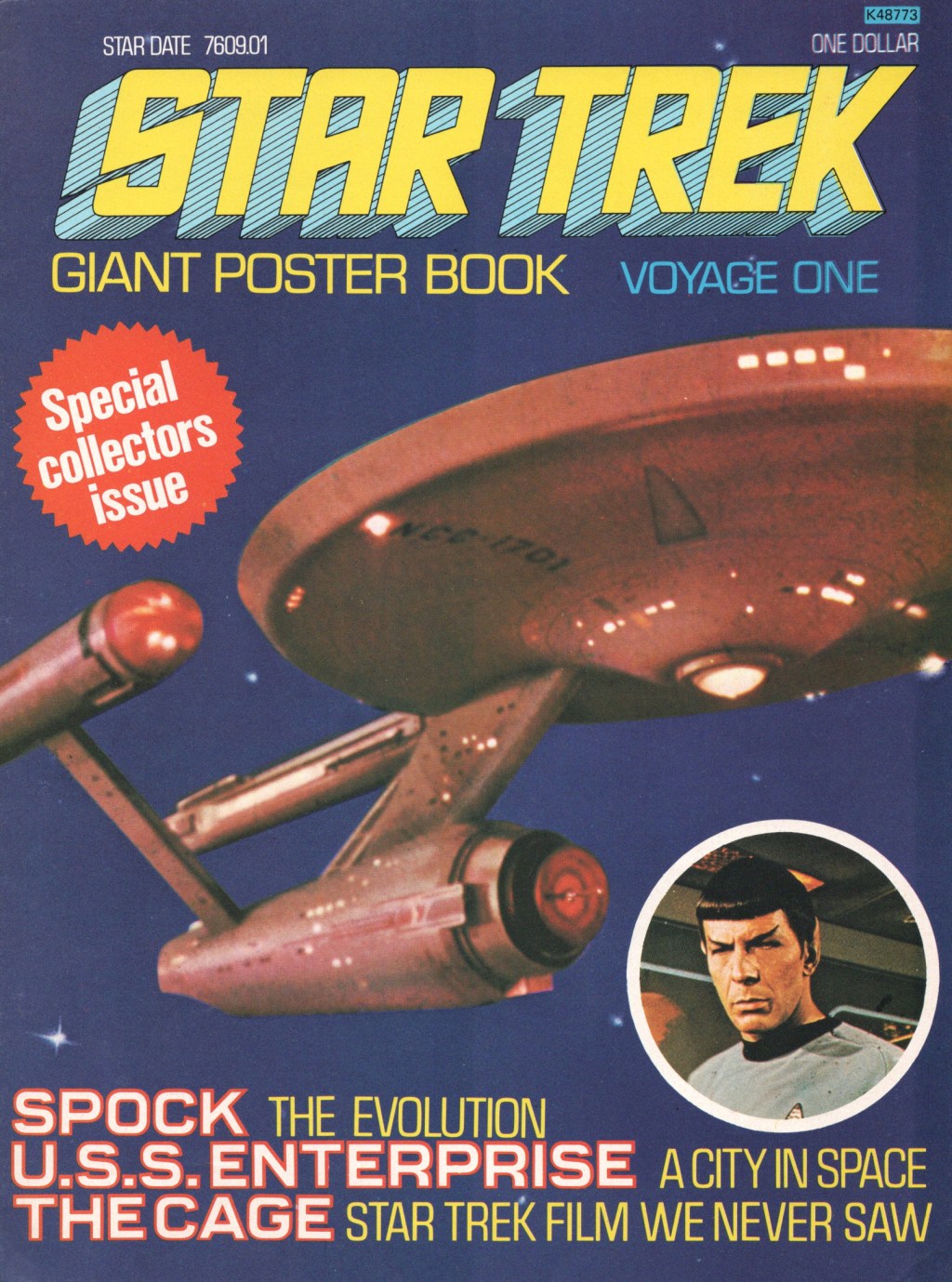
The Star Trek Giant Poster Books were the first professionally published Trek magazines. Seventeen issues were produced, printed almost every month from September 1976 to April 1978, plus a 1979 “Collectors Issue” devoted to The Motion Picture. Each magazine delivered six pages of content plus the cover and back cover, and each folded out into a large poster.
I own the complete set and will cover each issue. The story of the magazine’s genesis is told here.
Here are highlights from issue one, published in September 1976, plus a scan of the magazine.
There are many reasons to like the Star Trek Giant Poster Books. The biggest, for me, is that they were a thinking-person’s take on Star Trek. Issue one has none of the standard, expected articles, like a list of best and worst episodes or a “What is William Shatner doing now?” piece. Instead, readers were given a profile of the Enterprise as a living character, an analysis of Spock as a modern hero, and — best of all — a study of the first-draft script of The Cage. This is especially interesting because, as Allan Asherman and Doug Drexler wrote in 1976, “only a few copies remain” of this first draft. Today, they must be even rarer. I have a copy of the second draft but I have never seen the first.
The quality and insights delivered here are remarkable. Also, each issue gave readers a big freaking Star Trek poster! How great is that?
The editorial
The editor’s greeting is unsigned but was presumably penned by Ron Barlow, who wrote that he struggled to come up with a message for this first issue. I’ve known that challenge myself, but despite his concerns Barlow says one really important thing: this magazine will “let readers know you’re at home.”
And that is what the production team delivered. The entire run is a warm welcome to fans who love Star Trek from people who treat it with affection and knowledge.
The U.S.S. Enterprise: A city in space
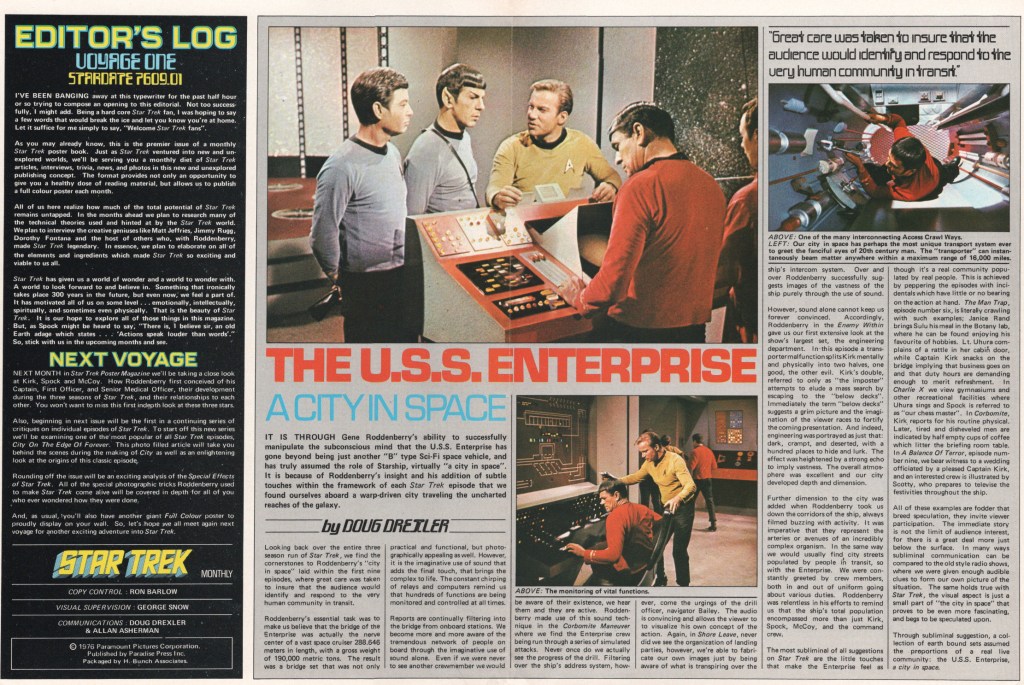
The first article explains how the show’s sound design places the viewer in a busy and purposeful city setting. The writer, Drexler, tells readers that the bridge set is practical, functional, and visually appealing but that:
It is the imaginative use of sound that adds the final touch, that brings the complex to life. The constant chirping of relays and computers remind us that hundreds of functions are being monitored and controlled at all times.
Reports are constantly filtering into the bridge from onboard stations. We become more and more aware of the tremendous network of people on board through the imaginative use of sound alone. Even if we were never to see another crewmember we would be aware of their existence, we hear them and they are active.
The Cage: Scenes unproduced
The Cage opens on the impressive bridge of the Enterprise and with a crew that is on edge, dealing with a red alert and a mysterious distress signal. Viewers are dropped into a tense situation already in progress.
That’s the filmed version. The first draft of the script opened instead on a more routine activity: the Enterprise is exchanging passengers with a shuttle and the captain, Robert April, is grousing that his new yeoman is too young.
Some personnel are also being transferred off April’s ship, and Roddenberry had this captain too deal with recent deaths among his crew, although the scene is a little more raw than what we later got from the series. One crewmember confronts April:
Crowley: You send me back this way, April, they’ll disqualify me as a navigator, break me as a ship’s officer.
April (interrupting): You fired on friendly aliens, cost us four dead, three injured…
Crowley (interrupts angrily): They looked like insects. How could I know that they were intelligent enough to have weapons?
April (quietly): Get off my ship, mister.
Roddenberry also wrote a lengthy description of warp drive, which we see in The Cage as the transparent starfield overlay and Jose Tyler’s seven-finger communication to Pike.
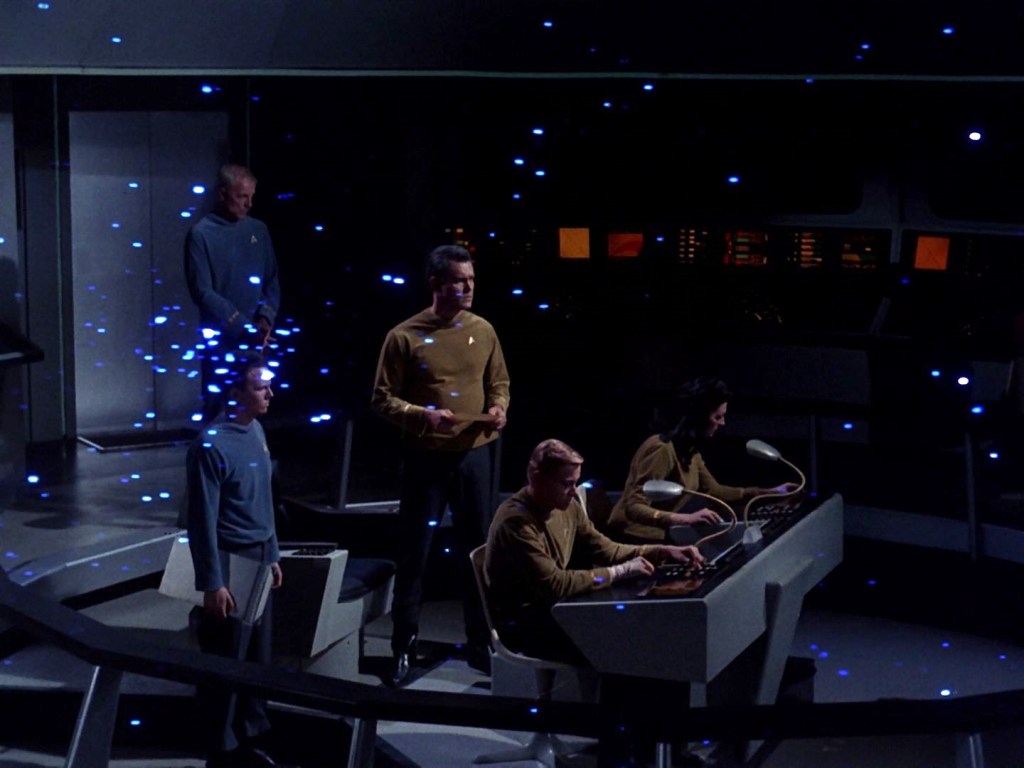
Both images: TrekCore 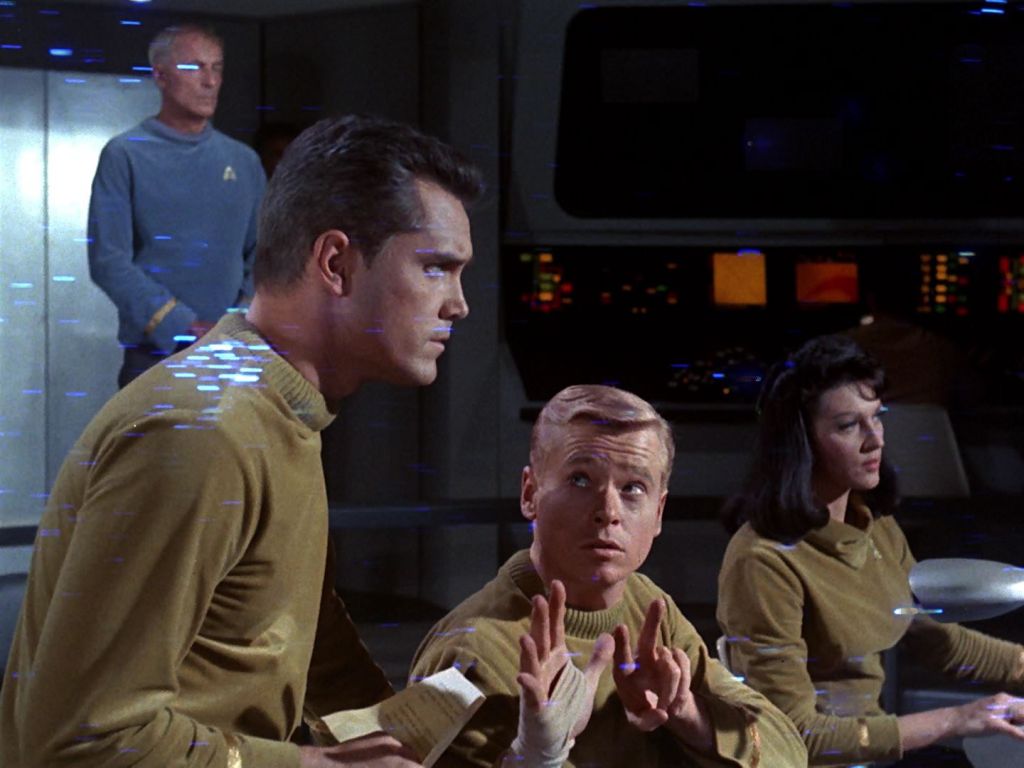
The whine of electric circuits and the high pitched signals of computers rise enormously in volume as Mr. Spock engages a control. A strange shifting-color radiance seems to emanate from the inner walls of the vessel. Spock engages the master control. Suddenly every sound is abruptly stilled. Then even more startlingly, the scene seems to dim and begins to become transparent (EFFECT: double exposure)… The transparent shadow of Captain Robert April moves to the astrogation position, eyes the navigator’s work. The figure of Jose turns, holds up seven fingers; April nods toward Mr. Spock who acknowledges, disengages the master control.
As the article authors rightly point out, the “complicated warp scene would have necessitated the same multiple exposures every time the ship wanted to get someplace fast, which would not only have cost more money but would have detracted from the drama present during such occasions.”
The first poster book cost $1 in 1976. This article alone is worth the buck.
Spock: An analysis
Asherman makes a number of interesting observations about Spock but what really stands out in this piece is how much these guys knew about Star Trek, in the days before Memory Alpha and the reference books that today crowd my shelves. The article tells us that Spock’s home world was originally called Vulcanis, that Nimoy’s arched eyebrows and pointed ears were airbrushed to look more normal in an early promotional booklet, and that The Corbomite Maneuver was filmed in June 1966. Accessing that information is trivial today, but how did Asherman know all that in 1976?
The poster
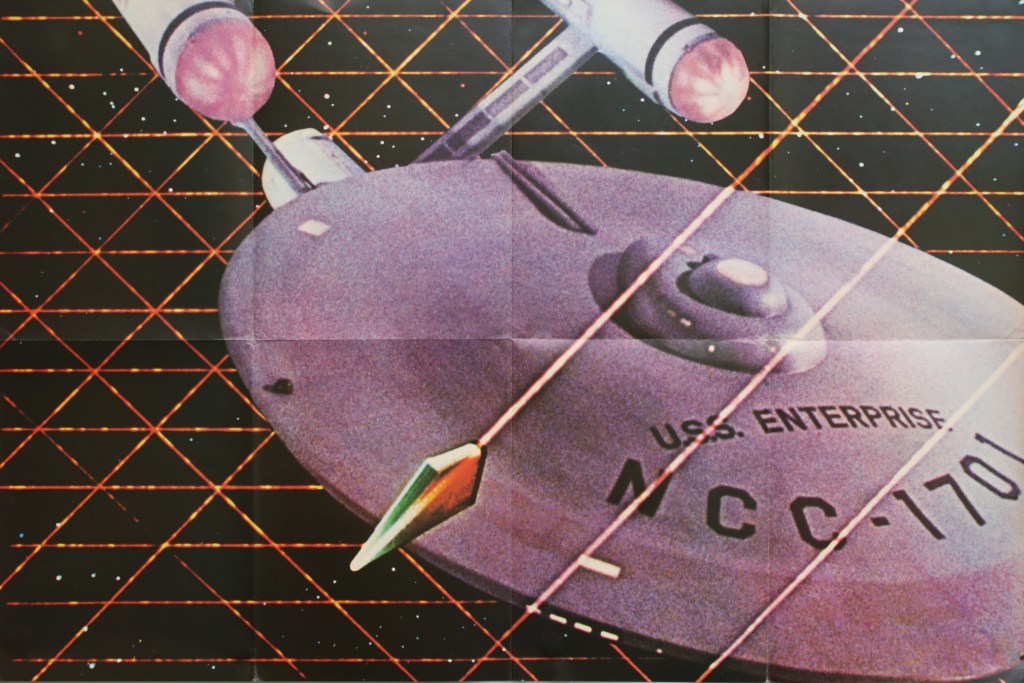
The Enterprise is slowly entwined in The Tholian Web.
Errata
No one is perfect and there are a couple of errors in the issue. Asherman’s statement in his Spock article that “Gene was also the head writer of Have Gun Will Travel” is often repeated but untrue — although to be fair Roddenberry himself regularly spread that story. The other (really small) error is Asherman’s statement that Leonard Nimoy was in Rocket Man, made by Republic Pictures. Nimoy actually appeared in Zombies of the Stratosphere, which used footage from Rocket Man.
Click here to read about how these magazines came to be.
-
Enjoy almost-lost audio from Star Trek’s third season

The Star Trek blooper reels were a highlight of most early conventions — even if the images were faded and grainy and the sound crummy.
A better experience, surprisingly, can be had on a record called Trek Bloopers, released in the early ’70s. First, the sound quality is excellent and, second, it features recordings from third-season episodes (Whom Gods Destroy, Let That Be Your Last Battlefield, The Way To Eden and Turnabout Intruder) while the blooper clips shown most often at cons were drawn from the first two seasons only.
And the LP beats the blooper reels in one other regard. Where the film clips focus on pratfalls — William Shatner bouncing off a door that fails to whoosh open, James Doohan stumbling on the dungeon stairs or Michael Forest air-kissing the camera — the record instead paints a picture of workaday TV production. You get a good share of flubbed lines, curse words and directors struggling to be patient, but the recordings are also a bonanza for production nerds like me, interested in how the show was made.
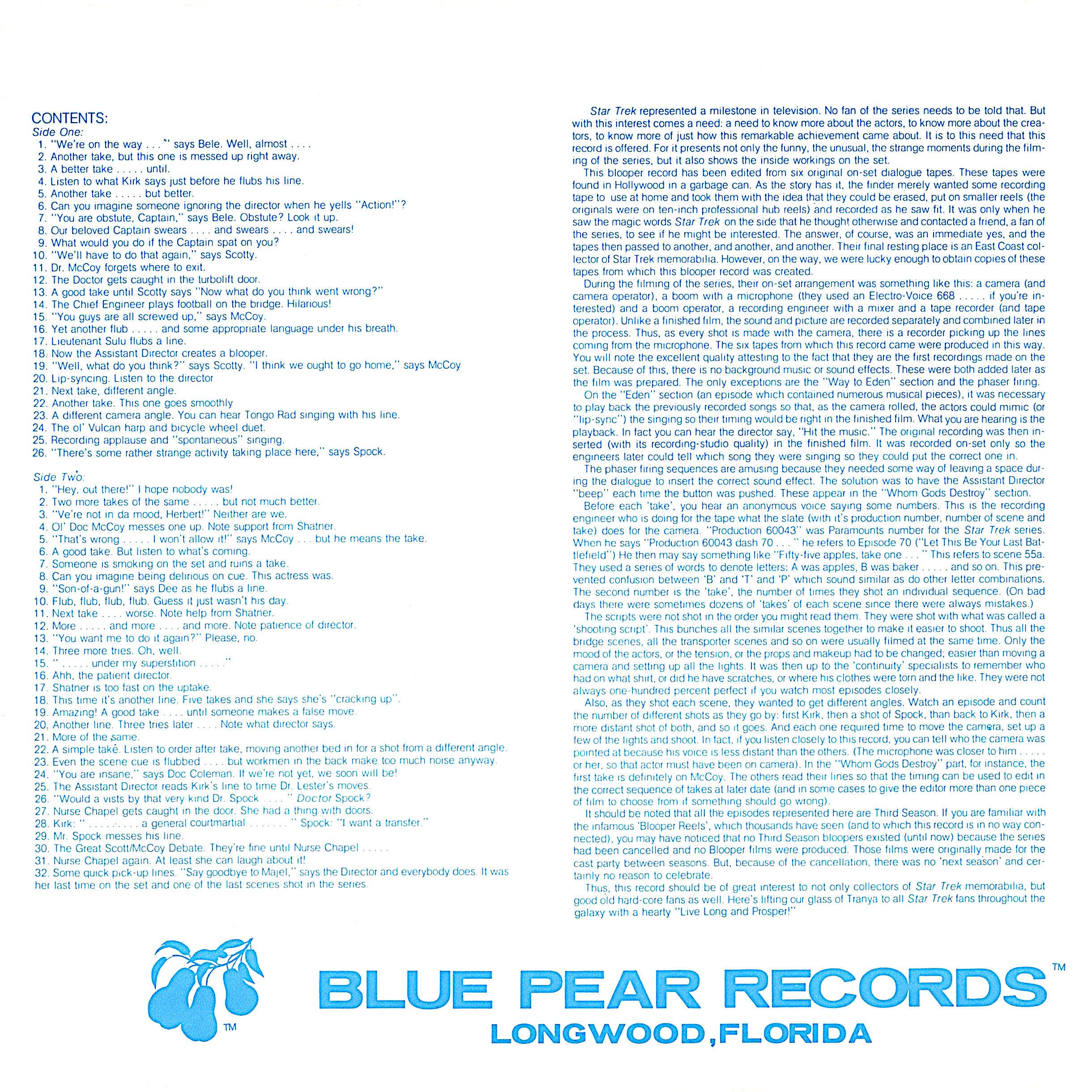
For example, many takes start with the recording engineer reading a notation like “Production 60043 dash 70” and the back of the album helpfully informs us that 60043 was the code Paramount assigned to Star Trek, and that the 70 refers to the 70th episode filmed, Let That Be Your Last Battlefield. (It’s also interesting to note that Paramount counted The Cage as episode 1, even though at that time it had never been seen on TV.) These notations performed the same identifying role as the familiar clapboards seen in many behind-the-scenes photos, such as this one from the extensive collection of Gerald Gurian (and used with his permission).

Where did the recordings come from?
The LP was released by Blue Pear Records, a name that was obviously a joke on “blooper,” and the company was supposedly based in Longwood, Florida. That is about all I or apparently anyone else knows about it. Some online sources say the album was released in 1975 and that the company produced bootleg recordings of stage plays. I don’t know if any of that is accurate.
And neither does the city of Longwood. I contacted the Economic Development and Special Projects Manager to ask if the city maintains any records of companies from the 1970s. I was told “Sorry, but no we do not have such records.”
Here is the LP’s origin story, as detailed on the back cover.
This blooper record has been edited from six original on-set dialogue tapes. These tapes were found in Hollywood in a garbage can. As the story has it, the finder merely wanted some recording tape to use at home and took them with the idea that they could be erased, put on smaller reels (the originals were on ten-inch professional reels) and recorded as he saw fit. It was only when he saw the magic words Star Trek on the side that he thought otherwise and contacted a friend, a fan of the series, to see if he might be interested. The answer, of course, was an immediate yes, and the tapes then passed to another, and another, and another. Their final resting place is an East Coast collector of Star Trek memorabilia. However, on the way, we were lucky enough to obtain copies of these tapes from which this blooper record was created.
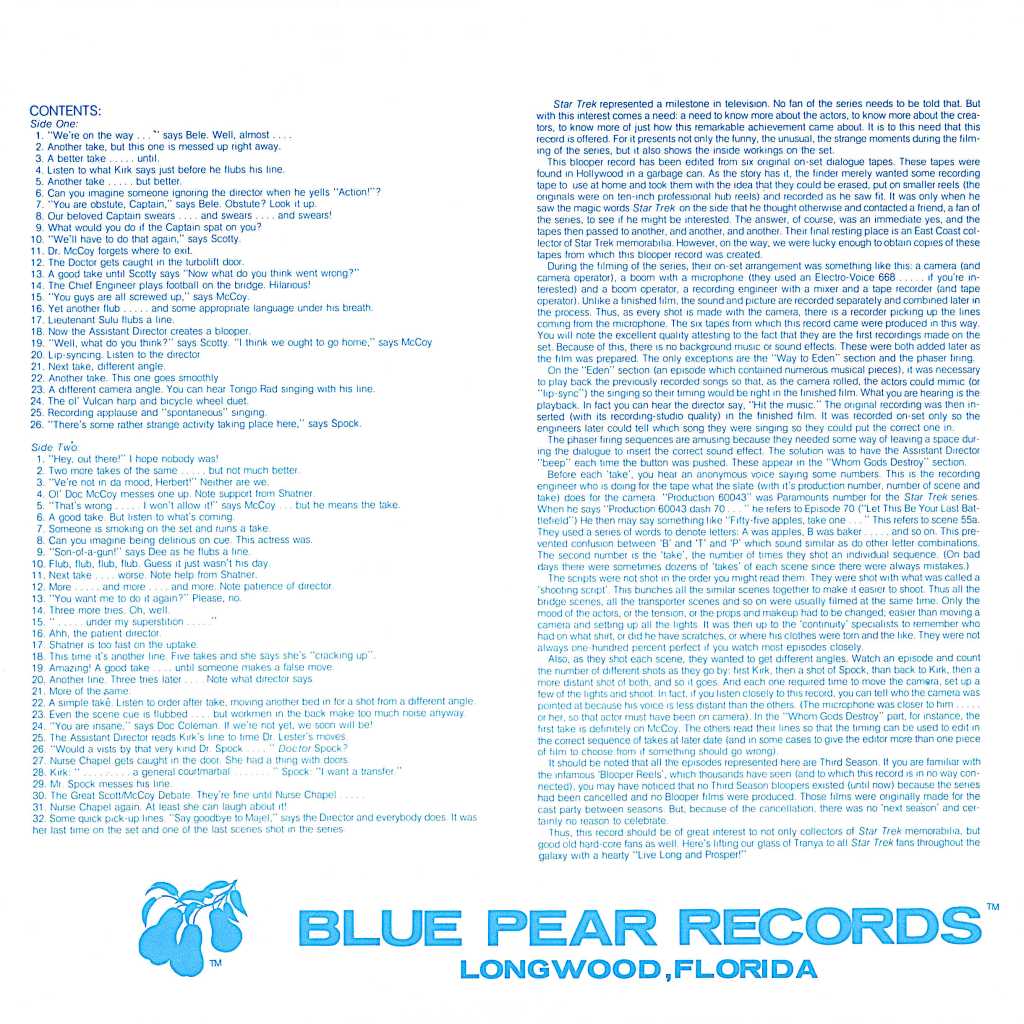
Again, I don’t know if this is true but it sounds plausible. After all, the 11-foot model of the Enterprise sat in the corner of a Paramount storage area for years and could easily have been discarded.
I’m just thankful Trek Bloopers exists. It’s a wonderful record of the soundstage between October 1968 and January 1969.
All the tracks are available below. My favourite bits include Shatner on side 2 offering a comforting “That’s okay. You’re alright” after DeForest Kelley flubbed a line and Harry Landers as Dr. Arthur Coleman burning at least 24 takes to get through this one small section in the Turnabout Intruder script.
KIRK: I thought my presence might quiet Doctor Lester. It seems to have had the opposite effect.
COLEMAN: It has nothing to do with you. It’s a symptom of the developing radiation illness.
MCCOY: Tests with the ship’s equipment show no signs of internal radiation damage, Doctor Coleman.
KIRK: Didn’t Doctor Lester’s staff become delirious before they went off and died?
COLEMAN: Yes, Captain. Yes.
MCCOY: Doctor Lester could be suffering from a phaser stun as far as the symptoms I can detect, Jim.
KIRK: Doctor Coleman, Doctor McCoy has had a great deal of experience with radiation exposure on board the Enterprise. I am guided by his opinion.
COLEMAN: Doctor Lester and her staff have been under my supervision for two years. If you don’t follow my recommendations, responsibility for her health or her death will be yours.
KIRK: Doctor McCoy, I’m sorry, but I’m going to have to take you off the case and turn it over to Doctor Coleman.
MCCOY: You can’t do this! On this ship my medical authority is final!
KIRK: Doctor Coleman wants to assume the full responsibility. Let him do it.
MCCOY: I won’t allow it.
KIRK: It’s done! Doctor Coleman, your patient. Doctor Coleman, didn’t you suggest a sedation to rest the patient?
COLEMAN: Yes, Captain.
MCCOY: It’s not necessary, Jim. Can’t you see she’s coming around?
KIRK: Doctor Coleman.
COLEMAN: Nurse, administer the sedative.
But the best bit is the phaser-fire boops on side 1. Here is one take:
Here is the full audio.
Side 1
Side 2
Postscript
The film clips shown at conventions were a treasured glimpse behind the production curtain, but Paramount was not happy about these screenings. One organizer of Toronto Star Trek ’76, for example, was threatened with jail time for showing the outtakes.
-
Peter Pan spins tales of new life and interstellar diplomacy
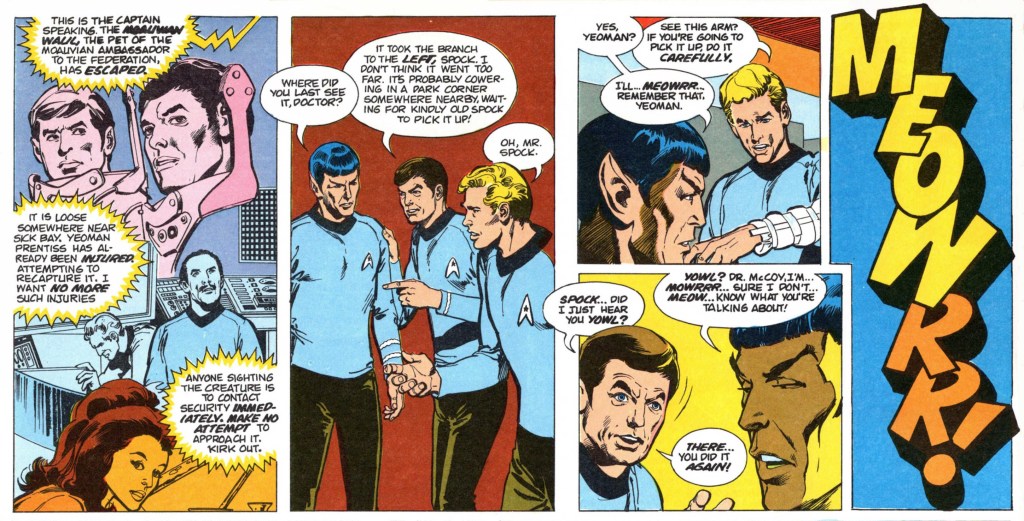
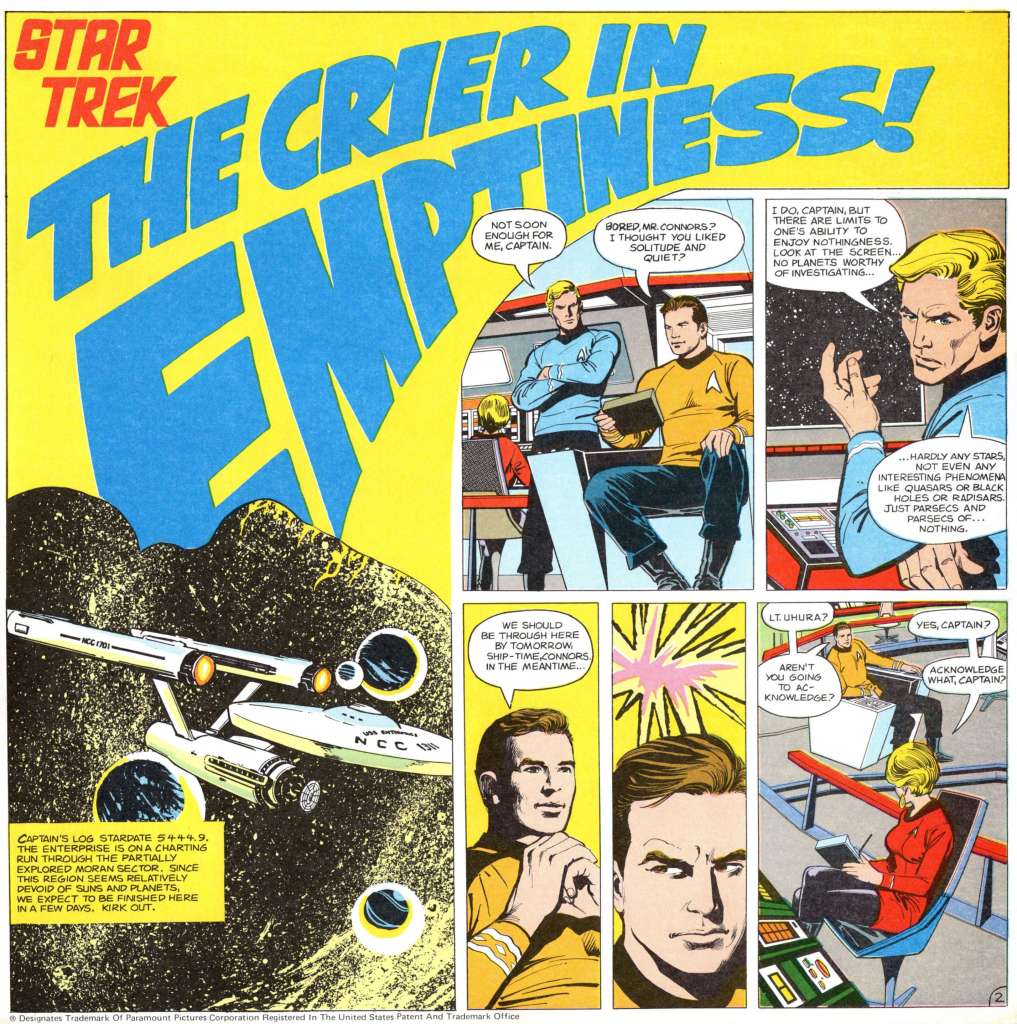
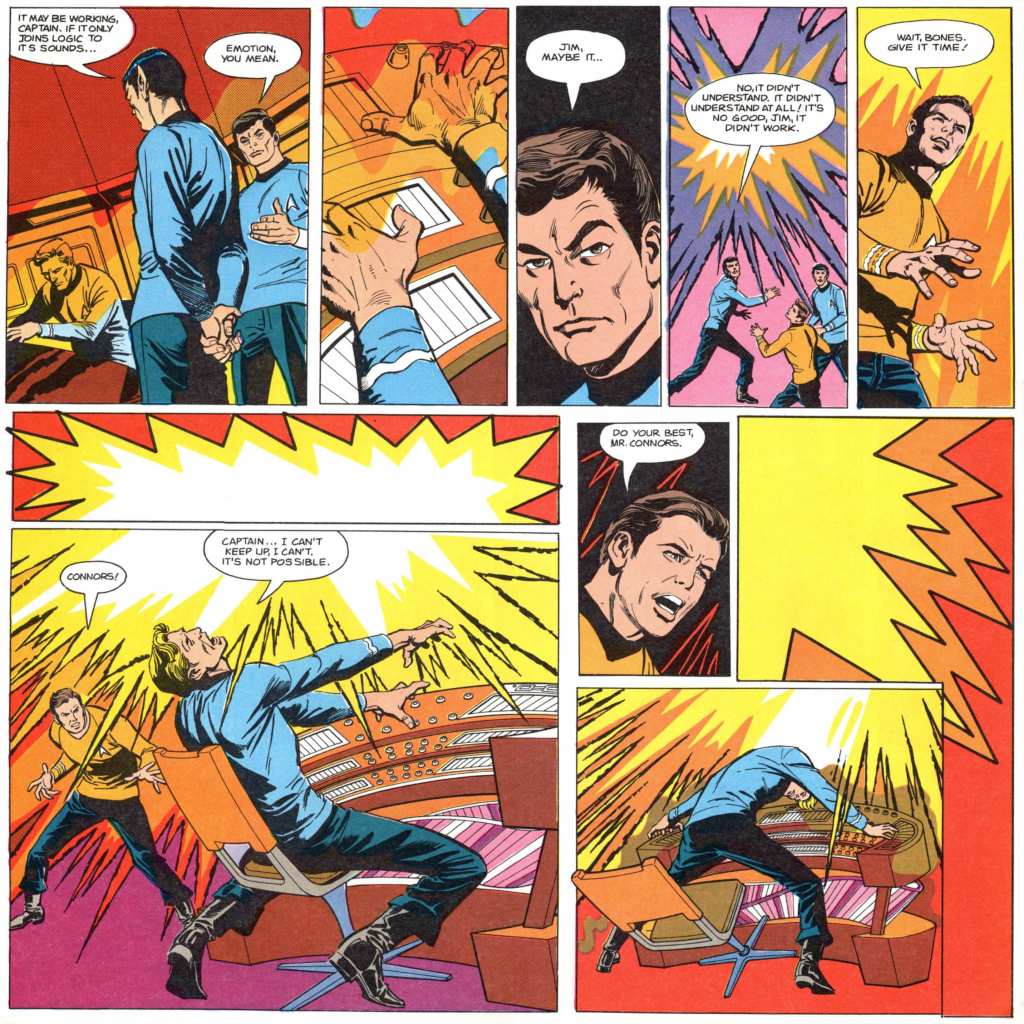
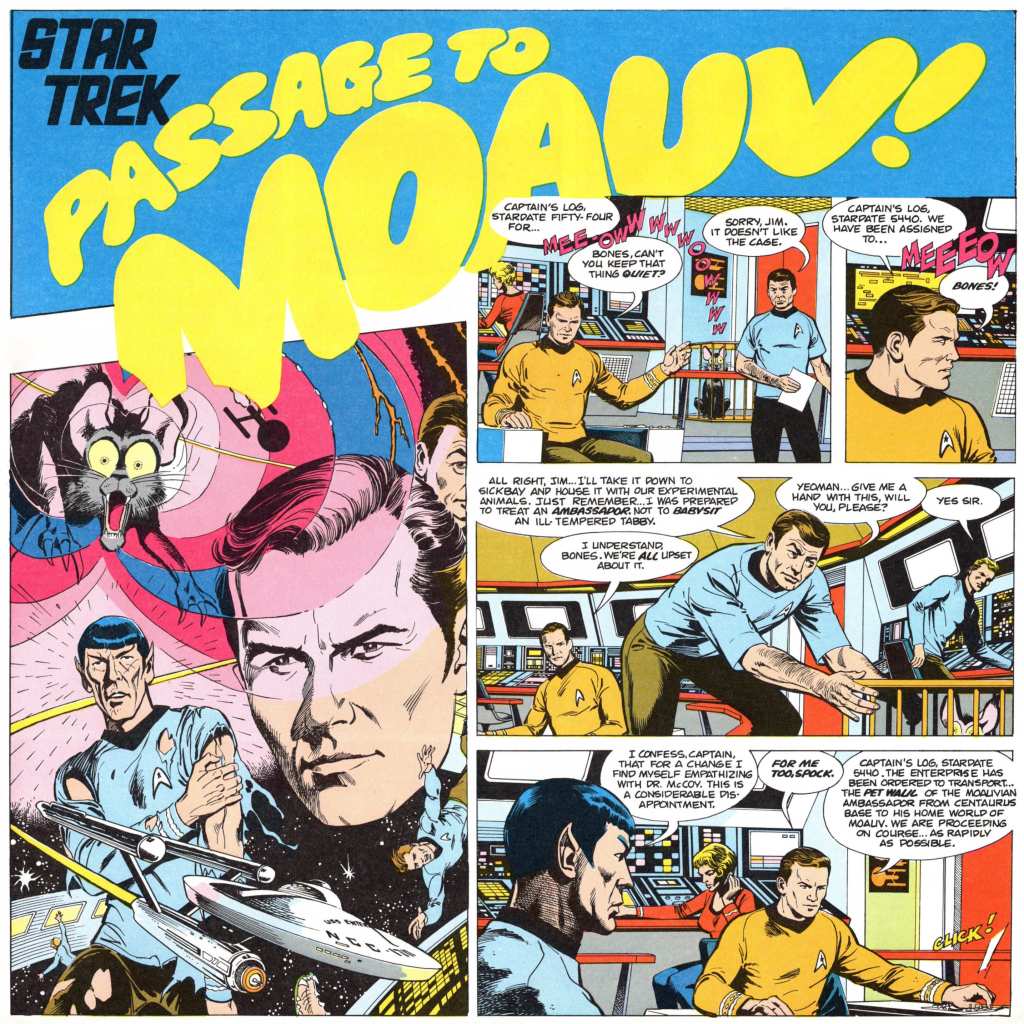
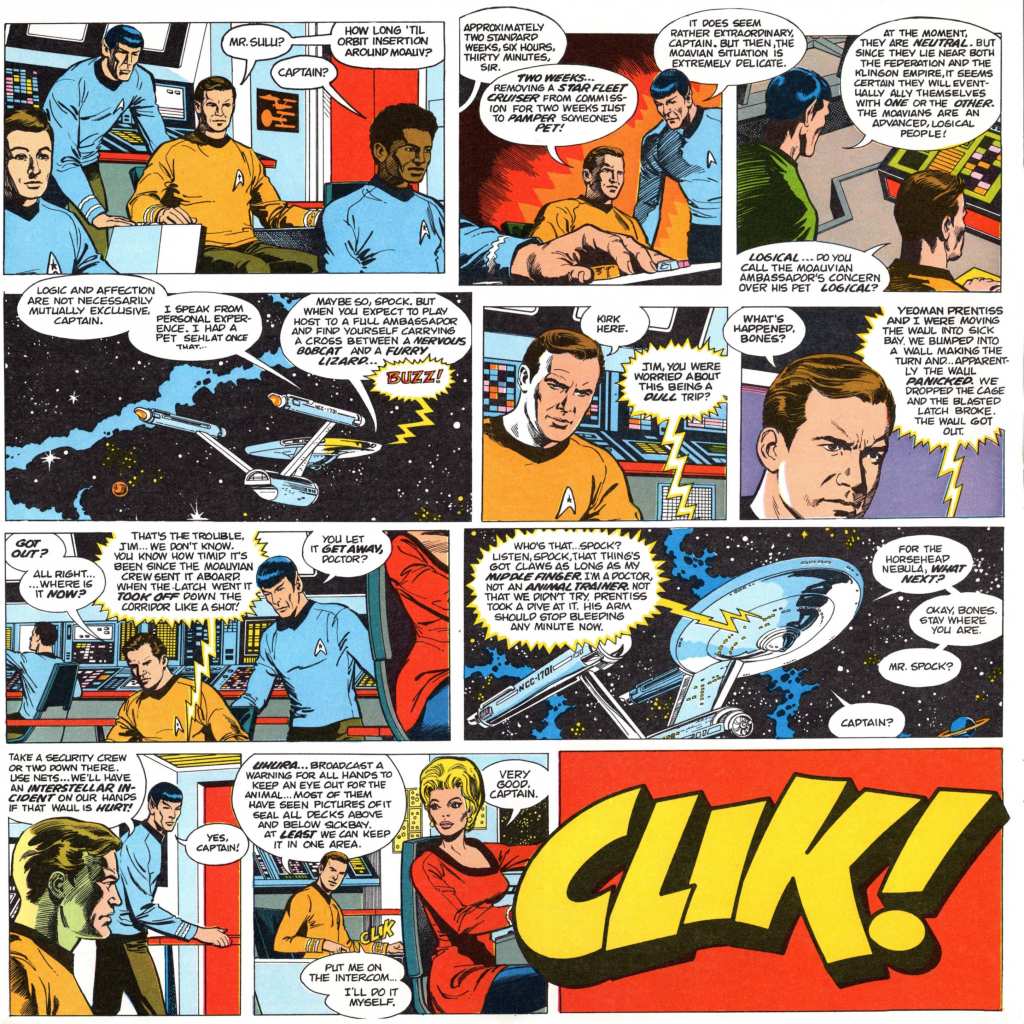
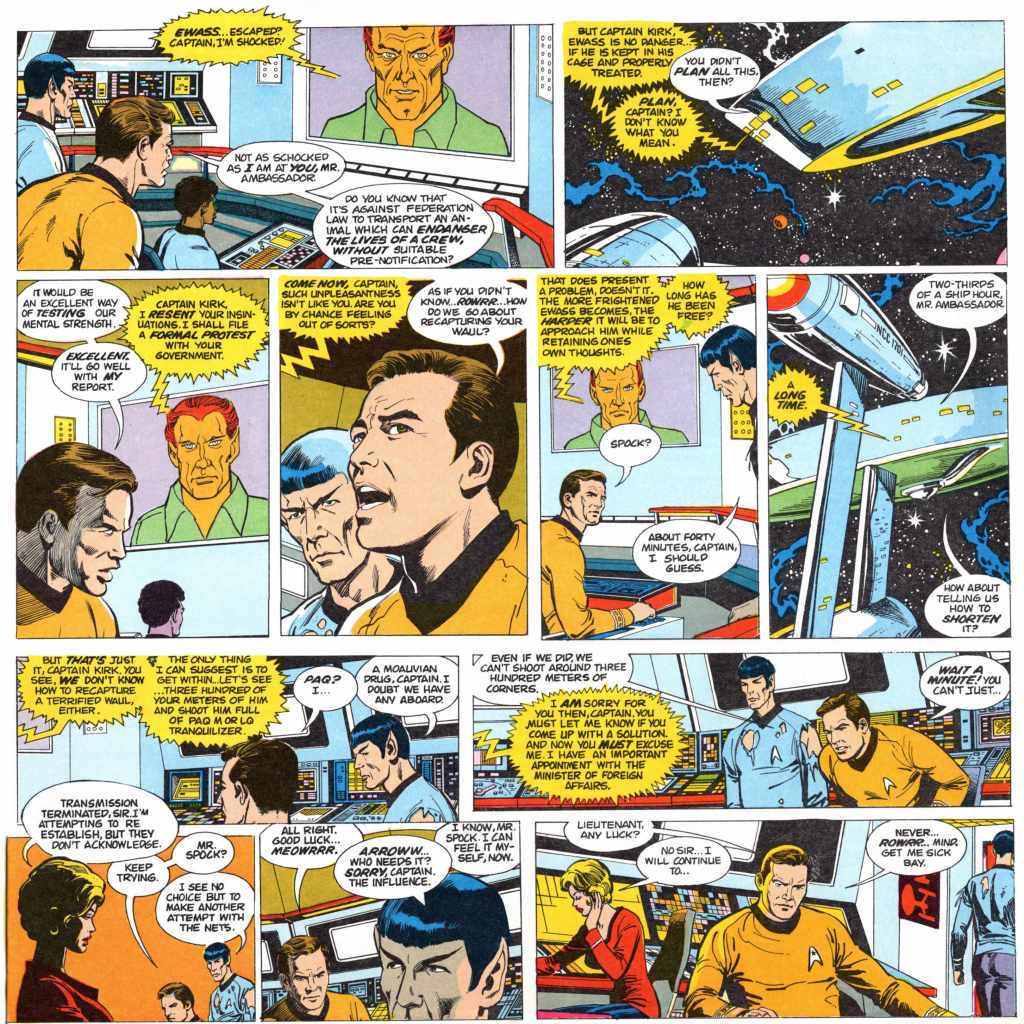
The second in my growing collection of Peter Pan record-and-comic sets features the original stories Passage to Moauv and The Crier in Emptiness, and both are good original tales that are consistent with the themes and values established in the original series. On that measure, this is a better outing than the first set I covered. (That article also gives some background on Peter Pan Industries.)

The artwork in the read-along comic is colourful and mostly accurate, as in the other set, but it strikes me as even more dynamic. The artists were really working to boost the drama of the tales.
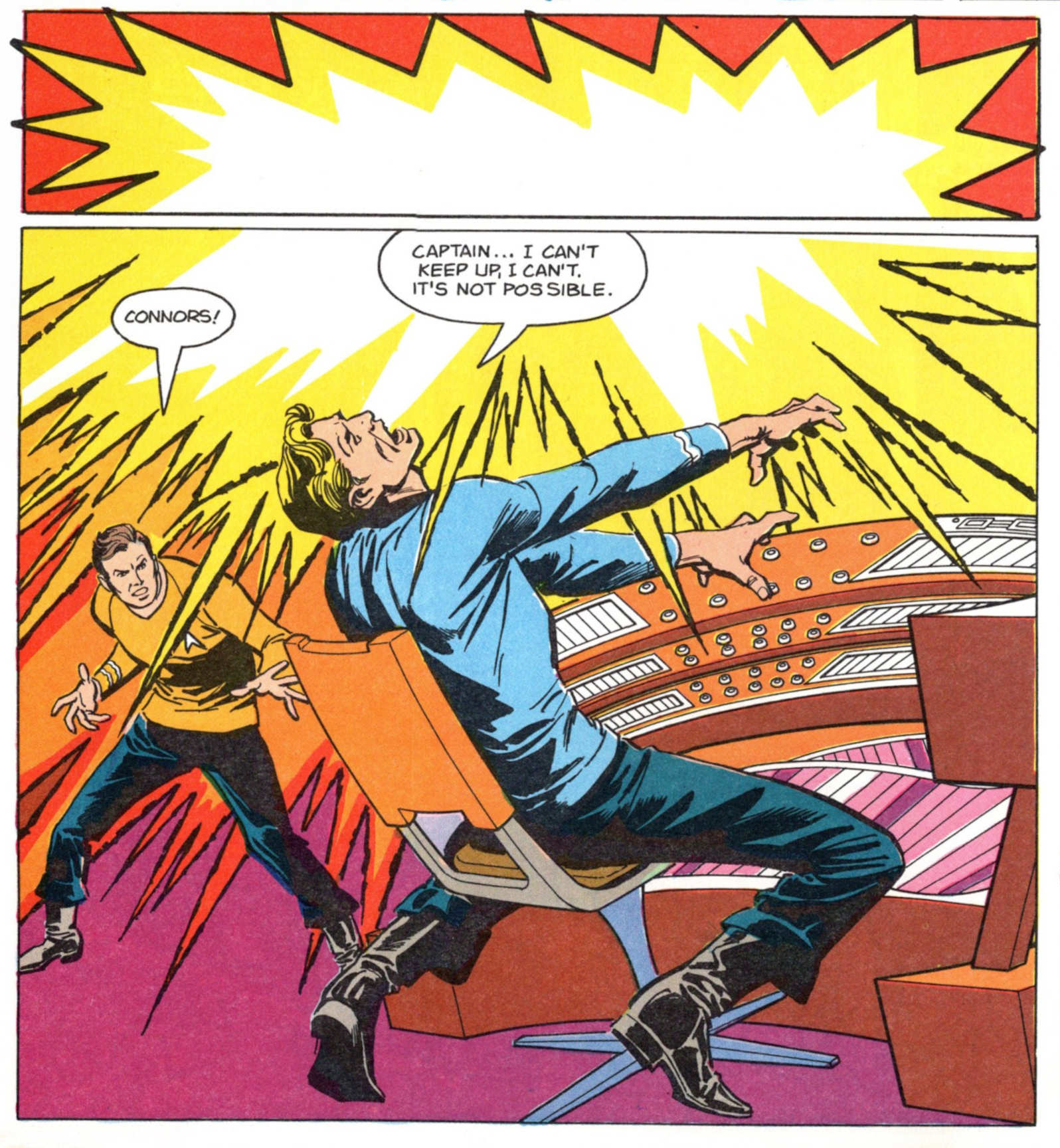
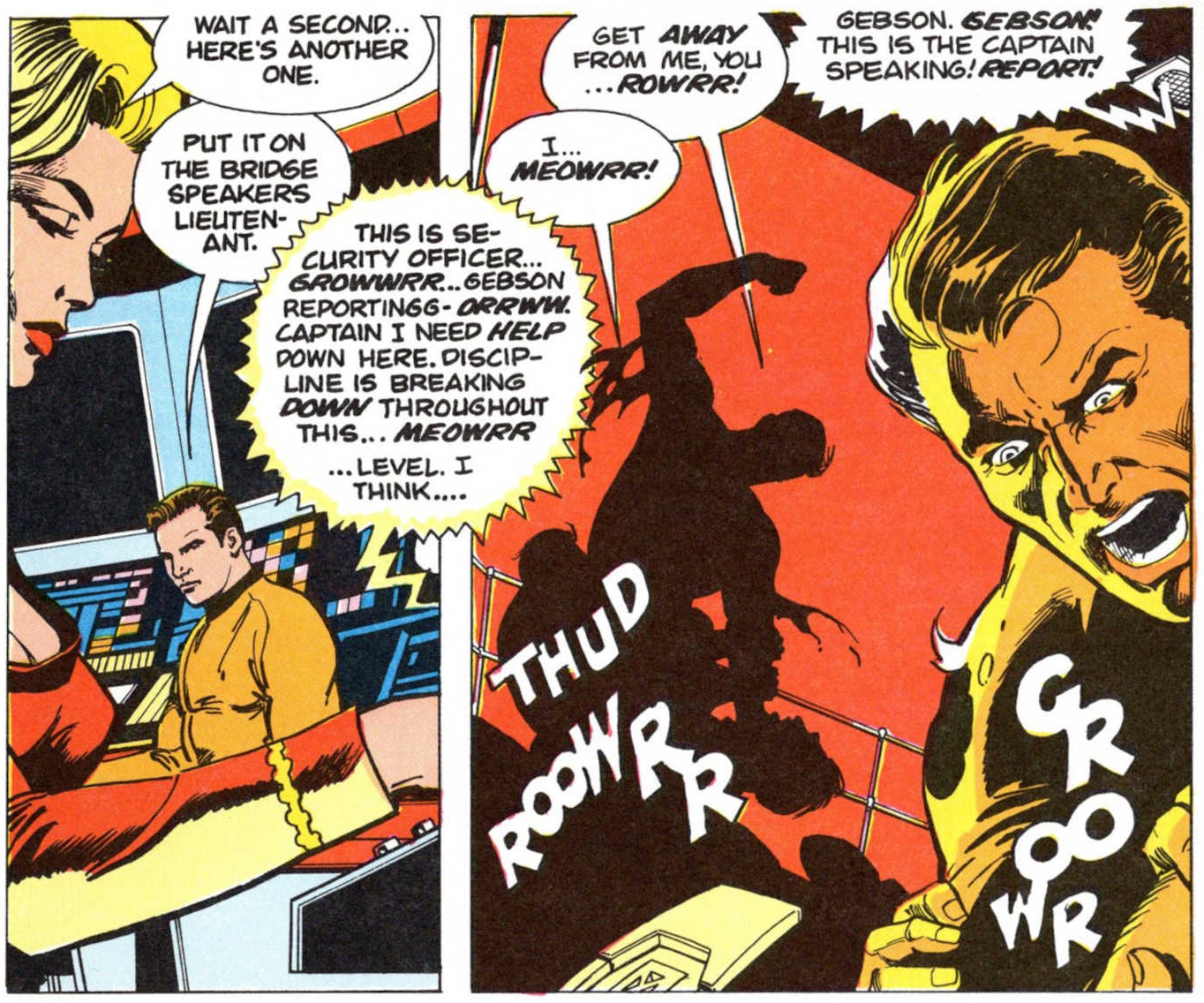
Here are the two stories. You can start the audio and flip through the scans in pace with the story — just as kids did in 1979 when this set was released.
The Crier in Emptiness
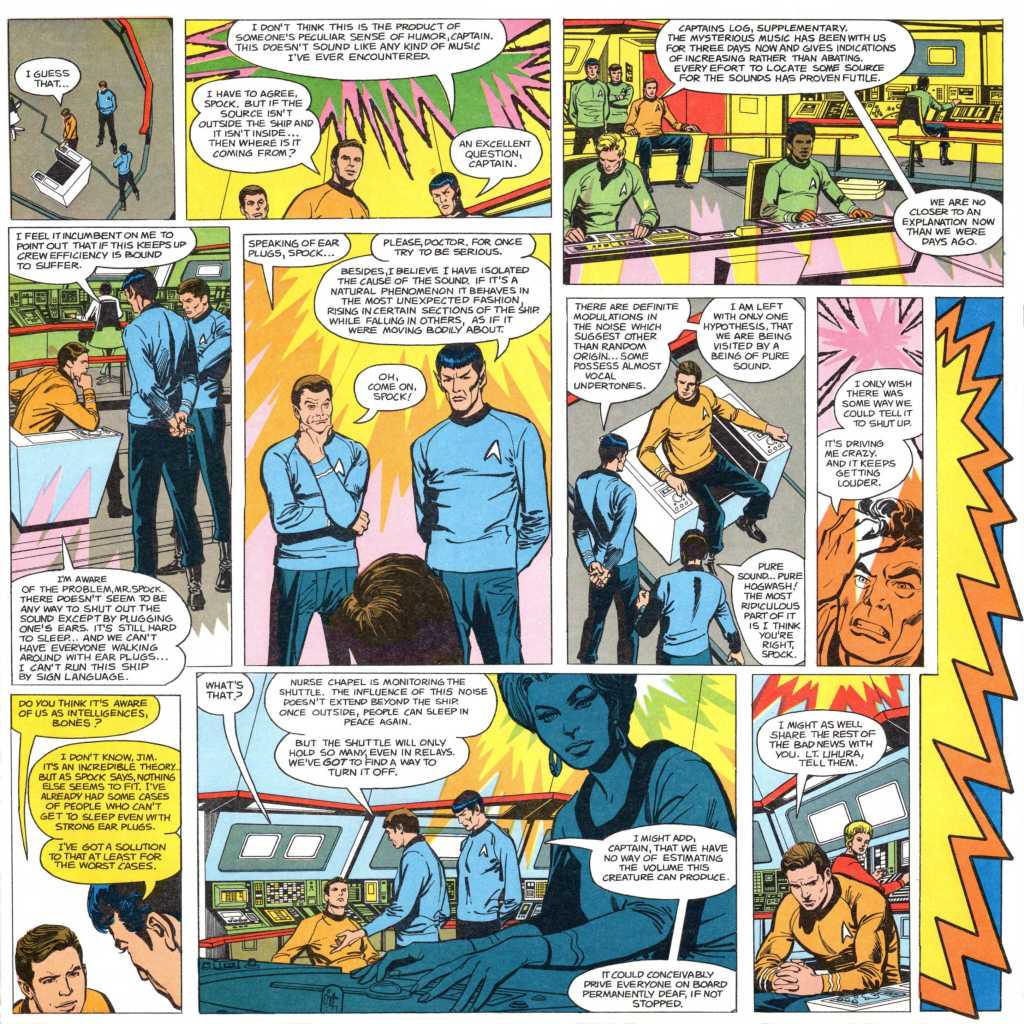
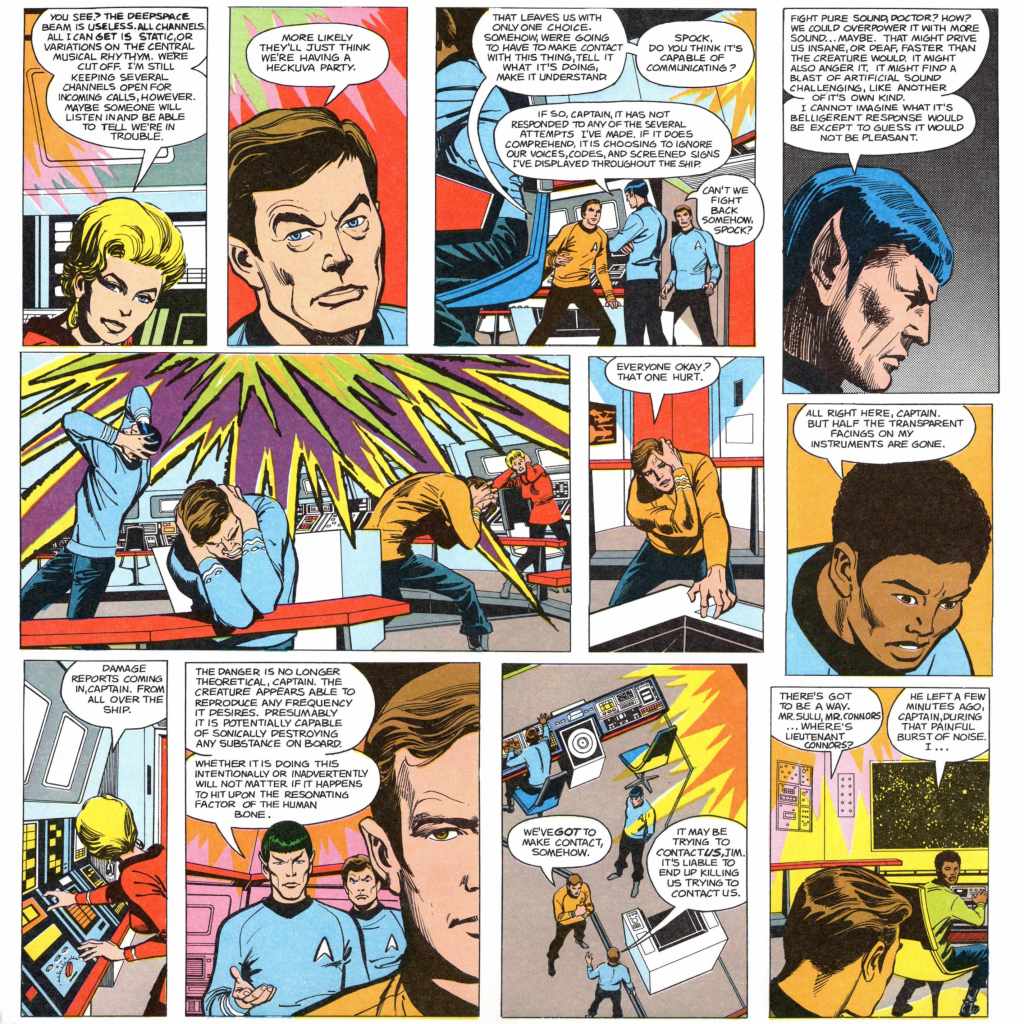
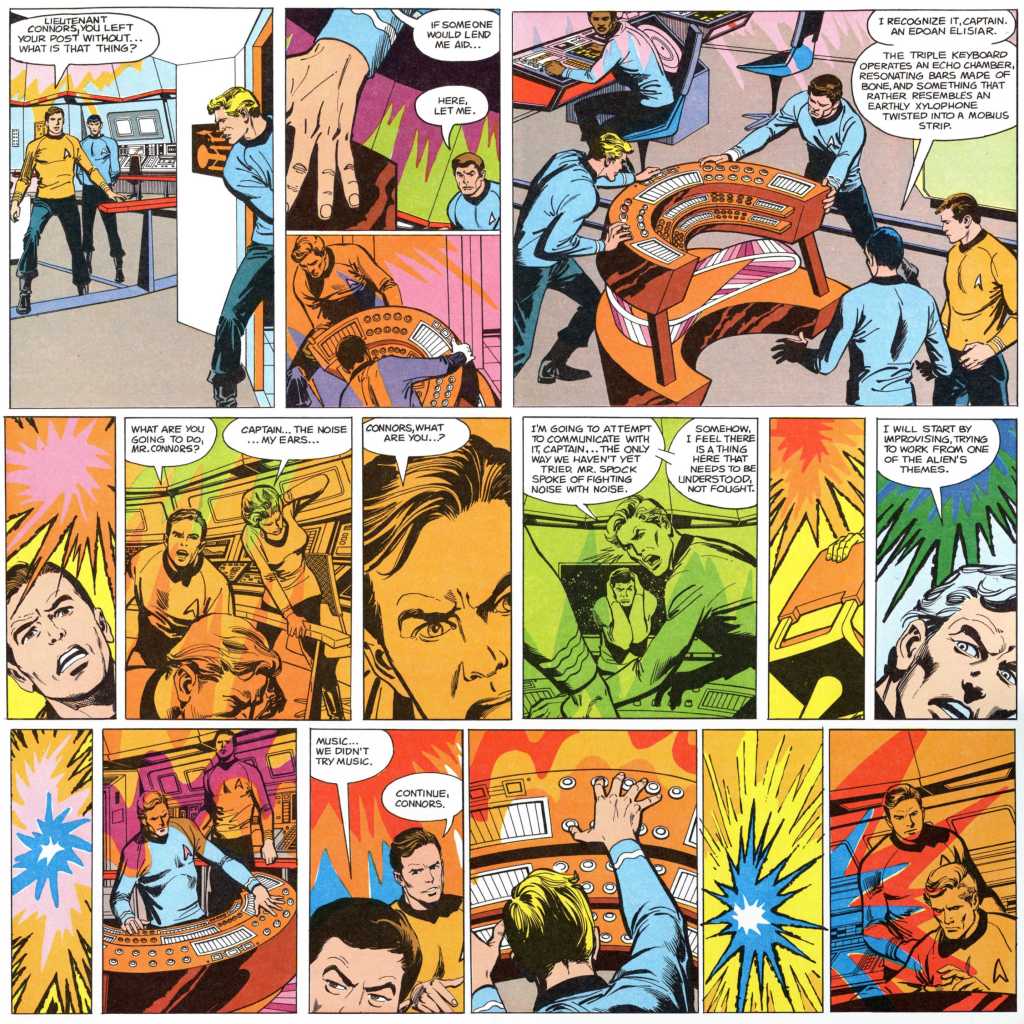
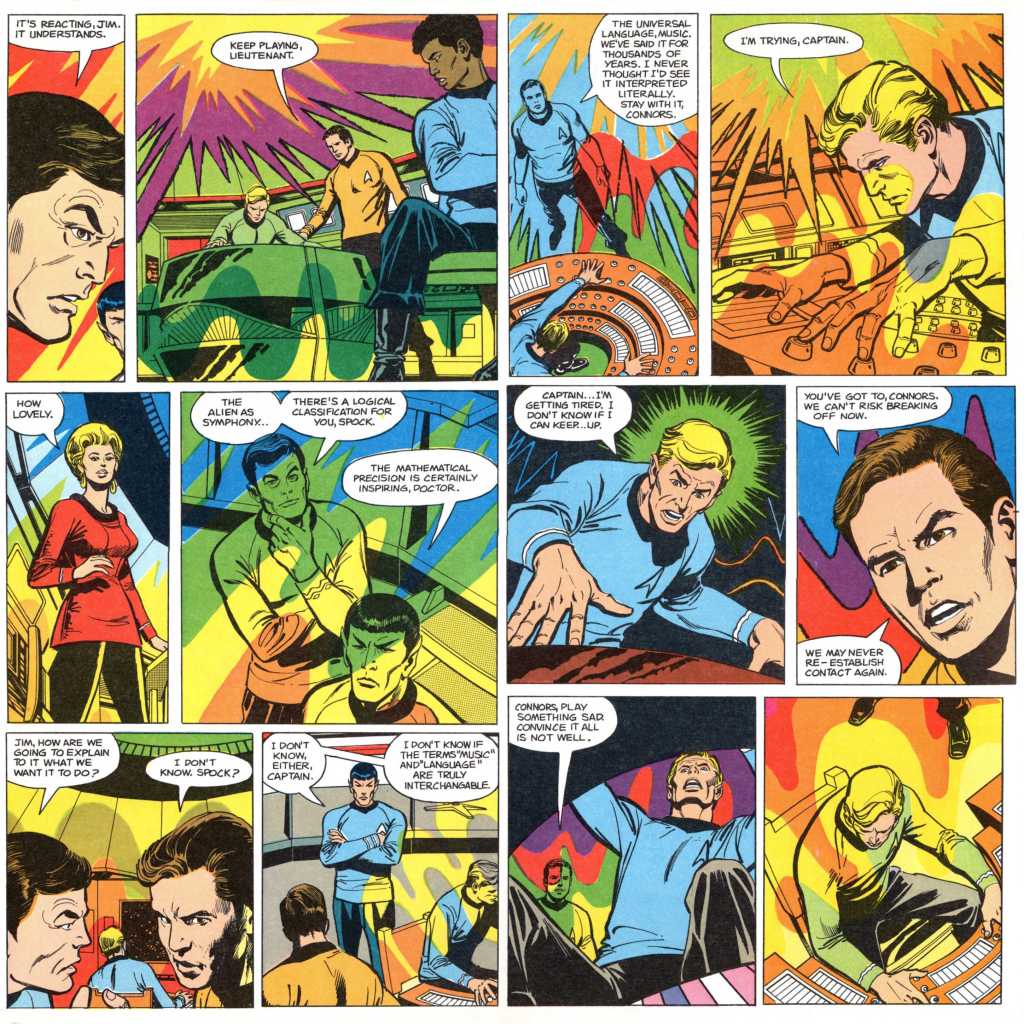
A boring mapping mission is interrupted by strange musical sounds which start as minor annoyances but quickly progress to full-out threats. The story was reportedly written by Alan Dean Foster, who added a number of sophisticated elements that raise the tale above basic kids’ fare. These include using the shuttle to provide respite for the crew, who take to it in shifts to escape the sounds, and the introduction of a creature who exists as sound only and, it seems, is simply trying to communicate. There is also a nice bit at the end in which Uhura says to no one in particular “I heard a voice, crying in the wilderness” — a biblical reference to either Isaiah or John.
Passage to Moauv
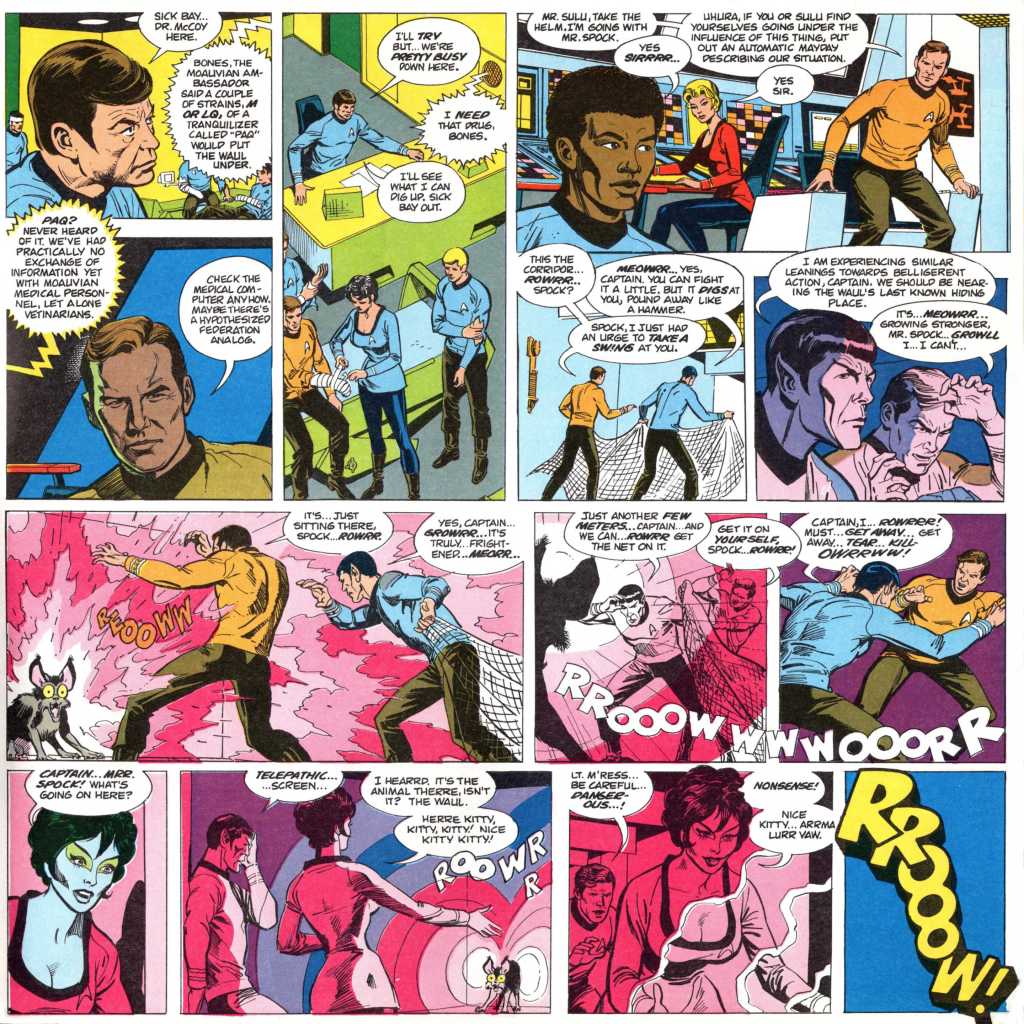
The Enterprise is on an important diplomatic mission — to deliver an ambassador’s pet. The crew grouches about the assignment but both the Federation and the Klingons are trying to get the strategic planet Moauv to join its alliance, so this babysitting task could be critical. This is an interesting premise, reminiscent of Elaan of Troyius, but you are reminded this is a story for kids when the pet escapes and that somehow causes the crew to begin to meow and growl.
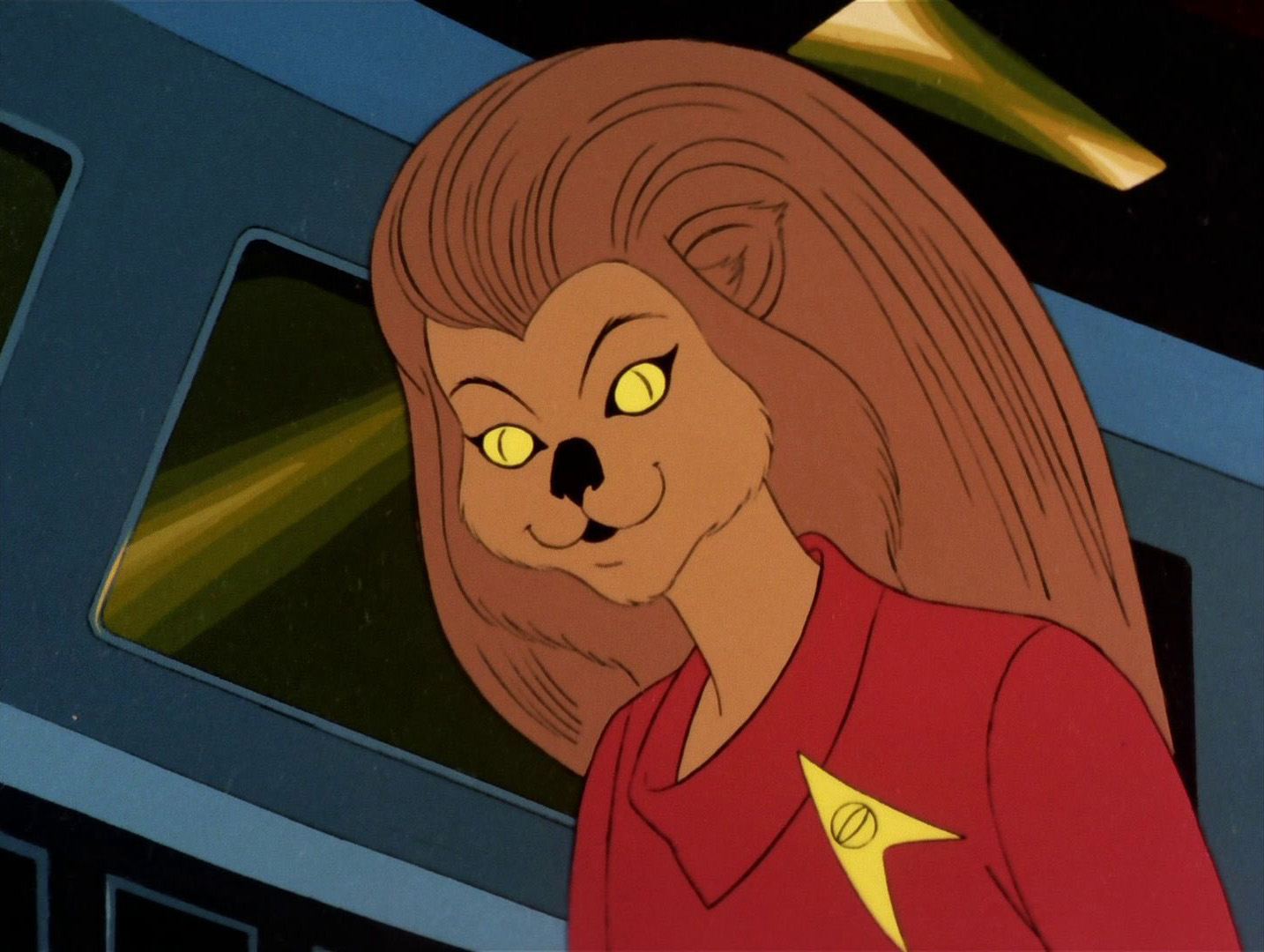
Lieutenant M’Ress, from the animated series, makes a welcome appearance but it is odd that she does not look like a cat. Peter Pan apparently only had rights to the likenesses of Kirk, Spock and McCoy (which is why Uhura is a blond white woman, for example) but it’s still surprising the company didn’t give its new M’Ress (in the second photo) fur, a tail, or cat ears.
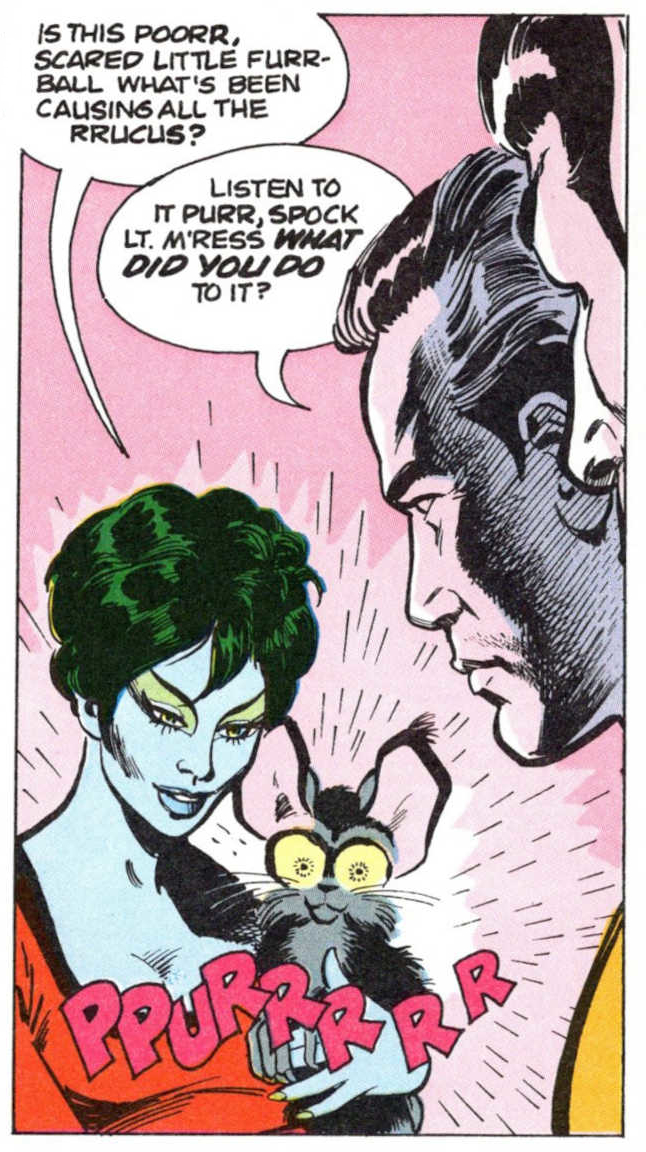
Peter Pan cashed in on the excitement around Star Trek: The Motion Picture by using movie images on the covers of the albums it issued in 1979, even though all but two of its 11 stories were written before the movie premiered and feature TOS-era comic artwork. The wrapping of TOS stories in movie imagery is a little jarring to adult fans but probably did not bother the kids who dropped allowance money on these entertaining stories and comic books.
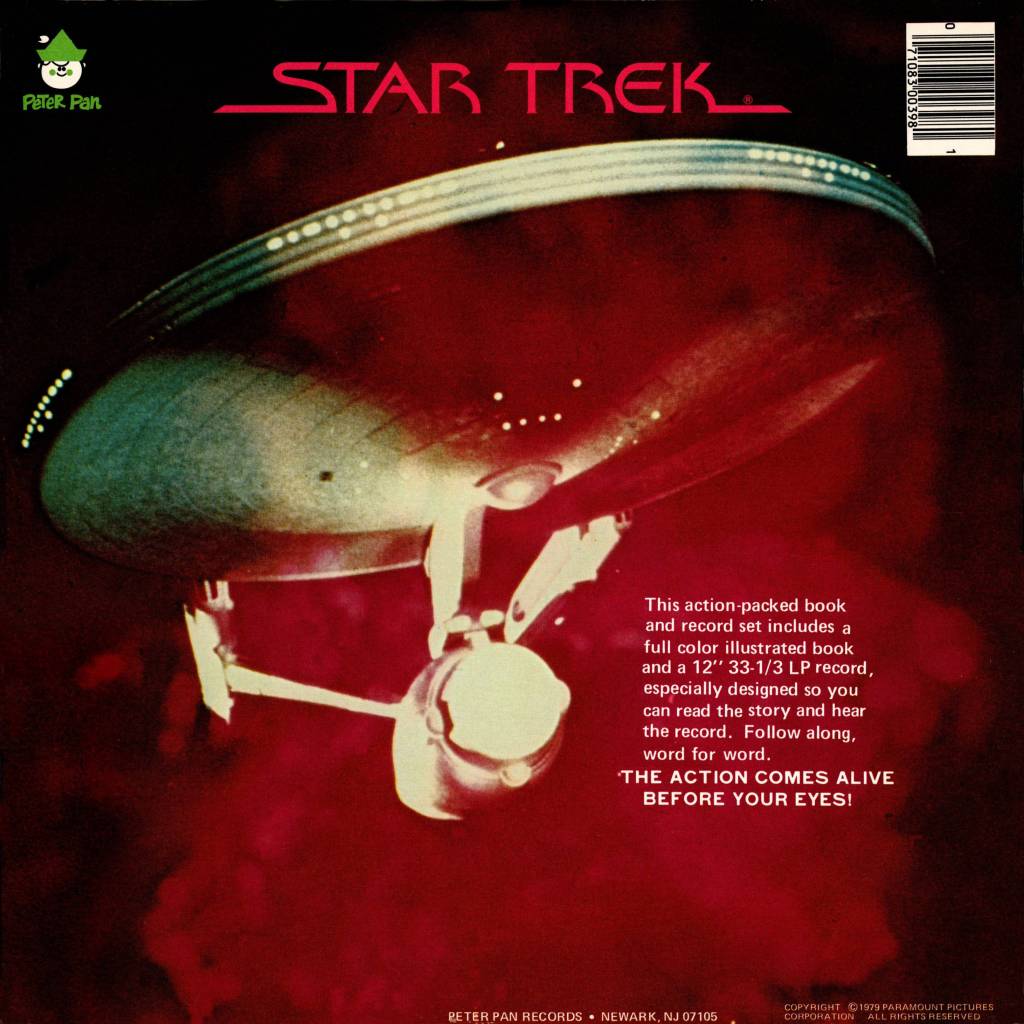
My pursuit of more record-and-comic sets continues.
-
Spend time with the two sides of Leonard Nimoy
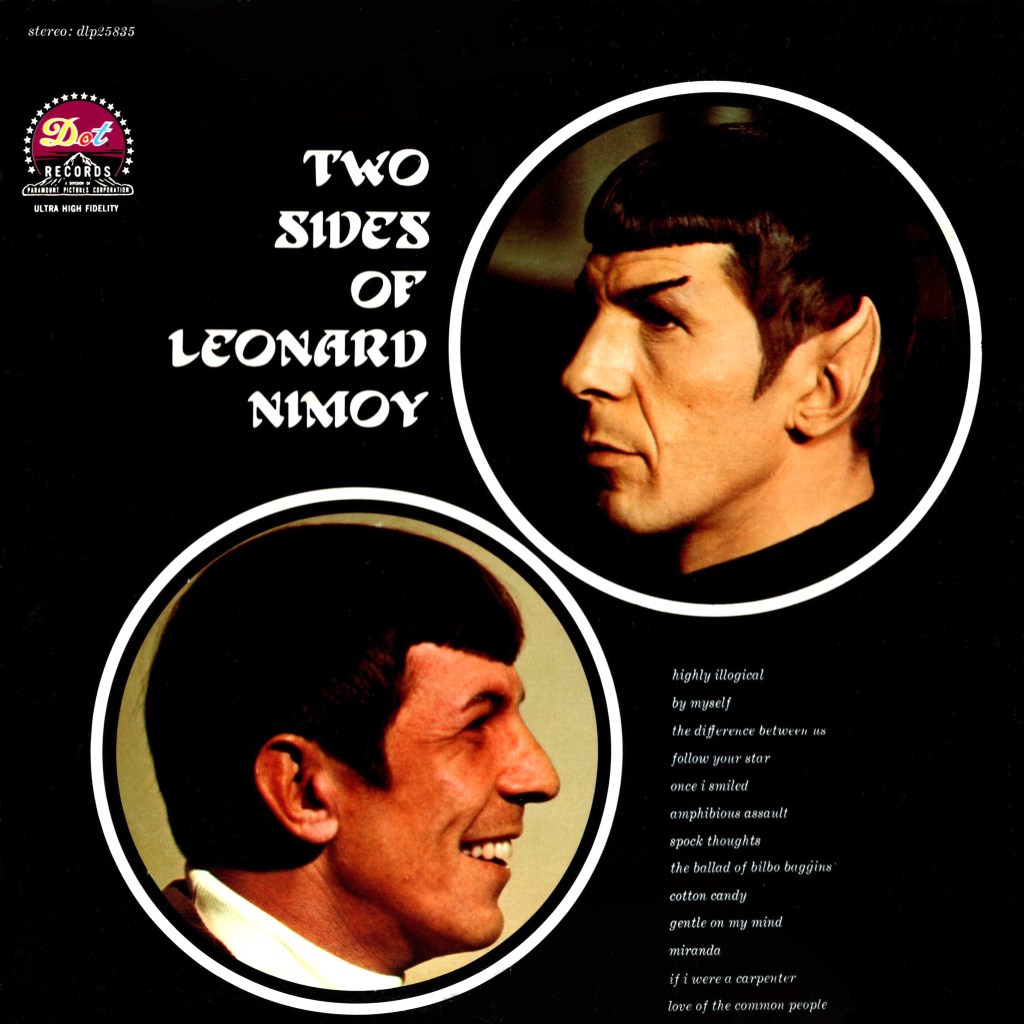
Leonard Nimoy was born on March 26, 1931, and I am commemorating his birthday by listening to Two Sides of Leonard Nimoy — and you can too. All the tracks are playable below.
Nimoy reflected on Spock and on his own view of the world in this 1968 album. The theme of the LP is described on the back of the record sleeve:
Ever since Gene Roddenberry and his Norway Corp. created the series “Star Trek” for Desilu, Leonard Nimoy has developed a distinctive second personality. He now spends half of his life as “Mr. Spock,” the highly logical, unemotional, intelligent and super-efficient first officer aboard the Starship Enterprise. The original Nimoy is the talented, experienced actor who has played many TV and movie roles, and who is called by his friends an “Actors’ actor.” Nimoy is also proving himself a most capable singer and entertainer in his personal appearances throughout the country. In this album, Leonard Nimoy offers musical versions of his “two sides.”
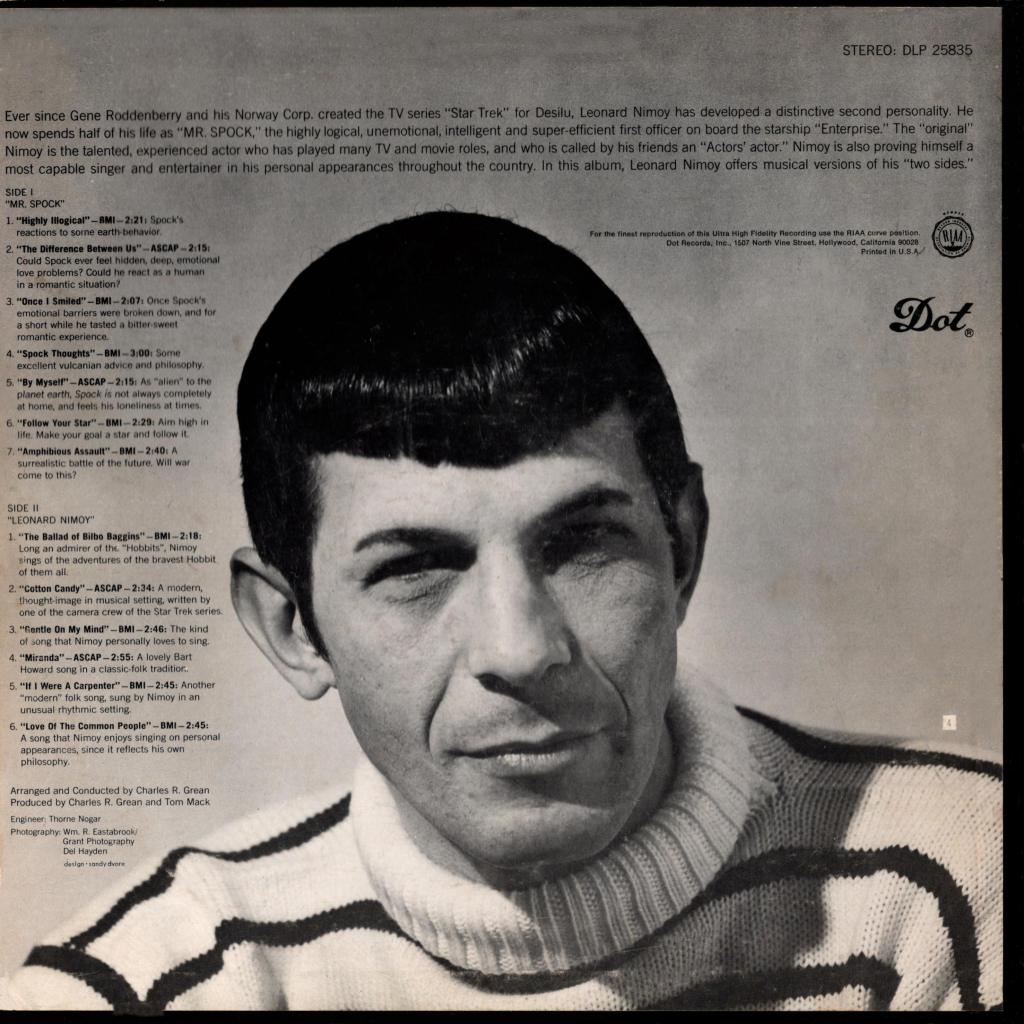
The description “a most capable singer” may ring a little thin to modern ears, as much of the music is not terribly impressive, but the insights into Nimoy and his thoughts on Spock are worth exploring. The album is a precursor to his self-reflective musings in the books I Am Not Spock and I Am Spock.
The idea here is that side one is Spock speaking and side two comes from Nimoy.
Here is side one:
Highly Illogical
The Difference Between Us
Once I Smiled
Spock Thoughts
By Myself
Follow Your Star
Amphibious Assault
The album opens with a lighthearted (and somewhat sexist) take on humanity called Highly Illogical. Next is The Difference Between Us, which really sounds like it’s about Droxine in The Cloud Minders, except that the album was released six months before even that episode’s story outline was penned. The lyrics include:
If you could live for just a moment in my world,
and recognize what makes me what I am,
perhaps that would the catalyst be,
to harmonize the differences between you and me.
Similarly, listen to Once I Smiled and just try not to think of Leila Kalomi as Nimoy sings “Once I smiled a smile so rare, Loved a girl with golden hair” and even references that the singer “swung from trees.”

Another highlight of side one is Spock Thoughts, but I was disappointed to learn it is not original to the album. The track is a slightly modified version of the poem Desiderata by Max Ehrmann. Some of it applies well to the Spock character, some not as well. Here are three sections.
Go placidly amid the noise and haste, and remember what peace there may be in silence.
Speak your truth quietly and clearly, and listen to others, even the dull and ignorant, they too have their story.
Be at peace with god, whatever you conceive him to be.
Here is side two:
The Ballad of Bilbo Baggins
Cotton Candy
Gentle on my Mind
Miranda
If I Were a Carpenter
Love of the Common People
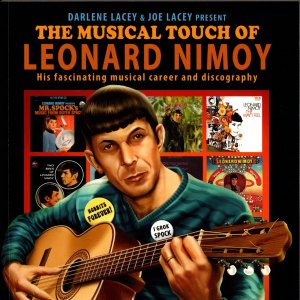
And, it must be said, some songs are quite awful. Cotton Candy, on side two, is painful. It is, however, notable as it was apparently written by Star Trek camera operator Cliff Ralke. That is a cool bit of obscure trivia. He is not credited by name on the album, which states only that the song was “written by one of the camera crew on the Star Trek series,” but a few sources, including a great little book called The Musical Touch of Leonard Nimoy, lists him as the writer. And he had a track record with Trek music, as the liner notes for William Shatner’s 1968 album The Transformed Man state Ralke encouraged Shatner to record the album.
One highlight on side two is Love of the Common People. The song has been performed by many artists, including Paul Young, Waylon Jennings, John Denver, The Everly Brothers, and Bruce Springsteen, and Nimoy’s version is quite good. The lyrics are about poverty and hunger but most versions present it with an upbeat tempo, as did Nimoy.
And then there is the famous — or infamous — The Ballad of Bilbo Baggins. The album explains: “Long an admirer of the ‘Hobbits,’ Nimoy sings of the adventures of the bravest Hobbit of them all.”
Honestly, this track alone is worth the price of admission, especially if you also watch the music video Nimoy made. I have never seen a high-res version; here is the best I can find.
And, once you have enjoyed the musical stylings of Two Sides, watch the actor briefly discuss his recording career at Fan Expo in Toronto in 2009.
You have to respect that Nimoy, like Shatner, was an accomplished actor who decided, what the hell, I’ll make some albums too. And we all benefit from that willingness to trade the safe confines of a TV soundstage for the unknown frontiers of a recording studio.
Happy birthday, Leonard.
-
Shatner wanted to get closer to his fans in 1977

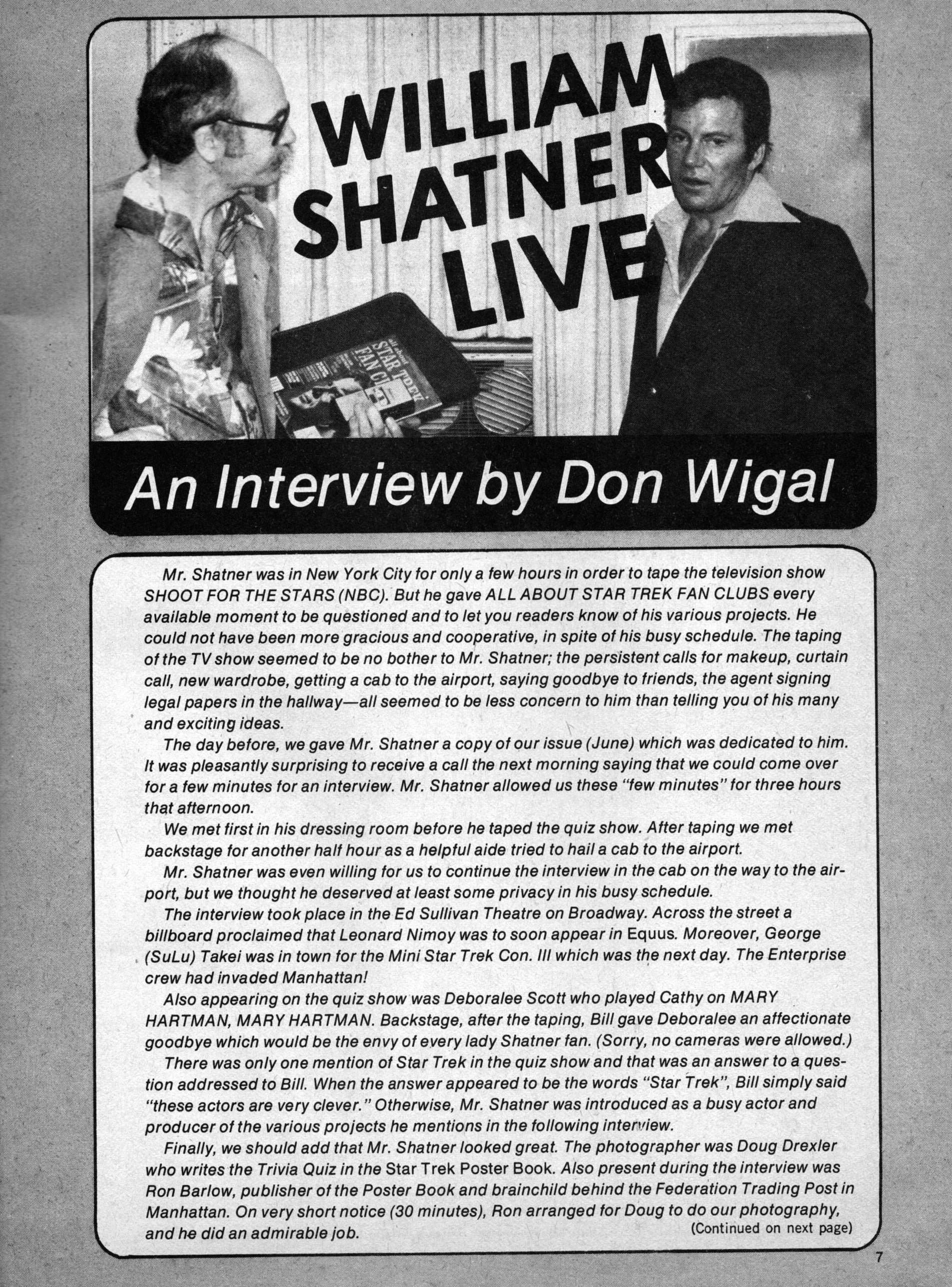
I recently shared Doug Drexler’s story of photographing William Shatner in 1977 for the magazine All About Star Trek Fan Clubs, and then I realized that issue is probably among the more than 150 Star Trek magazines I own. And I did find it in one of my storage boxes.
Here are the highlights from that interview.

Shatner opens by telling magazine associate editor Don Wigal that he has a newfound interest in connecting with Trek fans, but adds that his interest is essentially commercial: “I’m actively, now, looking for those people I’ve ignored all the years. I have now my own record called William Shatner Live. I’m mail ordering it myself. So I too have a vested interest in reaching the fans.”
It’s good that he’s honest. I guess.
The interview itself is a prime example of the semi-professional nature of most genre magazines in the ’70s. The piece is disjointed and meandering, because it seems the writer used everything that was said, rather than editing for clarity and interest. For example, when Shatner promotes an upcoming play, the magazine includes this exchange:
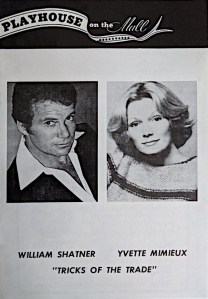
Image credit: Kevin G. Shinnick WS: Then, there is a play which I’ll be doing—Sidney Michaels’ “Tricks of the Trade,” here in the summer. And— (to his agent) do we know where?
Agent: Westport, Conn.
A more experienced editor would have left out the aside.
But the Shatner we know today does come through in the piece, especially when he talks about the many topics that interest him. He touches on “the conservation of whales and porpoises” and the “slaughter and genocide” humans inflict on them, Neanderthal anthropology, child welfare, and the meaning of life: “It’s such a mysterious thing. What people call God, or what the various religions attach a name to might just very well be the mysticism of what life is.”
Here is the interview in its entirety, along with a link to download a PDF.
And here is the magazine’s spread of the Drexler photos mentioned above.

The magazines of that era are a wonderful look into 1970s fandom, when both the publications and the celebrities were a little less polished and practiced.

-
Check out these photos of Bill Shatner from 1977

I have had the privilege recently of interviewing Doug Drexler for some articles (including this one) and he told me an interesting story about photographing William Shatner back in 1977, while Drexler worked at The Federation Trading Post in New York City.
I took photos of William Shatner backstage at the Ed Sullivan Theater in 1977. He was doing a game show, and a magazine, All About Star Trek Fan Clubs, arranged to interview him backstage. We knew the editor through The Federation Trading Post and he knew I liked to take pictures, so he asked me if I wanted to come along and be his photographer. I was snapping shots while he was being interviewed, and I caught some really good moments, because I knew all of Shatner’s moves, I knew where he was going. He could tell that and he started playing to me.
We sat and chatted after that. It was awesome.
The photo is owned by Doug Drexler. He has posted more from this series on his Facebook page.
I also wrote about the article in that issue of All About Star Trek Fan Clubs.
Collecting Trek
A TOS collection 40 years in the making



















 Collecting Trek