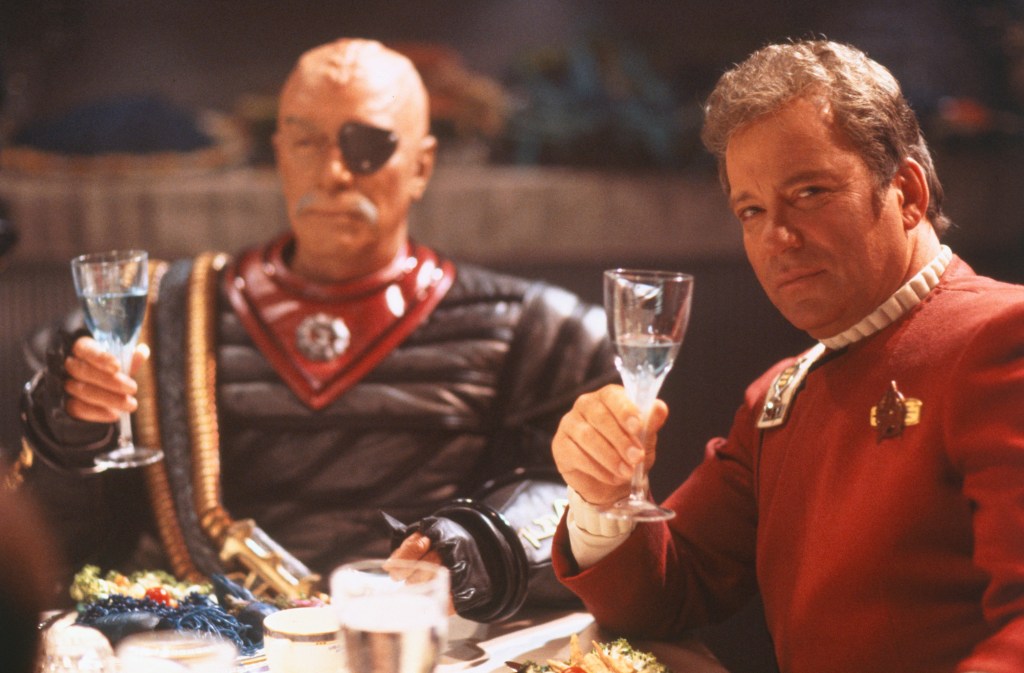
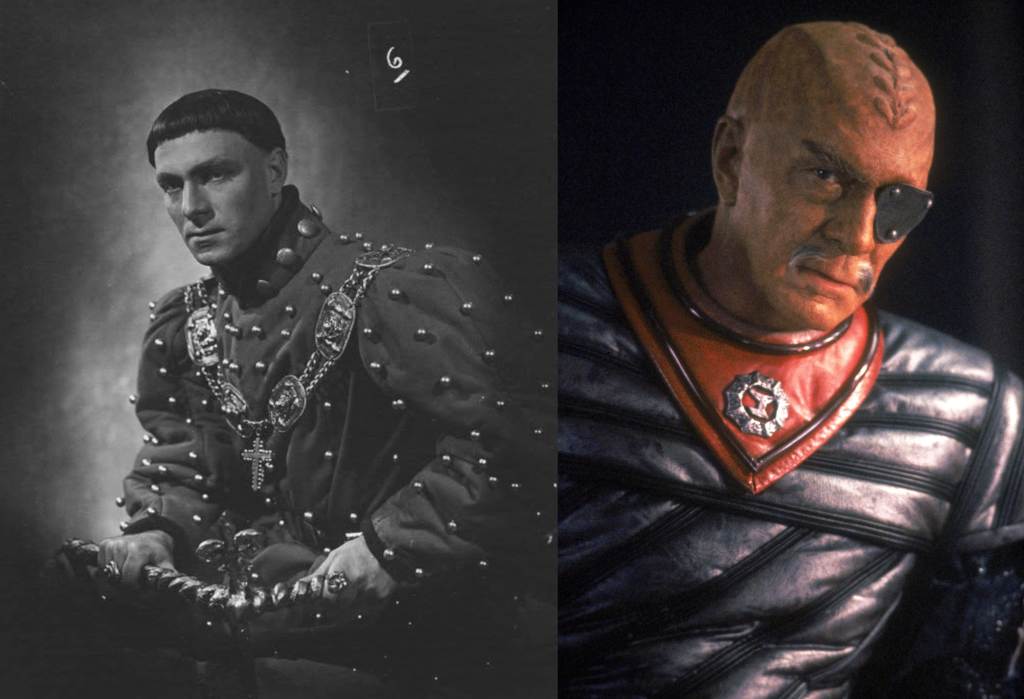
The casting of Christopher Plummer in The Undiscovered Country was a thrill for Star Trek fans. Plummer was a wonderful actor and landing him was a coup for the franchise, but knowledgeable fans also knew that his medical emergency three decades earlier delivered a big career boost to William Shatner.

Shatner, 25 years old in the summer of 1956, had landed a gig at Canada’s renowned Stratford Festival. The Festival, located a two-hour drive west of Toronto in Stratford, Ontario, was and is the country’s preeminent live-theatre venue.
He was playing the Duke of Gloucester in that year’s Henry V. It was a solid role for a young actor but there was little stage time. At least he got to understudy the titular character.
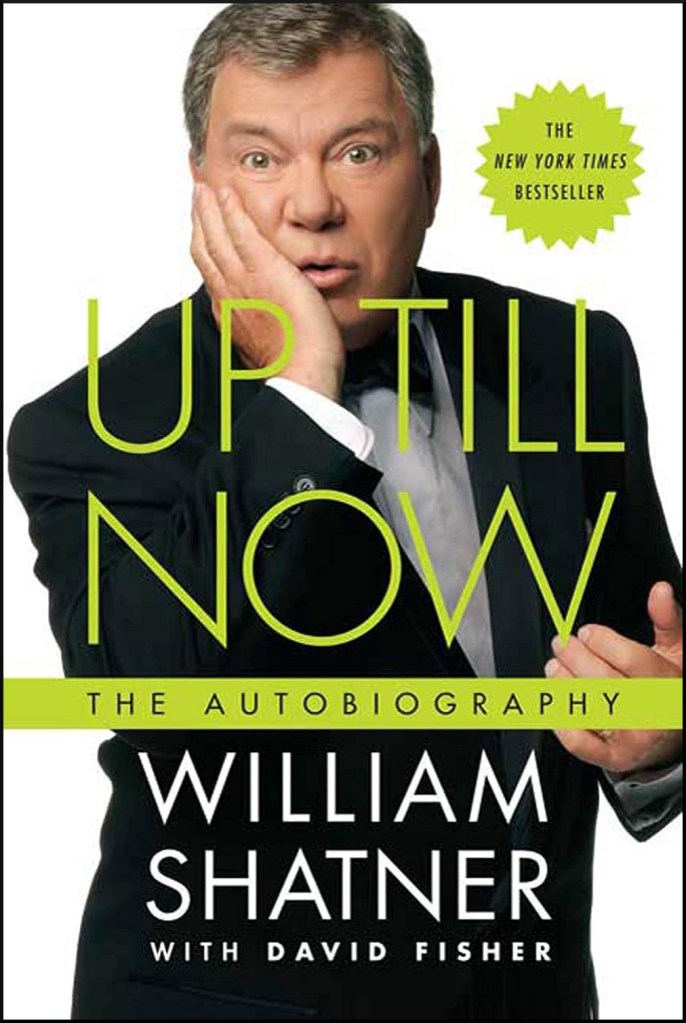
Shatner tells the Henry tale in his autobiography Up Till Now, although newspaper reports from back then call some of his storytelling into question. This excerpt starts on page 24 of the 2008 hardcover. I shortened it a little.
Within weeks of arriving in Stratford I was playing a small role in Henry V, starring Christopher Plummer. Chris Plummer and I are both the same age…he was probably the leading young actor in Canada. At Stratford he played all the young leading-man roles. In Henry V I was assigned the role of the Duke of Gloucester, for which I was on stage about five minutes, as well as understudying Chris Plummer.
Whenever I had a few extra moments, at night or in the bathroom, I memorized all of his speeches. Because we had opened the play after only a few weeks’ rehearsal there had been no time for an understudy run-through. During the staging of the play the understudies kept an eye on the roles we were supposed to be preparing to play, but none of us thought it was possible that we’d actually have to go on one day to replace a sick actor. The play opened to excellent reviews. Chris Plummer got rave reviews, the show was sold out for its entire run. This was by far the most successful work I’d done; I was a member of a prestigious company, working with some of the most respected actors in Canada. Mondays were my only day off, and one Monday morning about two weeks into our run I got a call from the production office. Chris Plummer was suffering from a kidney stone; could I go on that night?
Could I go on that night? Could I go on that night? Replace Plummer in one of the greatest rules ever written for the stage?
Absolutely. Without a doubt. Of course.
Clearly I was insane. I had never even said the lines out loud, but merely muttered them between flushes of the toilet. I hadn’t done a single rehearsal in that role.
A little digging in the archives of The Globe and Mail newspaper reveals possible discrepancies in Shatner’s version.
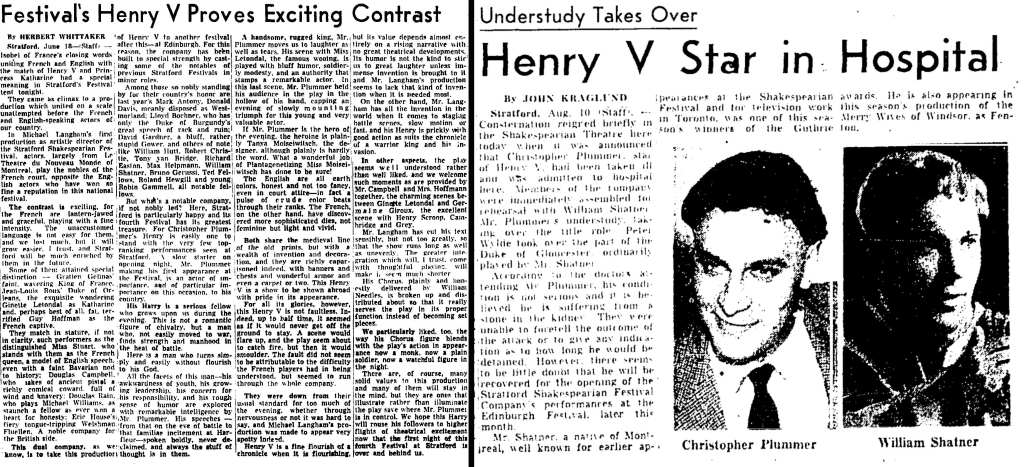
The play did get many good reviews, but that newspaper’s write-up on the opening night performance, published June 19, 1956, was decidedly mixed. It called Plummer’s work “easily one to stand with the very few top-ranking performances at Stratford” and said “A handsome, rugged king, Mr. Plummer moves us to laughter as well as tears [with] an authority that stamps a remarkable actor.” But on the play overall, reviewer Herbert Whittaker said “For all its glories, however, this Henry V is not faultless. Indeed, up to half time, it seemed as if it would never get off the ground to stay. A scene would flare up, and the play seem about to catch fire, but then it would smoulder.”
There is also this, from Shatner’s excerpt above: “There had been no time for an understudy run-through.” Whittaker’s Showbusiness column from Aug. 13, 1956 contradicts this:
Something near to panic struck at the festival with Mr. Plummer’s seizure. The company was mustered from swimming at St. Mary’s Quarry for an understudy rehearsal. Where was the understudy? Where was Bill Shatner?
Actually, the festival was remarkably well prepared for this emergency. Mr Shatner had asked to understudy Henry, and had worked hard on it. He had gone through two understudy performances of it.
And that makes sense. Stratford in the 1950s was not the world-class operation it is today, but I would guess The Globe and Mail was correct that the show that night was not the first time Shatner spoke those lines.
But there is no doubt that he gave a bravura performance, although even the star admits it did not go off without a hitch. From Up Till Now:
I took from the audience an internal strength that made me capable of an inexplicable performance. Until near the very end, the last few lines, only seconds away from perfection. I went totally blank. And I’m standing on stage with twenty-five hundred people looking at me with rapt expectation and there was nothing. A dead pause.
Shatner had frozen — but luckily Don Cherry was in the cast, an actor Shatner described as “a man with a photographic memory” and added “as long as I live, I will never forget Don Cherry.”
There stood salvation. Don Cherry had a photographic memory. He knew the entire play! Every line. During rehearsals if someone forgot their line he would give it to them. And he was only twelve feet away from me.
But Cherry, inexplicably, also could not think of Shatner’s next line. The temporary king improvised some stage movement until the words came back to him. He finished the play to enthusiastic applause.
But here’s the rub: Don Cherry, the flamboyant TV personality known to generations of Canadians for his hockey commentary during NHL games, was not on the Stratford stage. Nor was any actor with that name. There was a Donald Davis in the cast, so it seems likely that is who Shatner will never forget.
But those quibbles aside, it is true that Shatner’s leading-man debut was a big success:
I received a standing ovation. Even the cast was applauding. The critics loved it, lauding my instinctive and original movements on stage and my halting interpretation of the part. That was one of the greatest moments of my life.
That was the night I knew I was an actor.
Whittaker confirms this: “The performance went off remarkably well, the cast agreed, and shook the Shatner hand vigorously in congratulation.”
I don’t criticize William Shatner for embellishing the story. George Takei did something very similar in his own memoir. Shatner, Takei and the other Star Trek celebs who wrote autobiographies were recounting events that took place decades earlier. It’s understandable that some memories may get a little shinier with age.