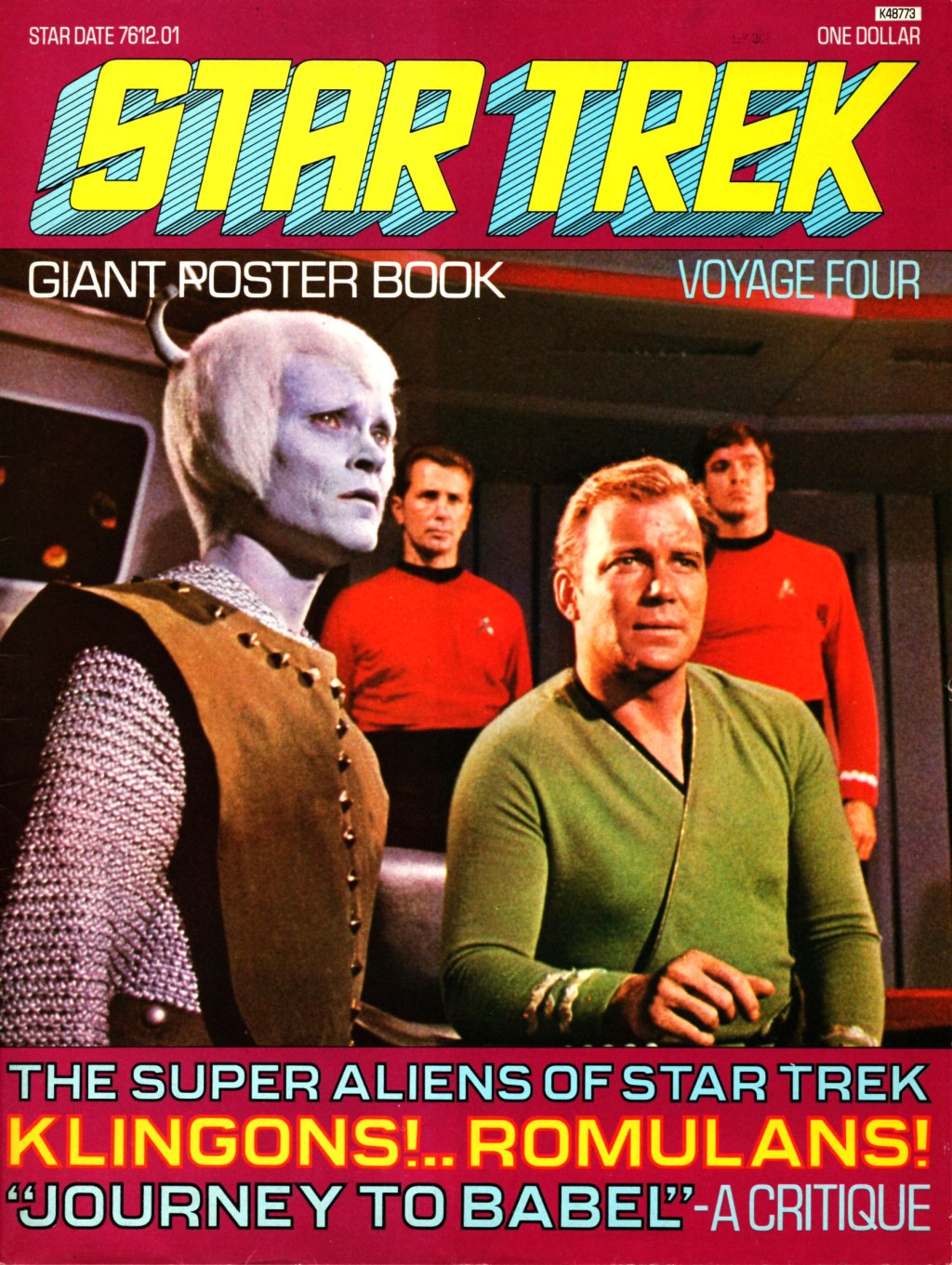
The Star Trek Giant Poster Books were the first professionally published Trek magazines. Seventeen issues were produced between September 1976 and April 1978, plus a 1979 “Collectors Issue” devoted to The Motion Picture. Each delivered six pages of content plus the cover and back cover and folded out into a large poster.
I own the complete set and will cover each issue. The story of the magazine’s genesis is told here.
Here are highlights from issue four, published in December 1976, plus a scan of the magazine.
The first three issues of the Star Trek Giant Poster Book are excellent. The fourth is a bit of a miss. It happens. Even the excellent first season of TOS gave us The Alternative Factor.
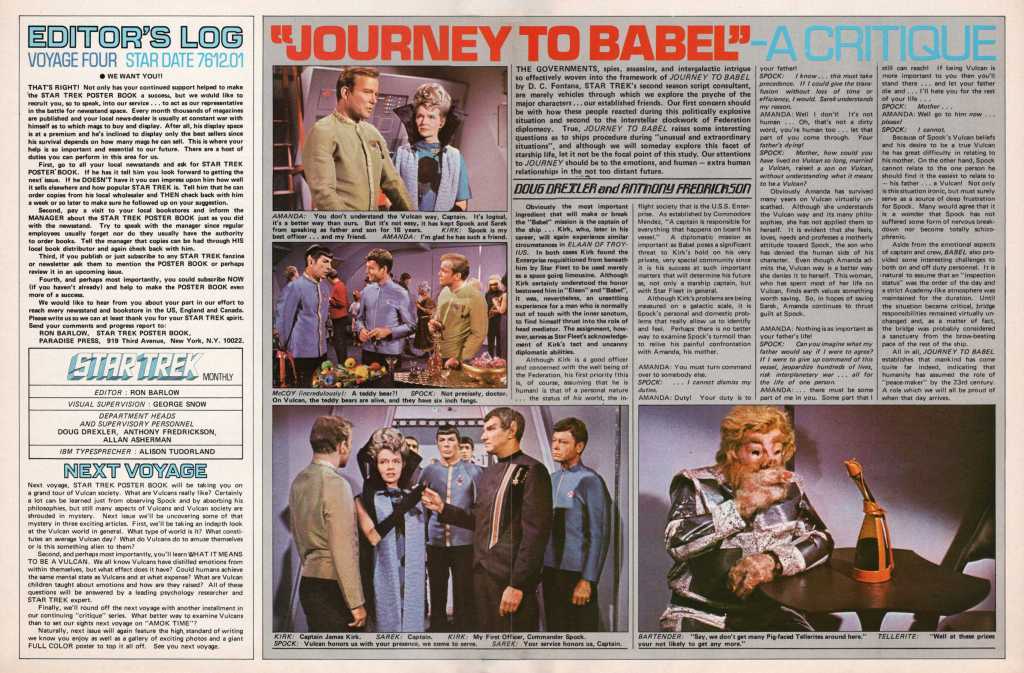
Issue four opens with a clever editorial from Ron Barlow. Fans had worked to delay the cancellation of the series, so he tried to get some of that same energy behind the pages of the magazine. He urged readers to pester newsstands and book stores to stock it, encourage fanzines to write about it, and — of course — asked them to dig out $10 for a subscription. Eighteen issues were published, so the appeal was a success of sorts.
What follows in this issue, though, may not have pushed many sawbucks into envelopes. We get a review of Journey to Babel that somehow ignores the emotion, excitement, and tension of the story, telling readers:
A diplomatic mission as important as Babel poses a significant threat to Kirk’s hold on his very private, very special community since it is his success at such important matters that will determine his future, not only as a starship captain, but with Star Fleet in general.
What? We also get: “Although Kirk is a good officer and concerned with the well being of the Federation, his first priority (this is, of course, assuming that he is human), is that of a personal nature…” Assuming he is human?
Allan Asherman’s rundown of The Super Aliens of Star Trek is really just a list of powerful beings and a reminder of in which episode each appeared. But this is actually more useful than it might appear today. In 1976, Bjo Trimble’s Star Trek Concordance was only just becoming widely available and Asherman’s own The Star Trek Compendium was still five years away. So lists were reference resources, and probably welcomed.
The final two articles are basically fan fiction about the history of the Klingons and Romulans. Again, some perspective helps here: the total number of Star Trek tales then was tiny compared to the ranks of episodes, novels, short stories, and comics we have today, so fans may have enjoyed these pieces.
The best bits of this issue are the last two pages. The ad for the magazine itself is humorous, pushing the publication as a treatment for Star Trek Fever. And the answers to the trivia questions from issue three are interesting, especially the statement that 1,000 tribbles were sewn for The Trouble with Tribbles, in four variations. I have no idea if that is correct.
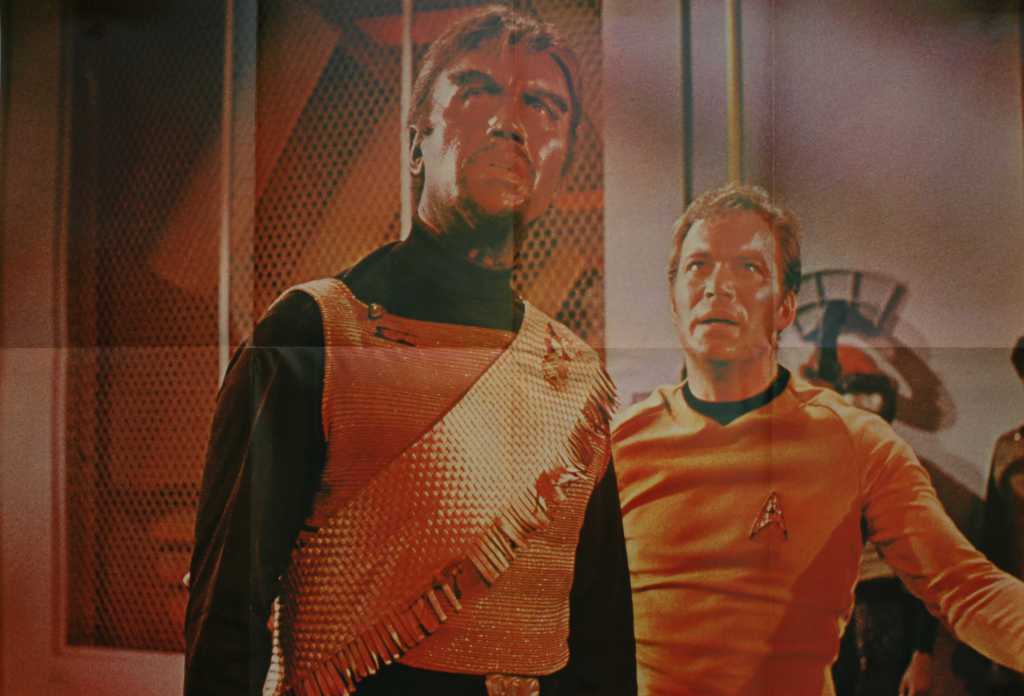
And the poster is excellent.
Let’s hope the next outing is better. I am about to read issue five for the first time in many years.
 Collecting Trek
One response to “Giant Poster Book four: super aliens, a sort-of review of Babel, plus tribble trivia”
[…] Collectingtrek.ca has added a new review for Alison Tudorland and Allan Asherman and Anthony Fredrickson and Doug Drexler and George Snow and Ron Barlow‘s “Star Trek Giant Poster Book: Voyage Four”: […]
LikeLike