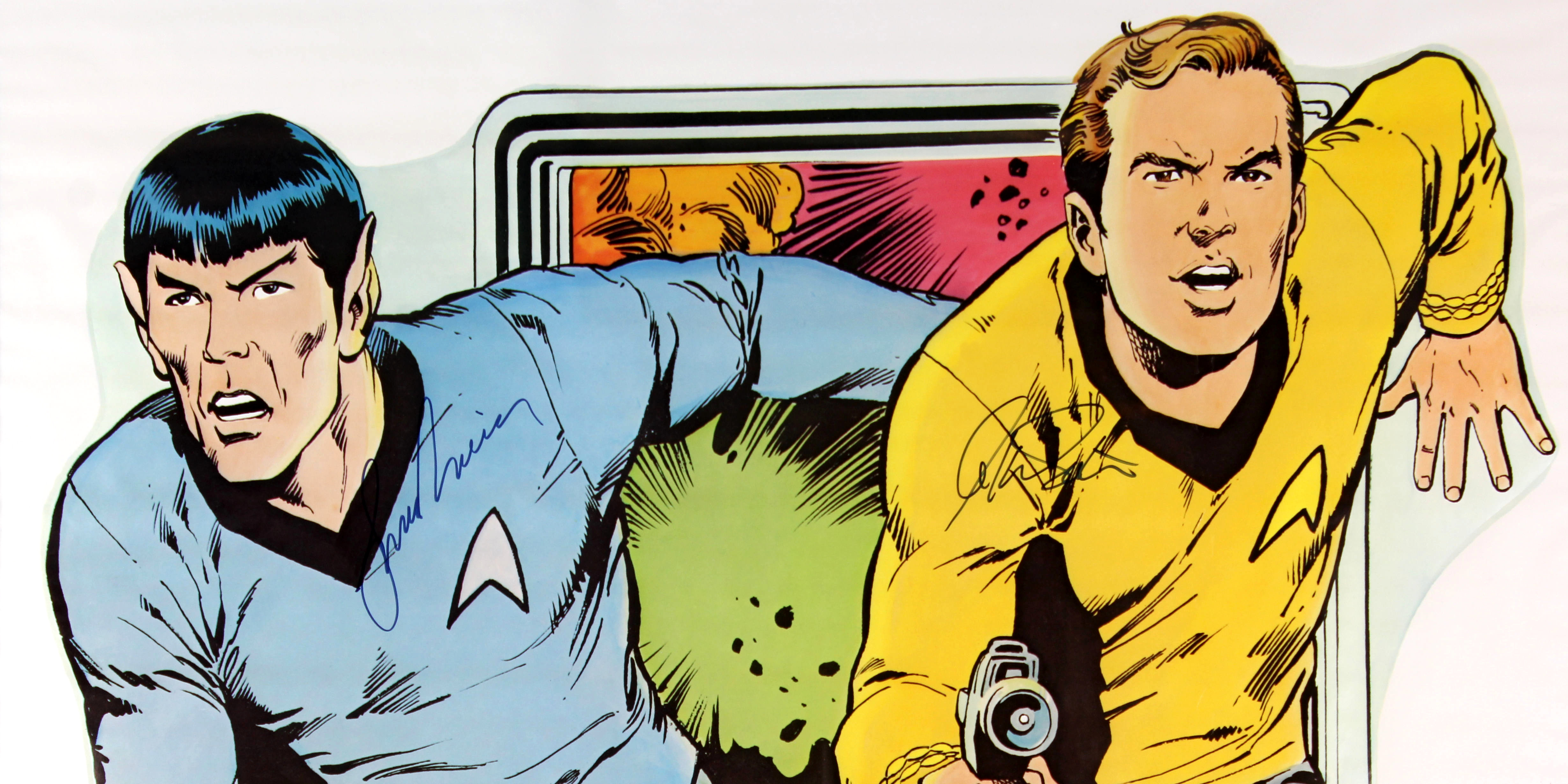
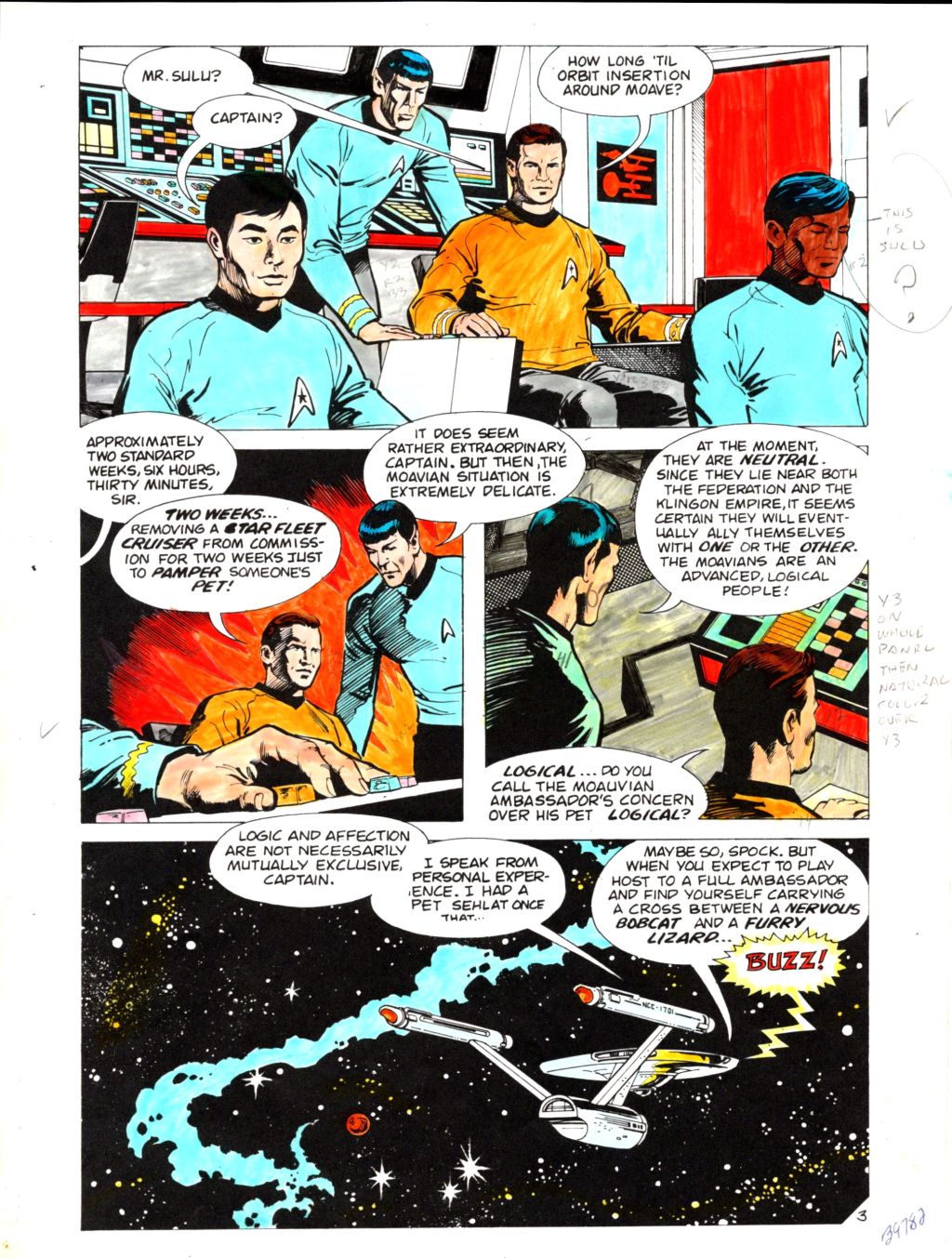
One of the best things about being a Star Trek collector is the community of experts and other collectors who are happy to share their knowledge. A good example is a recent assist from comics expert Mark Martinez about colour guides.
(Mark is online at X, Bluesky, and his extensive site, and he is active in the Star Trek Comics Weekly Facebook group.)
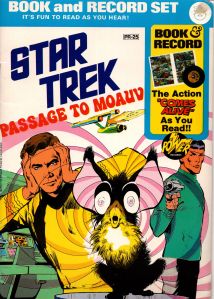
I first heard of colour guides on that Facebook group. Being familiar with these meant I knew what I was looking at when some popped up on eBay, and I bought one immediately. My page is from the Peter Pan comic-and-record set for the story Passage to Moauv. I wrote about that tale here.
Creating comics: a quick overview
Some comics are produced by one or two creators who do all the work themselves, but larger companies employ a team, each fulfilling a specific purpose. Scary Sarah has written a good overview of this process; here are the main players.
- The writer crafts a script.
- A penciller creates the basic images.
- A letterer renders the text in a readable format.
- An inker makes the drawings into black-and-white line art.
- A copy of the art is used by a colourist to specify the hues for each element.
- The resulting colour guides are passed to a colour separator to prepare negatives for printing.
Computers are now employed during the colouring process, so traditional guides are rarely made.
Unique pieces of art
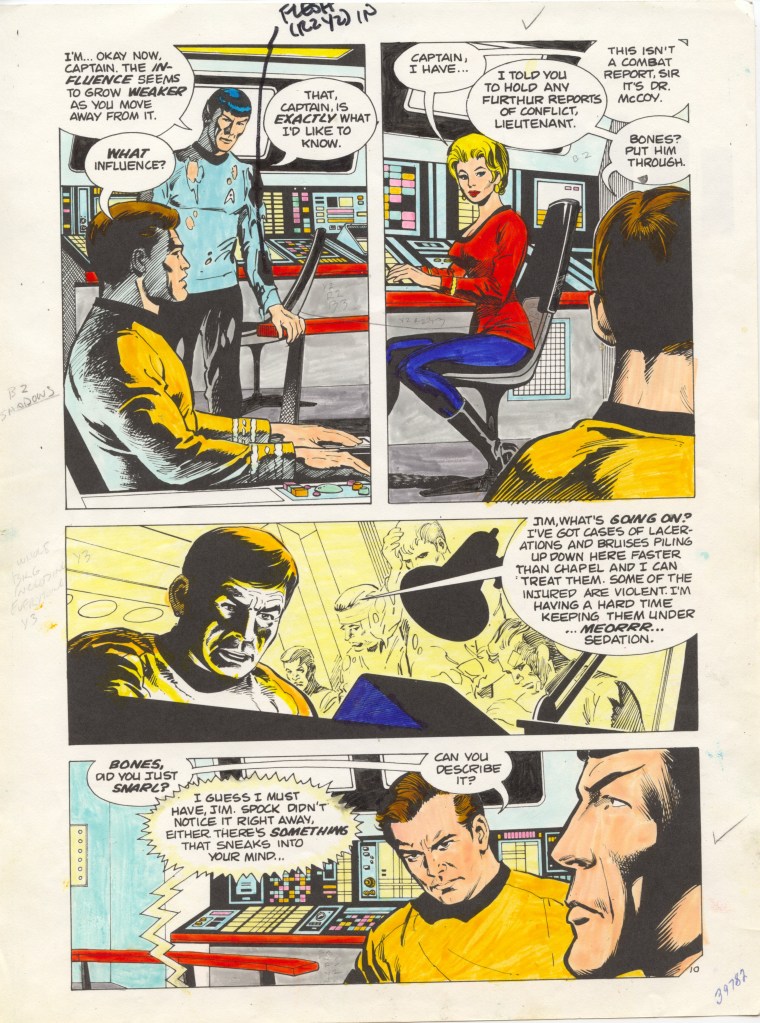
The drawings used for guides are copies (often photocopies), but the colours are done by hand, using pencils, felt-tip pens, watercolors or any combination, according to Mark, so each colour guide is a one-of-a-kind piece of comic art.
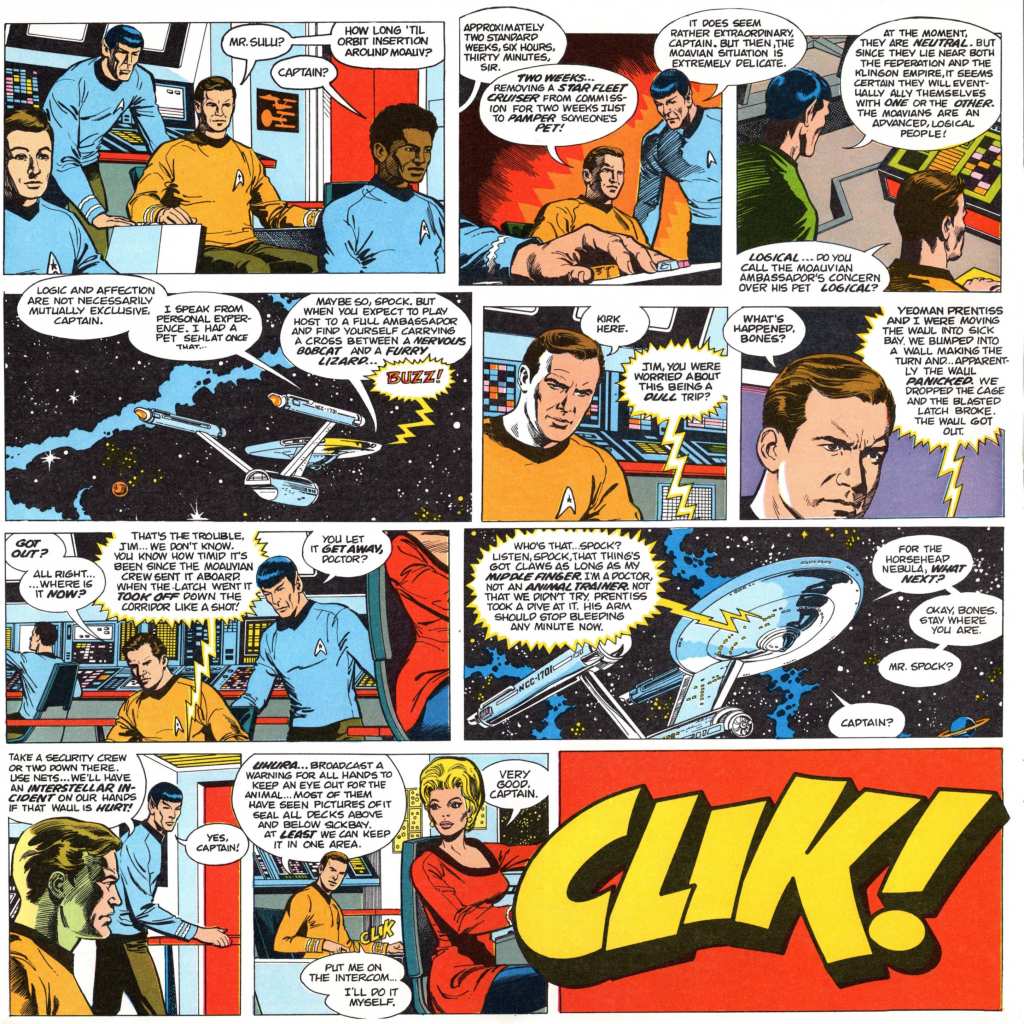
These guides also give some insight into the creation and editing process. For example, my page includes the penciled question “This is Sulu?” And no, it isn’t; Sulu is on the left of the drawing, and the question indicates the black character sitting at the helm station.
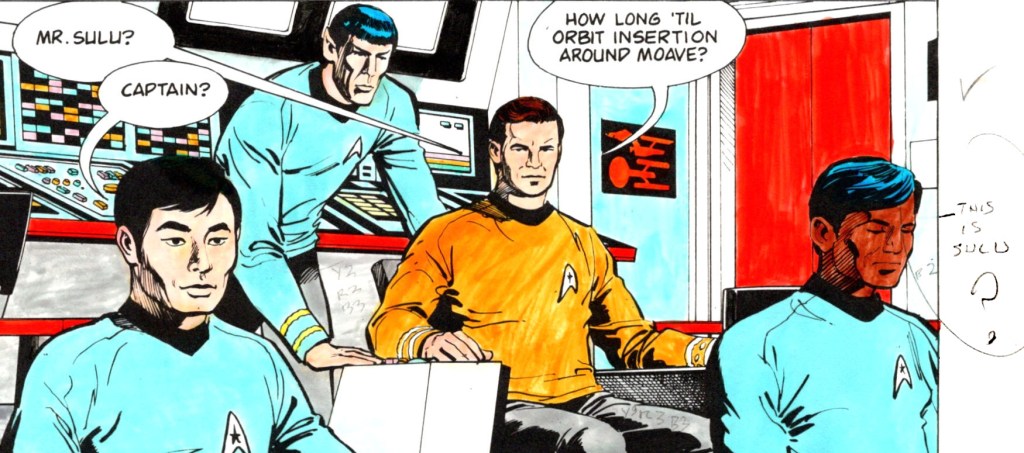
So why the odd question, and why — in the actual published book — has the drawing been reworked? The final comic replaced the familiar figure of Sulu with a generic navigator and instead has the black character answer to “Mr. Sulu?”
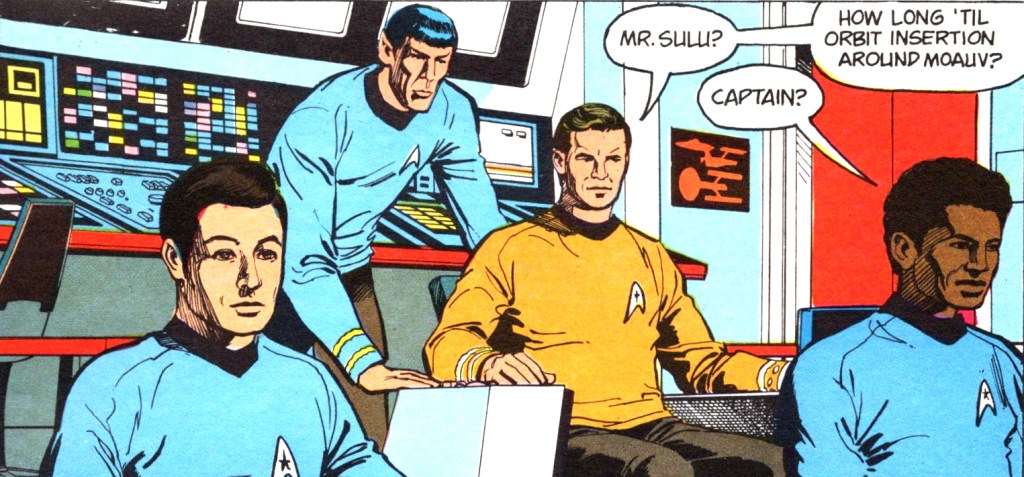
One piece of background information answers both questions: Peter Pan had licensed only the likenesses of Kirk, Spock and McCoy. The artist either did not know about this rule or completed the drawing while the licensing was still being finalized. The legal arrangement meant Sulu as we knew him had to go, and this is also why Peter Pan usually depicted Uhura as a blond white woman and Arex as a big blond human.
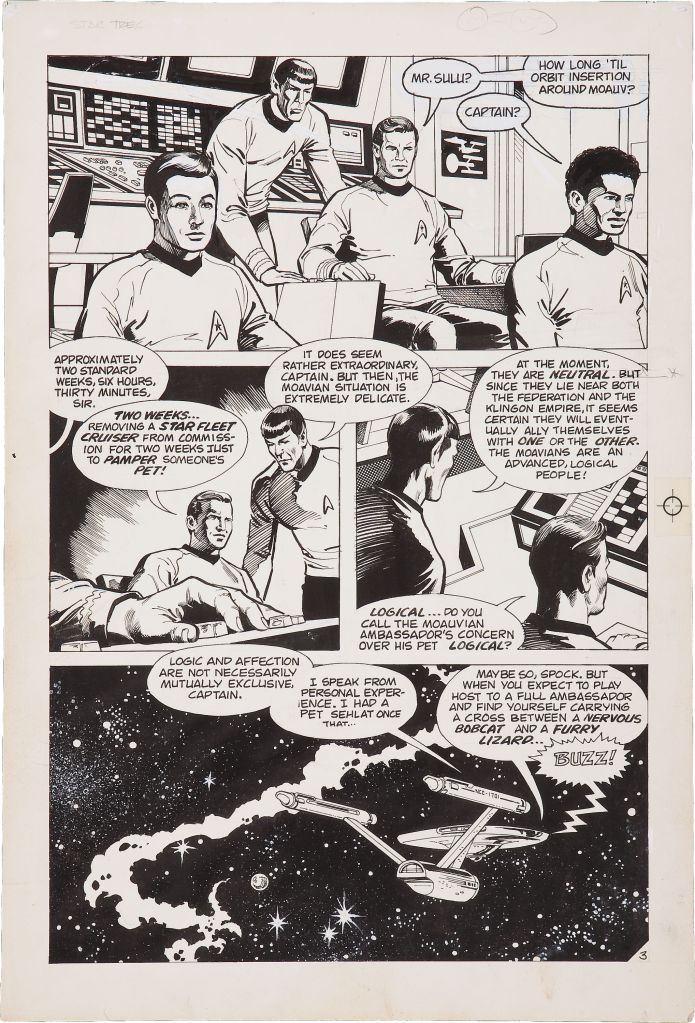
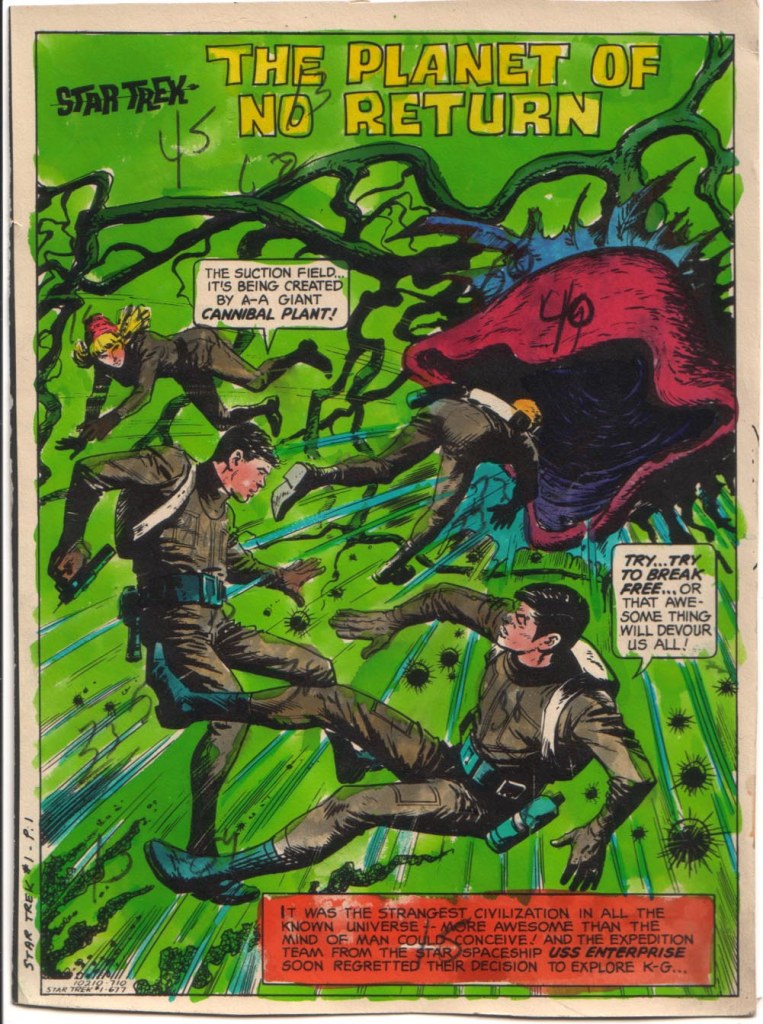
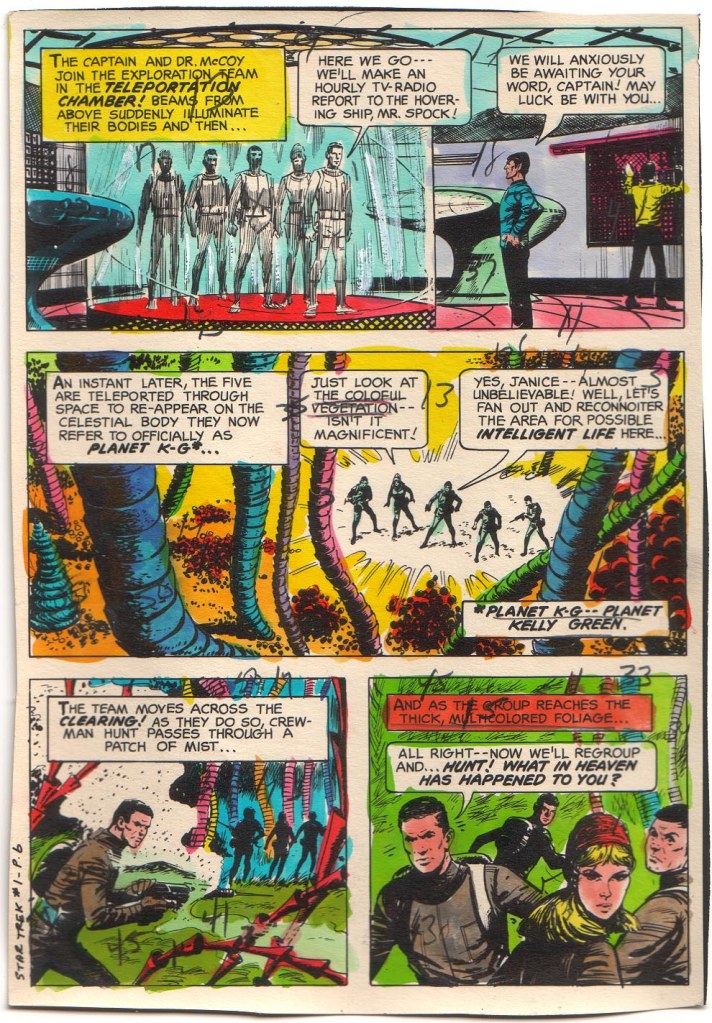
Mark sent me scans of the line art for my page, the colour guide for another page in the same story, and two guides from the first Gold Key comic, The Planet Of No Return. (Note the red cap on Rand in the Gold Key images. The artist or the coulourist thought the Yeoman’s elaborate beehive hair was a hat.) Thanks for sharing these, Mark, and for giving me permission to use them here.
Postscripts
The seller I purchased from still has a number of guides up for auction, at time of writing.
Many of the Peter Pan titles were repackaged with 33 RPM LPs, instead of the smaller 45 RPM discs. The larger format meant the layouts had to be redone. Here is the LP version of my page.
 Collecting Trek
One response to “Colour guides are great comics collectibles”
[…] These unique pieces of art are affordable and often tell stories about the creation process. […]
LikeLike