The greatest ship design in all of Star Trek is Matt Jefferies’ Enterprise. It’s both realistic and fantastical, and looks great from any angle. This is true from its first appearance in The Cage through to the unveiling of the refit Enterprise in that long, loving tribute at the beginning of The Motion Picture and into the debut of the 1701-A in Star Trek IV.
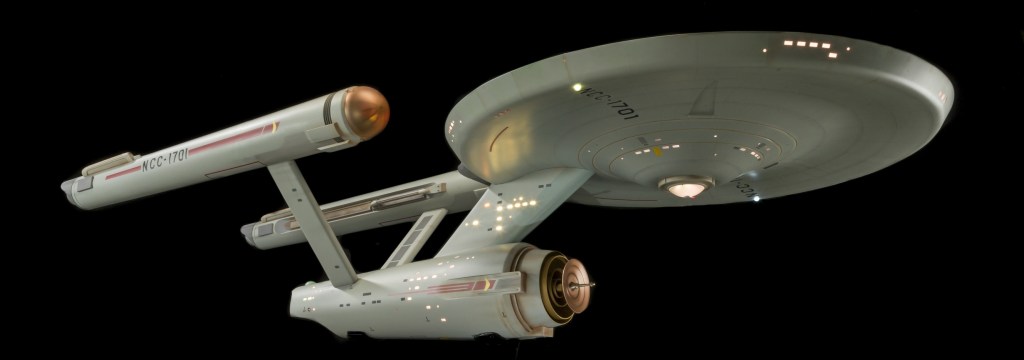
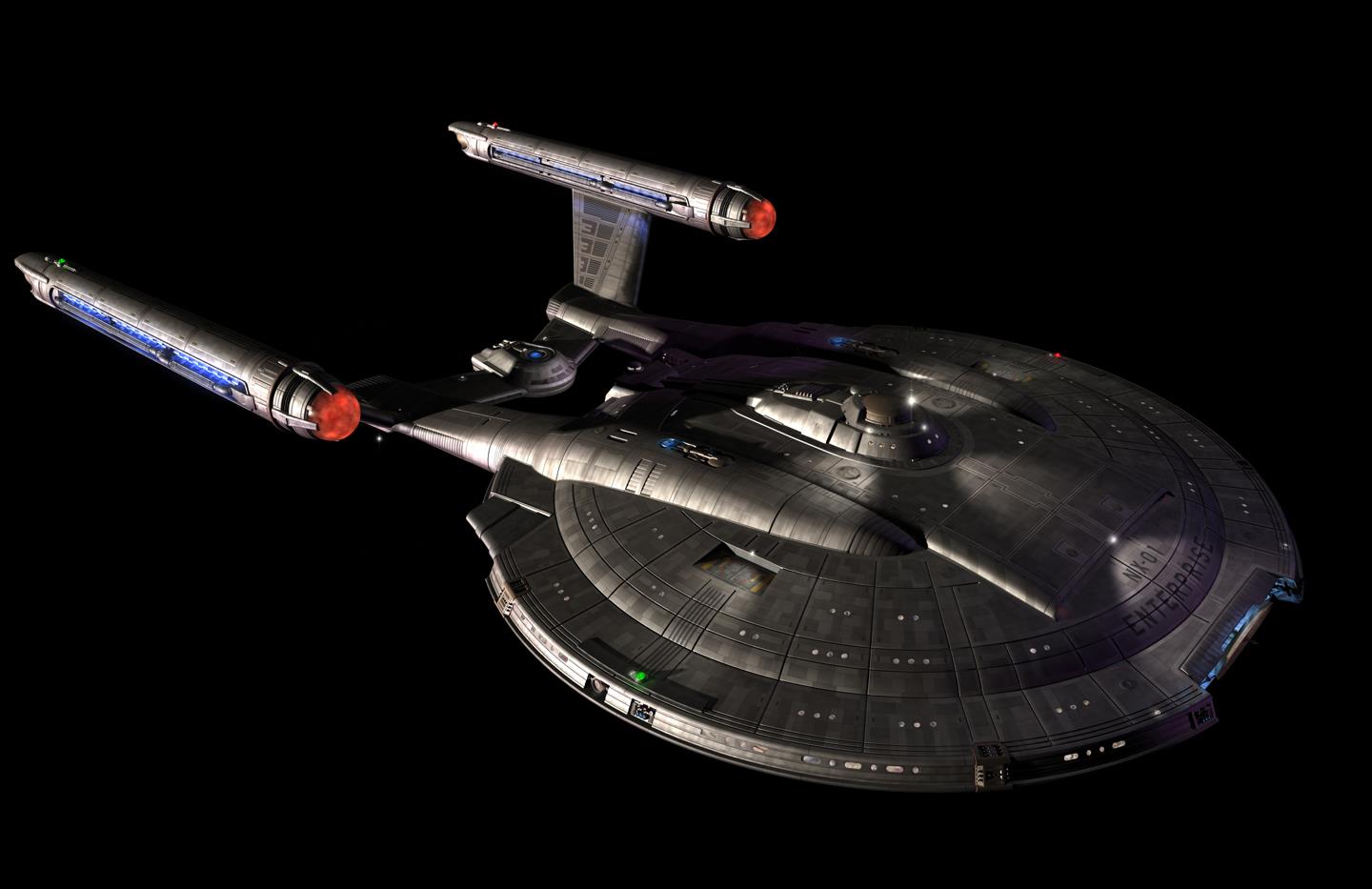

The hero NCC-1701 at the NASM and the NX-01 by Doug Drexler
The second greatest design is the NX-01, from Enterprise. It clearly predates Christopher Pike’s ship and it’s easy to see how it led to the NCC-1701 — especially if the secondary hull that designer Doug Drexler envisioned is added.
Enterprise was cancelled after four seasons but, had it gone further, one option for season five was the crew returning to Earth for an upgrade: the addition of a secondary hull. The warp-engine pylons which had connected directly behind the saucer would now extend down to the new section, with the saucer linked to the main hull with a small neck. This moved the NX-01 a big step closer to the ship that first appeared on televisions in 1966. And the fact we never got to see it on-screen is among the great disappointments that flow from the show’s cancellation.
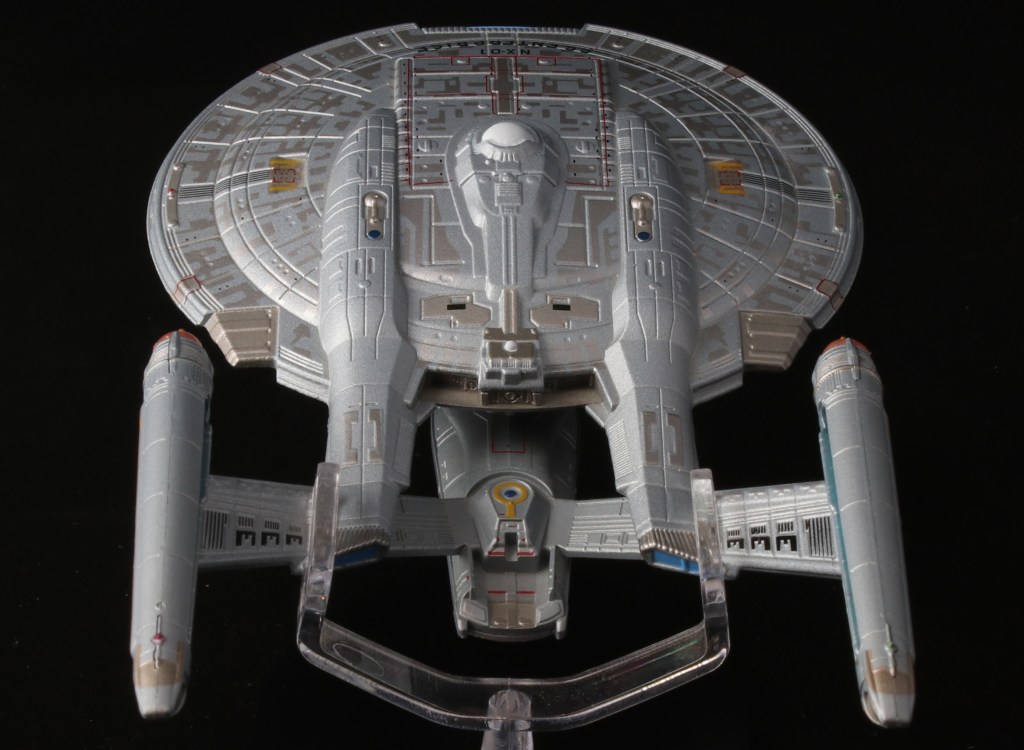
Luckily for Star Trek fans, Eaglemoss gave us models of the NX-01 and the NX-01 Refit, so we can see what Drexler envisioned.
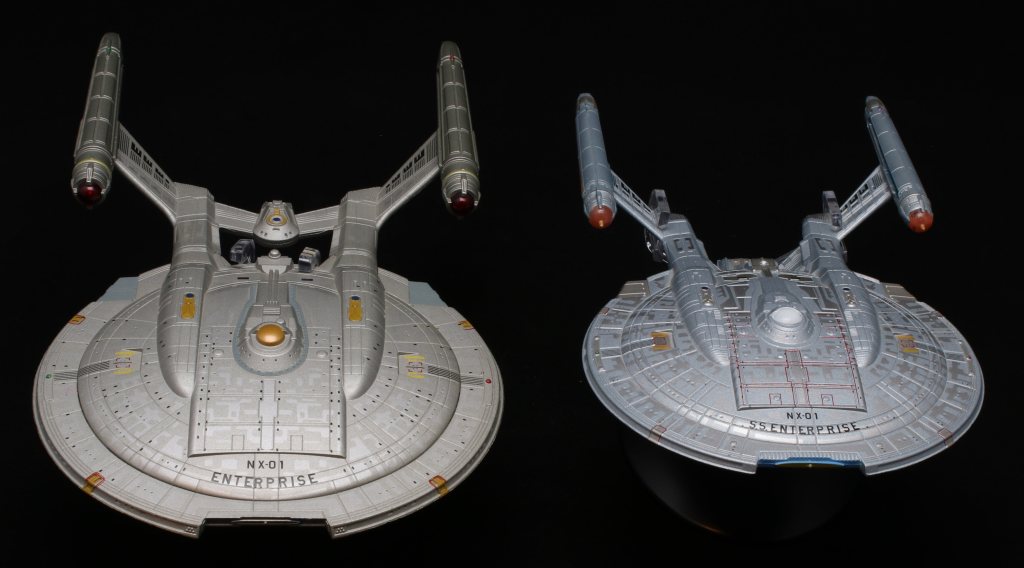
Every detail sweated out
I was fortunate to speak with Drexler for a few stories on this site, and I also asked him about creating the NX-01. I had seen some statements online that the ship was designed very quickly, but Drexler told me this is not true. A number of ideas for the new ship from Production Illustrator John Eaves had not worked out, and the staff was approaching a deadline; Production Designer Herman Zimmerman and Eaves had to begin work on the interior of the ship. Scenic Art Supervisor Mike Okuda suggested Drexler be brought in. Drexler agreed to take it on, even though he already had a full-time gig elsewhere. And despite the deadline pressure, the eventual look was not rushed. Instead, he told me “Every detail of that was sweated out. More time was spent on the NX than on any other starship.”
Drexler also delivered a bonus: he had been learning about computer-generated imaging, a technology new to the Enterprise production offices.
I was at Foundation Imaging, learning to do CG. Art departments didn’t have CG yet…but I had spent two years at Foundation. So basically, Mike Okuda said to Herman Zimmerman ‘If you bring Doug back to the art department, he brings the computer knowledge with him, and we can model a ship and see it from any angle, with different light on it. But I had to give two week’s notice, I couldn’t just leave (Foundation Imaging) so Herman said ‘That’s okay, I’ll just come to your house at night and we’ll work on it.
I would come home from work and Herman would be sitting on my front porch. This went on for a couple of weeks.
But even as the design work progressed, the project was almost pulled out from under him. The higher-ups considered simply using an existing ship design.
At one point, Peter Lauritson, the Post-Production Supervisor, asked about a model of the Akira, and my heart sank. His idea was to just use the Akira. Herman and I talked about it and we decided we needed to push it more towards the [original-series] class of ship.
The pontoons that the engines are attached to (in my design) are similar to the P38 Lightning, a plane from World War II that I loved. That was my main inspiration. It made sense that, if we didn’t have a secondary hull, what is going to hold the engines on? Because you don’t want them near the primary hull. So we had twin booms like on the P38.


The Akira (left) from the old Drex Files site. The P38 is from The Aviation History Online Museum
Drexler finalized the basic design and then sold it with some CGI showmanship. “I did animations of it flying by the camera, and they had never seen that before.”
The secondary hull
Drexler is a TOS fan, and he had always looked up to Matt Jefferies. (“Matt Jefferies became extended family for me and the Okudas.”) He wanted his design to be a clear precursor to the NCC-1701, and that meant it too needed a primary hull.
I always planned that a second hull would be added. When I was building the approval model for the NX, I would always take that secondary hull and put it underneath, just to see how it worked. There was an evolutionary thread. They would go out for the first four years and have their asses handed to them and while that is happening, [Starfleet is] building a secondary hull for when the NX comes back. They would then refit it with that secondary hull.

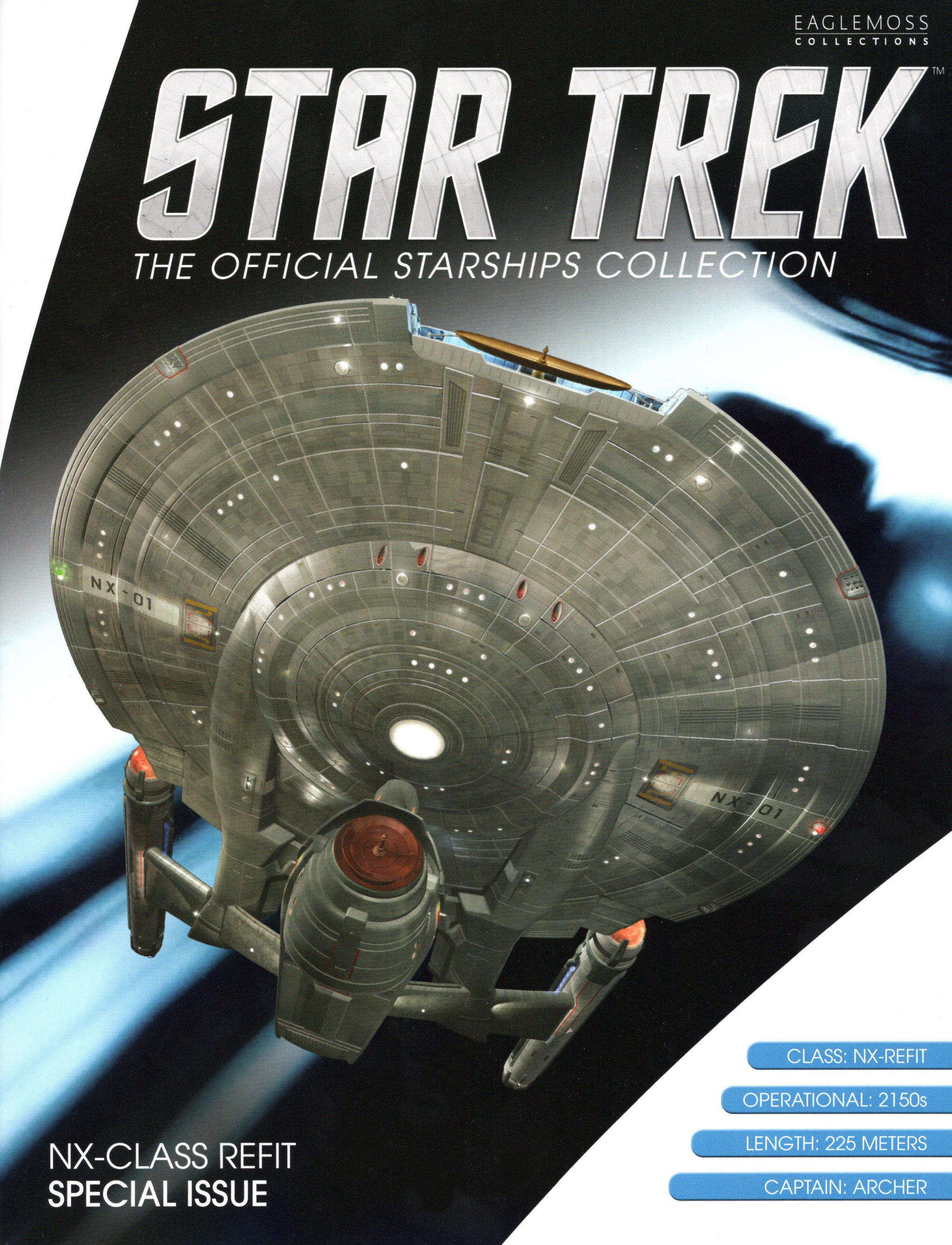
And, thankfully, Eaglemoss took that concept and produced a model of the NX-01 Refit, although sadly only in the company’s small size. I and a lot of other fans would have purchased an XL version.


Enterprise is not among the most popular of the Star Trek series, but even those who don’t love it should take a second look at the NX-01’s place in a starship lineage that eventually gave us TNG’s 1701-D and the 1701-E of First Contact. It fits perfectly, especially with the addition of the secondary hull, because Doug Drexler respected the artists who had created the design language of Federation starships. I wish the production team on Discovery had the same understanding of that aesthetic.
 Collecting Trek